
You need quiet-play zones since they give overstimulated students a predictable, low-cost place to calm down, rebuild attention, and practice emotional self-regulation. Evidence shows short, child-centered pauses improve focus, task persistence, creativity and social participation—especially for introverted or neurodivergent children. Simple corners with soft boundaries, tactile materials, and brief routines are easy to set up in tight Bangalore classrooms and support teacher and parent partnerships. Keep going to see practical designs, activities, and measurement tips.
Why Quiet Play Matters : And Why Bangalore Schools Need It Now
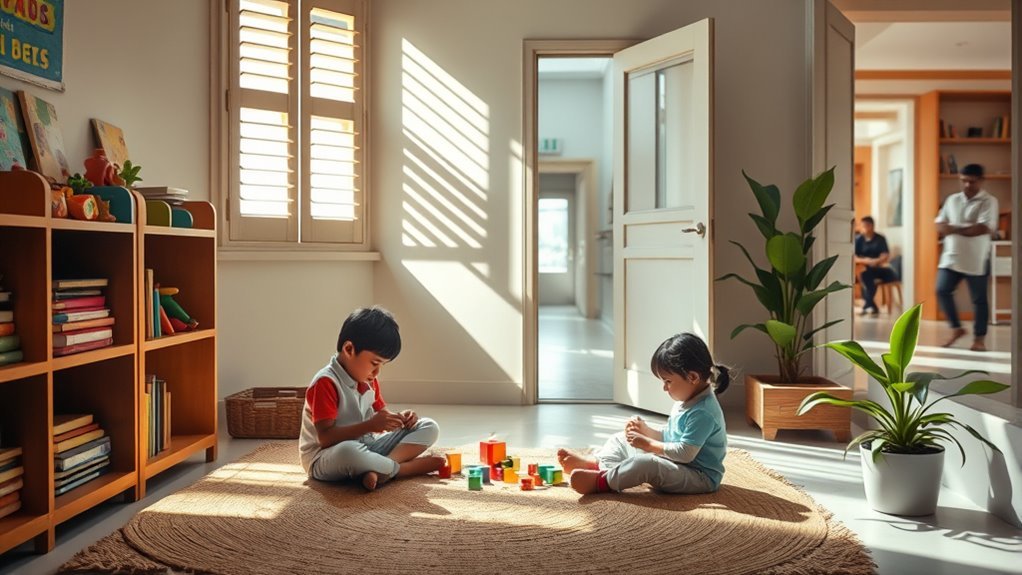
Why does quiet play matter in Bangalore schools right now? You’ll see growing class sizes, urban noise, and digital overload shaping children’s days; research links these stressors to reduced well-being and attention. When you create calm, student-centered spaces, evidence shows kids regain self-regulation and emotional safety. You’ll notice quieter corners let diverse learners—including those who’re neurodivergent or introverted—participate without performance pressure. Reflectively, implementing modest, low-cost zones signals that every child’s need for downtime and reflection belongs in school life. You’re fostering social inclusion by validating different play styles and giving teachers predictable routines that support learning. In short, quiet play isn’t a luxury; it’s an equitable, research-backed practice that helps all children feel seen, steady, and connected.
How Quiet Play Boosts Focus, Creativity, And Resilience
In classrooms and playground corners where noise and screens dominate, quiet play gives children a predictable space to calm their bodies and sharpen attention. You’ll notice sustained focus after short, unstructured moments: research links quiet, sensory-rich play with improved attention spans and task persistence. When you offer materials and gentle prompts, kids practice problem-solving and imaginative storytelling, strengthening creative pathways. Quiet play also builds resilience by letting children rehearse emotions and small setbacks in low-stakes settings, so they return to group tasks more regulated.
- A child arranging pebbles into patterns, testing sequences.
- Two friends whispering a shared story with puppets.
- A student calmly tracing shapes to steady breathing.
- Small repairs of a broken toy, trying solutions until it works.
Design A Quiet-Play Zone For Tight Urban School Spaces
How can you create a calming, resource-rich nook in a cramped Bangalore classroom that actually supports children’s attention and emotional regulation? Start by mapping unused corners and traffic flow so the nook feels safe, not isolated. Prioritize soft boundaries—curtains, low shelving, rugs—so children perceive a distinct space without losing connection to the group. Use adjustable seating and varied textures to meet sensory needs; research shows choice improves self-regulation. Keep visual clutter minimal and display a few familiar cues that signal calm. Integrate shared routines: short check-ins, quiet transition signals, and staff guidance to model use. Evaluate with brief observations and child feedback, adapting layout and rules. When you co-design the nook with children and teachers, it becomes both functional and belonging-centered.
Low-Cost Quiet-Play Materials And Activities For Bangalore Classrooms
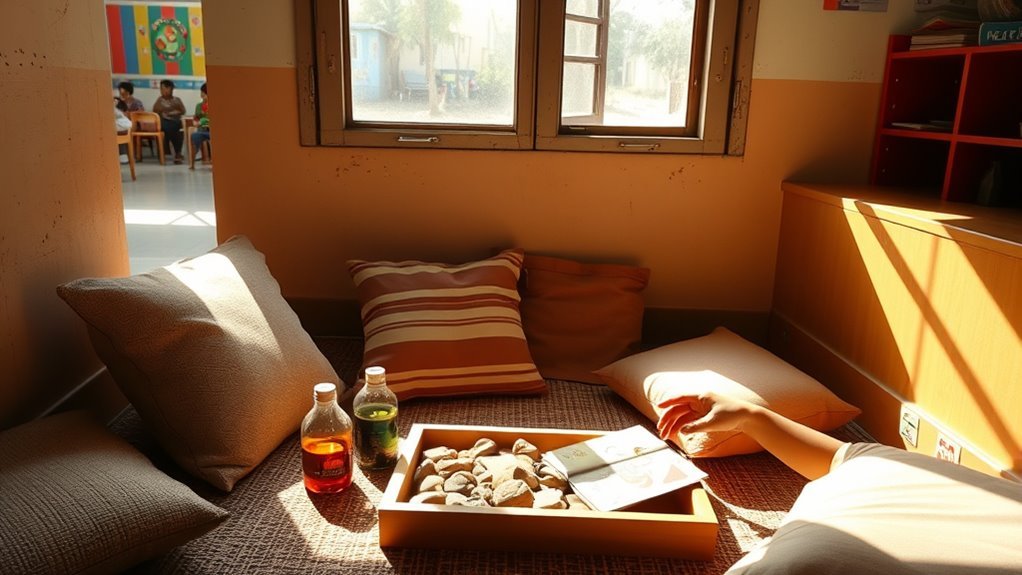
You can create low-cost sensory bins using local materials like rice, lentils, and small recycled toys to support fine motor skills and self-regulation, and research shows tactile play helps reduce stress in young children. Try a simple DIY calm corner with soft cushions, a small tent or curtain for privacy, and visual prompts for breathing or quiet activities so kids have a predictable space to return to. Reflect with your students about which materials and routines help them feel calmer, and adjust based on their preferences and observed responses.
Sensory Bins Setup
Many classrooms benefit from a compact sensory-bin corner that offers quiet, hands-on engagement for children who need calm focus. You’ll choose low-cost materials—dry rice, lentils, water beads, and textured fabrics—that research links to improved self-regulation and fine motor skills. Position bins at child-height, add simple scoops and containers, and rotate contents weekly to sustain interest. Observe reactions, note what soothes or overstimulates, and invite children to suggest themes so they feel ownership.
- A shallow plastic bin with dyed rice, small toys, and spoons—tactile sorting and counting.
- A tray of lentils with cups—pouring, measuring, bilateral coordination.
- Water beads in a sealed tub—calming sensory exploration.
- Fabric swatches and textured cards—sensory vocabulary practice.
DIY Calm Corner
Why not create a calm corner that fits into a busy Bangalore classroom whereas supporting children’s self-regulation and attention? You can assemble low-cost materials—soft cushions, muted fabrics, simple timers—to scaffold pauses and focused play. Evidence shows brief, predictable quiet moments help attention and emotional regulation; you’ll observe children choosing tools that suit them. Reflect with students about what comforts them and rotate items to honor diverse needs and belonging.
| Item | Use |
|---|---|
| Cushions | Create a cozy boundary |
| Sensory jar | Visual calm and focus |
| Simple puzzles | Gentle cognitive engagement |
Invite children to co-design rules and signal when they need space; this child-centered approach builds trust, autonomy, and inclusive classroom culture.
Train Teachers And Engage Parents: Routines, Scripts, Common Fixes
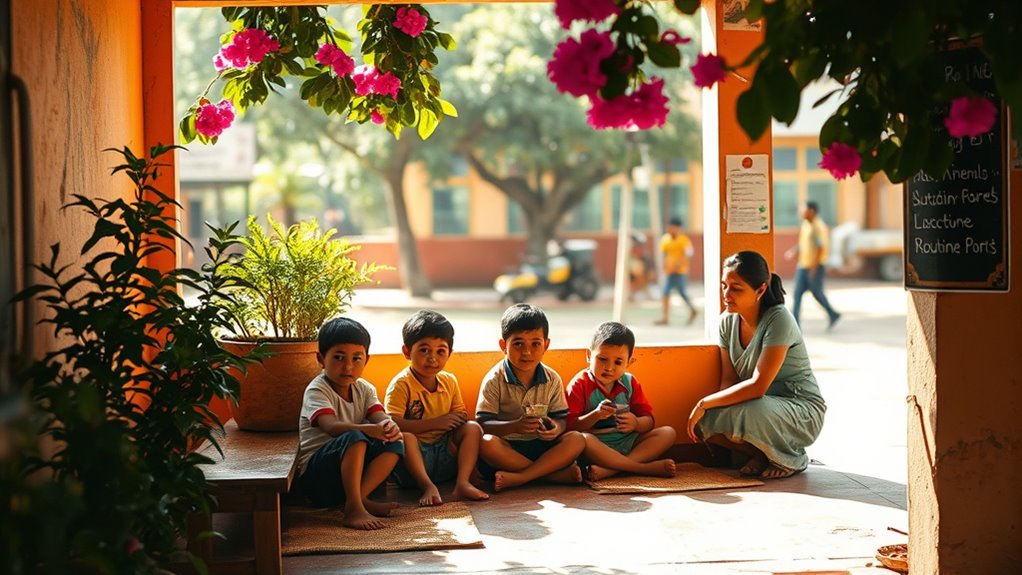
You’ll want clear teacher routines and simple scripts so adults can consistently guide children into calm, purposeful play; research shows predictable cues reduce transitions stress and support self-regulation. Train staff in brief, rehearsable prompts and common fixes for interruptions so responses stay child-centered and minimize escalation. Pair this with parent-engagement strategies—short workshops, take-home cues, and consistent messaging—to extend calm routines into the home and reinforce learning.
Teacher Routines And Scripts
How can teachers reliably create calm, predictable moments for children in noisy Bangalore schools? You’ll use short, consistent routines and simple scripts that cue transitions, reduce anxiety, and model gentle behaviour. Evidence shows predictable signals lower cortisol and support self-regulation; you’ll adapt language to children’s ages and cultural context. Reflect with colleagues about what works, and center choices on each child’s sense of safety and belonging.
- Ring bell, breathe together for 30 seconds, whisper reminder of expectations.
- Visual timer plus quiet cue card to signal independent play.
- Soft praise script: “I see calm hands, thank you,” repeated each session.
- Gentle repair script for conflicts: “I need help; let’s use our words.”
Parent Engagement Strategies
What works when you bring parents into quiet-play practices is consistent, simple messaging that mirrors what teachers use in the classroom. You’ll invite caregivers with brief guides, short videos, and sample scripts so home routines reinforce school expectations. Share evidence: predictable cues support self-regulation and calm, improving attention and social skills. Encourage small steps—ten-minute book corners, soft music signals, or a designated basket of quiet toys—and ask families to reflect on what felt doable. Provide common fixes for bumps: lower stimulation, set clear transition warnings, and model gentle language. Cultivate belonging by celebrating efforts, sharing successes in newsletters, and offering group reflection sessions where parents and staff co-create realistic plans that center children’s wellbeing.
Measure Impact With Simple Well‑Being And Learning Indicators
Want to know if quiet play zones are actually helping students? You can track simple, meaningful signs that respect children’s voices and learning rhythms. Use short, repeatable checks so staff and families feel included and confident.
- Observe a child settling into calm play for 5–10 minutes, noting cooperation and focus.
- Ask children one reflective question after play: “What did you enjoy?” and record brief themes.
- Monitor a small improvement in class transitions or reduced conflicts over a month.
- Collect guardian feedback on sleep, mood, or study ease in a quick weekly note.
These indicators are low-burden, evidence-aligned, and child-centered, helping you show impact while building shared ownership.
Frequently Asked Questions
How Do Quiet-Play Zones Affect School Safety Protocols?
They strengthen safety by reducing chaos, so you’ll notice calmer drills and clearer supervision; studies show quieter areas lower incident risks, support attentive staff, and help children feel secure, included, and easier to account for during emergencies.
Are There Government Grants for Creating Quiet-Play Spaces?
Yes — you can often access state and central education grants, CSR funds, and urban development schemes for quiet-play spaces; check KGBV, Samagra Shiksha, local municipality programs, and CSR partners to support child-centered designs.
Can Older Students Supervise Quiet-Play Sessions?
Yes — you can trust older students to supervise quiet-play sessions, though ironically their loud confidence must learn soft skills; evidence shows peer-led, child-centered guidance boosts belonging, reflection, and calm when adults train and support them.
How Do Quiet-Play Zones Integrate With Cultural Festivals?
They complement festivals by offering calm, culturally themed activities; you’ll adapt materials and schedules, involve students in gentle rituals, and reflect on inclusivity and sensory needs so every child feels connected, respected, and safely engaged.
What Liability or Insurance Issues Arise From Quiet-Play Materials?
Like a safety net, you’ll face product liability, injury claims, and inadequate supervision risks; ensure tested, age‑appropriate materials, documented maintenance, informed consent, staff training, and proper school insurance to protect children, staff, and community trust.