
You can turn parents into active partners by setting clear goals, a parent-friendly timeline, and small concrete roles that match availability and skills. Invite everyone to a kickoff, use short surveys and motivating messages, and host design sessions with childcare and visuals. Share simple decision tools for safety and accessibility, distribute fundraising and build tasks, and celebrate wins publicly. Keep updates brief and measurable so people feel impact—and keep going for step-by-step tools and templates.
Starter Plan: 5-Step Parent Engagement Playbook

Wondering how to get parents on board for the playground upgrade? Start with five clear steps you can follow as a community. First, invite parents to a kickoff meeting that values every voice—make it easy to attend. Second, share a simple survey so families can prioritize features and safety concerns. Third, form a small volunteer committee representing diverse backgrounds to keep momentum and trust. Fourth, offer concrete roles and timelines—fundraising, outreach, site visits—so folks feel useful, not overwhelmed. Fifth, celebrate early wins publicly to build pride and belonging. By following this playbook, you’ll turn interest into action, strengthen connections between families and the school, and create a playground that reflects your community’s shared priorities.
Set Clear Goals and a Parent-Friendly Timeline
To ensure clarity helps parents commit time and energy, start by defining what success looks like for the playground project and map it to a realistic, parent-friendly timeline. You’ll build trust when goals are specific, measurable, and tied to family needs—safety upgrades, inclusive equipment, or phased fundraising. Share milestones, volunteer windows, and decision points so parents can plan around work and family.
| Goal | Milestone | Parent Role |
|---|---|---|
| Safety audit | Complete in 2 weeks | Review report |
| Accessible play | Design finalized by month 2 | Attend feedback meeting |
| Phased build | Phase 1 done by month 4 | Help on build days |
This clarity invites steady commitment and strengthens community ownership.
Map Parent Stakeholders for Your Playground Upgrade
Now that you’ve set clear goals and a parent-friendly timeline, start mapping the parent stakeholders who’ll make the playground upgrade happen. List parents by roles: volunteers, fundraising champions, committee leaders, parents with trade skills, and those connected to local businesses. Note influence, availability, and communication preferences so you can involve people where they’ll feel most useful. Seek diverse voices—grade levels, cultures, schedules—to build ownership and equity. Identify potential allies on the PTA, classroom reps, and neighborhood associations, then pinpoint parents who can amplify outreach. Keep this map dynamic: update contacts, capacity, and commitments after meetings. When you intentionally place people where they belong and contribute, the project gains momentum, trust grows, and collaboration becomes the foundation of success.
Craft Motivating Messages: Email, Flyers, and Social Templates
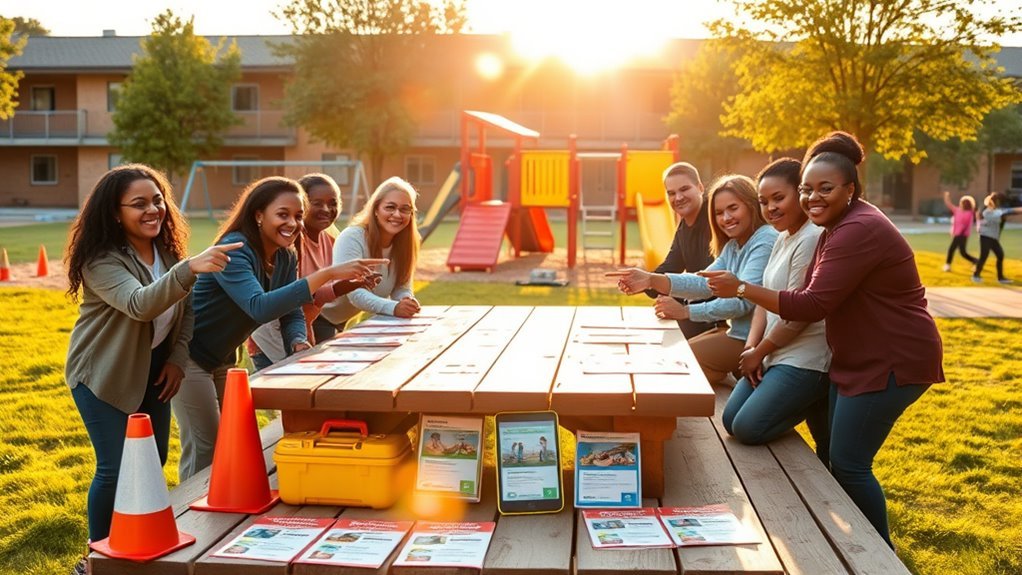
How will you grab parents’ attention and turn interest into action? Use brief, warm subject lines that promise benefits—safer play, happier kids, stronger community. In emails lead with a single ask: donate, share, or attend. Use a friendly tone, short bullets, and a clear deadline. Flyers should feature a striking photo, one-line purpose, and QR code to sign up; post them at pickup, the gym, and local shops. For social templates, craft shareable captions parents can personalize: express pride, invite neighbors, link to a pledge page. Include consistent branding and a volunteer contact. Offer translation-ready versions and suggest two calls-to-action per piece. Test one message, refine based on responses, and celebrate early supporters to build momentum.
Run Design Sessions Parents Will Actually Attend
Schedule sessions at times that fit parents’ routines, and you’ll see turnout improve. Provide on-site childcare and engaging activities so families can participate without juggling kids. Send clear visuals and materials in advance so attendees come ready to give focused feedback.
Pick Convenient Meeting Times
Because parents juggle work, kids’ activities, and errands, pick meeting times that respect their schedules so more people can actually join and contribute; offer a mix of options—weekday evenings, weekend mornings, and a short virtual session—for parents to choose from and ask for preferred times in advance so you can commit to what works for the majority. Then confirm a few clear choices and stick to them, so families can plan. Rotate times across meetings so different caregivers can attend. Send reminders and a simple agenda so parents see the value of their time. When people feel considered, they’re likelier to participate and stay engaged. Your thoughtful scheduling builds trust and helps the whole community shape a playground everyone will love.
Offer Childcare And Activities
Want parents to actually show up and focus on the playground design? Offer onsite childcare and activities so they can participate without worry. When caregivers see their children are safe and engaged, they’ll stay longer and contribute more thoughtfully. Try these practical supports:
- Provide supervised play with trained volunteers and clear sign-in/out procedures to build trust.
- Arrange age-appropriate crafts or movement stations nearby so kids are entertained while adults discuss priorities.
- Schedule short, rotating discussion blocks so parents can check on children between focused sessions.
Make it a welcoming, communal setup—name tags, comfortable seating, and snacks signal care. When you remove barriers and create belonging, parents will come, stay, and help shape a playground the whole community can be proud of.
Share Clear Visuals Ahead
Once parents know their kids are cared for, they’ll be far more prepared to participate—so make the most of that goodwill by sending clear visuals ahead of any design session. Share simple site maps, photos of existing equipment, and 2–3 mockups showing realistic options. Use annotated images with labels like “shade,” “sensory zone,” or “age 2–5” so folks immediately see what you mean. Send files in multiple formats (PDF, JPEG) and a short caption explaining decisions and trade-offs. Encourage parents to mark favorites or concerns before the meeting; that lets you focus discussion and honors their time. When people arrive, you’ll have a shared picture and a stronger sense of belonging—parents feel heard and ready to shape the playground together.
Turn Parents Into Volunteers: Roles, Shifts, and Onboarding
As you prepare to bring the playground vision to life, recruit a diverse team of parent volunteers by clearly defining roles, shifts, and a simple onboarding process so everyone knows what’s expected and can jump in confidently. Invite parents with varied skills—organizers, hands-on builders, snack coordinators—and match tasks to availability. Keep onboarding brief: safety basics, site map, and point-of-contact info. Use simple sign-ups and shift windows to respect family schedules.
- Define clear roles with short task lists.
- Offer flexible shift blocks and backup coverage.
- Provide a one-page onboarding sheet and a quick orientation.
When people feel seen and supported, they’ll join willingly. You’ll build community, spread responsibility, and finish the project faster together.
Organize Parent-Led Fundraising That Fits Your School

Since fundraising works best when it reflects your community’s strengths and limits, start by choosing activities that match your parents’ time, skills, and comfort level. You’ll build trust and momentum by offering a mix of low-effort and high-impact options, clear roles, and shared goals. Use friendly sign-ups, short timelines, and visible progress so everyone feels included.
| Activity | Commitment | Best For |
|---|---|---|
| Donation drive | Low | Busy parents |
| Event night | Medium | Networkers |
| Grant research | High | Detail-oriented parents |
Keep communications warm and specific: who’s needed, how long it takes, and what success looks like. Celebrate small wins, rotate leadership, and provide templates so parents can jump in confidently. This keeps fundraising manageable and strengthens your community around the playground vision.
Decision Tools to Prioritize Safety and Accessibility With Parents
While prioritizing fun, you’ll want decision tools that make safety and accessibility clear, measurable, and easy for parents to use, so everyone can weigh options without getting bogged down in jargon. Use simple checklists, visual scorecards, and shared criteria so parents feel confident contributing.
- Create a checklist of safety standards and accessibility features parents can tick off during walkthroughs.
- Use a visual scorecard (color-coded) to compare how design options perform on key metrics like surface impact, ramp access, and shade.
- Offer short, guided surveys that translate scores into clear trade-offs and budget implications.
These tools invite participation, build shared understanding, and keep conversations focused on inclusive choices. You’ll foster belonging while making decisions that protect every child.
Keep Momentum: Feedback, Recognition, and Impact Reporting
Keep people in the loop with regular progress updates so everyone knows what’s happening and what’s next. Make a point to celebrate volunteer contributions publicly to keep morale high and encourage continued help. Then share measurable outcomes—like safety improvements and usage stats—to show the real impact of your work.
Regular Progress Updates
How will you maintain enthusiasm and trust throughout the playground upgrade? Regular progress updates keep everyone connected and confident that their time and donations matter. Share concise, honest updates that highlight milestones, next steps, and any challenges—so parents feel included, not left guessing.
- Post short weekly summaries (photos, status, upcoming tasks) to the school site and group chat.
- Send monthly impact emails with budget snapshots and testimonials from kids or teachers.
- Host brief virtual check-ins for questions and to gather quick feedback.
When you communicate clearly and often, parents feel ownership and belonging. Consistent updates build trust, invite small contributions of time or ideas, and ensure the project stays a shared success for your whole school community.
Celebrate Volunteer Contributions
Regular updates lay the groundwork for trust, but recognizing the people behind the progress keeps energy high and volunteers coming back. Thank volunteers publicly—highlight names, roles, and moments they made possible in newsletters, social posts, and on a project board at school. Offer small, meaningful tokens like handwritten notes, a volunteer appreciation event, or a photo wall that shows your shared work. Invite volunteers to share their stories at gatherings so everyone feels seen and connected. Make recognition timely and specific so people know their efforts mattered. By celebrating contributions in warm, consistent ways, you reinforce a culture of belonging and encourage ongoing involvement, turning one-time helpers into committed members of your playground community.
Share Measurable Outcomes
Want to know the real difference your time and donations are making? Share measurable outcomes that connect effort to impact so everyone feels seen and motivated. Use clear metrics, visuals, and storytelling to keep momentum and belonging.
- Number of hours volunteered, funds raised, and equipment installed — publish monthly snapshots so progress is tangible.
- Student and parent feedback scores, injury reductions, or increased playtime — report outcomes that show wellbeing and usage.
- Stories and photos tied to specific metrics — spotlight families and volunteers whose work changed a child’s day.
When you report results promptly and warmly, you validate contributions, invite continued involvement, and build a confident, inclusive community committed to sustaining the playground.
Frequently Asked Questions
Who Pays for Maintenance After the Playground Is Installed?
The school or district typically covers routine maintenance, but you can rally parents, PTA, and volunteers to fundraise for extra upkeep or repairs; combining official budgets with community contributions keeps the playground safe and sustained for everyone.
How Do We Handle Liability and Insurance for Volunteer Work?
You’ll require volunteers to sign waivers, confirm district insurance covers volunteer claims, provide safety training, limit tasks to non-hazardous work, and log hours—this protects everyone, builds trust, and shows you’re responsibly caring for the community.
What if Parents Disagree on Playground Design Choices?
Like gardeners pruning one tree, you’ll mediate by setting clear design criteria, offering compromise options, running surveys and small-group reviews, and using a neutral facilitator so everyone’s voice’s heard and the community feels included and invested.
How Are Student Voices Incorporated Into Decisions?
You’ll gather student input through surveys, class meetings, and design workshops, ensuring their ideas shape priorities; you’ll include peer voting and student reps on committees so kids feel heard, valued, and invested in the final playground decisions.
Can Corporate Sponsors Influence Equipment Selection?
Yes — corporate sponsors can influence equipment selection, but you’ll set boundaries: prioritize safety, equity, and community input, negotiate branding limits, vet vendors, and ensure choices reflect student needs so everyone feels included and respected.