
You should inspect equipment weekly for damage, loose fasteners, and debris, then clear leaves, dirt, and animal waste. Scrub surfaces with mild detergent, rinse, and apply an EPA-approved disinfectant, following contact times and manufacturer guidance. Launder soft toys and wipe high-touch indoor spots; rinse and air-dry plastic, dry metal promptly, and avoid soaking wood. Assign roles, log tasks, and use simple checklists so responsibility’s shared and consistent—keep going to find step-by-step routines and product tips.
Who Should Use This Guide + 1‑Week Checklist
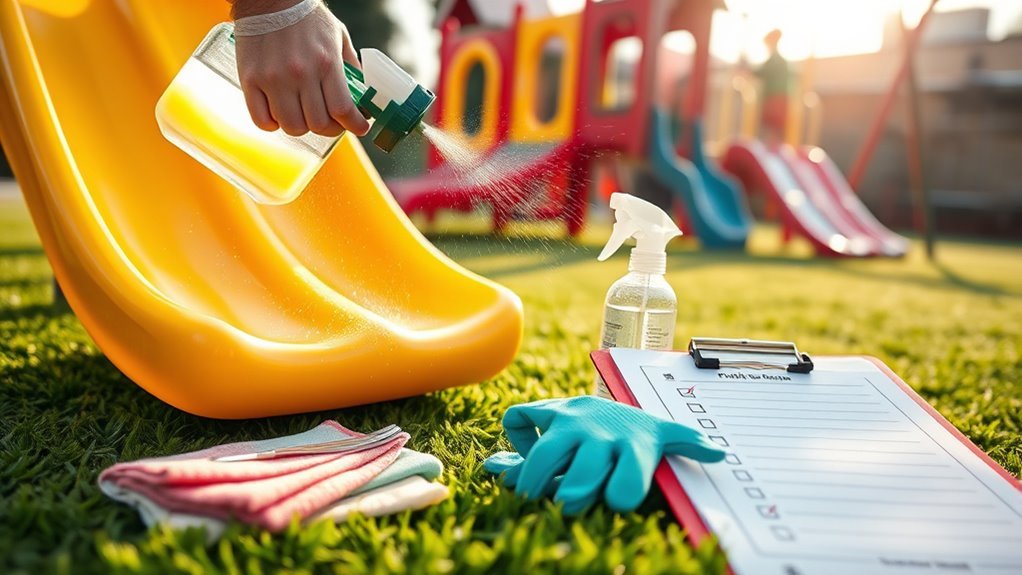
Who should use this guide? You should—whether you’re a school custodian, playground coordinator, teacher, or parent volunteer responsible for kids’ daily play areas. This guide’s for teams who want consistent, simple routines that keep equipment safe and shared.
You’ll get a one-week checklist that fits into busy schedules: daily quick wipe of high-touch spots; midweek deeper clean of seats, rails, and tunnels; end-of-week sanitizing of swings, slides, and climbing holds; plus supply checks and damage inspection. Assign roles so tasks feel communal, not burdensome. Use approved cleaners and wear gloves when needed. Track completion on a shared log so everyone knows the status. Follow this, and you’ll foster safer play spaces and a stronger, responsible community.
Quick Safety Checklist Before Cleaning Play Equipment
Before you start cleaning, do a quick safety sweep to protect yourself and the kids who use the equipment: check for sharp edges, loose bolts, broken parts, animal waste, and slippery surfaces, secure unstable items, cordon off the area if repairs are needed, and put on appropriate PPE (gloves, eye protection) before touching any surfaces or chemicals.
Use this short checklist so your team feels confident and included.
| Item | Action | Status |
|---|---|---|
| Sharp edges | Inspect and tag | ☐ |
| Loose hardware | Tighten/replace | ☐ |
| Waste/debris | Remove and dispose | ☐ |
| Slippery surfaces | Dry/mark | ☐ |
Communicate clearly with staff and volunteers, assign tasks, and keep a barrier until equipment is safe. Your care keeps everyone welcome and protected.
Best Cleaning Products for School Play Equipment (Swings, Slides, Climbers)
Which cleaner you choose depends on the material, level of soiling, and how often kids touch the equipment. For plastic slides and seats, use a mild detergent or a neutral pH cleaner; it removes grime without dulling surfaces. For metal frames and chains, a detergent followed by a disinfectant approved for non-porous surfaces works well. For wood components, pick cleaners formulated for sealed wood and avoid saturating joints. Use EPA-registered disinfectants when infectious disease control is required; follow dwell times and dilution instructions. Choose fragrance-free, low-toxicity products to protect children and staff. Keep concentrated chemicals locked and label diluted solutions. Train your team so everyone shares responsibility and confidence in maintaining safe, inviting play spaces.
Weekly Outdoor Equipment Cleaning Steps
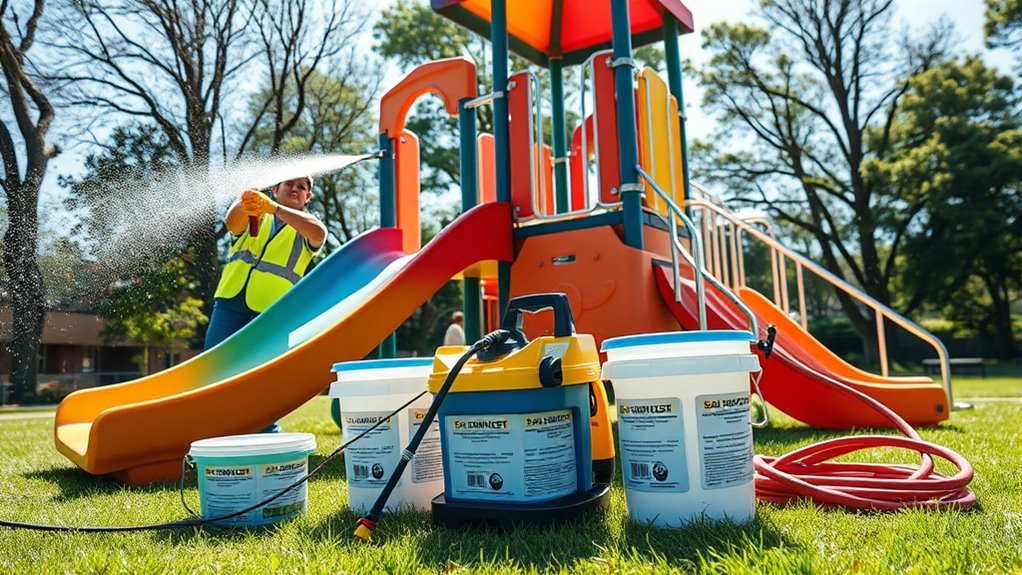
Want a simple, repeatable routine you can trust each week? You’ll inspect, remove debris, clean, then sanitize outdoor equipment in that order. Work with a partner so you’re safe and efficient, and rotate tasks to build team ownership.
| Task | Details |
|---|---|
| Inspect | Look for damage, loose fasteners, rust |
| Debris Removal | Clear leaves, dirt, animal waste |
| Cleaning | Use mild detergent, scrub surfaces, rinse |
| Sanitizing | Apply EPA-approved disinfectant, air dry |
Follow manufacturer recommendations for materials and allow contact time for disinfectants. If you find damage, tag and remove the item from service until repaired. Keep a shared checklist and log so everyone knows what’s done and who’s responsible—this keeps your community confident and safe.
Weekly Indoor Play Area & Classroom Toy Cleaning Steps
How will you keep indoor play areas and classroom toys safe and ready for use each week? You’ll lead a simple, reliable routine that supports everyone’s health and sense of trust.
- Inspect: walk the space, remove broken or soiled items, note areas needing deeper cleaning.
- Declutter: rotate toys, limit shared items, store extras—this reduces contamination and creates calm.
- Clean surfaces: wipe tables, shelves, mats, and high-touch spots with appropriate cleaners; launder soft toys and washable fabric on a regular cycle.
- Communicate: post cleaning logs, share schedules with staff and families, and invite feedback so caregivers feel included.
You’ll build consistency and community by following these steps each week, keeping kids safe and staff confident.
Sanitize Materials Safely: Plastic, Metal, Wood, Rubber
Once your weekly routine has removed obvious dirt and rotated toys, you’ll need targeted methods for sanitizing different materials so they stay safe without damage. For plastic, use a mild bleach solution (1 tablespoon bleach per gallon water) or EPA-approved disinfectant; rinse and air-dry to avoid residue. For metal, choose non-corrosive disinfectants and dry promptly to prevent rust—stainless steel tolerates stronger agents, painted metals need gentler products. For wood, avoid soaking: wipe with a diluted disinfectant or alcohol-based solution, then dry thoroughly to protect finish and grain. For rubber, clean with soap and water first, then apply an appropriate disinfectant; inspect for cracks where bacteria hide. Follow manufacturer guidance, label directions, and model shared responsibility so everyone feels invested.
Assign Tasks, Track Cleaning, and Involve Staff/Volunteers
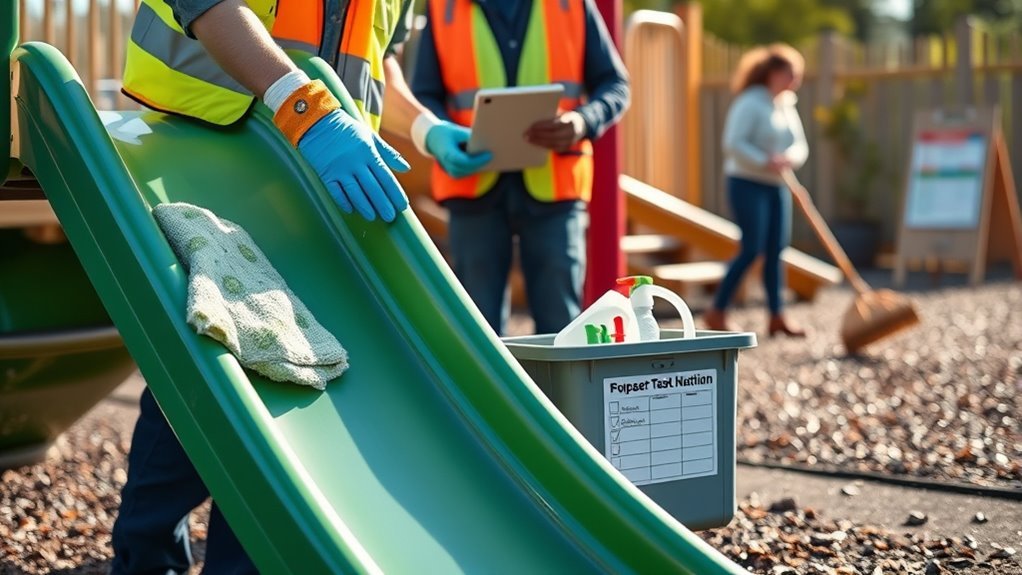
Assign clear roles so everyone knows which pieces of equipment they’re responsible for and when tasks must be completed. Use a simple tracking system—checklists, a wall calendar, or a digital log—to record dates, cleaners used, and any repairs needed. Involve staff and volunteers with brief training and scheduled shifts so the workload’s shared and accountability is maintained.
Assign Clear Roles
Who’s doing what, when, and how you’ll verify it matters as much as the cleaning products you choose. You’ll assign clear roles so everyone feels capable and included: cleaners, supervisors, floaters, and volunteers each have a defined scope. Use checklists and brief training so you all share standards and confidence. Keep responsibilities realistic and rotate tasks to prevent burnout.
- Designate primary cleaner with daily priorities.
- Assign a supervisor to verify completion and coach.
- Appoint a floater for spot-cleaning and supply runs.
- Recruit volunteers for supervised, limited tasks.
Clear roles build trust and consistency. You’ll reduce missed spots, improve safety, and make cleaning a shared responsibility rather than a burden.
Track Cleaning Schedules
How will you keep everyone on the same page about who cleans what and when? Create a simple, shared schedule that lists areas, tasks, frequency, and assigned people. Use a visible board plus a digital copy everyone can access and update. Color-code or label tasks by priority and surface type so it’s obvious at a glance.
Require a brief confirmation method — initials, checkbox, or timestamp — so completed work is trackable. Review the log weekly to spot gaps or repeats, and adjust assignments for fairness and coverage. Keep task sizes manageable and rotate duties to prevent burnout. Make the system part of your routine, and encourage short updates so the group feels connected to the shared goal of safe, clean play spaces.
Engage Staff And Volunteers
Want everyone pulling in the same direction? You can—by assigning clear roles, tracking completion, and welcoming helpers. Create a simple rota so staff and volunteers know weekly duties and shifts. Use a shared checklist for transparency and pride.
- Define roles: surface cleaner, equipment inspector, sanitizer lead, record keeper.
- Train briefly: demonstrate methods, PPE, and spot checks so everyone feels competent.
- Track tasks: use a visible chart or digital log with initials and dates for accountability.
- Recognize contribution: thank volunteers, rotate tasks, and celebrate milestones to build team ownership.
You’ll foster trust and consistency. When people see their impact and belong to a dependable system, cleaning gets done thoroughly—and everyone shares responsibility.
Frequently Asked Questions
How Often Should Deep-Cleaning Beyond Weekly Occur?
You should deep-clean beyond weekly every 3–6 months, or immediately after outbreaks, heavy use, visible contamination, or weather events. You’ll keep equipment safer, extend its life, and show your community you’re committed to shared wellbeing.
Can Cleaning Damage Playground Surface Coatings?
Yes, harsh chemicals and abrasive scrubbing can wear coatings like paint or rubber, slowly peeling their skin. You should use manufacturer-approved cleaners, test a small spot, and adopt gentle methods to protect surfaces and community safety.
Are Students Allowed to Help With Cleaning Tasks?
Yes — students can help with cleaning tasks if they’re age-appropriate, trained, supervised, and given nonhazardous duties. You’ll promote responsibility and belonging during ensuring safety, clear instructions, gloves, and staff oversight for any chemical or raised work.
What Records Are Required for Regulatory Inspections?
You’ll need records of cleaning schedules, sanitizing products used, staff training and certifications, incident logs, inspection reports, and maintenance/repair histories; keep them accessible, dated, and signed so your team and inspectors feel confident and included.
How to Handle Biohazard Spills (Vomit, Blood) on Equipment?
Like drawing a clean circle through chaos, you’ll cordon the area, don PPE, remove solids, disinfect with EPA-registered product, allow dwell time, dispose as biohazard, document incident, support affected staff and students, and restock supplies.