
You’ll create a safe sand play area by choosing clean, quick‑draining sand and smooth, rounded edging that sits flush with walkways so toddlers move safely. Install low, see‑through fencing (60–90 cm) with self‑closing gates and a 1.5–2 m supervision zone. Add shaded seating, non‑slip paths, covered toy storage and handwashing nearby. Train staff, schedule sift-and-inspect routines after rain, and keep a small maintenance budget — continue for step‑by‑step setup and care tips.
Quick Checklist: Is Your Sand Play Area Ready?
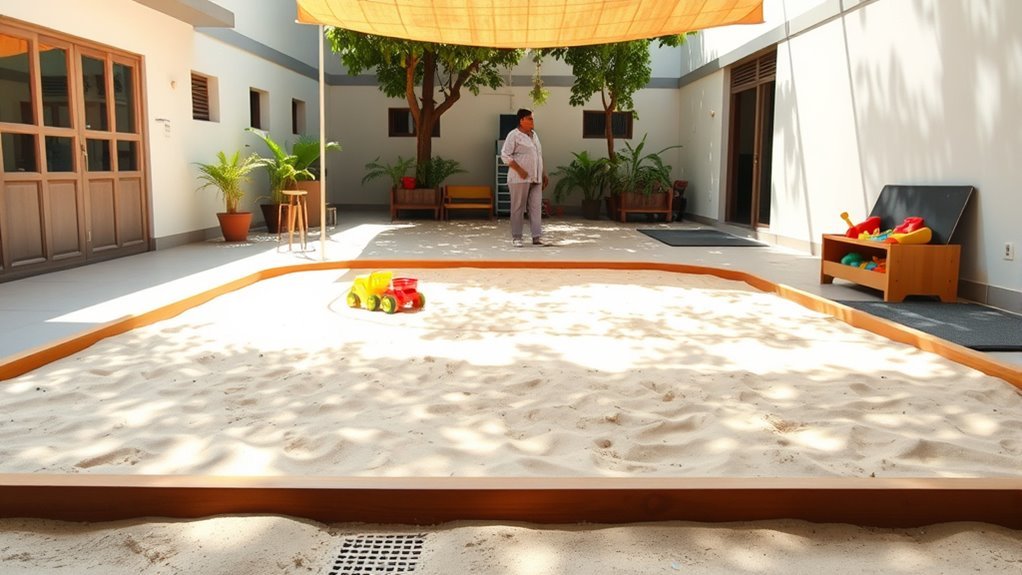
Wondering if your sand play area is truly ready for little ones? Check surface evenness, soft edges, and clear sightlines so children can move and teachers can watch. Confirm sand is free of debris, toys are age-appropriate, and storage keeps items dry and organized. Ensure seating and shaded spots for rest, plus non-slip pathways for rainy days. Verify surrounding plants are non-toxic and trimmed away from play space. Have handwashing stations nearby and easy access to first-aid supplies. Mark boundaries with low, visible edging and set rules for sharing and cleanup to build cooperative habits. Schedule regular inspections and involve staff and parents in upkeep so everyone feels responsible and connected to a safe, welcoming play area.
Pick Safe Sand And Waterproof Drainage For Bangalore Monsoons
After you’ve checked edges, shade, and handwashing, it’s time to choose sand and drainage that hold up to Bangalore’s heavy rains and keep kids safe. Pick fine, washed play sand free of dust, pebbles, and organic matter so little hands won’t get scratched or germ-exposed. Choose a supplier who provides particle-size and safety certificates, and keep a reserve for topping up. For drainage, install a slight slope with a waterproof sub-base and perimeter drains that divert monsoon flow away from the pit. Use geotextile fabric under sand to prevent clogging and seal joins with durable, child-safe materials. Plan routine checks after storms with your team so the play area stays clean, dry, and welcoming for every child.
Design Fencing, Edging And Safe Fall Zones For Supervision
How will you make the sand area easy to watch and safe to play in? Place low, see-through fencing about 60–90 cm high so staff can keep eye contact; use durable materials like powder-coated metal or timber slats spaced to prevent head entrapment. Create clear entry points with self-closing gates and visible latches at adult height. Install smooth, rounded edging to contain sand—no sharp corners—and set it flush with walking surfaces to avoid tripping. Define a 1.5–2 m clear supervision zone around the pit so adults can stand without crowding; keep play equipment and seating outside this zone. Use contrasting colors for borders to help children recognize boundaries. Involve teachers and children when choosing finishes so everyone feels ownership and responsibility.
Plan Shade, Shelter And Sun Exposure (Monsoon And Summer Tips)
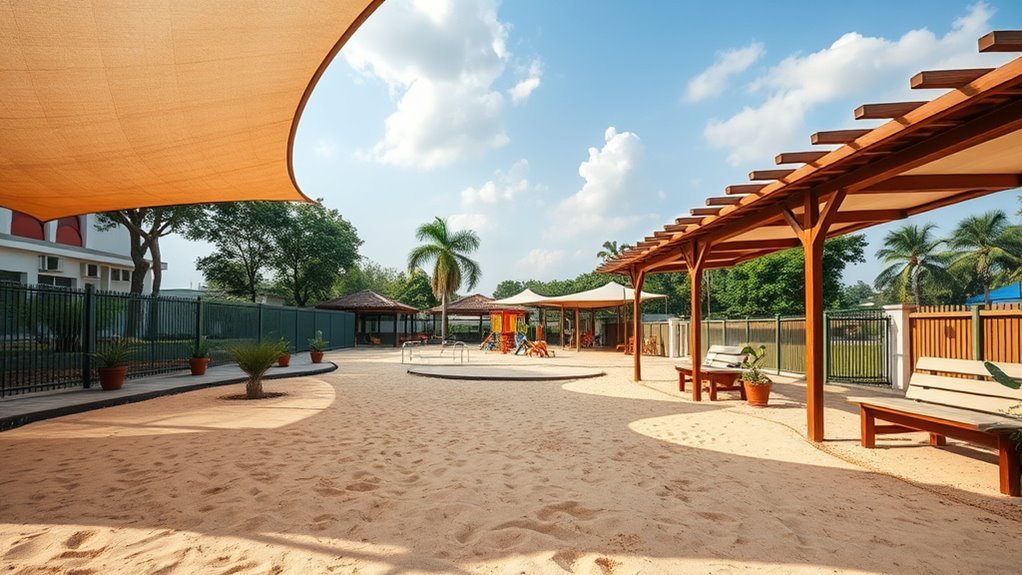
Now that you’ve set up clear sightlines and safe edges, you’ll want to make sure the sand area is comfortable and usable in both blazing sun and heavy rain. Plan a mix of permanent and flexible shade: a sturdy pergola or canopy over the main play spot, plus removable fabric sails for different sun angles. Position shade to protect toddlers between 9am–3pm, and include low benches and taught ropes so kids can gather without crowding. For monsoon you’ll need a gently sloped roof or waterproof tarp that directs water away from the sandpit and keeps edges dry. Use quick-draining sand, raised borders, and covered storage for toys. Invite staff and families to suggest comfortable layouts so everyone feels included in keeping play safe and joyful.
Set Cleaning, Pest‑Control Routines Plus Budget And Staff Training
Who’ll keep the sand clean and safe every day, and how will you pay for it? You’ll assign trained staff, set a small maintenance budget, and involve parents so everyone feels responsible. Create clear routines: cover, sift, and inspect after rain. Use this simple imagery to plan tasks:
Who’ll keep the sand clean and safe? Assign trained staff, a small budget, parents’ help, and simple cover-sift-inspect routines.
- A covered box with a fitted tarp to keep leaves and animals out.
- A fine mesh sifter and labeled schedule card for daily checks.
- A tiny first-aid and pest kit in a nearby cabinet for quick response.
Train staff on handwashing, safe pesticide alternatives, and reporting. Budget for replacement sand, tools, and annual professional pest inspection. Keep communication open so teachers, parents, and children belong to a safe, shared space.
Frequently Asked Questions
How Do I Introduce Sensory Play Without Causing Allergies?
Think of sensory play as a gentle garden: you’ll introduce hypoallergenic materials, test patches, clear labels, handwashing stations, and small group rotations, encouraging inclusion, monitoring reactions, and communicating warmly with families for safety and belonging.
Can Sand Be Colored or Scented Safely for Kids?
Yes — you can safely color or scent sand if you pick non-toxic, hypoallergenic pigments and natural scents (like food-grade extracts), test small groups, label allergens, rotate options, and involve caregivers so everyone feels included and informed.
What Age Is Appropriate for Unsupervised Sand Play?
Like a duck to water, kids around 5–6 can play with minimal supervision; you’ll still want clear rules, regular checks, peer-friendly tasks, taught hygiene, and nearby staff so everyone feels safe, included, and confident.
How to Involve Parents in Sand-Area Safety and Maintenance?
Invite parents to sign up for shifts, join monthly cleaning days, review safety checklists with you, share feedback, contribute sensory toys, and attend short training—so everyone feels involved, valued, and keeps the sand area safe.
Can Natural Materials (Shells, Stones) Be Used in the Sand?
Yes — you can use natural materials like shells and smooth stones, but you’ll check for sharp edges, wash them thoroughly, limit sizes for safety, rotate items for interest, and involve parents and children in caring for the collection.