
Play equipment supports gross motor growth by providing safe, structured opportunities for repetition and progression. You’ll map spaces, set goals, and choose age-appropriate gear that aligns with milestones like crawling, cruising, and standing. Equipment with non-slip bases, clear labels, and adjustable challenges helps kids build balance, coordination, and strength while caregivers observe progress. Regular safety checks and adaptive tweaks keep activity joyful and developmentally appropriate. If you keep exploring, you’ll uncover practical strategies to advance these skills further.
Assess Your Space and Goals for Gross Motor Development
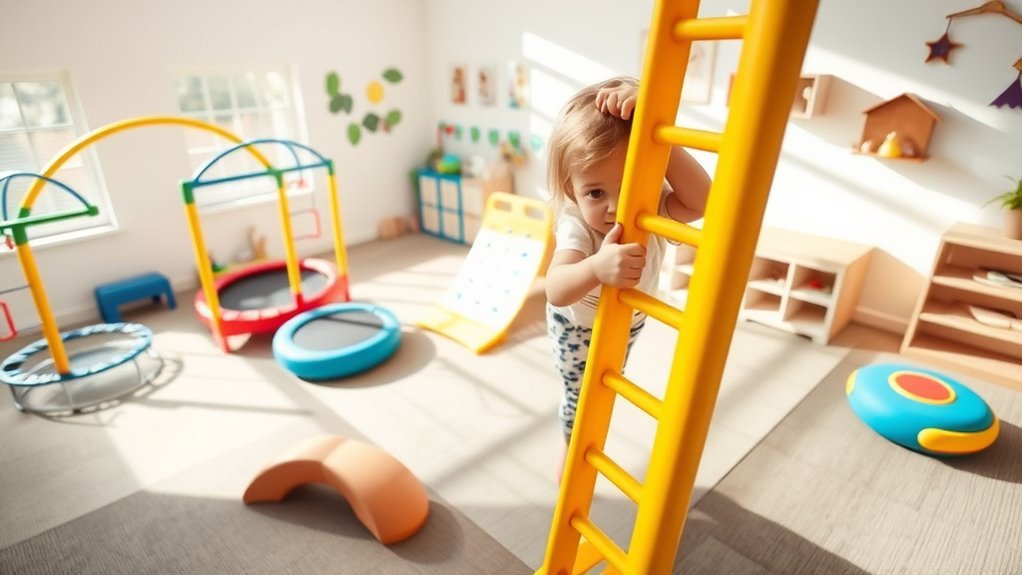
Assessing your space and goals begins with a clear, practical plan. You’ll start with a space assessment to map current areas for movement and safe access, noting floor type, lighting, and clutter. Next, set realistic goal setting targets tied to gross motor milestones you want your child to reach, aligning activities with development stages. Prioritize equipment safety by choosing age-appropriate gear and inspecting it regularly. Consider how play space design supports exploration, balance, and coordination while leaving room for supervision and quick incident response. Track progress measurement with simple, repeatable observations—timed climbs, cruising along furniture, or stair navigation. This thoughtful approach builds belonging, confidence, and consistent advancement through engaging, evidence-informed play.
Milestones in Gross Motor Skills: Crawling to Coordinating and What to Expect
Crawling, cruising, and progressing to coordinated movements mark key milestones in early gross motor development, and understanding what to expect can help you support safe, confident exploration. You’ll observe a progression from tummy time to hands-and-knees crawling, then to upright cruising and eventually purposeful standing. Movement milestones unfold at individual paces, yet typical patterns offer a framework for safe challenge and praise. Expect variability in speed, balance, and coordination as your child refines weight shifts and core control. Gentle, consistent practice with plenty of supervision supports exploration without pressure. When you notice unfamiliar pauses or signs of frustration, respond with reassurance and scaled tasks. Crawling progression can look different across ages, but steady exposure through play aids skill acquisition and self-efficacy.
Choose Age-Appropriate Equipment by Milestone and Safety Standards
Choosing age-appropriate equipment by milestone and safety standards helps you support safe, confident exploration as your child grows: are you matching toys and gear to their current abilities and supervision needs? When selecting items, anchor choices in documented milestones and established safety standards to reduce risk while promoting challenge appropriate for development. Observe your child’s endurance, balance, and coordination across activities, and adjust gear as those skills progress. Prioritize items with non-slip surfaces, stable bases, and clear age labels that reflect developmental readiness, not just curiosity. Discuss options with caregivers and, if needed, professionals to confirm suitability. By consistently aligning equipment with age appropriate expectations and safety standards, you cultivate trust, reduce anxiety, and foster a sense of belonging in your child’s learning journey.
Design a Play Space That Encourages Repetition and Progress
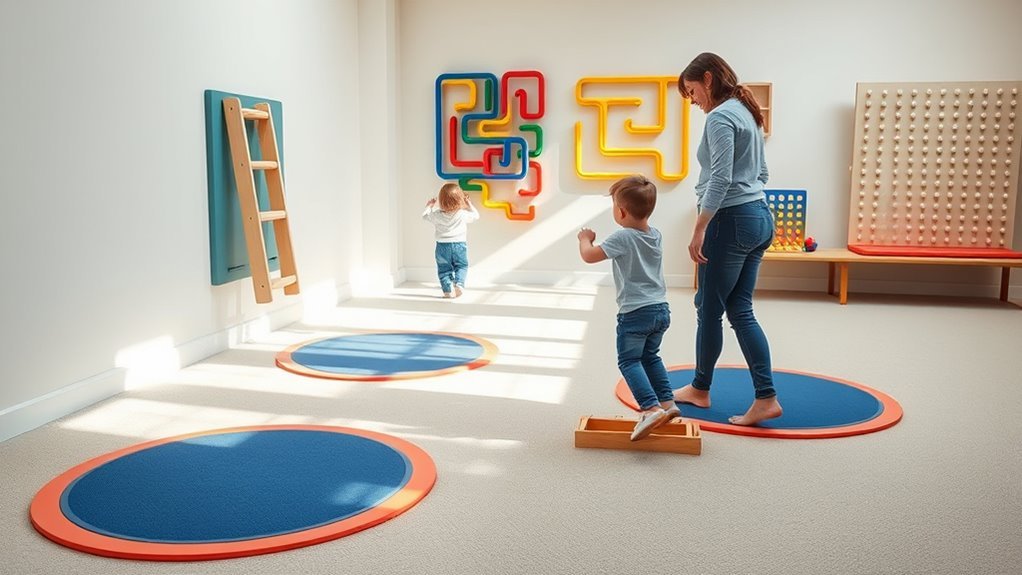
Designing a play space that invites repetition and marks progress helps kids build confidence and refine skills over time. You create routines that focus on small, observable milestones, so children sense steady growth rather than performance pressure. Prioritize varied, accessible stations that encourage busy body play, looping through familiar tasks with modest challenges to recycle movement patterns. An obstacle rhythm—alternating sequences of stepping, crawling, and balancing—offers predictable tempo while inviting effortful exploration. Scaffold activities with clear, nonverbal cues and inclusive options, so each child can join at their own pace and feel a sense of belonging. Track subtle shifts in posture, reach, and coordination, not just completion. When progression feels communal, families and educators reinforce persistence, safety, and joyful, lifelong engagement.
Implement, Measure Progress, and Adapt Equipment for Continuous Improvement
How can you translate intention into action to guarantee play equipment continuously supports gross motor growth? You implement, then assess, then adapt. Start with clear criteria for assessing equipment and observing how children move. Track progress using simple metrics, like balance duration, hop count, and reach distance, documented over weeks. If data show plateau or fatigue, adjust height, texture, or challenge level to match needs. Engage families and staff in interpreting results, fostering a sense of belonging through collaborative planning. Continue this cycle of refinement, ensuring safety and joy remain central. This approach blends evidence with empathy, guiding you toward continuous improvement.
| Assessing equipment | Tracking progress | Inclusive adjustments |
|---|---|---|
| Safety, accessibility, durability | Quantitative trends, qualitative notes | Tailored changes for ongoing growth |
Frequently Asked Questions
How Often Should Adults Participate in Play Sessions With Kids?
Play frequency isn’t one-size-fits-all, you should aim for several short sessions most days. You, as the caregiver, lead with consistent involvement, modeling engagement and patience. You don’t need perfect timing—just steady, meaningful interactions. Irony keeps you grounded: you’re busy, yet your presence is the most powerful tool. Evidence shows daily, brief play boosts gross motor skills and social belonging. Your caregiver involvement matters most; your regular participation matters for growth and connection.
What Signs Indicate a Need to Adjust Equipment Difficulty?
You should adjust equipment when you observe signs of fatigue or cognitive distraction affecting task performance. If kids struggle to maintain balance, slow their movements, or lose focus, dial down complexity or provide more support. Conversely, if they excel briefly but show frustration, consider a gradual, modest increase. You’ll support safety and confidence by monitoring engagement, staying empathetic, and ensuring tasks feel attainable, inclusive, and reinforcing—fostering a sense of belonging.
Do Gross Motor Activities Aid Fine Motor Development Too?
Yes, gross motor activities can support fine motor development too. When you participate in large movements, you refine coordination, balance, and control, which transfers to precise hand actions like grasping and manipulating small objects. Consistent, structured activities promote neural connections that strengthen both gross motor and fine motor skills. You’ll notice improved hand-eye coordination and better dexterity as you progress, reinforcing a sense of belonging and confidence in your ongoing, evidence-based practice.
How Can Play Space Be Made Accessible for All Children?
You can make play space accessible by applying inclusive design and offering adaptive equipment. You’ll create environments where every child can participate, observe universal cues, and adjust setup for mobility, vision, or tactile needs. Empirically, flexible layouts, clear paths, and varied textures support engagement. With inclusive design, you invite belonging; adaptive equipment reduces barriers, enabling safe, meaningful play. Your approach respects diversity, fosters confidence, and promotes peer interactions through thoughtfully chosen, accessible equipment.
What Safety Practices Are Essential During Group Play?
You must ensure active playground supervision at all times during group play, and you’ll verify age appropriate equipment is used. Maintain safe spacing, teach shared rules, and watch for fatigue or overexertion. Apply brisk, inclusive floor checks for hazards and rotate roles to keep everyone engaged. If concerns arise, pause activities and reassess. Your approach is evidence-based, empathetic, encouraging belonging while prioritizing safety through consistent, documented practices and clear communication.