
A great school playground isn’t just fun—it’s a data-driven investment that boosts health, attendance, and learning outcomes. You’ll see higher time-on-task, better focus, and equitable access when design links to STEM, SEL, and hands-on goals. Durable equipment, shade, clear safety protocols, and modular layouts cut maintenance costs and downtime, boosting ROI. Sponsorship and transparent dashboards reveal real gains in attendance, safety, and achievement. If you want specifics on metrics and budgeting, keep going.
Why School Playgrounds Matter: Beyond Playtime
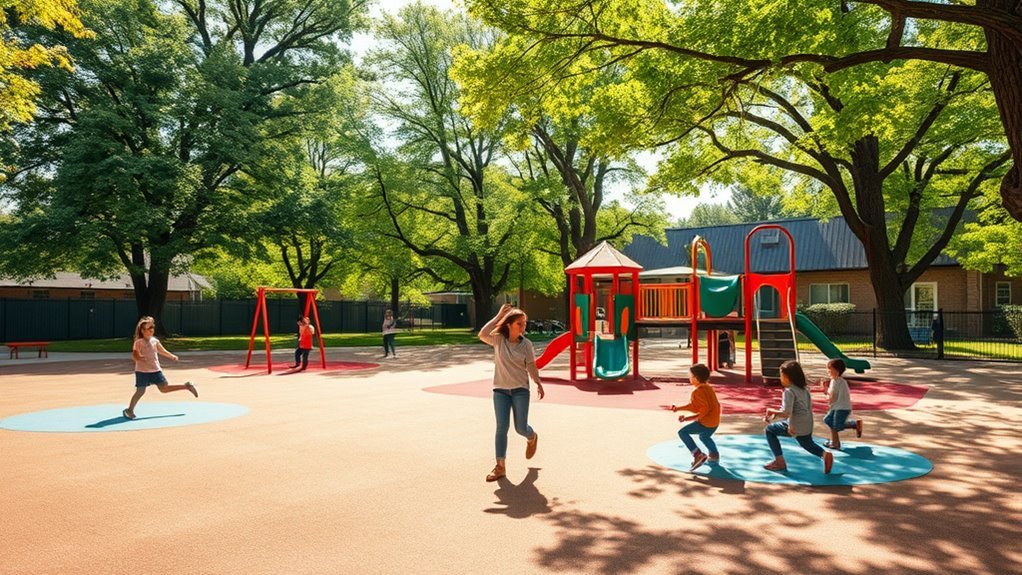
Playgrounds aren’t just recess breaks; they’re investments in student health, safety, and achievement. When you view play spaces as infrastructure, you recognize measurable benefits: improved concentration, reduced behavioral incidents, and higher time-on-task in class. Policy data show that well-designed playgrounds support motor development, social skills, and equitable access, especially for students from diverse backgrounds. Playground aesthetics matter because appealing, age-appropriate environments encourage use and foster a sense of belonging to the school community. You’ll see cost-effective outcomes when maintenance plans prioritize durable materials and safe layouts, delivering long-term value per dollar spent. Engage parents as partners, inviting input on equipment choices and safety standards to build trust and shared responsibility for student wellness and success.
Linking Playgrounds to Student Health and Attendance
Could playground design really move the needle on student health and attendance? Yes—when you harmonize features with policy goals and cost data, you see clearer outcomes. Evidence links sturdy play spaces to higher physical activity, reduced obesity risk, and fewer visit days due to illness or stress. With disciplined playground maintenance and clear safety protocols, schools minimize injuries and maximize instructional time. Attendance gains compound when students feel supported and captivated, not stigmatized. Implement cost-conscious planning: prioritize durable equipment, shade, and accessible layouts that serve all students. The table below highlights core inputs, expected effects, and measurement signals to track progress.
| Input | Expected Effect |
|---|---|
| Playground maintenance | Reduced incidents, better uptime |
| Safety protocols | Safer environments, increased attendance |
| Soft turf vs. hardscape | Lower injuries, higher use |
| Restorative spaces | Improved focus, fewer absences |
| Equity access | Stronger belonging, broader attendance |
Designing for Engagement: STEM, SEL, and Hands-On Learning
To build on the health-and-attendance gains from well-managed playgrounds, design must explicitly link features to STEM, SEL, and hands-on learning goals. You’ll want spaces that scaffold design thinking, allowing students to test ideas, iterate quickly, and show evidence of impact. Integrate maker spaces where low-cost prototyping—cards, climbers, modular panels—translates curiosity into tangible outcomes, aligning with curriculum standards and measurable outcomes. A data-driven plan tracks time-on-task, collaboration metrics, and skill acquisition, informing budget choices and maintenance needs. Prioritize flexible furniture, durable materials, and clear wayfinding to support inclusive participation. Cost awareness means prioritizing multi-use components and scalable modules. When you co-create with teachers and families, you foster belonging and shared responsibility for sustained engagement and equitable access to hands-on learning opportunities.
Building Safe, Inviting Spaces That Drive Consistent Participation
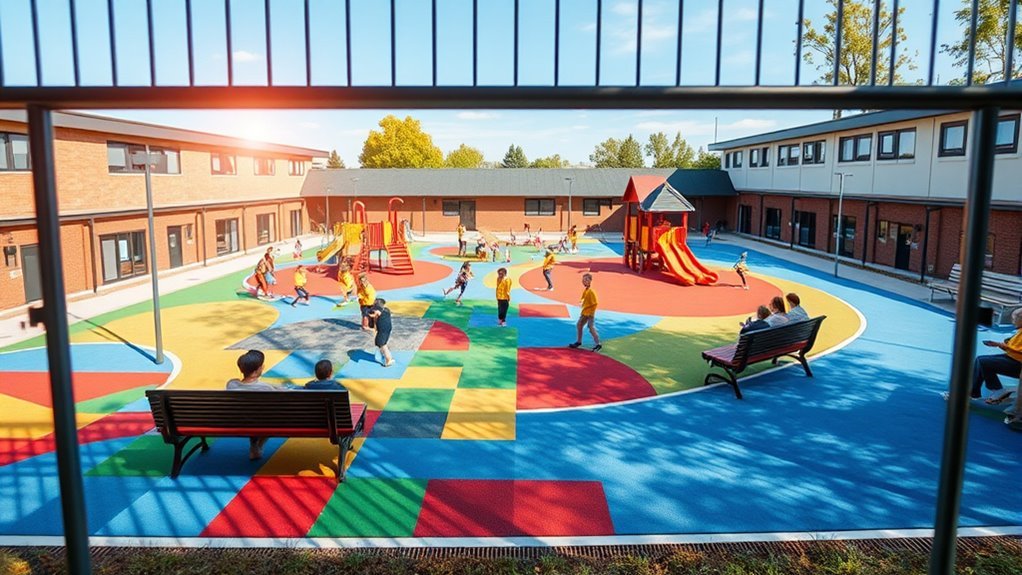
Are consistent participation and a sense of safety the invisible outcomes that truly reveal a playground’s value? Yes, and you can measure this through use rates, incident reports, and supervision efficiency. When spaces are designed for predictable flow, sightlines, and adult oversight, participation becomes habitual rather than episodic. Prioritize durable, low-maintenance equipment and clearly marked zones that reduce conflict and wait times, aligning with evidence-based safety standards. Integrate shade structures to extend usable hours and protect students, boosting daily participation in all weather. Establish playground etiquette through simple signage and brief, uniform micro-training for staff and volunteers to reinforce expectations. Data-informed refinements—accessibility, inclusive play, and equitable access—support belonging while keeping costs predictable and results measurable.
Funding and Community Value: Sponsorship, Fundraising, and Pride
Building on the measurable participation and safety outcomes from well-designed play spaces, you can quantify community value through sponsorship, targeted fundraising, and pride-driven engagement. A clear sponsorship strategy aligns local businesses with school objectives, delivering visibility while supporting students’ well-being. Fundraising innovations streamline donor pathways, reduce overhead, and reveal cost-aware impact in real time. When communities rally around a playground, you create a sense of belonging that extends to students, families, and neighbors alike. Use these mechanisms to demonstrate ROI and social capital, not just dollars.
1) Sponsorship strategy mapping: partners, perks, and measurable outcomes
2) Fundraising innovations: digital campaigns, data capture, and efficiency
3) Pride-driven engagement: story-rich milestones, transparent reporting, ongoing stewardship
How to Measure Real Learning Gains From Play
Real learning gains from play show up in measurable gains across academics, behavior, and wellbeing, not just in smiles on the playground. You’ll track progress with objective metrics: time-on-task, executive function tasks, attendance, and incident rates, aligned to grade-level standards. Use pre/post assessments for math fluency, reading comprehension, and problem-solving during project-based play, then compare to control cohorts. Pair this with behavioral indicators—task persistence, collaboration, and leadership during group activities—to show transfer to classroom routines. Communicate findings through clear dashboards that support policy decisions and budget requests, emphasizing cost efficiency and scalability. This approach reinforces playground branding as an evidence-backed asset, and invites parent volunteerism to sustain data collection, community trust, and shared ownership.
Budgeting for Long-Term Value: Cost Considerations and ROI
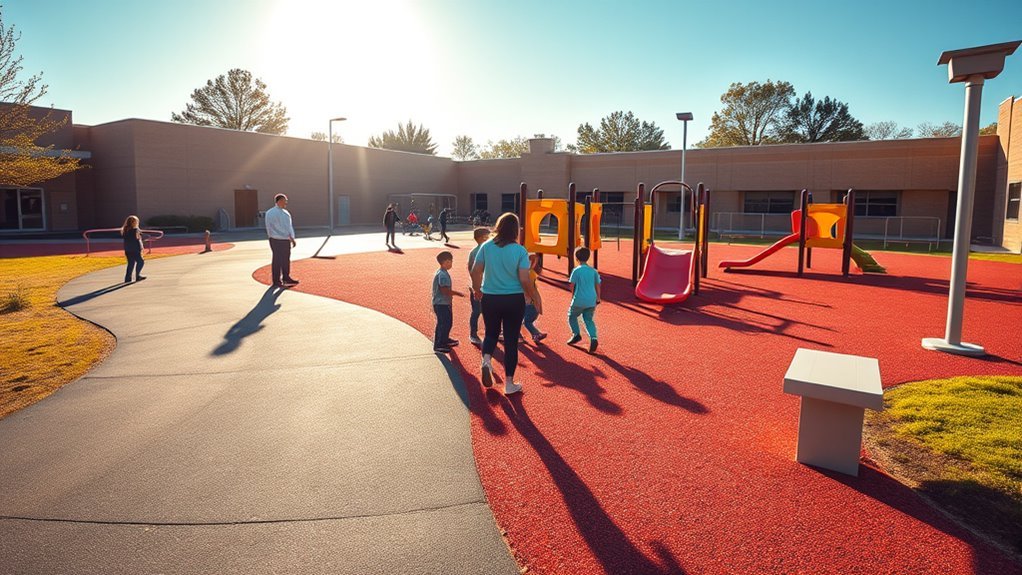
You’ll assess long-term cost implications by comparing initial investments to expected replacement cycles and lifespan data, so your budgeting reflects true ROI. Consider play value longevity by prioritizing durable materials and modular designs that extend usable life while reducing per-use costs over time. Build a maintenance budget plan that consolidates routine upkeep, safety inspections, and part replacements to stabilize total cost of ownership and inform policy decisions.
Long-Term Cost Analysis
What’s the true payoff of a school playground project over its lifetime? You’ll see disciplined long-term cost analysis shaping smarter choices, from initial procurement to ongoing maintenance. By forecasting lifecycle expenses, you protect budgets and unlock durable value for all students. Here are core steps to anchor your plan:
1) Compile total cost of ownership, including installation, maintenance, and replacements.
2) Compare scenarios with different materials, standards, and amortization schedules to reveal true ROI.
3) Build a transparent funding model that aligns with district goals and minimizes budgeting pitfalls.
This approach strengthens stakeholder buy in, ensures accountability, and supports policy decisions grounded in data. A clear long-range view helps you deliver safe, accessible play that endures.
Play Value Longevity
Could long-term value be the true measure of a playground project? You’ll assess play value not just at launch, but across years of use. Prioritize components with proven durability testing and materials that resist wear under heavy school-day traffic. This approach lowers replacement cycles, reduces lifecycle costs, and strengthens stakeholder confidence in budget plans. Quantify ROI with tiered scenarios: upfront capital, ongoing maintenance, and end-of-life salvage. Favor modular, adaptable designs that extend useful life as needs shift, preserving value for students and families. Track performance metrics such as abrasion resistance, wobble thresholds, and safety compliance over time to avoid hidden costs. Transparent data sharing builds trust; communities feel they belong when decisions reflect real durability and predictable budget trajectories.
Maintenance Budget Planning
To budget effectively for long-term value, you should forecast maintenance costs as a core component of the playground’s ROI, not an afterthought.
Maintenance budgeting aligns policy goals with fiscal reality, ensuring durable impact for all students. You’ll quantify lifecycle costs, prioritize safety, and reduce downtime from unexpected repairs. Expect to budget against predictable patterns like playground debris accumulation and equipment weathering, then reserve for replacements at useful intervals.
- Identify annualized costs for inspection, cleaning, and minor repairs
- Allocate funds for surface restoration and component replacement cycles
- Build contingencies for weather events and supply chain delays
This approach signals responsible stewardship, strengthens community trust, and sustains access to safe, inclusive play.
From Plan to Maintain: Implementation Best Practices
To implement effectively, you’ll align stakeholders early and document clear roles, timelines, and success metrics. Use tight budgeting and scheduling to avoid scope creep, tying expenditures directly to planned maintenance, safety upgrades, and quarterly reviews. Establish rigorous maintenance and safety protocols that support ongoing value, with data-driven checkpoints to adjust practices as needed.
Stakeholder Alignment Practices
Coordinating stakeholders from planning through maintenance is guarantee to guarantee a playground project scales with needs, stays within budget, and delivers measurable outcomes. You’ll leverage stakeholder alignment to map roles, responsibilities, and decision rights, ensuring transparent progress and accountability. Aligning on budgeting priorities early prevents scope creep, reduces rework, and preserves resource flexibility for maintenance needs. Your approach centers on data-driven evidence, policy considerations, and cost awareness, so every milestone sits within a measurable framework. To deepen engagement and trust, adopt these practices:
- Define success metrics and ownership roles for planning, construction, and upkeep.
- Establish formal feedback loops with caches of performance data accessible to all parties.
- Prioritize budgeting priorities through collaborative reviews that align funding with safety, accessibility, and long-term value. This alignment sustains belonging and shared responsibility across the school community.
Budgeting and Scheduling Tips
How can you ensure a playground project runs on time and within budget while still delivering safety and accessibility? You’ll map phased milestones, tying each phase to measurable KPIs and risk controls. In practice, prioritize a clear scope and fixed-cost components for core features, while reserving contingency for unknowns in playground logistics. Use a rolling budget forecast to compare actuals against projections weekly, so variances prompt quick corrective actions. Schedule buffers around procurement, permitting, and installation to protect timelines without inflating costs. Leverage data-driven vendor comparisons and reference projects with similar scope to inform cost-per-square-foot benchmarks. Communicate forecasts and tradeoffs with families and staff to cultivate trust and belonging, ensuring you’ve aligned policy goals, budget forecasting, and safety certifications throughout implementation.
Maintenance and Safety Protocols
After laying out the project scope and costs, you’ll transition to keeping the playground safe and functional. You’ll implement clear maintenance protocols and schedule regular safety inspections to sustain long-term value for students, staff, and families. Data shows proactive upkeep reduces incidents and extends asset life, driving lower life-cycle costs. To align with policy and budget realities, follow documented intervals, checklists, and traceable records.
1) Establish a quarterly maintenance protocol that covers hardware, surfacing, and accessibility features, with sign-off from facilities leadership.
2) Conduct monthly safety inspections, logging findings, corrective actions, and verification of fixes.
3) Train staff and volunteers on reporting channels, escalation paths, and safe-use guidelines to foster shared ownership and belonging. Regular audits ensure compliance and measurable ROI. Safety inspections and maintenance protocols are integral to trust and continuity.
Future-Proofing Playgrounds: Sustainability and Adaptability
As playgrounds age, tomorrow’s designs must be both sustainable and adaptable to evolving needs, ensuring long-term value and safety without escalating costs. You’ll benefit from a framework that prioritizes future proofing through sustainability, adaptability, durability, and resilience. Data show durable materials reduce lifecycle costs by lowering replacement frequency, while modular layouts support evolving user cstyles and supervision needs. Policy guidance favors energy efficiency, low-maintenance surfacing, and shade to extend usable hours without spikes in operating budgets. Invest in standardized components to simplify upgrades and inventory management, enabling scalable resilience across school facilities. By aligning procurement with long-term performance metrics, you create inclusive environments that foster belonging, support diverse activities, and protect community investments against obsolescence.
Frequently Asked Questions
How Does Play Influence Classroom Behavior Beyond Recess?
Play influences classroom behavior beyond recess by boosting self-regulation and focus, you’ll see steadier engagement and fewer disruptions. When you implement playful discipline, you support intentional, student-led problem solving that reduces punitive recalls and increases intrinsic motivation. You’ll also cultivate peer collaboration, improving social norms and cooperative norms. Data show improved on-task time and respectful interactions, leading to cost-aware reductions in behavior referrals. You’ll create an inclusive environment where you and your students feel a strong sense of belonging.
What Metrics Capture Social-Emotional Growth From Play?
Play psychology and tactile learning shape social-emotional growth metrics like collaboration rates, conflict resolution, and peer empathy, you measure through observational rubrics and time-sampled interactions. You’ll track cooperative skills during play, emotion labeling, and turn-taking, then correlate with attendance and academic engagement. You’ll quantify resilience via persistence in tasks and reduction in problem behaviors. Your policy-ready dashboard highlights cost-effective gains, ensuring belonging, while data-driven targets guide scalable playground investments. Prioritize inclusive activities to maximize transfer to classroom culture.
Do Outdoor Spaces Impact Achievement Gaps Among Students?
Yes, outdoor spaces can impact achievement gaps if you target play equity and close funding gaps. When you invest equitably, you boost access to quality play, social-emotional learning, and engaged learning time, which correlate with smaller gaps in test scores and graduation rates. You’ll need transparent budgeting, outcome tracking, and community involvement to show cost-effectiveness and long-term benefits. By prioritizing equity, you create inclusive environments that support all students’ learning and belonging.
Can Play Environments Affect Teacher Recruitment and Retention?
Yes—play environments can boost teacher recruitment and staff retention. You’ll attract and keep high-quality staff when schools showcase safe, engaging spaces that support well-being and effective instruction. Data show lower turnover and stronger applicant pools in districts with well-maintained outdoor areas. Budget thoughtfully: cost per recruit, tenure savings, and long-term maintenance. You’ll frame investments as strategic, equitable, and community-building, signaling belonging and professional value to current and prospective teachers.
What Are Hidden Costs of Maintenance and Replacement Cycles?
Hidden costs include ongoing maintenance, safety inspections, and repair team time, and replacement cycles can surprise your budget with uneven cash flows. You’ll need to plan for coatings, surface repairs, and component wear, not just initial installation. Data shows life-cycle costs spike when cycles aren’t aligned with funding windows. You’ll gain predictability by setting multi-year reserve targets, scheduling proactive replacements, and tracking condition-based triggers to reduce total costs and reinforce a sense of shared stewardship.