
Play equipment actively shapes your cognitive growth by engaging attention, working memory, and problem-solving through structured, real-time challenges. You rapidly shift focus, filter distractions, and plan actions as you play with rules and timing. Balance tasks boost motor planning and proprioception, which parallels gains in attention and problem-solving. Perception builds from balance and cue interpretation, guiding quick decisions. Social play fosters collaboration and flexible thinking. If you keep exploring, you’ll uncover more mechanisms linking play to cognition.
How Play Shapes Attention and Working Memory
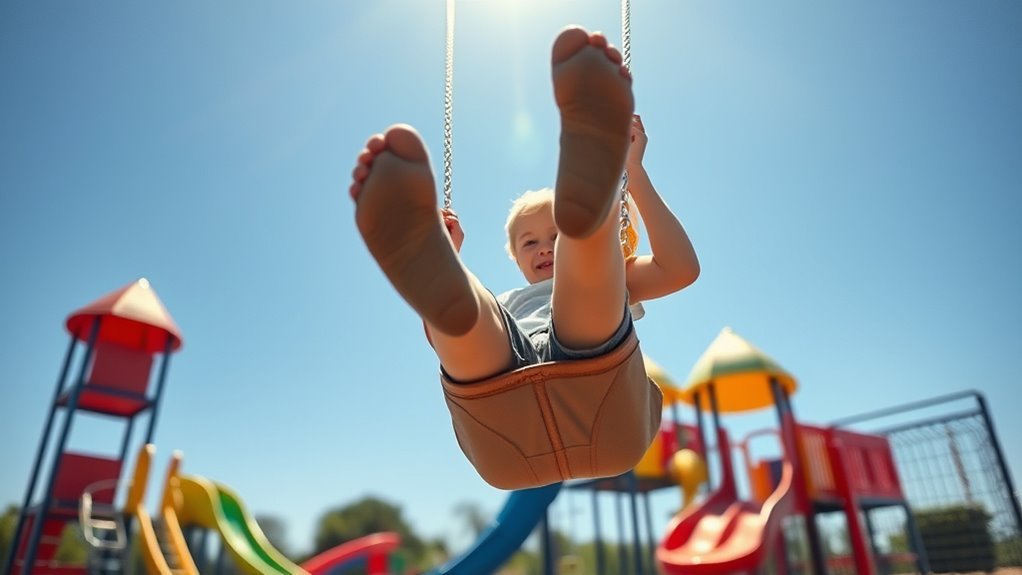
Play is not just recreation; it actively shapes cognitive processes, particularly attention and working memory. When you engage with play equipment, you encounter rapid shifts in focus, selective attention to relevant cues, and sustained concentration over task sequences. Repeated, goal-directed play supports neural pathways linked to attention training, strengthening the ability to filter distractions and prioritize information. In turn, you build working memory strategies as you plan, monitor, and adapt actions based on feedback from peers and the environment. These dynamics emerge from structured play—rotating challenges, rules, and timing demands—rather than incidental activity. The result is measurable improvements in task persistence and information manipulation. By choosing varied, age-appropriate activities, you reinforce cognitive skills while maintaining a sense of community and belonging.
Balance and Motor Planning: The Physical Route to Cognitive Skill
Balance and motor planning link physical action to cognitive outcomes in a direct, measurable way. You engage balance development through progressively challenging tasks, and you reveal how motor sequencing aligns with cognitive sequencing demands. In controlled settings, evidence shows that balance stability supports attention to task, error monitoring, and planning ahead, which collectively function as cognitive scaffolds. You’ll find that consistent practice on unstable surfaces improves proprioceptive accuracy and sequence fluency, facilitating smoother transitions between actions and goals. This link is observable across age groups, with gains paralleling improvements in working memory and problem-solving performance. You belong in communities that value precise methods, replication, and transparent reporting. Embrace balance-focused activities as a concrete pathway to enhanced cognitive skill, grounded in empirical observation and shared, supportive inquiry.
Perception in Play: Reading Cues and Making Real-Time Decisions
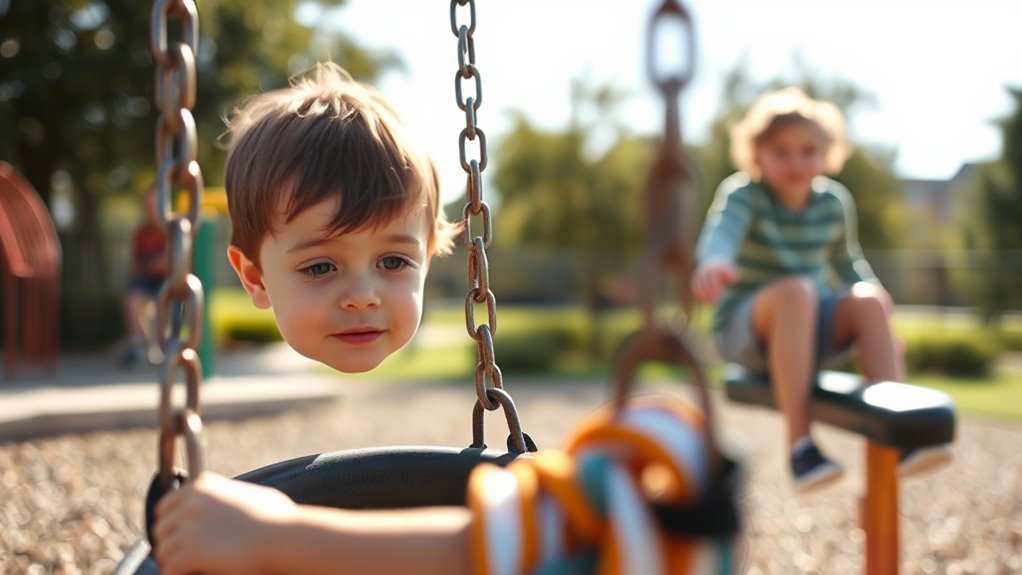
Perception in play builds on the motor and cognitive scaffold established by balance and motor planning, shifting the focus to how players continuously interpret environmental cues to guide actions. You assess dynamic surroundings, integrating motion planning with rapid cue interpretation to select appropriate responses. Perception cues from equipment—timing, height, surface texture, and visible affordances—inform decisions about when to accelerate, pause, or alter trajectory. In real time decisions, you weigh risk versus reward, updating plans as new information arrives. This process relies on tight sensorimotor feedback loops, enabling swift adjustments without conscious reformulation. Objective measurement shows consistent links between accurate cue interpretation and task success, reinforcing that perceptual acuity underpins skilled interaction with play structures and supports broader cognitive efficiency.
Social Play and Problem-Solving: Collaborating to Learn
Social play enables problem-solving by allowing learners to negotiate goals, share diverse perspectives, and coordinate actions within group tasks. In this subtopic, you observe how collaborative problem solving emerges as peers interpret social cues, adjust strategies, and validate each other’s ideas. You’ll note that success hinges on turn-taking, shared goals, and mutual accountability, all of which reinforce cognitive growth through interaction. Social cue interpretation helps you align actions, anticipate effects, and offer constructive feedback, enhancing memory for procedural steps. Evidence indicates gains in flexible thinking and cooperative reasoning when groups face complex challenges together. This section foregrounds belonging as a facilitator of rigorous inquiry, not a barrier to objective assessment. table follows:
| Context | Process | Outcome |
|---|---|---|
| Group task | Role rotation | Shared strategy |
| Peer feedback | Observation | Improved accuracy |
| Task constraints | Negotiation | Coordinated plan |
| Reflection | Discussion | Enduring collaboration |
Designing Play for Cognitive Growth: Everyday Activities and Tips
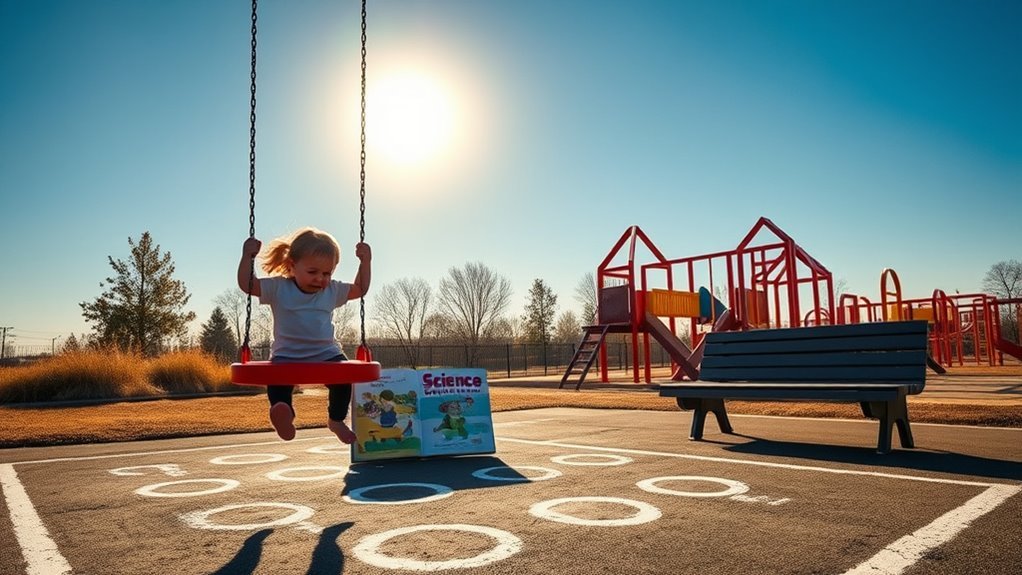
Designing play for cognitive growth hinges on turning everyday activities into structured, purposeful opportunities for exploration and reasoning. You can design routines that blend simple tasks with deliberate questions, prompting hypothesis testing and reflection. Include cycling ramps and sensory mats to scaffold problem solving; ramps invite measurements, velocity estimation, and sequencing, while mats encourage tactile exploration and memory linking. Choose materials with controllable difficulty and provide clear goals to reduce ambiguity, then adjust complexity as skills develop. Embed brief, objective prompts—“predict outcome,” “compare options,” “log results”—to foster evidence gathering. Observe how children negotiate roles, share strategies, and iterate, noting which activities sustain attention and which require prompts. Document outcomes to refine designs, ensuring activities remain inclusive, motivating, and grounded in consistent, observable growth.
Frequently Asked Questions
How Does Play Affect Long-Term Executive Function Development?
Play supports long-term executive function development by strengthening attention control, working memory, and cognitive flexibility through repeated, varied experiences. You benefit when play duration is sufficient to challenge planning and rule-following without fatigue, and when environmental diversity exposes you to novel problems requiring adaptive strategies. Over time, these patterns promote persistence and goal-directed behavior, building a foundation for self-regulation. With consistent, inclusive play opportunities, you’re more likely to develop durable executive skills and a sense of belonging in learning communities.
Do Age and Size of Equipment Change Cognitive Benefits?
Age and size of equipment do influence cognitive benefits: age-appropriate and scalable gear tends to maximize engagement, challenge, and problem-solving opportunities. You’ll likely see stronger executive-function gains when equipment matches development and can grow with you. Think of it as a rhythm, like a scaffold that rises with your curiosity. Prioritize age-appropriateness and equipment scalability to keep tasks within reach yet progressively demanding, fostering sustained exploration and inclusive, belonging-oriented participation.
Can Solitary Play Enhance Social Cognition Outcomes?
Solitary play can contribute to social cognition outcomes, though its effects are nuanced. You may benefit from independent tasks that promote perspective-taking and self-regulation, which transfer to social contexts. During solitary play emphasizes internal processing, you’ll still observe improved attention, executive control, and goal-directed behavior that support social interaction. To maximize belonging, combine solitary play with guided peer-sharing sessions, reinforcing shared goals and feedback to translate cognitive gains into social understanding.
What Role Does Risk-Taking Play in Learning Through Play?
You’ll find risk taking in play supports learning by nudging you to test hypotheses and adapt strategies, driven by curiosity. When you engage in moderately challenging, curiosity driven activities, you explore cause and effect, which strengthens executive functioning and problem-solving. You also gain confidence and a sense of belonging as you co-create solutions with peers. However, safety and support structure matter, ensuring risks remain developmentally appropriate to sustain positive learning outcomes.
How Can Caregivers Measure Cognitive Gains From Play Activities?
Play duration helps you gauge cognitive gains by watching sustained attention, problem-solving, and strategy use over time. You, as caregiver, should collect systematic observations and note changes in reasoning, planning, and memory. Simile: like tracking footprints in sand, your records reveal patterns. Use caregiver observations alongside structured checks—simplified scales, time-on-task, and goal attainment. Regular summaries support comparisons, strengthen conclusions, and foster belonging while you build an evidence base for your child’s evolving cognition.