
To boost social skills, choose group play equipment that prioritizes turn-taking, cooperative problem-solving, and inclusive leadership across ages and abilities. Look for age-appropriate, adjustable gear with clear safety labels and durable construction. Design spaces that invite dialogue, rotations, and peer mentoring, with open-ended materials that require collaboration. Favor obstacle courses, climbing, and imaginative sets that encourage planning, listening, and shared goals. Want more tips on evaluating kits and quick-start setups? You’ll discover practical steps next.
Identify Goals: Which Group Play Devices Boost Social Skills?
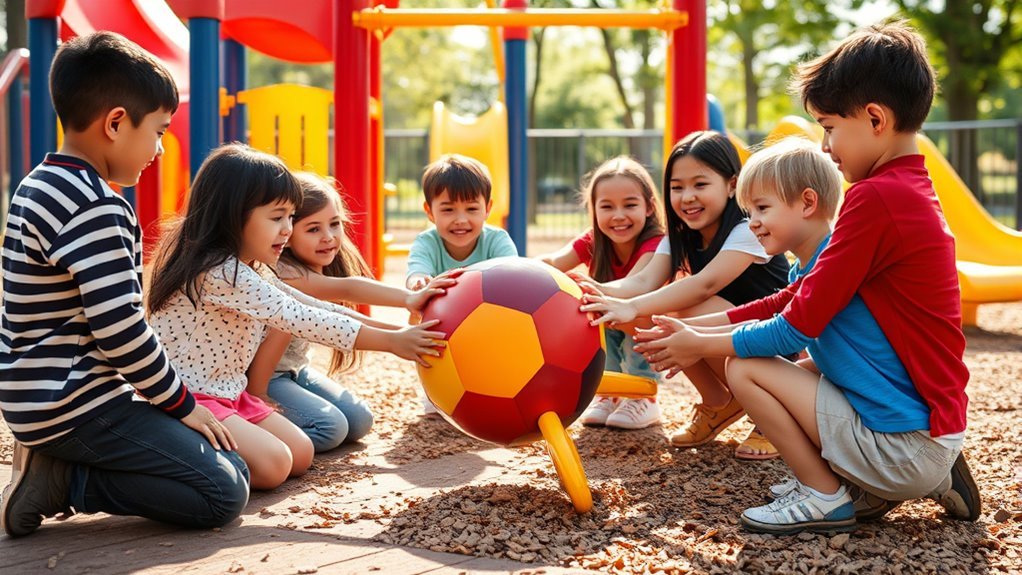
Determining which group play devices most effectively boost social skills starts with clear goals: do you want to improve communication, cooperation, turn-taking, or conflict resolution? You’ll assess devices through the lens of group play and social skills, focusing on how they cultivate interaction rather than just fun. Consider whether a setup encourages shared planning, listening, and inclusive participation. If your aim is communication, choose tools that require describing ideas and negotiating meaning. For cooperation, look for activities that demand joint problem-solving and turn-taking. Tie each choice to measurable outcomes, like time to reach consensus or number of cooperative statements. By defining targets, you’ll select equipment that supports belonging, evidence-based progress, and a positive, inclusive play culture.
Safety and Inclusion: Choosing Gear by Age and Ability
Consider how you choose gear that fits both age and ability, so every child can participate safely and confidently. Look for age-appropriate designs and adjustable features that support inclusive play access for kids with diverse needs. Balancing safety guidelines with opportunities for peer interaction helps everyone build social skills through group activities.
Age-Appropriate Gear
Choosing gear that matches a child’s age and abilities helps keep play safe and inclusive, and it also encourages participation by providing appropriate challenges. You’ll find that age-appropriate gear supports motor skills, coordination, and social timing, reducing frustration while boosting confidence. Look for simple, scalable options that can grow with them, and prioritize equipment with clear safety labels and TÜV or ASTM standards. Consider variety within a single setup to invite turn-taking and collaboration, not competition. When planning purchases, weigh parental tips and budget considerations to balance quality with affordability. Invest in durable materials, easy maintenance, and adjustable features so gear remains relevant as kids develop. This thoughtful approach reinforces belonging and invites steady, joyful group play.
Inclusive Play Access
Inclusive play access means selecting gear that accommodates a wide range of ages and abilities so every child can participate safely and meaningfully. When you choose equipment with inclusive design, you support social interaction across diverse skill levels. Look for inclusive playgrounds that encourage joint play, not segregation, and prioritize surfaces, sightlines, and clear paths for mobility aids. Adaptive equipment helps kids try new roles—leader, helper, participant—without stigma. Safety features like fall zones, pinch-point protection, and intuitive controls reduce barriers to entry. Consider modular options that reconfigure for different abilities, so siblings and peers can join in together. Your selections demonstrate belonging, backed by research on engagement and motor learning, reinforcing accessible, evidence-based play as a universal right.
Space That Invites Interaction: Designing Play Areas for Leadership

When you design play spaces, prioritize Inclusive Space Design so every child can see, access, and contribute to group activities. Signals For Leadership help kids recognize turn-taking, sharing ideas, and inviting others to join, building confident, cooperative play. Create Collaborative Play Zones that encourage peer-led problem solving and cross-group interaction, coordinating with evidence on social skill development.
Inclusive Space Design
Could a space that invites interaction transform how kids lead and cooperate during play? Absolutely, when you design with inclusive design in mind, every child can participate, observe, and contribute. The environment becomes a social learning arena where leadership emerges through collaboration and shared goals.
- Plan zones that are accessible to all abilities, with clear sight lines and adjustable seating.
- Use varied textures and cues that invite turns, role-switching, and cooperative problem-solving.
- Provide predictable routines and visual guides that support peer mentoring and inclusive leadership.
This approach nurtures belonging, reduces barriers, and supports evidence-based practices for social development. You’ll see more peer-led activities, smoother transitions, and kids who feel seen, heard, and valued.
Signals For Leadership
Signals for leadership emerge when spaces invite interaction and make leadership feel reachable, not intimidating. In play areas designed for kids, you’ll notice leadership signals arise from accessible setups, clear pathways, and zones that encourage turn-taking. When furniture and equipment create sightlines and inviting sightlines, children can notice peers stepping up, offering guidance, or inviting others into games, which strengthens group dynamics. Small, democratic layouts—circles, semi-circles, inclusive huddle spots—support conversational leadership without dominance. Evidence shows that when kids see approachable role models in action and feel safe to contribute ideas, participation increases and trust grows. Observe who initiates, who invites, and how roles rotate. Clear cues foster belonging, helping everyone feel valued within the group’s evolving dynamics.
Collaborative Play Zones
Collaborative play zones invite kids to co-create games, share space, and practice leadership through joint turns and decisions. You’ll design spaces that invite dialogue, peek‑a‑boo problem solving, and peer modeling, so social dynamics feel natural rather than forced. When kids collaborate, they learn to listen, negotiate, and cheer progress together, building belonging through shared purpose. Evidence suggests organized zones reduce conflict and boost prosocial behavior by providing clear roles and accessible leadership opportunities.
- Set clear prompts and rotate roles so each child experiences guiding, supporting, and following.
- Use open‑ended materials that require collaboration, not competition, to solve a task.
- Reflect briefly after activities to reinforce what worked and what to try next.
This approach nurtures belonging and strengthens social dynamics.
Cooperative Play: Collaborative Sets and Games
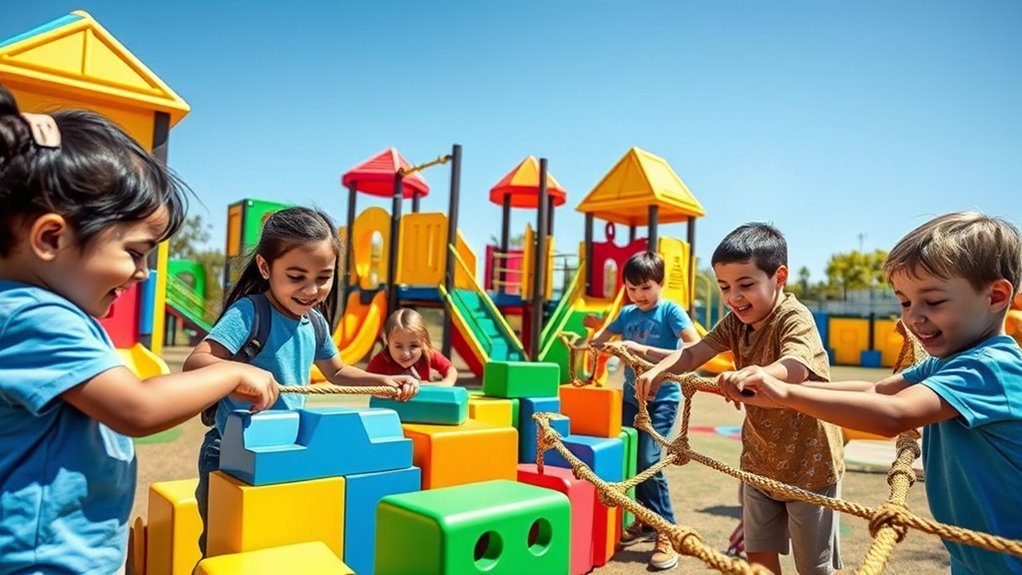
Cooperative play thrives when kids work together to build, solve, and share goals, and collaborative sets and games provide a structured, low-pressure way to practice teamwork. You’ll notice progress as kids negotiate roles, share materials, and celebrate small wins, all while learning patience and turn-taking. Research supports that collaborative activities boost social skills and reduce conflict when expectations are clear and tasks are achievable. Choose sets that require joint planning, not just assembly, to maximize interaction and problem-solving. Use these tips: model turn-taking, provide prompts, and praise cooperative strategies.
| Role | Task | Outcome |
|---|---|---|
| Builder | Assemble pieces | Shared achievement |
| Leader | Manage flow | Inclusive participation |
| Helper | Support peers | Mutual support |
Team-Building Obstacles: Features That Build Communication
Ever wonder which features most effectively build communication during team play? You’ll notice that well-designed obstacles nudge kids to share ideas, listen actively, and read each other’s communication cues, strengthening team dynamics. When challenges require planning and role shifts, conversations become clearer and more purposeful. Here are key features that support this growth:
- Clear roles and turning points
- Timed checkpoints with verbal prompts
- Feedback debriefs that summarize what worked
As you choose obstacles, prioritize spaces that encourage turn-taking, quick huddles, and positive reinforcement. Observation shows little kids improve collaboration when they label needs aloud and acknowledge peers’ contributions. By fostering safe, inclusive dialogue, you help every child feel seen and valued, strengthening belonging and trust while learners practice critical social skills in real-time.
Climbing and Imaginative Play for Social Growth
Climbing and imaginative play offer dynamic ways to boost social growth by inviting kids to share space, coordinate moves, and negotiate roles. As you design playground moments, you’ll see how climbing nurtures trust, patience, and turn-taking while imaginative play nourishes empathy and shared problem-solving. When kids tackle a wall or rope challenge together, they practice outdoor teamwork—planning routes, offering help, and celebrating group successes. Imaginative collaboration grows as they invent roles, narrate actions, and adapt to others’ ideas, reinforcing belonging and mutual respect. Keep sessions inclusive, emphasize safety, and acknowledge each contribution. With steady guidance, you’ll help children build confidence, cooperation, and resilience in a joyful, supportive environment that values every voice.
Evaluate and Compare Top Group Play Kits
Wondering which group play kits truly boost teamwork and social skill development? When you’re evaluating options, focus on how each kit supports group dynamics and reinforces safety protocols, so every child feels included and protected. Here’s a concise comparison to guide your choice:
- Social engagement features: collaborative tasks, turn-taking cues, and prompts that encourage communication.
- Durability and safety: sturdy materials, rounded edges, and clear assembly instructions that minimize risk.
- Adaptability and inclusivity: adjustable heights, universal design elements, and activities suitable for mixed ages and abilities.
Quick-Start Playtime: Setup to Inclusive Engagement
Getting kids started with group play quickly is about simple, inclusive setup that invites every child to participate from the start. You create a welcoming circle, label stations, and pair activities so no one waits alone. Use clear, short instructions and offer choices to reduce anxiety, which supports steady engagement. Pairing textures in mats, fabrics, and props helps tactile learners join confidently, while varied height cues prevent crowding and promote equal visibility. Color psychology guides attention and mood: warm accents for energy, cool tones for calm, with high-contrast markers for visibility. Plan a quick introduction that names each role and signal, then switch smoothly to peer-supported tasks. This thoughtful framework lowers barriers, builds trust, and fosters inclusive play that sustains participation.
Frequently Asked Questions
How Can Parents Model Social Skills During Play Time?
You can model social skills during play by narrating your choices: “I’m listening, I’ll wait my turn,” and gently reflecting feelings. Show modeling empathy by labeling others’ emotions and offering help. Practice turn taking etiquette with clear signals, like a timer or a passing object, so everyone participates. Use positive language when mistakes happen, and celebrate cooperation. Your consistent example helps kids feel safe, understood, and connected, strengthening belonging and social confidence.
What Are Signs a Child Feels Overwhelmed by Group Play?
You notice signs overwhelm when a child tugs at sleeves, withdraws, or switches groups, showing tense shoulders or quick breathing. You’re not guessing; you’re reading cues. Managing emotions here means pausing activities, offering a quiet break, and naming feelings calmly. Provide predictable routines, invite small-group options, and validate each effort. This evidence-based approach helps you support belonging, reduce stress, and empower them to rejoin play when they’re ready.
How Do You Rotate Kids to Ensure Equal Participation?
To rotate kids for equal participation, assign rotating roles within each game and time-box activities so everyone gets turns. You’ll use inclusive games that let flexible skills shine, like cooperative challenges or buddy rotations, and clearly explain rotations ahead of time. You, as the facilitator, track participation gently and switch kids smoothly, ensuring shy players aren’t sidelined. Rotate roles consistently; this builds belonging, confidence, and evidence-based social growth.
Which Devices Promote Quiet, Inclusive Participation for Shy Kids?
You can use devices that promote quiet invitation and inclusive pause, like small-group games and turn-taking cards, to help shy kids participate without pressure. You’ll provide a quiet invitation with clear, simple prompts and gentle pacing, then wait for their responses. Evidence suggests structured formats reduce anxiety and increase sense of belonging. You’ll monitor progress, adjust difficulty, and celebrate small wins, ensuring every child feels seen, heard, and valued in the group.
How Can Success Be Measured Beyond Immediate Fun?
Like a garden of different flowers, success isn’t just about petals of fun. You’ll measure progress by measurable outcomes and social emotional targets, not smiles alone. You’ll observe safer sharing, turn-taking, and warmed peer support, then track growth over weeks, note consistency, and adjust prompts. You’ll trust the process, invite reflection, and celebrate belonging as kids learn collaboration, empathy, and resilience—evidence-based signs that growth endures beyond immediate fun.