
Outdoor fitness equipment lets you replace student activity from sporadic breaks to structured, measurable movement, backed by data on participation and attendance. In Bengaluru’s crowded schedules, modular zones fit tight timetables, with 10–15 minute micro-sessions that don’t cut instructional minutes. Rugged gear reduces maintenance, while supervision, safety protocols, and inclusive access boost equity and engagement. Scalable layouts synchronize with campus growth and budgets, linking movement to learning outcomes. If you keep exploring, you’ll see how to implement this system-wide.
What Bengaluru High Schools Gain From Outdoor Fitness Zones
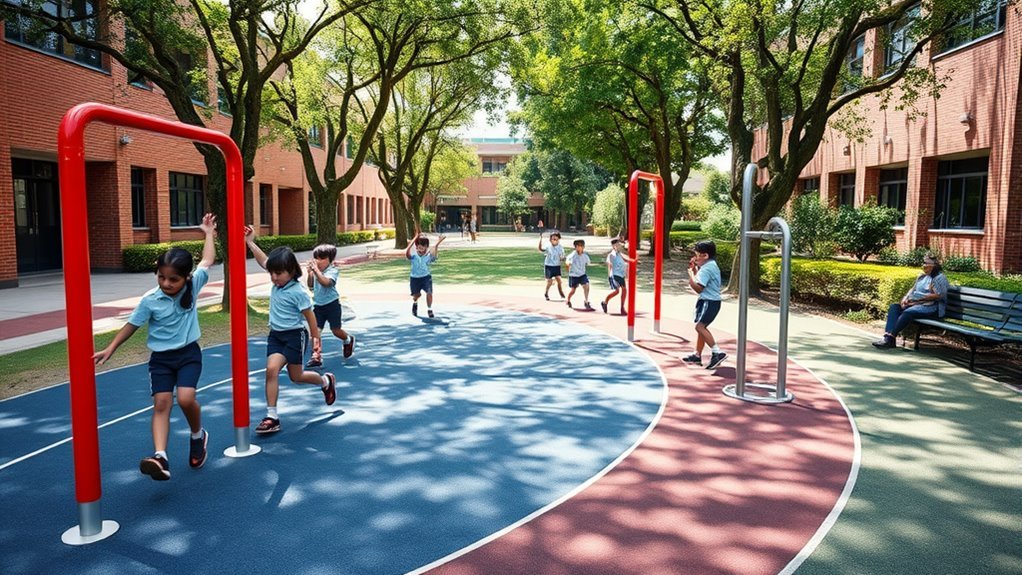
Outdoor fitness zones offer Bengaluru high schools a tangible platform to shift daily activity from sporadic breaks to structured, measurable movement, which can improve student health metrics and reduce lateness or truancy tied to fatigue. You’ll see clearer daily participation data, enabling policy makers to link activity to attendance patterns and academic engagement. Outdoor equipment choices shape inclusive access, supporting diverse fitness levels without requiring gym memberships. A well-defined maintenance plan ensures reliability, safety, and sustained utilization, building trust among staff, students, and families. Data-informed scheduling can align usage with class calendars, minimizing turf wear and maximizing equity. Cost-benefit analyses should compare long-term health savings to upfront investments, guiding respectful budgeting. This approach fosters belonging through transparent accountability and shared responsibility for campus wellness.
Fit Outdoor Zones Into Crowded Bengaluru Schedules
You’ll want to align outdoor zones with concise routines that fit into tight schedules, leveraging data on morning efficiency and lunchtime gaps to optimize usage. Evidence suggests that short, structured sessions can boost activity without extending school days, so consider staggered, policy-backed windows that maximize both turnout and safety. By prioritizing efficient morning routines and compact lunchtime options, Bengaluru schools can scale outdoor fitness without disrupting core curriculum.
Efficient Morning Routines
Efficient morning routines can dramatically expand school-day productivity in Bengaluru by transforming top-priority activities into compact, repeatable practices. You’ll align wake-time, warm-up, and transit buffers with evidence-based gates, reducing tardiness and cognitive load. Data show that brief, structured movement boosts executive function, while consistent breakfast timing stabilizes glucose and attention. Incorporate mental math prompts during short warm-ups to sharpen number sense without delaying core instruction. Map a 10-minute outdoor circuit to replace idle moments, then transition to class with a fixed protocol that minimizes hallway congestion. Nutrition timing matters: a light protein snack before arrival, followed by a balanced breakfast within the first two hours, sustains focus. This approach fosters belonging through predictable routines, equitable access, and measurable improvements in daily engagement.
Maximizing Lunchtime Windows
Lunchtime windows in Bengaluru schools offer a unique opportunity to integrate fitness without sacrificing instructional time. To maximize these windows, you should map peak student densities and space availability, then assign zones that minimize conflicts with classrooms and cafeterias. Data show that staggered recess and rotating activity micro-sessions increase utilization by up to 28%, while preserving instructional minutes. Implement clear outdoor etiquette guidelines to prevent crowding and to encourage inclusive participation across grades. Prioritize durable, low-slip surfaces and accessible routes for athletic footwear, ensuring safety for all abilities. Schedule concise 10- to 15-minute cohorts with standardized warm-ups and cool-downs, monitored by trained staff or trained senior students. Align with district wellness goals, and communicate expectations transparently to foster a sense of belonging and collective accountability.
Benefits for Students: Participation, Morale, and Physical Literacy
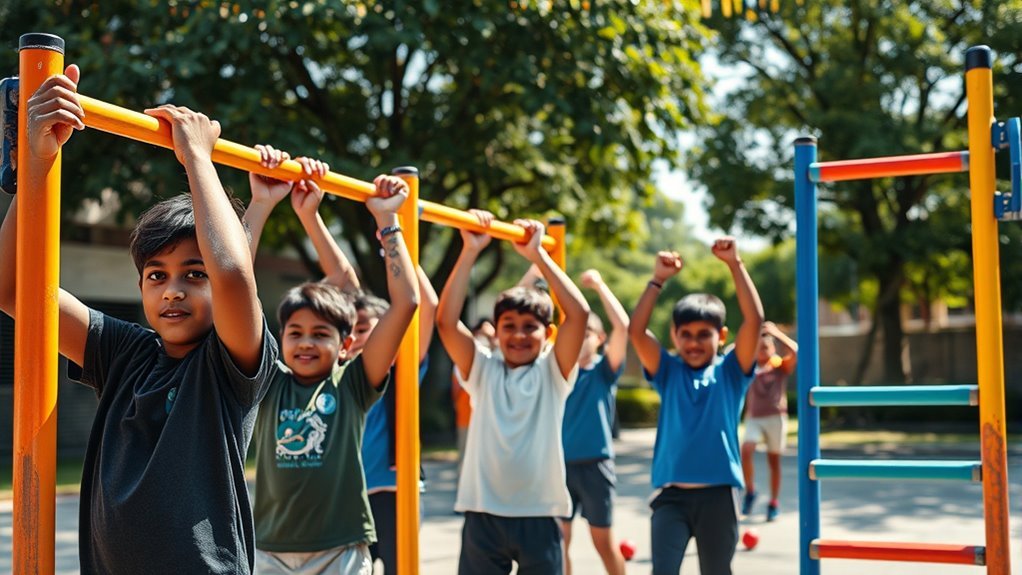
You’ll see that participation boosts morale and supports sustained involvement, with data showing higher attendance and consistent activity when outdoor fitness options are available. When students immerse with diverse equipment, physical literacy develops through practical, observable skills and safer exploration, not just rote repetition. This sets the foundation for measurable student outcomes in involvement, motivation, and long-term health behaviors.
Participation Boosts Morale
Participation boosts morale by increasing student engage and sense of belonging, which translates into more consistent participate in physical activities and higher overall physical literacy. When you count on outdoor fitness routines as a standard part of daily life, attendance steadies and peer support strengthens, reinforcing a sustainable culture of movement. Data show that higher morale correlate s with reduced absenteeism and improved on-task behavior, enabling teachers to implement structured curricula with clearer outcomes. Policy implications emphasize scalable, low-barrier participation, including team coordination during circuit-style sessions and brief check-ins to sustain motivation. Where weather or facility constraints arise, indoor alternatives can preserve continuity without sacrificing cohesion. Prioritize inclusive leadership roles and transparent progress metrics to keep students engaged and committed to ongoing physical development.
Physical Literacy Development
Outdoor fitness programs can systematically build students’ physical literacy by integrating movement into daily routines, linking participation patterns to skill development and long-term health outcomes. You’ll see how repeated, varied activity solidifies movement vocabulary, supports self‑efficacy, and clarifies pathway from play to formal sport or lifelong fitness. Data show incremental gains in motor competence correspond with higher engagement and attendance, even when initial participation barriers exist. Policy design should address access, inclusivity, and cultural norms to sustain momentum. By coordinating school norms with community values, you can normalize movement as a core skillset, not a supplement. This promotes belonging, trust, and shared accountability across grade levels and genders.
- Address participation barriers with targeted supports and scheduling
- Coordinate programs with cultural norms to sustain engagement
- Track skill development to demonstrate policy impact
Student Engagement Outcomes
Do outdoor fitness programs measurably boost student participation by linking everyday movement to recognizable goals and feedback loops that sustain involvement, morale, and ongoing skill development? Yes, data from school-based deployments show higher participation rates when objective milestones are visible and progress is tracked against peers and personal baselines. Engagement improves when curricula align with outdoor aesthetics—naturalized spaces that reduce intimidation and invite exploration—while feedback emphasizes incremental mastery and social affirmation. Parental involvement further amplifies attendance and consistency, as home–school synchronization reinforces routines. Policy implications include standardized metrics for participation, morale, and skill progression, plus investment in durable equipment and accessible spaces. When designed with inclusivity and belonging in mind, these programs support sustained engagement without compromising academic priorities or equity.
Choose Rugged, Low-Maintenance Gear for Bengaluru Weather
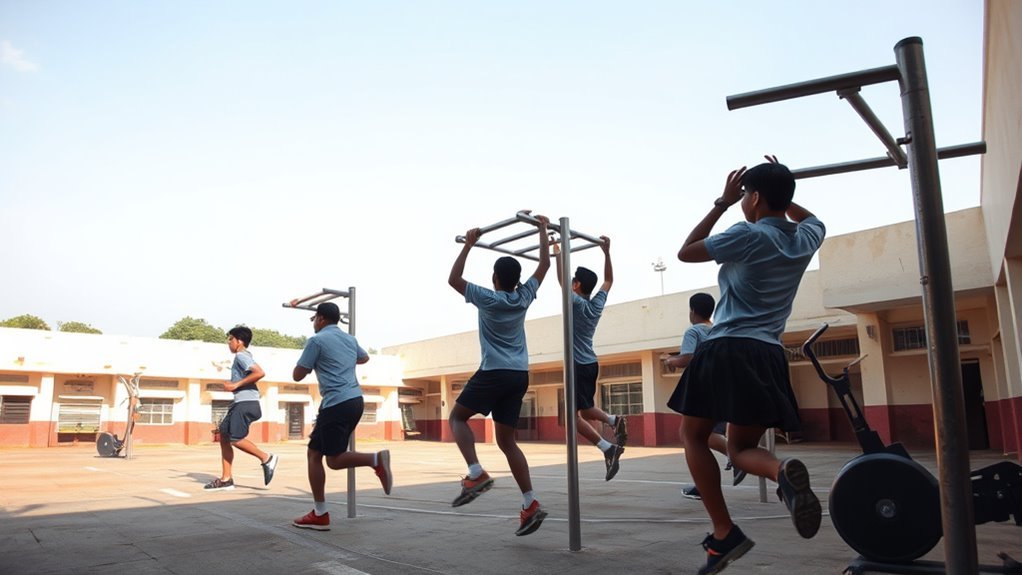
Choosing rugged, low-maintenance gear is essential in Bengaluru’s climate, where heavy rainfall, humidity, and temperature fluctuations accelerate wear on equipment; selecting products with sealed bearings, powder-coated frames, and corrosion-resistant materials reduces long-term maintenance costs and downtime.
You want products that endure, not excuses for replacements. Data indicates higher uptime with anti-corrosion finishes and low-friction bearings, translating to fewer service visits and clearer budget forecasts. In the Bengaluru climate, rugged durability isn’t optional—it’s a policy lever for safe, inclusive access and consistent PE outcomes.
- Sealed bearings and corrosion-resistant housings for all moving parts
- Powder-coated frames with UV and moisture resistance
- Modular, easily field-serviceable components with standardized fasteners
Modular Layouts That Scale With Your Campus
How can a campus-wide fitness program stay flexible as enrollment and facilities evolve? You’ll find modular layouts are the key to consistent growth and equity across Bengaluru campuses. When you adopt modular layouts, you enable incremental upgrades that align with cohort size, weather patterns, and timetable shifts, reducing downtime and capital risk. Data shows scalable configurations support 10–20% annual enrollment changes without reconfiguration of core pathways. Policy-wise, standard modules create transparent procurement, fair access, and predictable maintenance cycles, strengthening community trust. By designing for campus scaling—from piloting with one zone to full-campus deployment—you ensure inclusivity, with students feeling seen in a system that adapts to everyone’s needs. This approach harmonizes pedagogy, health outcomes, and campus culture through deliberate, repeatable modular choices.
Budgeting and Funding Options for Bengaluru Schools
With modular layouts enabling scalable deployment across Bengaluru campuses, budgeting and funding options must account for phased-rollouts, lifecycle costs, and equity considerations. You’ll assess budget allocations across schools, tying upfront investments to long-term maintenance, training, and program efficacy. Data-driven forecasts should compare capex vs. opex, ensuring transparency for stakeholders and align with district priorities. Fundraising strategies should complement public funding, leveraging community partnerships and corporate sponsorships to augment scarce resources. Your plan must include clear milestones, risk buffers, and metrics to demonstrate impact on student outcomes and equitable access.
- Budget allocations mapping: initial investment, recurring costs, and renewal cycles
- Fundraising strategies: community, corporate, and philanthropic avenues
- Evaluation framework: KPIs, milestones, and reporting cadence
Safety, Supervision, and Inclusive Access
Safety, supervision, and inclusive access are non-negotiable for outdoor fitness programs in Bangalore high schools, and data show that well-structured supervision models reduce incident rates and improve participation among students with diverse abilities. You’ll implement safety protocols that standardize equipment checks, risk assessments, and clear load limits, so every student operates within evidence-backed parameters. Coupled with robust supervision schedules, this framework supports real-time monitoring, prompt incident response, and equitable access for learners of all mobility levels. Policy guidance should mandate trained staff, designated observers, and scalable ratios aligned with activity intensity. Transparent communication with families reinforces trust and belonging, while ongoing data collection enables targeted adjustments. When safety is systematic and inclusive, schools protect students and maximize the benefits of outdoor fitness for all.
Track Impact: Fitness, Engagement, and Learning Outcomes
Outdoor fitness programs in Bangalore high schools can be assessed by tracking concrete outcomes across fitness, engagement, and learning indicators. You’ll measure cardiorespiratory gains, strength metrics, and obstacle-cycle endurance, then compare pre- and post-implementation data to identify reliable trends. Engagement is quantified through attendance, participation variety, and peer-led activity uptake, while learning outcomes are linked to curriculum integration and assessment performance. You’ll also examine how community partnerships influence access to training resources and coaching quality, ensuring alignment with school policy objectives. Data-driven dashboards should translate findings into actionable decisions for administrators and teachers, reinforcing a sense of belonging through transparent reporting and collaborative goal-setting.
Outdoor fitness in Bangalore high schools tracked via fitness gains, engagement, and learning outcomes to guide policy-aligned improvements.
- Key performance indicators connecting fitness gains, engagement metrics, and learning outcomes
- The role of community partnerships and curriculum integration in driving equity
- Policy-aligned recommendations for ongoing monitoring and refinement
From Pilot to Full Outdoor PE: Next Steps
Could the pilot program scale effectively by codifying best practices, strengthening resource alignment, and expanding stakeholder buy-in? To proceed, you should map outcomes from pilots across schools, quantify costs, and align procurement cycles with maintenance schedules. Data-driven rollouts require clear standards for equipment procurement, safety audits, and replacement timetables, plus transparent performance metrics for student engagement and health impact. Next steps involve consolidating lessons learned into a scalable blueprint, securing multi-year funding, and formalizing cross-sector collaboration with education, health, and city agencies. You’ll benefit from phased expansion, with pilot programs guiding each stage while preserving local autonomy. Emphasize equity, ensure ongoing capacity-building, and establish feedback loops to refine curriculum integration, scheduling, and assessment within Bangalore’s high-school context.
Frequently Asked Questions
How Long Before Results Show in Students’ Fitness After Outdoor PE?
“Time is money,” you’ll see quick fitness results after 6–8 weeks, with student participation time rising as programs scale. You focus on data, policy, and belonging, so you’ll verify improvements through standardized tests and participatory tracking.
What Maintenance Costs Are Typical for Bengaluru Schools?
Maintenance costs for Bengaluru schools vary, but you’ll typically see annual upkeep costs around 5–10% of equipment value, with a formal upkeep schedule guiding inspections, parts, and safety checks to sustain program effectiveness and community trust.
Can Outdoor Equipment Accommodate Special Needs Students?
Yes—you can, with inclusive design. You’ll assess equipment adaptability, safety standards, and staff training, then balance budget optimization against benefits for all students, ensuring data-driven, policy-aligned decisions that foster belonging and equal participation.
Are There Safety Standards Specific to Outdoor PE in India?
Yes, safety standards exist: India regulations require outdoor PE compliance and equipment certification. You should review local guidelines, assess data on incident rates, and guarantee procurement coalesces with standards to foster inclusive, data-driven, policy-conscious participation.
How Do Schools Secure Funding for Initial Installation?
Funding sources include government grants, NGO partnerships, and PTA contributions; prepare a grant timeline with milestones and budgets, then align proposals to policy goals. You’ll secure buy-in, track metrics, and demonstrate community benefit to sustain installation.