
When selecting slides and swings for nursery kids, prioritize age-appropriate design and solid safety features. For swings, look for secure restraints, padded seats, and strong anchoring. Slides should have gentle inclines, sturdy handrails, and safe landing zones. Make sure materials are non-toxic and durable, with no pinch points or sharp edges. Consistent maintenance is vital for ongoing safety. Further details will reveal how to create a truly secure play space.
Key Safety Principles for Toddler Swings and Slides
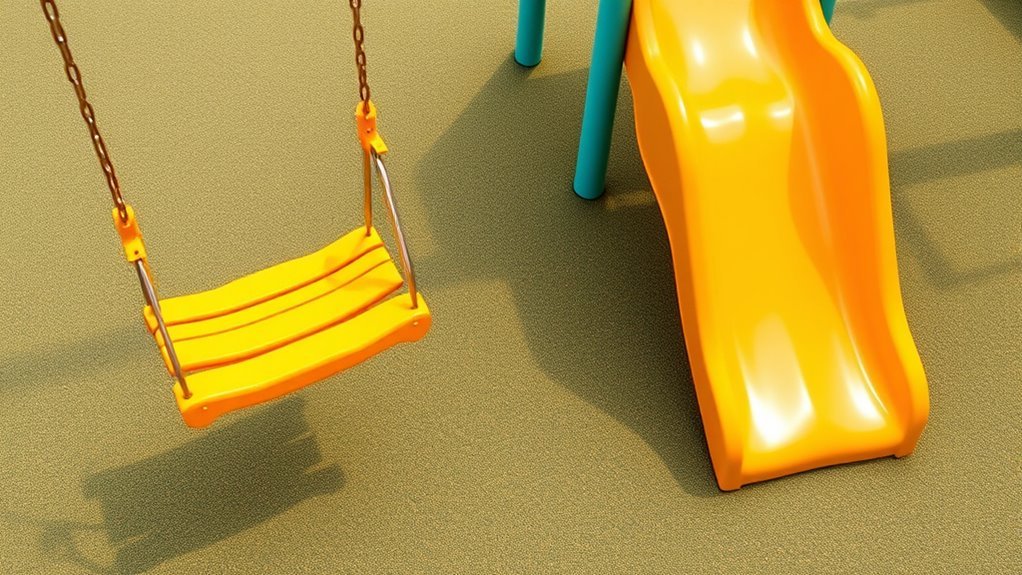
When selecting swings and slides for nursery kids, safety’s always paramount. You’re not just picking equipment; you’re creating a secure environment where those little ones can grow and thrive, nurturing a sense of belonging through shared play. Prioritize age-appropriateness, synchronizing choices with specific child development stages. For younger toddlers, look for low-to-the-ground slides with gentle slopes and bucket swings that offer support. Guarantee all equipment has smooth surfaces, no sharp edges, and securely anchored bases. Remember, effective supervision strategies are an essential part of safety. Always guarantee an adult is present and attentive, ready to intervene if needed, making playtime both fun and secure for everyone in your care.
Choosing the Right Swings for Little Ones
When selecting swings for your little ones, you’ll need to regard various types designed for their age and development. Ensuring the swing’s construction includes vital safety features, such as secure straps and sturdy framing, is paramount for preventing accidents. Prioritizing these aspects will help you choose a swing that’s both enjoyable and safe for your child.
Swing Type Considerations
Nursery kids often find particular delight in swings, which can be a wonderful addition to outdoor play. When selecting a swing, consider the age and developmental stage of your child to confirm it’s a perfect fit for their enjoyment and safety within your community’s play space.
- Bucket Swings: Ideal for infants and toddlers, offering full support.
- Belt Swings: Suitable for older toddlers and preschoolers, promoting independence.
- Toddler Merry-Go-Rounds: A fun, cooperative option for a group of children.
- Weight Capacity: Always verify the swing’s maximum weight capacity to validate it can safely support the intended users.
- Installation Methods: Research secure installation methods to secure the swing remains stable and operational for everyone to enjoy.
Safety Features Paramount
Beyond selecting the right swing type and confirming its weight capacity, a parent’s attention must rightly turn toward the specific safety features built into the equipment. You’ll want to look for secure harnesses, often a five-point system, which will keep your little one snug and prevent them from sliding out. For younger children, seats with high backs and side supports are indispensable to guarantee comfort and stability. Always prioritize age appropriateness; what’s safe for a toddler might not be for an infant. Remember, even with the safest swings, supervised play is vital for preventing accidents. Guarantee all hardware is sturdy, with no sharp edges or pinch points accessible to tiny hands. This painstaking approach assures a joyful, secure swinging experience for your child, cultivating a sense of belonging and trust in their play environment.
Designing Safe and Fun Slides for Toddlers
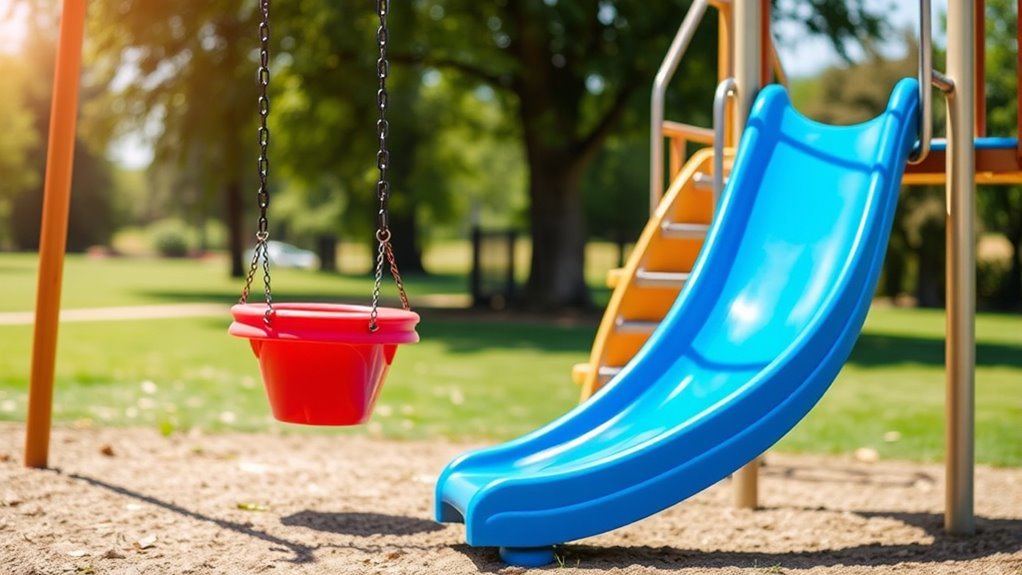
Designing a safe and enjoyable slide experience for toddlers requires careful consideration of several key factors to *guarantee* their protection and maximize their fun. You’ll want to prioritize elements that make the slide accessible and comfortable for little ones. Remember, their safety and sense of adventure go hand-in-hand.
- Appropriate Height: *Verify* the slide isn’t too tall, allowing for easy and secure climbing.
- Gentle Slide Incline: A gradual slope prevents sudden descents, offering a smooth ride.
- Sturdy Handrails: These provide critical support as they ascend and prepare to slide.
- Ergonomic Grip: Built-in handles where needed will help them feel secure and in control.
- Safe Landing Zone: A soft, clear area at the bottom is *crucial* for a gentle stop.
Safe Materials for Nursery Play Equipment
When selecting nursery play equipment, you’ll want to prioritize materials that are both safe and built to last. Guarantee any wooden components feature non-toxic finishes to protect little ones from harmful chemicals. For other elements, opt for smooth, durable plastics engineered to withstand frequent use and repeated cleanings.
Non-Toxic Wood Surfaces
Wood, a natural and versatile material, can be an excellent choice for nursery play equipment, provided it’s treated and finished safely. You want to ascertain your little ones are safe whilst playing, and selecting wood with non-toxic finishes is key. When you choose wood, you’re bringing a warm, inviting element into your child’s play space, nurturing a sense of connection and comfort.
Here’s what to reflect upon:
- Wood Treatments: Opt for pieces that clearly state they use non-toxic wood treatments.
- Natural Finishes: Look for items finished with water-based paints or stains.
- VOCs: Ascertain the finishes are low or zero Volatile Organic Compounds (VOCs).
- Sealed Edges: Check that all edges are smooth and sealed to prevent splinters.
- Certifications: Seek out products with certifications for safety and eco-friendliness.
Smooth, Durable Plastics
Choosing plastic play equipment for your nursery kids means you’ll want to focus on materials that are both smooth and durable, guaranteeing safety and longevity. You’re looking for high-density polyethylene (HDPE) or similar plastics, as they resist cracking and splintering, keeping little hands and knees safe. Don’t overlook the importance of smooth finishes; rough edges can quickly become hazards.
When evaluating plastics, consider the presence of plastic additives. Seek out products that use non-toxic, UV-resistant additives to prevent degradation and fading. This guarantees the equipment remains stable and safe even after prolonged sun exposure. Moreover, exploring options that employ post-consumer recycled (PCR) plastic, or products that are themselves designed for future plastic recycling, shows a commitment to both your child’s well-being and a healthier planet, building a shared sense of community responsibility.
Must-Have Safety Features for Nursery Swings
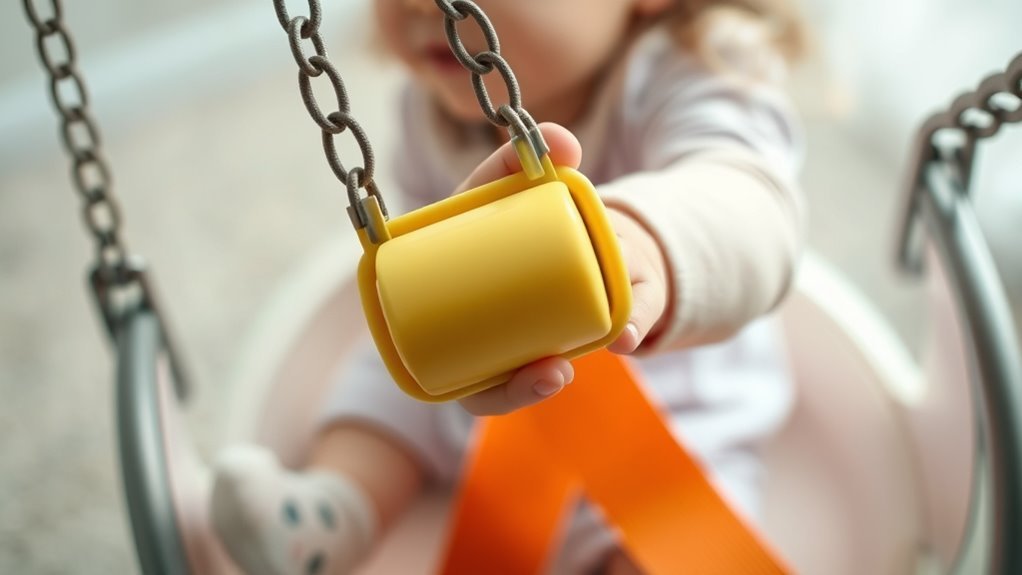
To ascertain your nursery swing is a secure haven for your little one, look for specific safety features that go beyond the basics. You want a swing that’s not only fun but also prioritizes your child’s well-being, giving you peace of mind whilst they enjoy their playtime. Think of it as creating a safe space for their early adventures.
Here are key features you should consider:
- Comfortable padding: Ascertain the seat and any headrests are well-padded for maximum comfort and to prevent bumps.
- Secured harnesses: Look for a sturdy, adjustable five-point harness system that will keep your child safely in place.
- No pinch points: Inspect the swing for any areas where little fingers or clothing could get caught.
- Sturdy frame and anchor: Verify that the frame is strong and that there are secure anchoring mechanisms.
- Rounded edges: All components should have smoothly rounded edges to avoid scrapes or injuries.
Slide Landings and Fall Protection
When you’re setting up a slide for nursery kids, it’s crucial that you put just as much thought into the landing area as you do the slide itself, as the surface below the slide is your primary defense against potential injuries from falls. You’ll want to guarantee the “impact zones” are adequately covered. These are the areas where a child might land or fall from the slide’s exit. Different materials offer varying levels of protection. Pay close attention to the recommended “surface depth” for fall height ratings. This confirms that if a child does stumble, the cushioning is sufficient to absorb the impact and prevent serious harm, creating a secure space for everyone to enjoy.
Designing Your Nursery Playground Layout
As you plan your nursery playground, giving careful consideration to its overall arrangement is paramount to confirm both safety and participation for little ones. Embracing thoughtful design helps create an environment where every child feels they belong, igniting their sense of wonder and exploration.
- Zone Differentiation: Designate distinct areas for active play, quiet exploration, and social interaction.
- Flow and Accessibility: Confirm smooth pathways between zones, accommodating strollers and varying mobility levels.
- Sensory Engagement: Incorporate elements that appeal to different senses, utilizing a palette influenced by color psychology.
- Visibility and Supervision: Position children’s activities where they’re easily seen by supervising adults.
- Budget Considerations: Prioritize vital safety features and durable equipment within your financial constraints.
When to Upgrade Playground Equipment
Your playground’s layout supports active play and social interaction, but even the best-designed spaces require attention to the equipment itself over time. You’ll know it’s time to upgrade when current equipment no longer fits with the children’s developmental stages or safety standards. Consider a seasonal play analysis; if certain pieces are underutilized during specific times of year, perhaps they can be replaced with something more engaging. Budget considerations are essential here. Instead of waiting for major failures, plan for incremental upgrades. This proactive approach guarantees that your playground remains a lively and safe haven for every child, cultivating a sense of community and shared enjoyment. Proactive replacement is far more cost-effective than emergency repairs.
Ongoing Maintenance for Playground Safety
Regularly inspecting and maintaining playground equipment is paramount to guaranteeing children’s safety and prolonging the lifespan of your play structures. You’re creating a safe haven where every child feels they belong, and that means being diligent about upkeep. This diligence extends beyond just checking for loose bolts; it’s a commitment to their well-being.
- Check for Wear and Tear: Look for cracks, splinters, or rust on all equipment.
- Bolts and Fasteners:arantee all nuts and bolts are secure and haven’t worked themselves loose.
- Surface Inspection: Regularly check the fall surfacing for adequate depth and a lack of hazards like rocks or debris.
- Swing Hardware: Examine chains, ropes, and seats for any signs of fraying or damage.
- Overall Stability: Test equipment for wobbling or instability, which could indicate deeper issues.
Frequently Asked Questions
Can Swings Handle Adult Weight?
You’re wondering if swings can handle adult weight. Even though many swings are designed with strong materials, they’re typically not meant for adult use. Think of a typical playground swing’s chains; they often undergo basic swing durability testing, not rigorous load-bearing assessments for adults. Without specific swing safety mechanisms designed for heavier individuals, you’re risking damage or injury. Stick to the weight limits intended for children to guarantee everyone’s safety.
Are There Alternatives to Sand for Landings?
You’ve got concerns about fall safety for the little ones, and thankfully, there aren’t just sand alternatives for landings. You’ll want to ponder** natural fall zones like wood chips, mulch, or even recycled rubber. These absorb impact effectively, ensuring a gentler landing for your children. It’s about creating a secure environment where everyone feels comfortable and protected, developing** a sense of community around play.
What if My Child Has Allergies to Materials?
Don’t fret if your child has material allergies. For their safety and comfort, you’ll want to explore hypoallergenic options. Many manufacturers offer gear made from natural materials like untreated wood or certain fabrics that are less likely to trigger reactions. This lets your little one join in the fun without worry, ensuring everyone feels included.
Can I Paint or Decorate the Equipment?
You undoubtedly can paint or decorate your nursery kids’ equipment, but you’ll want to prioritize paint durability and decorative safety. Confirm all materials you use are non-toxic and securely fastened. Loose decorations or chipping paint can pose choking hazards for little ones. Think about how your chosen aesthetics contribute to a welcoming environment for all children.
How Many Children Can Use It at Once?
You’ll want to treat capacity limits like a golden rule. Typically, most nursery-age equipment is designed for one child at a time. This guarantees they maintain balance and control, preventing accidents and promoting a sense of individual accomplishment. Always check the manufacturer’s guidelines for specific age appropriateness and weight restrictions to guarantee everyone feels secure and included, having a positive playtime experience together.