
You should adopt universal playground safety standards in Karnataka to protect every child and reduce injury risk across districts. Set age-appropriate equipment and durable, low-maintenance surfacing with proper drainage. Establish clear supervision, routine inspections, and confidential reporting channels for students. Ensure accessibility and inclusive options, with trained staff and transparent audits. Align maintenance with budgets, and pursue phased implementation with quick wins and long-term upgrades. If you stay with this, you’ll uncover concrete steps and metrics to guide your implementation.
The Case for Universal Playground Safety Standards in Karnataka
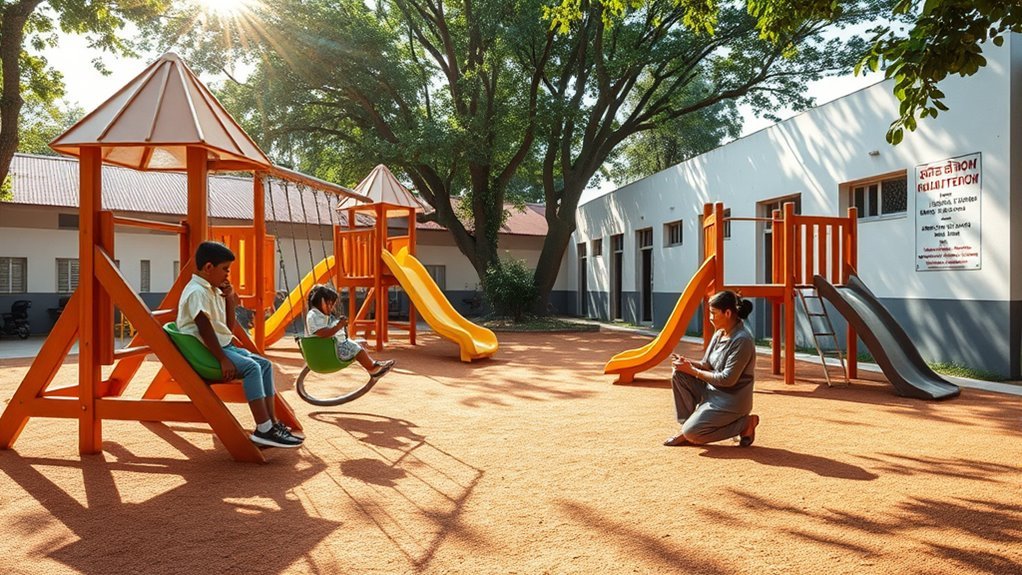
Universal playground safety standards are essential in Karnataka to protect every child, regardless of school or district, from preventable injuries. You’ll see that universal rules create consistent expectations across districts, reducing confusion for families and staff alike. When standards are clear, you can justify prioritizing playground funding, ensuring durable surfaces, inspected equipment, and trained staff. You’ll also recognize that strong policies support equitable access, so every child shares the same safeguards, regardless of location or school size. Engaged parents become partners in accountability, advocating for audits, maintenance schedules, and transparent reporting. With shared standards, you cultivate community trust and belonging, inviting districts to collaborate rather than compete. The result: safer play spaces, measurable improvements, and a sustainable framework for ongoing protection.
Age-Appropriate Equipment and Surfacing Guidelines
Are age-appropriate equipment and surfacing standards essential to preventing injuries and ensuring inclusive play across Karnataka schools? Yes, they set a clear baseline for safe design, procurement, and usage. You’ll align equipment with age bands, ensuring accessible inclusive access while supporting developmental milestones. Implement surfacing guidelines that meet fall-height protection and drainage, reducing injury risk during rain or heavy use. Establish a roadmap implement safety standards that emphasizes durable, low-maintenance materials, regularly inspected installations, and timely upgrades. Emphasize supervision maintenance, pairing trained monitors with routine checks to sustain safe play environments. Build incident reporting processes that capture near misses and injuries, informing continuous improvement. This approach makes students district ready, fosters belonging, and guides policy from planning through renewal.
Best Practices for Supervision, Maintenance, and Incident Reporting
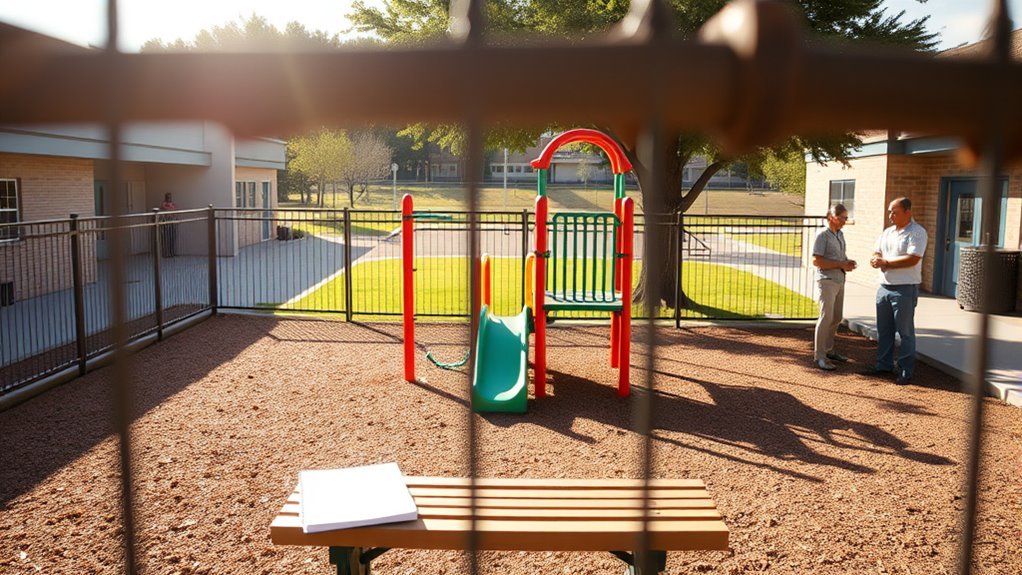
Effective supervision, ongoing maintenance, and sturdy incident reporting are needed to keep playgrounds safe and inclusive after you’ve set age-appropriate equipment and surfacing standards. You implement clear roles for staff, volunteers, and contractors, with defined checklists and response timelines. Regular, documented inspections catch unsafe equipment and wear before incidents occur, and you promptly students to report concerns through simple, confidential channels. Maintenance planning aligns with budget constraints, prioritizing high-risk areas and timely repairs, so safety isn’t optional. Incident reports must be standardized, actionable, and promptly shared with school leadership and parents, while preserving privacy. You build a culture of accountability, training, and transparency that reinforces belonging and trust across the school community.
Making Playgrounds Accessible and Inclusive for All Students
Making playgrounds accessible and inclusive for all students isn’t optional—it’s a standard. You expect spaces where every child can participate, regardless of ability, background, or need. To achieve this, you align design, policies, and practices with universal accessibility principles, remove barriers, and provide adaptive equipment alongside traditional equipment. You establish clear targets for accessible routes, signage, inclusive play events, and trained staff who welcome diverse learners. You measure progress with transparent metrics, periodic audits, and student feedback, ensuring accountability. Avoid unrelated topic distractions or a disconnected discussion; keep decisions grounded in evidence and equity. By prioritizing collaboration with families, therapists, and educators, you cultivate belonging, safety, and shared ownership, so every student can engage meaningfully in play and learning.
A District-Ready Step-By-Step Roadmap to Implement Safety Standards
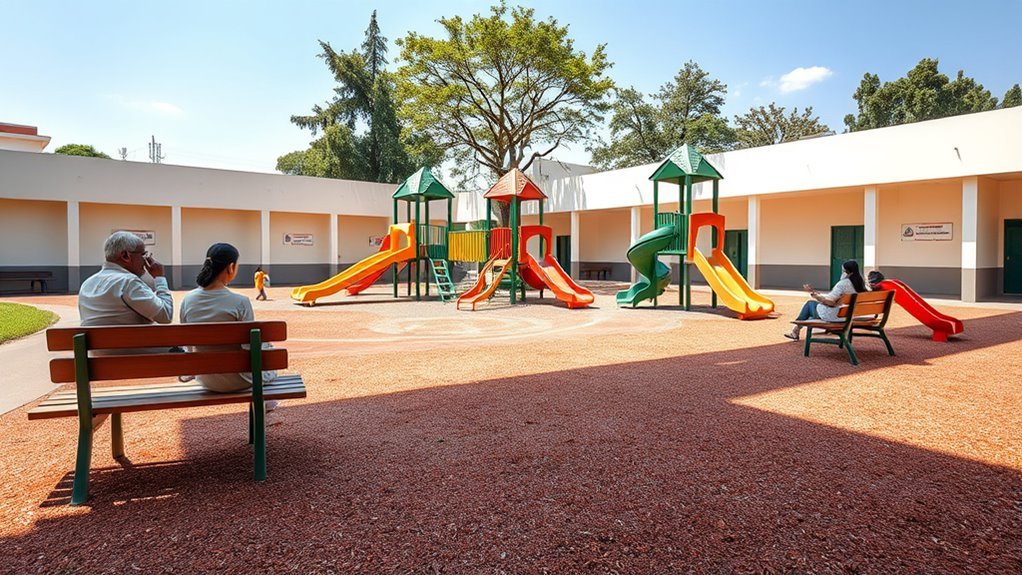
A district-ready roadmap to implement safety standards begins with a clear, action-oriented vision that translates national and state requirements into practical, school-level steps. You’ll map responsibilities across governance, facilities, and curriculum, ensuring every decision aligns with Karnataka’s safety codes. Start with a needs assessment, documenting existing risks and resource gaps, then prioritize fixes by impact and feasibility. Establish a phased plan: quick wins, mid-term upgrades, and long-term systemic changes, with defined owners and timelines. Secure playground funding through transparent budgeting and cost-sharing partnerships, and track expenditures against measurable safety outcomes. Embed parent engagement to build trust, solicit feedback, and co-create standards. Finally, institute regular audits, refresher training, and public reporting to sustain continuous improvement.
Frequently Asked Questions
How Do Costs Impact Long-Term Playground Safety Investments?
Costs shape long-term safety investments via cost benefit analyses, you weigh upfront outlays against reduced injuries and downtime. You’ll explore funding sources, ensuring sustainable budgets, as prudent planning aligns safety gains with community prosperity and shared responsibility.
What Training Ensures Teachers Enforce Safety Consistently?
All it takes is consistent teacher training to ensure safety enforcement. You should implement formal teacher training and ongoing refreshers, with clear standards, accountability, and peer coaching, so every teacher upholds safety together, promoting belonging and trusted school-wide practice.
Which Local Regulations Align With These Standards in Karnataka?
You should align with local regulations that map directly to playground standards, ensuring compliance across Karnataka. You’ll monitor updates, implement audits, and engage communities so your schools meet expectations and feel like safe, inclusive places for all learners.
How Is Contractor Accountability Monitored for Playground Projects?
Contracts are watched with precision; contractor oversight and audit protocols ensure accountability. You’ll see transparent milestones, independent reviews, and strict reporting, so every playground project stays compliant, traceable, and worthy of collective trust and belonging in your district.
What Metrics Measure Safety Improvement After Implementation?
You’ll track metrics showing safety improvements, costs, and investments after implementation, plus training, enforcement, and accountability under regulations; you’ll see clear standards, uphold accountability, and feel a sense of belonging within a safer school community.