
The return of monkey bars signals a broader urban fitness trend: modular agility stations fit tight city spaces, scale with demand, and blend safety with inclusive challenge. You gain quick, transferable skills—grip, core control, and coordination—across ages, boosting cross-age engagement and social belonging. These setups pair clear cues with gradual progressions, ensuring long-term participation at transit hubs and courtyards. If you keep exploring, you’ll uncover how design, accessibility, and lifecycle management keep communities coming back.
The Rise of Agility Stations in Urban Spaces
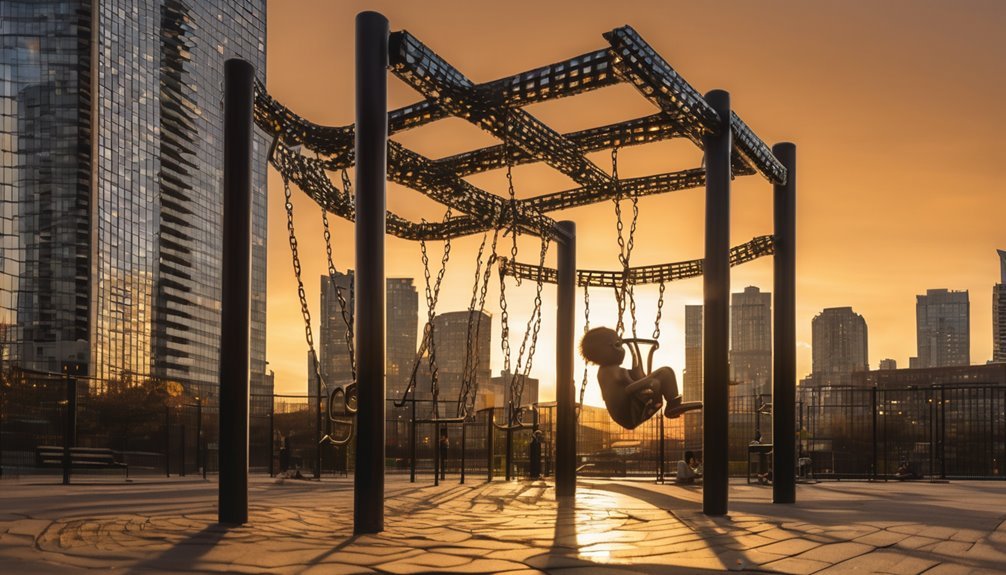
Urban spaces are embracing agility stations as a compact, multi-use solution that fits dense environments. You’re noticing a shift where these installations double as physical hubs and social connectors, aligning with contemporary urban design. The trend isn’t random: modular, scalable setups simplify zoning, reduce costs, and invite inclusive participation in public spaces. You’ll see stations positioned near transit nodes, courtyards, and pedestrian corridors, maximizing exposure and footfall. Design emphasis prioritizes safety, accessibility, and intuitive use, so people of varying abilities feel welcome. The benefit isn’t just motion; it’s place-making that signals belonging. As cities rethink idle curb space, agility stations become a measurable asset for health, grip on community vitality, and everyday interaction within urban design ecosystems. Public spaces evolve toward practical, sociable infrastructure you can trust.
How Monkey Bars Build Coordination Across Ages
Monkey bars aren’t just a kid-friendly fixture; they map a clear arc of coordination that spans ages. When you engage them, you’re negotiating grip, timing, and body control in real time, building a shared language of movement. Across age groups, these stations reveal cross age benefits: beginners gain confidence from visible progress, while older participants refine planning, sequencing, and fluidity under pressure. You notice how transitions—swing, reach, drop, regrasp—create a pattern that translates to daily tasks and teamwork. The trend isn’t spectacle; it’s scalability. As facilities diversify, you can tailor challenges to your comfort level, then incrementally raise the bar. You belong to a culture that values adaptive, inclusive play, where monkey bars coordination becomes a social and physical common ground.
The Science Behind Grip Strength and Core Stability
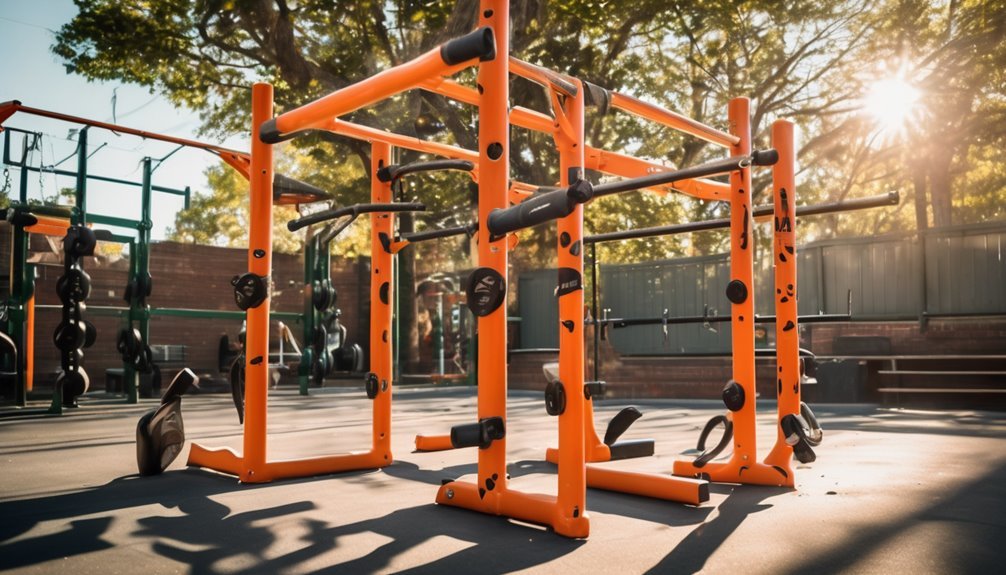
Grip strength and core stability aren’t just fitness buzzwords—they’re the backbone of functional performance on monkey bars and beyond. You’ll notice grip endurance and core activation drive smoother transitions, safer holds, and consistent momentum through sequences. Mechanically, a strong grip reduces forearm fatigue, while a stable core minimizes energy leaks during both pull and swing phases. Training focus shifts toward neural efficiency, not just raw force, so you can sustain contractions under fatigue and maintain precise kinematics under load. Below is a quick comparison to frame the idea:
| Grip-focused cues | Core-focused cues |
|---|---|
| Squeeze, release, repeat | Brace, stabilize, rotate |
| Finger endurance | Anti-extension control |
| Ropes, bars, chalk | Planks, hollow holds, anti-rotations |
| Tempo consistency | Breath-m synchronized stability |
| Fatigue management | Spatial awareness |
Designing Accessible and Inclusive Setups
Designing accessible and inclusive setups means removing barriers to participation whereas preserving challenge. You’ll design with inclusive access in mind, prioritizing straightforward navigation, visible cues, and modular layouts that scale with ability. The trend favors adaptability over one-size-fits-all, so you’ll deploy adaptive equipment that supports varied grips, speeds, and heights without diluting effort. Think universal pathways, low-threshold entry points, and clear, multilingual signage that respects diverse participants. You’ll balance safety with autonomy, using fall protection, labeled zones, and intuitive color coding to reduce hesitation. Data-backed customization helps you tailor stations to different ages and needs, fostering belonging rather than stigma. This approach centers on participation first, performance second, ensuring everyone can contribute, learn, and enjoy the shared challenge.
Implementing Agility Drills in Schools and Workplaces
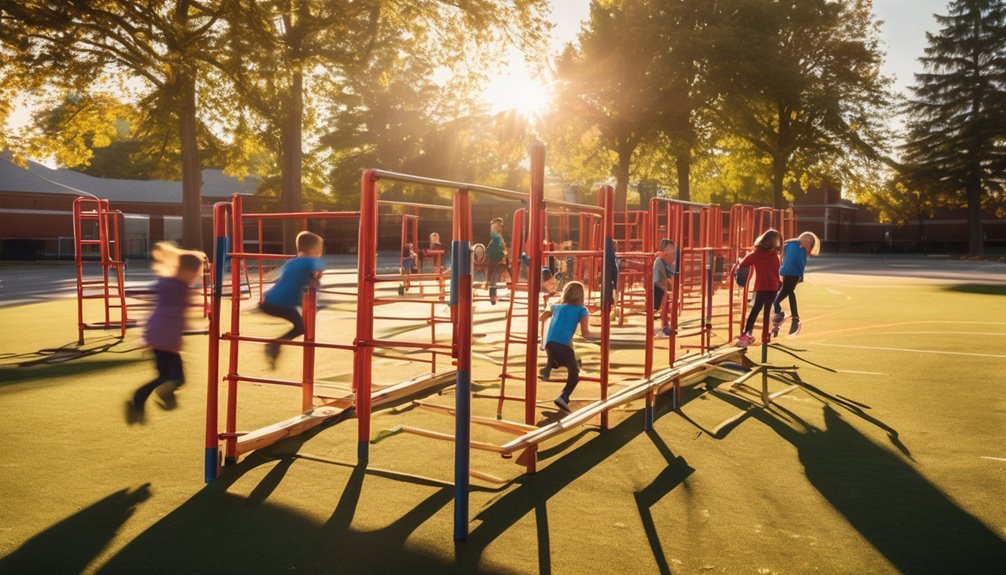
Integrating agility drills into schools and workplaces hinges on scalable, evidence-based formats that match participants’ needs and schedules. You’ll prioritize short, modular sessions, clear instructions, and accessible equipment to foster inclusion and momentum across roles. Pair drills with brief warm-ups and debriefs to reinforce technique, safety, and social cohesion. Emphasize exercise etiquette and injury prevention from the start, modeling respect for space, pace, and limits. Use a rotating schedule that avoids bottlenecks and supports varied literacy levels.
| Column 1 | Column 2 | Column 3 |
|---|---|---|
| Short sessions | Clear cues | Inclusive progressions |
| Rotating slots | Practical demos | Feedback loops |
| Quiet zones | Demonstration videos | Peer coaching |
Safety Practices and Progression for Longevity
Safety-first progressions set the baseline for longevity, ensuring you build skill without sacrificing joints or confidence. You’ll see that mastering technique and controlled loading—not just repeating reps—drives lasting safety and performance. Regular equipment checks and clear inspection routines underpin trusted use and consistent advancement.
Safety-first Progressions
Could a phased, safety-first approach keep agility-station workouts sustainable for years to come? You’ll structure progressions around risk assessment and injury prevention, not intensity alone. Begin with clear thresholds: grip, shoulder load, and core control. Use gradual exposure, built-in rest, and objective checks before advancing. Monitoring feels communal—coaches, peers, and you, aligned on shared goals. Prioritize predictable patterns over flashy drills to reduce surprises and burnout. Documented progressions foster belonging: you’re growing with others, not racing ahead. This trend favors longevity through smart pacing, quantifiable milestones, and constant feedback loops.
| Phase | Focus | Guardrails |
|---|---|---|
| 1 | Baseline control | Stop-if-pain, form check |
| 2 | Loaded basics | Reduction, tempo adjustments |
| 3 | Moderate exposure | Recovery days, risk-flag criteria |
| 4 | Skill integration | Spotting, progress records |
| 5 | Maintenance | Periodic risk assessment, injury prevention audits |
Longevity Through Technique
Is longevity the real payoff of careful technique? Yes, and you’ll feel it in every session. Longevity comes from deliberate, progressive practice that respects joint health, grip patterns, and tissue loading. You’ll optimize technique before intensity, reducing setback risk and extending your usable years on the bars. Prioritize controlled drills, tempo, and posture to build durable capacity rather than chasing flashy feats. Creative licensing lets you adapt progressions to your body, tailoring challenges without compromising safety. Recognize budget constraints as a design constraint: you can stage scalable progressions, use simple cues, and document gains to sustain motivation. The trend favors sustainable consistency over sudden, high-stress bursts, fostering a community vibe where members support steady improvement and long-term involvement.
Equipment Inspection Practices
Regular equipment inspections are the backbone of longevity on the bars, blending safety with steady progression. You’ll want a disciplined routine that minimizes downtime and maximizes confidence in every move. Start with a practical approach: schedule checks after heavy sessions, and document findings so teammates share accountability. Focus on wear, looseness, and corrosion that could compromise grip or stability. Your inspection checklist should cover fasteners, pivot points, mats, and anchor points, plus ropes or chains for frays. Prioritize immediate fixes for urgent faults, and tiered maintenance for less critical wear. This habit builds trust in the community, signaling you value safety as a shared standard. By integrating equipment maintenance into your cycle, you sustain progress without sacrificing belonging or performance.
Maximizing Engagement: Keeping Communities Coming Back
Original Text:
Harnessing momentum matters: what keeps communities returning to agility stations is a mix of accessible design, ongoing novelty, and measurable progress. You’ll see engagement rise when stations are intuitive to use, with clear cues and safe, scalable challenges that invite frequent visits. Pair new routines with predictable milestones—badge-like progress, social shoutouts, or friendly challenges—to reinforce belonging. Track participation trends, not just counts, and adjust gear lifecycles to sustain interest: rotate modules, refresh layouts, and spotlight user-generated routines. Prioritize inclusive options that welcome beginners and veterans alike, reinforcing community engagement through shared goals. A well-managed equipment lifecycle reduces downtime, preserving momentum. When consistency meets surprise, members stay longer, invite others, and transform fitness into a persistence, social habit.
Frequently Asked Questions
How Do Monkey Bars Improve Mental Resilience Alongside Physical Skills?
Monkey bars build mental resilience by forcing focus, risk assessment, and deliberate pacing, whereas you master each swing. You’ll notice anxiety drops when you push through moments of uncertainty, strengthening coping strategies that transfer to daily challenges. Agility stations sharpen skill transfer, linking balance, grip, and sequencing to broader tasks. You’ll feel connected to a community that values growth, turning workouts into shared, trend-aware routines you can genuinely belong to.
What Is the Cost Range for Safe, Modular Agility Setups?
The cost range for safe, modular agility setups typically runs from $1,500 to $8,000, depending on material, add-ons, and installation. You’ll want modular safety features like cushioned landing zones and secure anchoring. As trends evolve, you’ll find scalable systems that grow with your needs, making it easier to belong to a fitness-minded community. Budget strategically, compare warranties, and prioritize safety ratings to maximize long-term value and peace of mind.
Can Adults With Limited Mobility Use Agility Stations Effectively?
Yes, adults with limited mobility can use agility stations effectively with adaptive coaching and accessibility design. You’ll focus on gradual progressions, supported grips, and adjustable heights, making movements feel achievable. By using adaptive coaching, you’ll tailor sessions to your range of motion while preserving safety and motivation. The trend favors inclusive fitness, so you’ll join a community that values progress and belonging, not perfection. Keep evaluating equipment needs and celebrate small wins along the way.
Which Age Groups Benefit Most From Regular Practice?
You’ll find that kids and adults up to midlife benefit most from regular practice, especially when you consider social emotional gains and peer support. As you train, you observe improved balance and confidence across ages, with frequent newcomers and seasoned users driving momentum. You’ll see a sense of belonging grow as you sharedly troubleshoot, cheer each other on, and build routines. In short, varied age groups gain resilience, social skills, and motivation from consistent, supported practice.
How Do You Measure Progress Beyond Distance or Time?
You measure progress beyond distance or time by tracking novel progress across skills, not just speed. Observe consistency, form, and adaptivity—how you handle obstacles, momentum, and control under fatigue. Use simple data tracking: note repetition quality, obstacle variety completed, and pacing changes over sessions. Look for qualitative shifts, like smoother transitions and fewer drops. This trend-aware approach makes you feel part of a community, seeing tangible improvements beyond numbers.