
Montessori-style play equipment at home supports your child’s independence by offering low-height, clearly organized materials that invite self-directed exploration. You’ll see improved concentration as kids tackle purposeful tasks with predictable steps and immediate feedback. Real-life skills—such as practical routines and problem-solving—surface through repeated, meaningful activities. Simple, durable tools reduce clutter and promote safe, autonomous play. The design emphasizes accessibility and safe boundaries, helping curiosity stay focused. If you keep exploring, you’ll uncover how these setups foster lifelong learning habits.
Building Independence Through Self-Directed Play
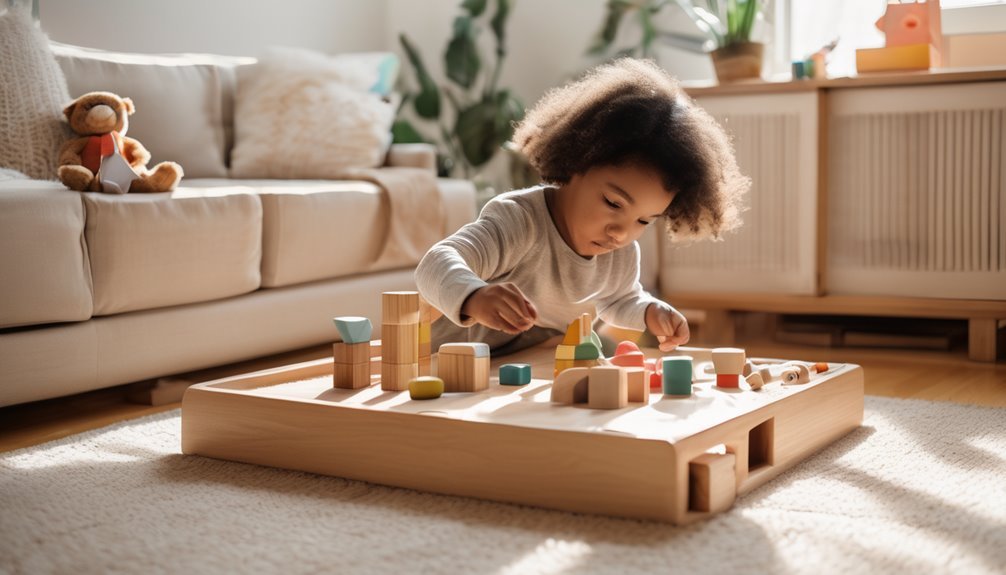
Independent play helps kids develop autonomy by choosing activities, managing time, and guiding their own learning. You’ll notice that self-directed exploration builds confidence as children test ideas, revisit tasks, and reflect on outcomes. In a home setup, provide low-pressure options that invite choice: simple role-play props, tactile materials, and open-ended puzzles. When you curate accessible materials at child height, you encourage independence through play and reduce reliance on prompts. Research highlights that self-directed exploration supports executive function, problem-solving, and intrinsic motivation. Your role shifts from director to facilitator—observe, ask open-ended questions, and resist over-structuring. A calm environment with clear routines helps kids anticipate what comes next, reinforcing responsible autonomy while preserving a sense of belonging within the family learning community.
Fostering Concentration With Purposeful Materials
Crafting meaningful focus at home hinges on selecting materials that invite sustained attention without overwhelming young learners. You’ll notice that purposeful tools support concentration routines by offering clear, achievable steps and immediate, tangible feedback. Use materials with distinct sequences, predictable outcomes, and minimal distractions to guide your child toward focused attention strategies that feel achievable and safe. Start with small, inviting tasks—sorting, pouring, threading—that invite repeated, mindful practice. Rotate sets to prevent boredom while preserving consistency. Observe how patience, repetition, and personal interest strengthen engagement without coercion. Comments that celebrate effort, not perfection, reinforce intrinsic motivation and belonging. Document progress gently, adjusting complexity as attention grows. This deliberate curation helps you cultivate steady focus, confidence, and a shared sense of purpose in learning.
Real-Life Skill Practice in a Home Setting
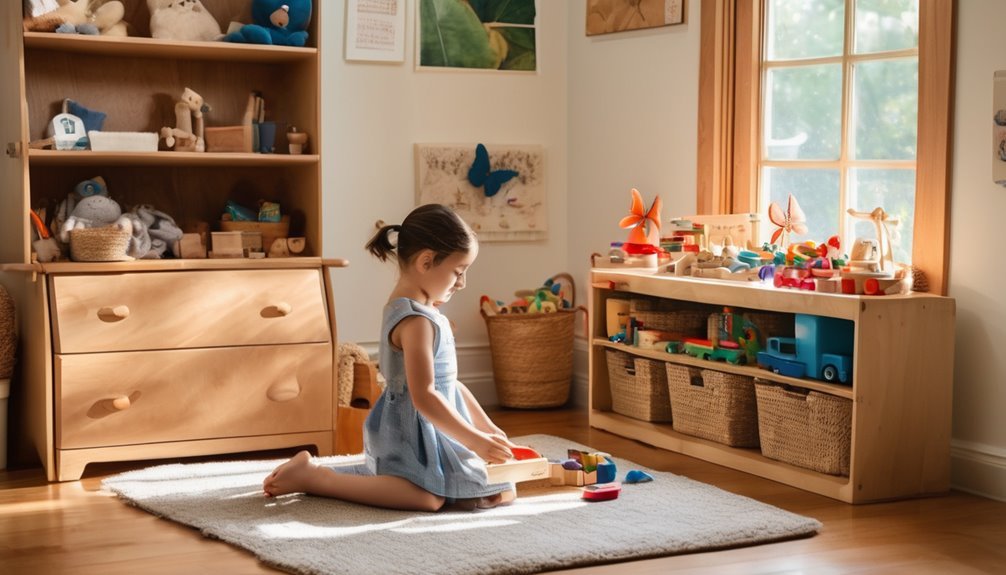
Real-life skill practice in a home setting helps children apply Montessori-inspired routines to daily tasks, reinforcing independence and purposeful learning. You’ll notice benefits across the home as tasks become more predictable, razv? (No, keep simple) Real-Life Skill Practice, Home-Setting Skill Benefits, and Montessori-Inspired Daily Tasks all intersect to build confidence, fine-motor control, and executive functioning through practical, repeatable activities. This discussion starts with how simple, well-prepared daily chores and self-care tasks translate into meaningful learning moments at home.
Real-Life Skill Practice
Real-life skill practice at home helps kids transfer classroom learning into daily routines, building independence and confidence through meaningful, hands-on tasks. You’ll see progress when activities align with real needs, like pouring with labeled jugs, sorting objects by size, or setting a simple table for meals. Real life practice supports motor control, executive function, and purposeful attention, while inviting curiosity through real materials and clear expectations. You guide without over-direction, offering prompts that encourage independent exploration and problem-solving. Build routines that rotate materials, track small successes, and celebrate effort. Involve family members by naming steps aloud and modeling calm, deliberate pacing. This approach reinforces practical competence, fosters belonging, and helps your child see learning as part of everyday life.
Home-Setting Skill Benefits
Home-setting skill benefits arise when real-life practice is embedded in daily routines, helping kids transfer classroom learning into practical tasks at home. When you include Montessori-style play equipment in daily spaces, you support autonomy through simple, repeatable chores and self-care activities that feel meaningful. This approach cultivate independence milestones by guiding kids to plan, initiate, and complete steps with gentle, ongoing feedback. With consistent practice, you notice more focused concentration during tasks, as kids become confident perimeters—cleaning, sorting, measuring, and tidying—within a supportive environment. The emphasis stays practical and collaborative, reinforcing belonging as you share purposeful moments together. Over time, these home-based routines build reliable skill transfer, reinforcing resilience, self-regulation, and a sense of competence that extends beyond play.
Montessori-Inspired Daily Tasks
Montessori-inspired daily tasks bring real-life skill practice into everyday routines, making learning truly applicable at home. You’ll notice how simple chores become meaningful lessons when you frame them as purposeful work. By guiding children through tasks like dressing, kitchen prep, and tidying, you support autonomy and confidence, essential for independence milestones. Establish clear steps, predictable sequences, and a calm pace to foster concentration routines that feel achievable rather than overwhelming. Use real materials and age-appropriate tools to enhance tactile learning and pride in personal effort. Consistency matters: regular practice helps children anticipate outcomes, internalize judgment-free timelines, and reflect on progress. When tasks align with daily rhythms, learning becomes collaborative, inclusive, and rewarding, reinforcing belonging within your home learning community.
Encouraging Exploration and Problem-Solving
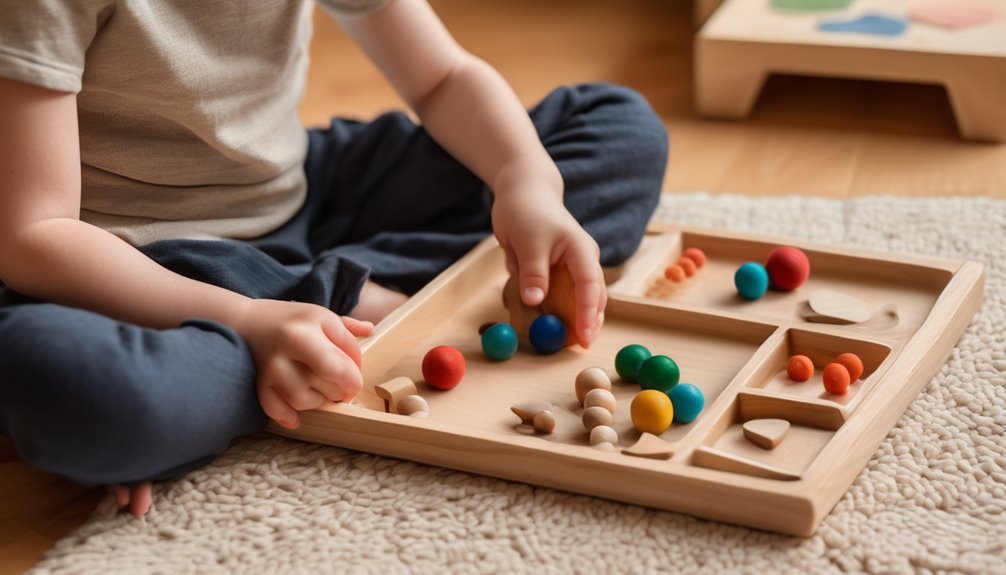
Encourage curiosity by offering open-ended materials and opportunities to experiment, letting kids test ideas, make predictions, and revise strategies as they play. You’ll notice exploration prompts invite deliberate thinking, guiding rather than directing. Provide varied textures, sizes, and mechanisms—water, ramps, blocks, mirrors—so children control the pace and direction of inquiry. When they encounter a mismatch or failed attempt, celebrate the process, not just the outcome, and pose gentle questions to deepen reasoning. Structured problem solving challenges—poured with careful scaffolds—support persistence and confidence, helping kids articulate hypotheses and compare outcomes. Regularly reflect with them on what worked, what didn’t, and why, reinforcing a growth mindset. This approach honors belonging by validating curiosity as a shared, collaborative journey.
Simplicity and Accessibility in Montessori Design
Simplicity and accessibility shape Montessori design, guiding you toward materials and setups that are easy to recognize, use, and adapt at home. By favoring straightforward, low-cost options that support independent exploration, you create a home learning environment that stays true to Montessori principles. This practical approach emphasizes purpose, durability, and clear, hands-on cues that help children focus and self-direct their activities.
Simple, Accessible Design
Simple, accessible design means equipment that’s easy to assemble, safe to use, and flexible enough to adapt as a child grows. You’ll find that simple design supports confidence, limits overwhelm, and invites ongoing exploration. Prioritize pieces built from accessible materials, with sturdy joints and rounded edges, so you feel confident in daily use. The approach centers on child led play, letting curiosity steer activities while adults provide safe boundaries. Favor practical life activities that build pouring, scooping, threading, and sorting skills, then scale complexity as abilities develop. Design should be modular and low-height, enabling independent access and choice. Clear labels and simple transitions reduce setup time, reinforcing autonomy. This approach fosters belonging by honoring a child’s pace and curiosity within a thoughtful, warm home learning space.
Montessori-Style, Home Focused
Montessori-style design for home use centers on clear, accessible setups that invite independent exploration while supporting safe, guided engagement. In a home setting, a montessori style approach emphasizes routines, labeled shelves, and purposeful activity choices that honor child autonomy. You’ll find materials sized to little hands, with real-world relevance that invites repetition and mastery. Aim for modular, easily rearranged spaces that reduce clutter and foster focus, so children feel a sense of belonging within a shared environment. Research highlights the value of self-directed work, guided observation, and age-appropriate challenge in development. By prioritizing simple, durable tools and predictable routines, you create a home focused environment where curiosity thrives and independent learning becomes a natural habit.
Long-Term Benefits for Lifelong Learning
So, how do Montessori-style play setups at home influence lifelong learning? You’ll notice that these spaces cultivate independence minded habits, curiosity, and sustained focus, all foundational for lifelong learning. Regular, self-directed exploration builds confidence in problem solving, resilience, and reflective thinking. Over time, children transfer these skills to school, work, and social settings, reinforcing a learner identity that values growth. The long-term benefits accumulate as curiosity frames how you approach challenges, embrace new information, and collaborate with others. By design, home setups invite safe risk-taking, purposeful repetition, and meaningful choices, supporting enduring engagement. Below is a simple table to visualize components that reinforce lifelong learning.
| Skill focus | Behavior cue | Outcome |
|---|---|---|
| Independence | Choice-making | Autonomy |
| Curiosity | Questioning | Inquiry habits |
| Persistence | Repetition | Mastery development |
Frequently Asked Questions
How Do I Choose Age-Appropriate Montessori Play Equipment?
Choosing age-appropriate Montessori materials means matching developmental stages to sturdy, engaging options, like simple manipulatives vs. complex puzzles. You’ll compare textures, sizes, and independence cues, ensuring safety and belonging during observing your child’s curiosity and growth.
What Safety Features Are Essential for Home Montessori Toys?
Safe materials and a non toxic design are essential for home Montessori toys; you’ll want sturdy construction, rounded edges, and no small parts. Check certifications, replace worn pieces, and supervise play to create a trustworthy, belonging-filled environment.
Can Montessori-Style Play Support Social Skill Development at Home?
Yes, Montessori-style play can support social skill development at home; it fosters social emotional growth and peer interaction, like a bridge between kids. You’ll observe calmer collaboration, turn-taking, and empathy as routines become predictable and inclusive.
How Much Space Is Needed for Effective Montessori Play Setups?
You’ll need a flexible space roughly 20–40 square feet per setup to allow safe, independent exploration. Prioritize low, accessible shelves and open floor area. Space efficiently with modular stations; focus on space requirements and setup optimization to belong.
How Do I Balance Screen Time With Montessori Materials?
You should balance screen time with hands-on Montessori materials by establishing a balanced routine, mixing digital activities with tactile, real-world tasks. Include outdoor options, short screen intervals, and purposeful transitions to cultivate belonging, focus, and practical problem-solving.