
Design age-appropriate play zones by evaluating space with a multi-generational lens, prioritizing safety, accessibility, and clear wayfinding. Create flexible zones with modular, durable furnishings that grow with kids—from toddling explorers to teens seeking autonomy. Use distinct, labeled areas that support toddler exploration, preschool collaboration, and older kids’ problem-solving, all while maintaining supervision. Apply consistent routines, sightlines, and quiet spaces for focus. If you keep exploring, you’ll uncover practical steps to implement these transitions smoothly.
Understanding Age-Specific Play Needs in Housing Communities
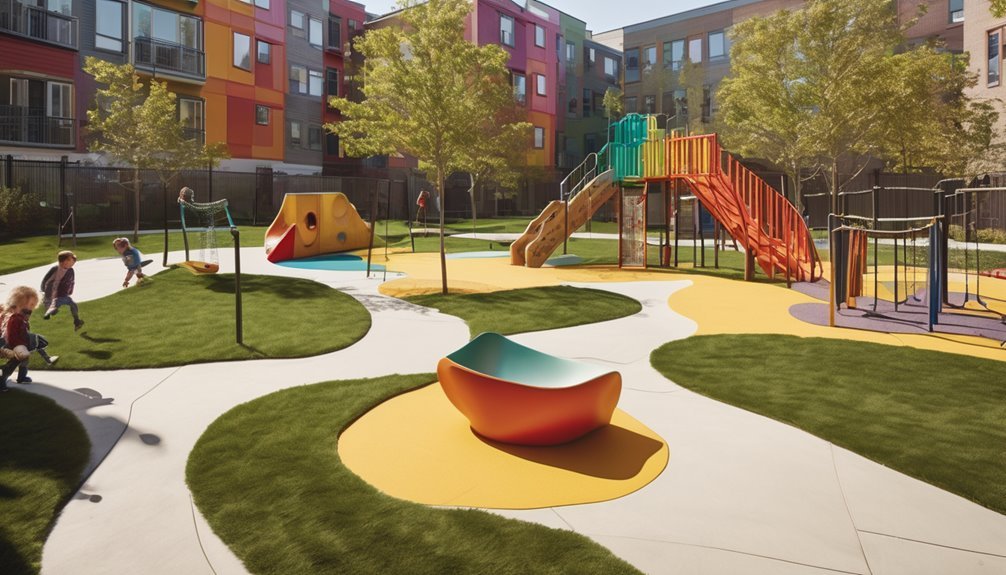
Understanding age-specific play needs in housing communities requires recognizing how children’s interests, physical abilities, and social skills evolve across stages. You’ll notice toddlers seek exploration and safety, preschoolers crave social play and simple challenges, school-aged kids want structured activities and peer interaction, and teens pursue autonomy with space for self-directed projects. Your approach should map these transitions to practical spaces, guiding how environments feel welcoming and inclusive. Consider how routines and observer feedback shape participation, and how small adjustments can expand engagement for diverse abilities. When planning, balance variety with clarity, so families feel seen and supported. Remember to document preferences and progress, and to plan with mindful resource use. Playground budgets and material sourcing matter for sustainable, equitable access to all ages.
Assessing Space and Safety for Multi-Generational Use
Building on the insights about how play needs shift across ages, the focus here is to evaluate how spaces can support families that include toddlers through teens. You approach space evaluation with a mixed-age lens, seeking zones that reduce friction between activities and generations. Observe sightlines, acoustics, and surface materials to minimize hazards while enabling supervision and autonomy. Implement clear wayfinding, inclusive seating, and adaptable furniture so residents feel seen and capable. Safety protocols should address common multi-gen scenarios: accessible routes, gated transitions, appropriate playground equipment, and quiet spaces for focused tasks. Prioritize evidence-based standards, routine maintenance, and responsive reporting channels. Your goal is to foster belonging by ensuring environments are predictable, engaging, and safe for every age within the household.
Creating Flexible Zones That Grow With Children
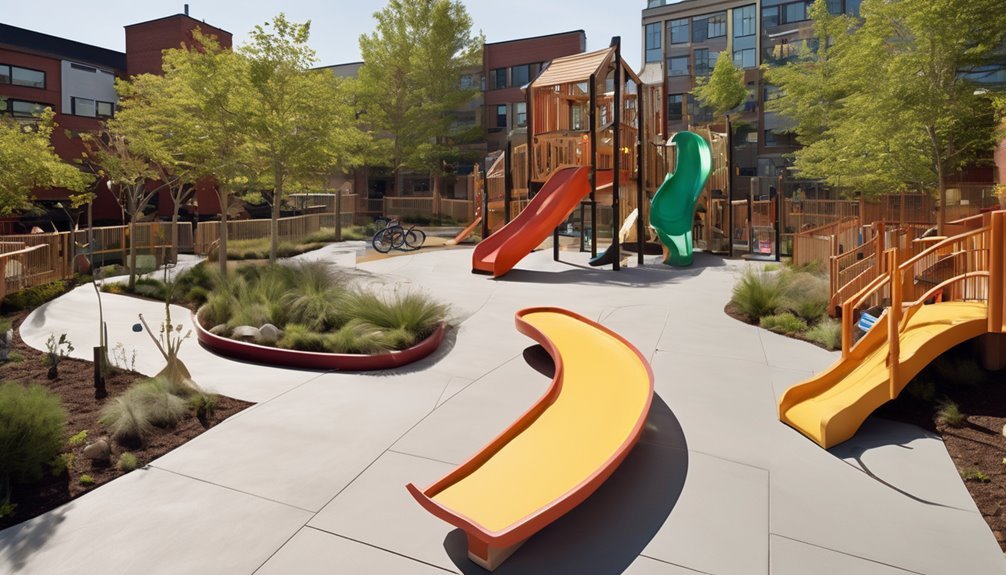
Flexible zones should evolve with children’s changing interests and abilities, so spaces stay usable from toddlerhood through adolescence without costly reconfigurations. You’ll design with flexible zoning and scalable materials that adapt as skills grow, reducing the need for frequent renovations. Ground rules center on supervision, accessibility, and inclusivity, ensuring all ages feel a sense of belonging. Use modular furnishings, adjustable layouts, and durable finishes that endure years of use. Encourage layered challenges: simpler pathways for toddlers, more complex routes for teens. Regularly reassess goals with families to align spaces with evolving play and learning needs. The result is a community asset that grows with you, supporting healthier development and stronger bonds.
| Zone Type | Required Features | Growth Indicators |
|---|---|---|
| Moveable play | Lightweight, modular pieces | Rolling, reconfigurable |
| Quiet corners | Flexible seating, acoustics | Age-appropriate comfort |
| Active hubs | Durable flooring, scalable equipment | Varied intensity use |
Designing Toddler-Friendly Features and Transitions
Designing toddler-friendly features and transition means shaping spaces that invite exploration while supporting safe, age-appropriate growth. You’ll design zones that balance curiosity with clear boundaries, enabling independent movement without overwhelming sensory input. Implement toddlerproofing strategies that reduce hazards, designate low-height storage, and use soft edges to minimize injury risk. Introduce distinct, reachable play shelves, cushioned mats, and stable furniture that children can navigate confidently. Transitions should feel predictable: consistent layouts, color cues, and simple, labeled pathways guide movement between activities. Prioritize sensory exploration by offering varied textures, smells, and visuals at toddler level, then gradually expand choices as skills mature. Regularly observe routines, invite caregiver feedback, and adjust features to reflect evolving developmental milestones, fostering belonging through responsive, age-appropriate environments.
Engaging Preschoolers and Early School-Age Kids
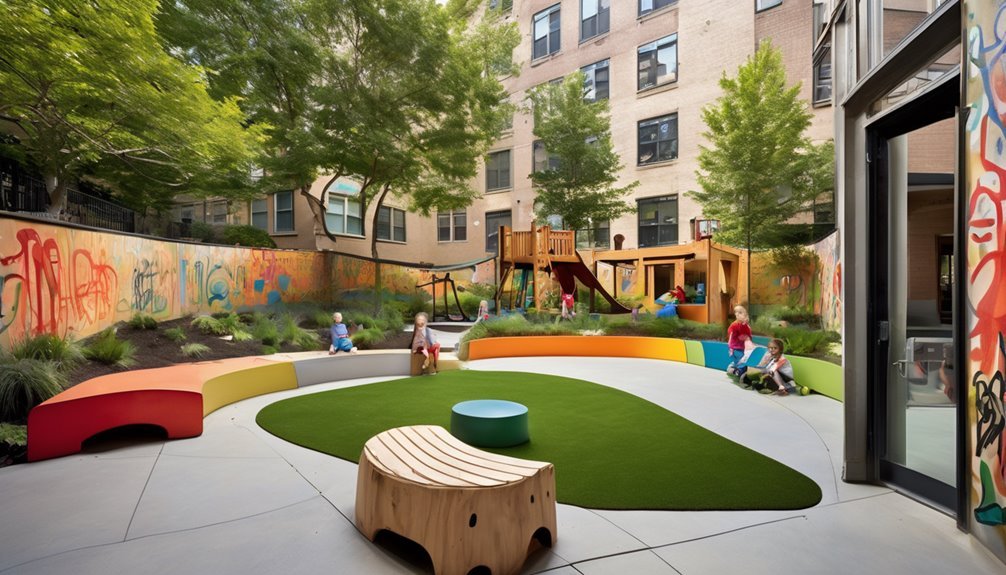
How do we create play spaces that captivate preschoolers and early school-age kids during safety and development? You’ll shape environments that nurture curiosity while supporting motor and social growth. Observing children helps tailor features to diverse interests, from confident climbers to curious quiet learners. Relationships驱e as you guide, not dictate, so participation feels belonging-based and responsive. Embrace playful literacy and outdoor exploration as core practices, weaving storytelling, early numeracy, and tactile, nature-rich elements into daily routines.
- Design modular activities that scale with skill
- Integrate cozy corners for collaborative play
- Include accessible, labeled outdoor stations
- Rotate materials to sustain novelty and challenge
Building Collaborative Spaces for Older Children
As kids move into older elementary and preteen years, spaces that support collaboration become the backbone of social and project-based learning. You’ll design zones that invite joint problem-solving, peer feedback, and collective decision-making, anchored by predictable routines and clear expectations. In these areas, collaborative signage guides roles, timelines, and agreed norms, reducing ambiguity and fostering responsibility. Shared planning sessions become a regular practice, with accessible materials, whiteboards, and modular seating that adapt to group size and tasks. You’ll emphasize inclusive entry points, so every child can contribute, feel valued, and see progress. The result is a network of safe, welcoming spaces where belonging drives motivation, peer mentoring strengthens skills, and the environment visibly supports cooperative achievement.
Teen-Friendly Areas That Encourage Supervised Autonomy
You’ll explore how Supervised Autonomy Zones can balance safety with teen independence, using teen-friendly supervision tools that support responsible choice. By centering teens’ perspectives, we’ll examine how Safe Independence Playplaces promote gradual autonomy while ensuring clear adult oversight. This discussion will spotlight practical layouts and protocols that foster development, trust, and sound judgment without added risk.
Supervised Autonomy Zones
Could teens benefit from spaces that balance freedom with oversight? You’ll explore supervised autonomy zones as intentional, teen-friendly environments that foster responsibility within safe boundaries. In these zones, you test independence while a trusted observer remains readily available, guiding decisions and reinforcing growth. Your approach centers on collaboration, safety budgeting, and clear policy framing to reduce ambiguity and increase belonging.
- Define clear entrance rules, objectives, and escalation steps.
- Install adaptable cues and lighting that support self-regulation and safe risk-taking.
- Schedule periodic check-ins to align with evolving teen needs.
- Encourage peer-led stewardship, with adult mentors providing reflective feedback.
These zones illuminate developmental milestones, showing you can balance autonomy with support. Subtopic: supervised autonomy zones ideas.
Teen-Friendly Supervision Tools
What practical tools best support teen supervision without stifling independence? You assess needs, preferences, and safety realities to choose practical options. Teen-friendly supervision relies on clear boundaries, open communication channels, and adjustable monitoring that respects autonomy. Utilize digital check-ins, location-aware apps, and agreed-upon check-in schedules to support responsible decision-making without micromanaging. Multi age supervision can be facilitated by rotating supervision roles among trusted older youths and adults, fostering peer accountability while ensuring adult presence in common areas. Documented guidelines, incident reporting, and accessible escalation paths empower you to respond consistently. Emphasize collaboration: feedback loops, problem-solving sessions, and adaptive routines build trust and belonging. When implemented thoughtfully, teen friendly supervision supports growth, safety, and a sense of community within housing societies.
Safe Independence Playplaces
Safe independence playplaces are designed to balance exploration with supervision, supporting teens’ autonomy while ensuring safe, structured environments. You’ll create teen-friendly zones that blend challenge with oversight, fostering belonging and responsible decision‑making. Empirical observations guide layout, traffic flow, and supervision staffing, ensuring predictable routines that teens trust.
- Define playground zoning that separates active, social, and quiet areas, reducing risk while preserving interaction.
- Implement visible sightlines, clear wayfinding, and modular equipment adaptable to skill levels.
- Require safety certifications for every surface, structure, and activity, with regular audits and maintenance.
- Establish supervised autonomy protocols, including check-in options, consent-based supervision, and incident reporting.
This approach supports developmental needs, respects individuality, and reinforces community ownership.
Ensuring Accessibility, Inclusion, and Universal Access
Ensuring accessibility, inclusion, and universal access isn’t optional—it’s foundational to every housing society’s design brief. You’ll assess pathways, signage, and play equipment through a user-centered lens, prioritizing smooth transitions between age zones. In practice, inclusive infrastructure means low-threshold entries, tactile cues, and clear sightlines that empower you to navigate confidently with strollers, wheelchairs, or limited mobility. Universal access isn’t a single feature but an ongoing standard—bench heights, transfer zones, and adaptable play surfaces that invite participation across abilities. Your engagement should be iterative: test with families, observe usage, and refine layouts to reduce barriers. The goal is a welcoming environment where belonging drives day-to-day choices, not compliance, enhancing social interaction and development for every child and caregiver.
Planning for Longevity, Maintenance, and Community Involvement
How can a design that lasts be planned, maintained, and enriched by neighbors over time? You’ll shape a resilient space through clear ownership, ongoing checks, and shared rituals that empower everyone. Your focus on inclusive design and gender neutral playgrounds helps every child feel welcome, while fault-proof materials ease upkeep. Here’s a simple plan you can apply:
A resilient, inclusive space built by neighbors through clear ownership, regular checks, and shared rituals.
- Establish a maintenance schedule with resident volunteers and easy task rotas.
- Create a feedback loop to identify wear, safety issues, and new needs.
- Budget community funds for repairs, upgrades, and inclusive equipment.
- Organize quarterly gatherings to celebrate improvements and reinforce belonging.
Together, you cultivate a space that grows with your community, remains safe, and invites lasting participation.
Frequently Asked Questions
How Can Noise Levels Be Balanced Across Age Groups?
You balance noise by implementing noise zoning and acoustic planning, tailoring zones to activity and age, monitoring feedback, and iterating designs so you feel heard, supported, and confident in a harmonious, inclusive environment for every resident.
What Budget Ranges Are Realistic for Multi-Age Zones?
Start with practical ranges: realistic budgets vary, but you might aim for $50k–$150k per multi age zoning area, plus phased upgrades. You, as planner, track budget planning, cultivate belonging, and adjust to developmental milestones empirically.
How Do We Handle Supervision Without Over-Surveillance?
You should balance supervision models with trust, using clear roles and flexible shifts, while honoring community norms and individual needs to prevent over-surveillance and foster belonging, safety, and development across ages.
Which Materials Support Long-Term Durability and Safety?
Like a sturdy heartbeat, you’ll choose durable surfaces and slip resistant materials. You’ll develop sustainable playgrounds with modular safety, prioritizing longevity and safety, so you feel you belong, and your community trusts the evidence-backed durability choices.
How Can Users Provide Ongoing Feedback to Designers?
You create user feedback loops to designers, so your input guides ongoing improvements. You’ll see dynamic design adjustments reflect your experiences, supporting empirical, client-centered progress and a sense of belonging as play zones evolve with community needs.