
Space-saving play equipment for compact Bangalore campuses turns every inch into learning and fun. You’ll use modular, fold-away designs that tuck into walls or under benches, unfolding quickly for bursts of activity near classrooms. Multi-use gear doubles as gym, lab, and play space, while sturdy, durable cores withstand heavy use. Outdoor-In ideas blend nature and rotation for calmer, inclusive spaces. Curious how to make it all fit your schedule and budget? You’re about to uncover more.
Innovative Modular Playframes for Small Campus Spaces
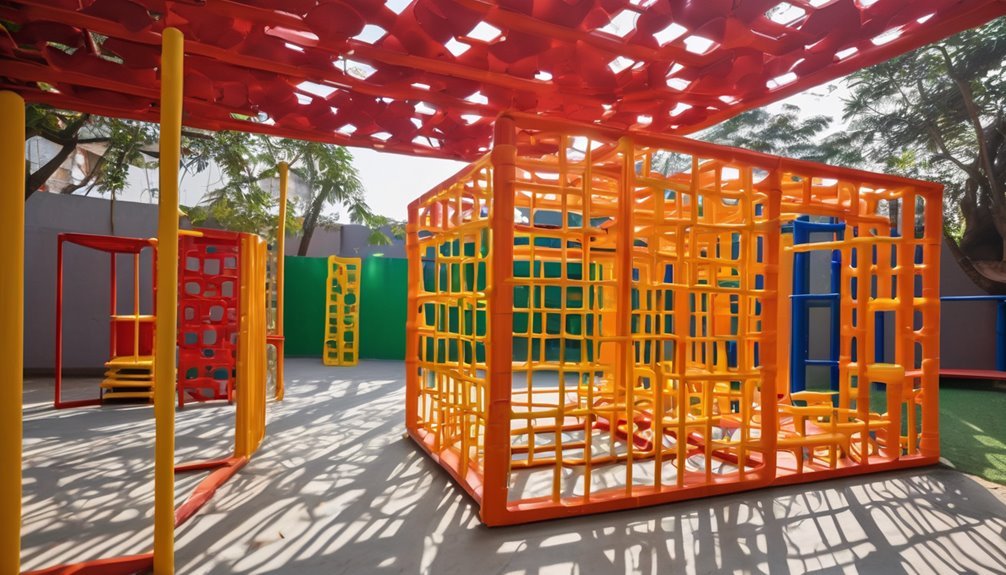
Could modular playframes really transform a tiny Bangalore playground? You’re stepping into a world where space isn’t a limit but a puzzle to solve. Envision innovative modular systems that snap together, adapt, and grow with your students. You’ll find compact playframes designed to maximize height and variety without crowding the ground. Each piece fits a purpose—climbs, spirals, tunnels—so little hands can explore freely, safely, and with confidence. You’ll appreciate clean lines, bright accents, and adjustable configurations that invite collaboration, sharing, and belonging. With modular parts, maintenance stays simple, parts are replaceable, and upgrades feel natural. The result: a welcoming, dynamic space where kids lead the play, neighbors notice, and your campus becomes a confident hub for creative, cooperative learning.
Fold-Away and Space-Saving Equipment Designs
Ever wished a playground could vanish when the bell rings but reappear just as kids race out? Fold-away and space-saving designs let you keep play near classrooms without crowding footprints. You’ll love clever, lightweight mechanisms that tuck equipment neatly into walls, corners, or under benches, then unfold in seconds for active bursts. Think modular panels, retractable nets, and compact climbers that scale down when not in use, yet stay inviting when you need them. Your students feel ownership through visible, accessible options that fit your schedule and space. Focus on practical, durable choices you can trust. Start with conceptual sketching to map flow, then lock in material sourcing that balances safety, cost, and local availability. The result is welcoming, efficient play that belongs to everyone.
Multi-Use Apparatus for Versatile Activity
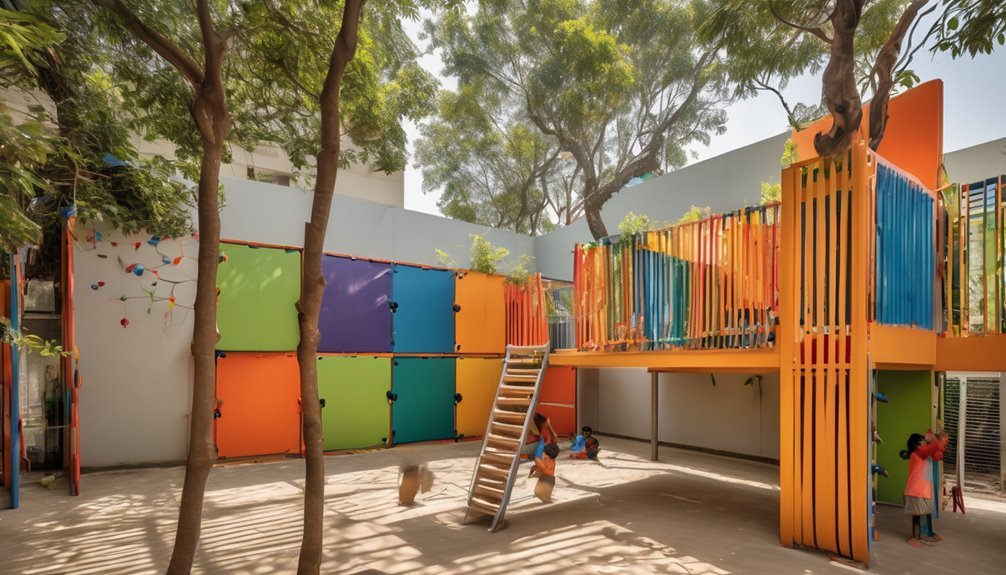
Think of multi-use apparatus as a single, adaptable toolkit that unseals a week of activity from a single footprint. You’ll discover equipment that doubles as gym, lab, and play space, so students move freely between games, math, and storytelling without rearranging rooms. Each piece is modular, stackable, and easy to store, giving you more hours in the day to unleash creativity. Involve kids in choosing configurations to boost belonging and ownership, not just usage. A concise case study shows how one campus swapped clutter for connected routines, cutting prep time and clutter while expanding options. For budget planning, prioritize durable cores, scalable add-ons, and shared storage. The payoff: safer spaces, louder enthusiasm, and an inclusive pulse across every class.
Outdoor-In Design Strategies for Urban Schools
Outdoor-In design isn’t just about surviving a tight footprint—it’s about turning every inch into a learning playground, even in busy urban yards. You’ll shape spaces that invite collaboration, curiosity, and pride in belonging, where each corner sparks discovery. Prioritize playground ergonomics by designing routes that fit small bodies, reducing fatigue, and guiding safe movement. Use material sustainability to choose durable, low-maintenance elements that respect the city’s footprint and the planet. Flexibility matters: rotate activities, reuse structures, and blend nature with play. Your urban school can feel expansive when surfaces invite footpaths, shade, and micro-nooks for quiet storytime.
1) Integrate modular stations that swap roles quickly
2) Layer vertical greenery to soften edges and teach ecosystems
3) Select recycled or responsibly sourced materials for all fixtures
Practical Planning and Budget-Friendly Options
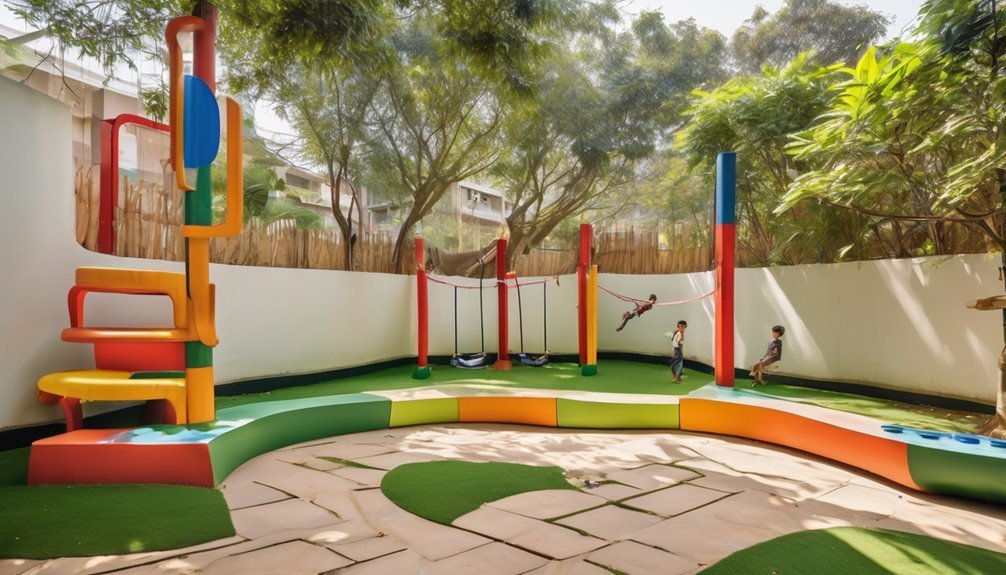
Can you stretch a budget without stretching the play? You can, with practical planning that centers on kids and community. Begin with a clear map of needs: what activities support learning, movement, and social time in tight spaces. Prioritize versatile pieces—modular kits, stackable connectors, and multi-use appliances—that adapt as cohorts grow. Seek durable, easy-to-install options that minimize maintenance and downtime, saving more on long-term urban budget. Leverage local partnerships for donations, refurbished gear, and volunteer build days, turning space optimization into a shared mission. Use scalable layouts: compact layouts that feel roomy when used in shifts, not all at once. Choose safety, flexibility, and inclusivity, so every child sees belonging in every playground corner. Budget-smart planning fuels confident, joyful play.
Real-World Bangalore Case Studies and Lessons
You’ll see how Bangalore schools reimagine tiny spaces with clever layouts and multifunction gear. These case studies show space-saving tricks that fit busy classrooms and active play, keeping kids at the center. Let’s pull out the lessons on adapting equipment, optimizing storage, and making every inch count.
Bangalore School Case Studies
In Bangalore’s tight-schoolyards, real-world case studies show how clever layout and flexible equipment turn small spaces into dynamic play zones. You’ll discover schools where every corner speaks belonging—from compact rooftops to vibrant stair landings—proving space can invite imagination without crowding. These stories share practical patterns you can adapt: modular setups, shared play zones, and clear sightlines that keep students safe and engaged. You’ll feel the pulse of a community where kids lead, teachers support, and families cheer progress. You’re not just saving space; you’re weaving opportunity into daily learning, making every meter matter.
- Scan for multipurpose zones that morph with the day’s needs.
- Repurpose corridor corridors into safe, supervised play lanes.
- Use modular pieces to reconfigure rooftops without costly overhauls.
Space-Saving Equipment Lessons
Bangalore’s tight schoolyards aren’t a limit, they’re a design brief—showing how space-saving equipment can spark big play and big learning. You’ll see classrooms swapping static routines for adaptable setups, where benches become step-stools and low ramps invite inclusive, active exploration. In real-world Bangalore cases, lessons revolve around collaboration, quick reconfigurations, and durable materials that endure daily use. You’ll learn to map two word ideas—fun focus, compact collaboration—into every corner, pairing curiosity with safety. An irrelevant pair pops up as a reminder: surprise lines the way; predictable boredom doesn’t. From outdoor corners to indoor nooks, students co-create challenges, document progress, and celebrate small victories. This approach builds belonging, ensuring every child feels seen, capable, and excited to play, learn, and grow together.
Urban School Adaptations
How did urban schools turn tight spaces into dynamic learning playgrounds? You’ll see real-world Bangalore tweaks that fit learning and play into every corner. By reimagining courtyards, corridors, and rooftops, you gain spaces that feel like belonging—even on a crowded timetable. Refurbishment challenges become opportunities when multiple uses share one surface, and furniture is modular, mobile, and kid-sized. Your budget allocation shifts toward durable, scalable solutions that grow with you, not just today’s tests. Here’s how it happens:
- Multi-use zones: splashy learning walls meet PE mats, so every inch counts.
- Flexible equipment: collapsible structures, storage tucked under benches, quick swaps for themes.
- Community-led design: students, teachers, and parents co-create, ensuring ownership and joy.
Safety, Maintenance, and Longevity in Compact Equipment
You’ll want gear that meets clear Safety Standards, so kids stay safe as you play. Regular Maintenance checks boost Reliability, keeping the equipment ready for the next activity. Let’s set up simple, kid-friendly routines that guard longevity and minimize upkeep.
Safety Standards
Safety, maintenance, and longevity aren’t afterthoughts—they’re the core of durable play spaces. In your compact yard, safety standards guide every choice, from grip textures to anchor points, so you feel confident and included. You’re building spaces where every kid sees themselves reflected in thoughtful design, where innovative safety and modular maintenance combine to reduce downtime and maximize play.
- Prioritize compliant surfacing and rounded edges to minimize injuries while staying space-efficient.
- Use modular maintenance plans that rotate checks, keeping goals and gear fit for years of use.
- Document inspection routines openly, inviting families to participate and reinforce a sense of belonging.
Together, you create trust, consistency, and joyful, safe play for all.
Maintenance Reliability
Maintenance reliability keeps compact play spaces dependable: when routines are tight and data is real-time, downtime drops and kids stay in action. You’ll protect safety without slowing play, using simple checklists and quick-tune routines that fit busy days. By tracking wear, you spot weak links before they fail, extending instructional longevity and keeping equipment ready for the next learning sprint. Prioritize modular designs that adapt to class sizes, so fixes aren’t disruptive or costly. Lean maintenance means fewer surprises and more confidence for families and staff, fostering belonging as students see consistent access to joyful, active spaces. With clear ownership, your team shares accountability, communicates transparently, and builds a culture where care and creativity go hand in hand.
Student Well-Being, Collaboration, and Creative Play Outcomes
How do well-designed, space-saving play spaces boost student well-being, collaboration, and creative play outcomes in compact urban schools? You’ll feel calmer, more connected, and ready to explore. When balanced watchfulness guides design, inclusive play invites every child to join, share, and lead. You’ll notice friendships deepen as shade, sound, and seating zones create safe, flexible spaces for quick huddles and big ideas. Creativity flourishes when play is compact yet open to interpretation, sparking problem-solving and imagination in every corner.
- Quick collaboration cues: modular nooks invite teams to plan, test, and iterate on the fly.
- Inclusive routines: swapped roles and accessible equipment ensure everyone contributes.
- Playful reflection: cozy debrief spots turn action into learning moments.
Frequently Asked Questions
How to Integrate Space-Saving Play Equipment With Existing School Curricula?
You can integrate space-saving play equipment with your existing curricula by aligning activities with daily learning goals and using compact setups that fit your classrooms. Think of it as a storytelling relay: one 5-minute activity feeds into the next, like a baton passing. For an anecdote, a student’s data sprint on movement becomes math, science, and literacy together. This supports integration planning, curriculum alignment, and a sense of belonging for every learner.
What Age-Appropriate Features Maximize Play Value in Tight Spaces?
Age-appropriate features maximize play value in tight spaces by prioritizing safe, modular elements that adapt as kids grow. You’ll love compact climbs, cushioned nooks, and colorful, distraction-free zones that invite imaginative play. Use multi-use panels and removable accessories to keep areas flexible, so every child feels seen and included. This approach fits tight space, fostering belonging. Two word discussion ideas: Age appropriate, Tight space. You’ll create innovative, kid-focused environments your students proudly call home.
Which Local Suppliers Offer Warranty and Service in Bangalore?
Local suppliers with solid warranty service line up in Bangalore, ready to brighten your playground projects. You’ll find trusted brands offering on-site maintenance, timely replacements, and responsive support, so your space stays safe and lively. You’ll feel heard, valued, and part of a community that keeps kids thriving. Choose partners who pledge clear warranties, quick callouts, and ongoing care, turning compact courtyards into confident, thriving play spaces for every child. You’ve got this, together.
How to Monitor Usage to Prevent Crowding and Wear?
You monitor usage by scheduling staggered recess, counting stations, and tagging equipment with simple sensors. You spread out play times to prevent crowding, and you spot overuse before wear appears. You keep routines kid-focused and inclusive, inviting everyone to join diverse activities. You empower students with friendly reminders and buddy systems, reinforcing belonging. You review logs with teachers weekly, adjust rotations, and celebrate shared spaces, so every child feels safe, seen, and involved.
What Funding Sources Support Small-Campus Playground Projects?
Funding sources include grants, local government allocations, corporate sponsorships, and community fundraising to support small campus playgrounds. You’ll tap alternative funding streams, like in-kind donations of equipment and services, matching grants, and philanthropy networks that value inclusive, kid-focused spaces. You’ll partner with parents, teachers, and leaders to craft a compelling case for space-efficient playgrounds that foster belonging. With smart budgeting and clear outcomes, you’ll transform compact campuses into welcoming, thriving play hubs that everyone can enjoy.