
You’ll follow a structured 12‑month calendar that schedules weekly hazard checks, monthly logged inspections, seasonal surfacing care, and timely torque and anchor verification to keep students safe. Assign roles—facilities lead, on‑site staff, certified techs—use torque wrenches, depth probes and cameras, and keep centralized timestamped logs with corrective action deadlines. Involve professionals for structural cracks, anchor failures, unpredictable movement or post‑incident work. Continue for a month‑by‑month checklist, surfacing guidance and escalation triggers.
12‑Month Playground Maintenance Overview
What needs checking each month to keep your playground safe and compliant? You’ll follow a structured 12‑month overview that outlines recurring inspections, seasonal adjustments, and documentation tasks so your team stays consistent and accountable. Each month you’ll verify surface impact attenuation, fasteners and connections, guardrails and barriers, and wear points on moving parts. You’ll monitor drainage, trip hazards, and erosion after weather events, and confirm signage and access control remain intact. Record all findings in a central log, assign corrective actions with deadlines, and follow up until completion. Monthly reviews also include inventorying spare parts and scheduling professional audits when thresholds are exceeded. This steady routine helps your community feel responsible, informed, and united around child safety.
Month‑By‑Month Checklist (Jan–Dec)
How will you keep inspections consistent through the year? You’ll follow a clear, month-by-month checklist so your team feels capable and connected to a shared safety goal. Each month targets specific systems, components, and records so nothing’s overlooked.
Follow a month-by-month checklist so your team stays capable, connected, and consistent in shared safety inspections.
- January–April: winter damage checks, anchor inspections, surface drainage—visual and tactile assessments to spot cracks or loosened fasteners.
- May–August: wear-and-tear, rope and chain tension, hardware torque, sun/UV degradation; schedule adjustments and component replacements.
- September–December: fall-surface depth, seasonal fastening, corrosion treatment, documentation updates; prepare for freeze/thaw cycles.
Keep concise logs, assign responsibilities, and communicate findings. This precise routine builds trust, ensures safety, and makes maintenance a shared, dependable practice.
Weekly & Monthly Playground Safety Checks
When will you perform the critical weekly and monthly checks that keep your playground safe and compliant? You’ll schedule weekly visual inspections for obvious hazards: broken glass, exposed bolts, damaged surfacing, drainage issues, and loose or missing hardware. Note findings on a simple checklist and address high-priority items immediately. Monthly, conduct a more thorough walk‑through: test equipment stability, check swing chain wear, examine fasteners and welds, confirm proper surfacing depth under play zones, and verify signage and fencing. Record measurements, repair dates, and who performed work so your team shares responsibility and trust. Keep communication clear and routine—your consistent checks protect children and build a community standard of care that everyone on staff can follow reliably.
Seasonal Priorities: Spring, Summer, Fall, Winter
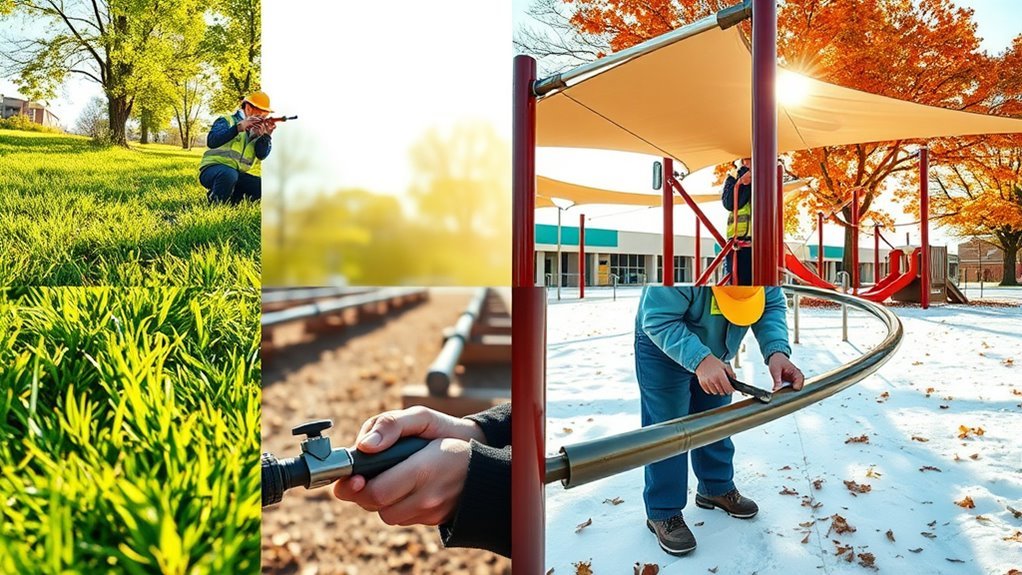
In spring you’ll inspect anchorage, fasteners, surfacing depth, and drainage to remove winter damage and confirm safe play before heavy use. In summer you’ll monitor wear and tighten hardware more frequently, but focus now on spring tasks plus scheduling any repairs. Before winter you should secure loose components, treat metal surfaces for corrosion, and clear areas so snow and ice preparation can be done safely.
Spring Inspection Tasks
Why start spring inspections now? You’ll catch freeze‑thaw damage, loosened fasteners, and surface hazards before children return, keeping your team and community safe and confident.
- Walk the site: note drainage paths, displaced surfacing, and standing water that invite slips or mold.
- Check hardware: tighten bolts, replace rusty connectors, and test moving parts for smooth, restrained motion.
- Inspect structure: look for cracks, splinters, corrosion, and compromised welds; tag items needing immediate repair.
You’ll document findings in a shared log, prioritize repairs by risk, and assign clear owners so staff and families feel included in safety outcomes. Your precise, routine approach prevents injuries and builds trust across the school community.
Winter Weather Prep
How will you harden playgrounds against winter hazards ever keeping maintenance efficient and safe? You’ll prioritize de-icing plans, secure loose components, and protect surfacing. Inspect fasteners, remove water traps, and store movable equipment. Train staff on cold-weather checks so your team feels prepared and included.
| Task | Frequency |
|---|---|
| De-ice walkways with school-approved agents | Daily during freeze |
| Inspect and tighten fasteners | Monthly |
| Clear drains and snow from equipment tops | After storms |
| Cover vulnerable surfacing/materials | Pre-winter |
| Store loose/movable equipment | Pre-winter |
Document all actions and hazards in a shared log. Use PPE for slip and frostbite protection, and schedule prompt repairs to prevent deterioration. By following this plan, you’ll keep children safe and your crew connected through clear, consistent procedures.
Preventive Repairs and Surfacing Care
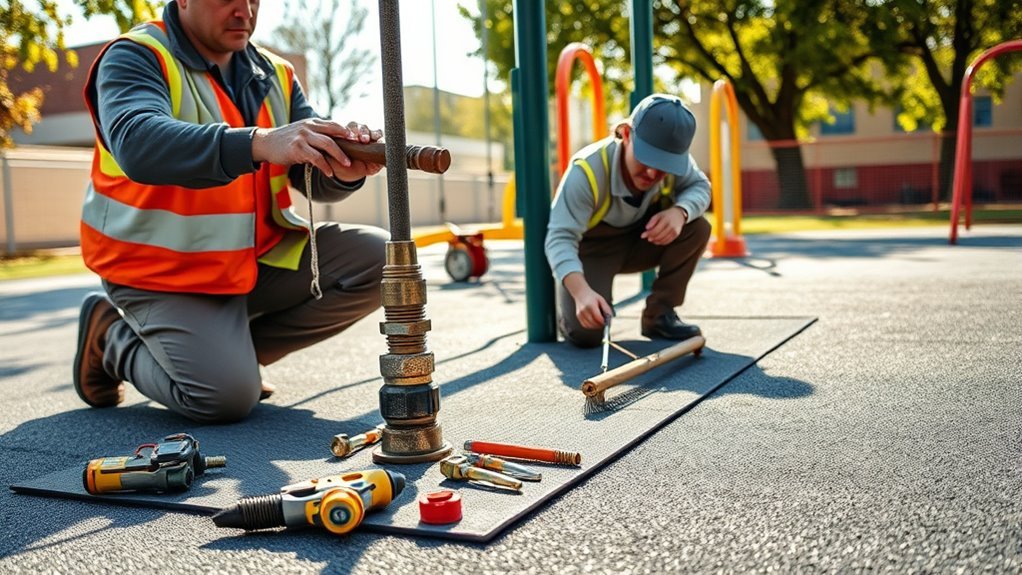
You should inspect surfacing regularly for compaction, displacement, and wear to maintain proper impact attenuation. Address minor repairs — loose fasteners, torn mats, low infill — promptly to prevent hazards from worsening. Plan seasonal surface treatments such as raking, top‑ups, or sealants to preserve performance and meet safety standards.
Regular Surfacing Inspections
When should surfacing be inspected? You should inspect surfacing weekly and after severe weather, plus monthly for depth and wear, so the whole school community feels safe and cared for. Look for compression, displacement, pooling, tears, or exposed footing.
- A child running stops short at a rut that collects water—note depth and drain issues.
- Crumbled rubber mulch reveals hard soil beneath—measure impact attenuation immediately.
- Torn seams on poured rubber show exposed substrate—mark, cordon, and report.
Document findings with date, location, photos, and measured depth. Prioritize areas under swings and slides. Communicate results to colleagues and caretakers so repairs are scheduled; your consistent inspections keep play spaces inclusive and reliably safe for every student.
Timely Minor Repairs
Routine, timely minor repairs are the first line of defense against playground hazards and should be done as soon as inspections reveal issues that could worsen or cause injury. You’ll tighten loose fasteners, replace worn connectors, and realign displaced components immediately to prevent cascading failures. For surfacing, you’ll refill low spots with matching material, remove hazardous debris, and compact loose areas to maintain correct impact attenuation and accessible pathways. Keep a log of each repair, noting date, location, action, and who performed it, so your team builds shared ownership and continuous improvement. Use manufacturer-approved parts and documented procedures; if a repair exceeds your scope, pause use of the equipment and escalate to certified technicians. Quick, consistent action protects kids and strengthens your community’s trust.
Seasonal Surface Treatment
Why check and treat playground surfacing each season? You ensure consistent impact attenuation, reduce trip hazards, and extend material life for every child who plays. Inspect for compaction, wash away debris, and top up loose-fill or repair seams in poured surfaces. Schedule treatments before heavy-use seasons and after winter thaw.
- Imagine raking and leveling wood chips to maintain 12 inches under high equipment, removing hidden rocks.
- Picture pressure‑washing rubber mats, checking seams and drainage channels so water won’t pool.
- Visualize compacted sand being loosened and replenished, restoring depth and cushioning.
You’ll keep a shared space safe and welcoming by following measurable checks, documenting actions, and involving staff and volunteers in routine care.
Roles, Tools, and Maintenance Logs for Schools
A clear division of roles, the right tools, and accurate maintenance logs keep your playground safe and compliant: assign a trained facilities lead to oversee inspections, designate on-site staff for daily hazard checks, and contract certified technicians for annual structural assessments; equip teams with properly adjusted torque wrenches, fall-surface depth probes, digital cameras, and lockable tool kits; and use timestamped, centralized logs that record inspection findings, corrective actions, parts replaced, and personnel initials so you can track trends, verify repairs, and demonstrate due diligence to regulators.
| Role | Primary Responsibility |
|---|---|
| Facilities Lead | Program oversight, scheduling, regulatory records |
| On-site Staff | Daily checks, minor repairs, immediate reporting |
| Certified Techs | Structural evaluation, major repairs, certification |
Keep entries concise, consistent, and shared so your team feels accountable and supported.
When to Call a Professional Inspection
Your team handles daily checks and keeps logs, but you’ll need a professional inspection whenever issues go beyond minor fixes or when documentation requires third‑party verification. Call a certified inspector if you find structural cracks, anchoring failures, or unpredictable movement; these are beyond routine tightening and signal risk. Schedule professionals after any significant incident—student injury, equipment collision, or severe weather—so a neutral assessment confirms safety and next steps. Bring inspectors in when your annual audit or insurer demands certified reports; that protects your community and shows you care.
- Bent support post with visible stress lines—imagine a swing frame leaning after a storm.
- Fractured connector inside a climbing module—picture hidden damage under stepped panels.
- Repeated failures in fall-surface compaction—visualize soft spots around high-traffic zones.
Frequently Asked Questions
How Do I Budget for Major Equipment Replacements?
Nearly 70% of hardware failures stem from deferred maintenance; you’ll allocate a replacement reserve, inspect quarterly, prioritize high-risk items, forecast lifespans, phase purchases, involve stakeholders for buy‑in, and secure funds for safety-critical replacements.
Can Students Help With Maintenance Tasks Safely?
Yes — you can involve students safely: assign age‑appropriate, supervised tasks like litter pickup, visual checks, and reporting hazards; provide training, PPE, clear procedures, and inclusive roles so everyone contributes responsibly and feels valued.
What Records Are Legally Required to Keep?
Like a ledger you’ll always check, you must keep inspection, incident, maintenance, repair, and replacement records, plus training and equipment purchase documents; these’re legally required, precise, dated, signed, and stored accessibly for accountability and community safety.
How to Handle Vandalism After Hours?
You’ll secure the site immediately, document damage with photos and time-stamped notes, notify authorities and your insurance, arrange urgent safety repairs or closures, communicate transparently with the community, and review prevention measures to promote shared responsibility.
Are There Eco-Friendly Surfacing Alternatives?
Yes — you can choose recycled-rubber tiles or engineered wood fiber; they’re safer yet gentle on Earth. You’ll want certified impact ratings, permeable drainage, non‑toxic binders, regular inspections, and community buy‑in for upkeep and replacement.