
Soft play equipment is the best home choice for toddlers since it supports safe, evidence-based motor and social development in a comfortable, adjustable space. You’ll bolster balance, coordination, and tactile learning while encouraging exploration within structured limits. Cushioned, rounded designs reduce risk, and modular layouts grow with your child, adapting as they crawl, cruise, and climb. It likewise promotes cooperative play and belonging without screens. If you keep exploring, you’ll uncover how to tailor it exactly to your family.
Benefits of Soft Play for Early Development
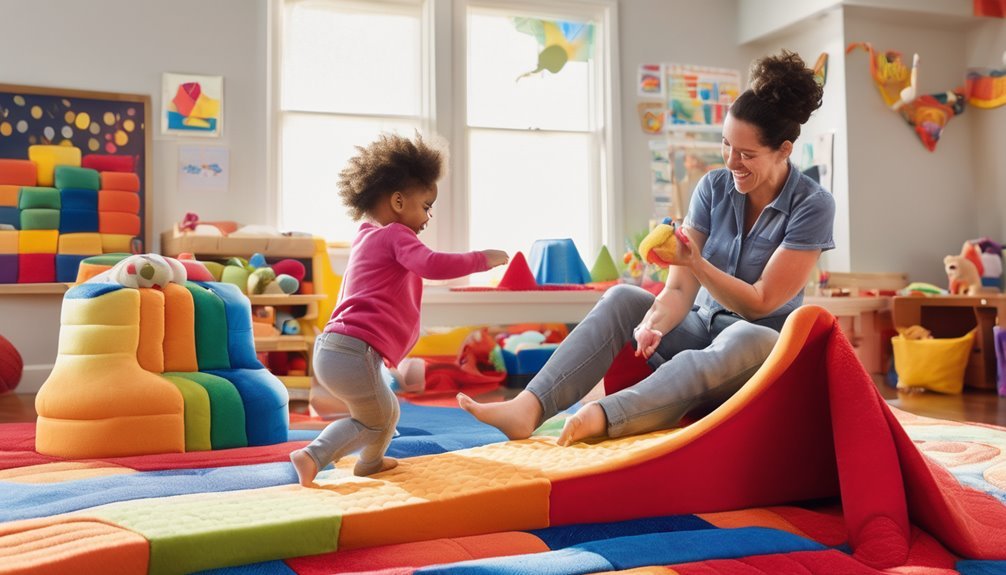
Soft play offers a safe, engaging way for toddlers to explore movement and build foundational skills. You’ll notice improved balance, coordination, and spatial awareness as little bodies explore climbing, sliding, and crawling at their own pace. Evidence supports early soft play as a foundation for motor development, while social interactions boost communication and collaboration in small groups, nurturing a sense of belonging. You’ll also see opportunities for problem-solving and safe risk-taking within structured limits, which supports autonomy and confidence. Incorporate soft play ethics to guarantee fair access, inclusive design, and gentle guidance that respects each child’s pace. Use toddler risk assessment to tailor activities to developmental stages, reducing overwhelm and enhancing safety. This approach harmonizes development with care, community, and covered curiosity.
Safety Features That Set Soft Play Apart
When selecting soft play gear, safety features that truly set it apart focus on mitigating risk supporting exploration. You’ll notice cushioned edges, non-slip bases, and seam-free covers that prevent pinches and tears, helping you feel confident while your child explores and develops. Evidence points to reliable padding reducing impact during tumbles, while stable structures support gross motor milestones in toddler development. Look for certifications and clear labeling that confirm durable construction and thorough quality checks. Soft play safety isn’t just about protection; it sustains curiosity and belonging as you join in play.
| Cushioning | Stability | Accessibility |
|---|---|---|
| Non-slip bases | Rounded corners | Easy-clean fabrics |
| Seam-free covers | Lightweight framing | Color-coded sections |
| Impact-absorbing mat | Secure connectors | Clear safety instructions |
Designing a Cozy Home Play Zone
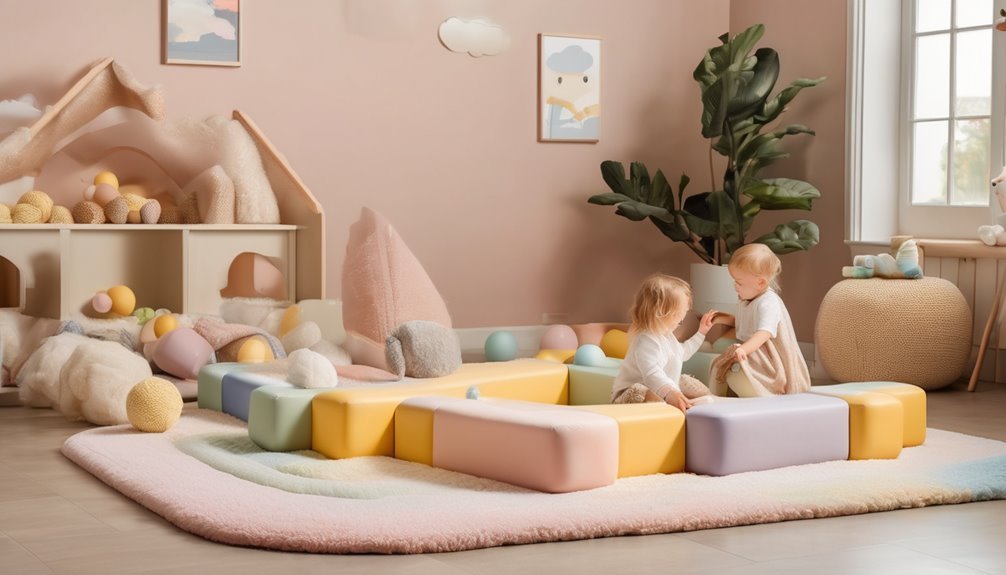
Creating a cozy home play zone starts with a soft, safe layout that invites your toddler to explore without clutter. Consider space-saving zones and accessible storage so play and cleanup feel effortless for you and enjoyable for them. Integrate stimulating textures and touchpoints to support sensory development while keeping the area calm and organized.
Soft, Safe Layouts
A well-planned home play zone combines accessible toys, cushioned boundaries, and clear zones for movement to reduce accidents and support exploration. You’ll design with soft play principles in mind, prioritizing low-height installations and rounded edges for safety. Arrange a central open area for crawling and cruising, flanked by defined stations that encourage ball rolling, building, and pretend play, all on non-slip mats. Use labeled zones so family members know where to place toys after use, reinforcing order and calm. Choose age-appropriate, easily washable textures to support sensory exploration while reducing risk. Regular checks for wear and tear keep safe layouts intact, and caregiver supervision remains integral. By embracing soft play, you create a welcoming, belonging-filled space that supports confidence and development.
Space-Saving Zones
Looking to maximize play space without overwhelming a room? You’ll design a cozy, intentional play area through space-saving zones. Start with a clear focal point, then layer low-profile shelves and modular mats to define a zone design that invites approachability and belonging. Choose multiuse pieces—soft blocks that stack as seating, a foldable mat for quick cleanup, and a small storage bin that keeps toys within reach but out of the way. Prioritize vertical real estate: wall-mounted organizers and peg rails free floor space for movement. Color and texture should signal safety and warmth, not chaos, helping your child feel secure joining in. Regular, short sessions reinforce routines, support independence, and sustain a calm, inclusive play environment—space saving, zone design, together.
Stimulating Textures Touchpoints
Have you noticed how varied textures can invite toddler exploration as supporting sensory processing? In a cozy home play zone, you’ll pair stimulating textures with clear touchpoints that invite safe, hands-on discover. Use soft, chewable fabrics, smooth vinyl, and fuzzy mats to create inviting contrasts that support tactile development without overstimulation. Map touchpoints at reachable heights, so curiosity stays active within your child’s routine and comfort zone. Emphasize safety features like rounded edges, non-slip bases, and coverings that are easy to clean, reducing barriers to exploration. Your choices should feel belonging-oriented: evidence shows regular, low-pressure exposure to diverse textures supports regulatory skills and attention. Crafting these experiences together reinforces trust, confidence, and a shared sense of home.
Versatility: Adapting as Your Child Grows
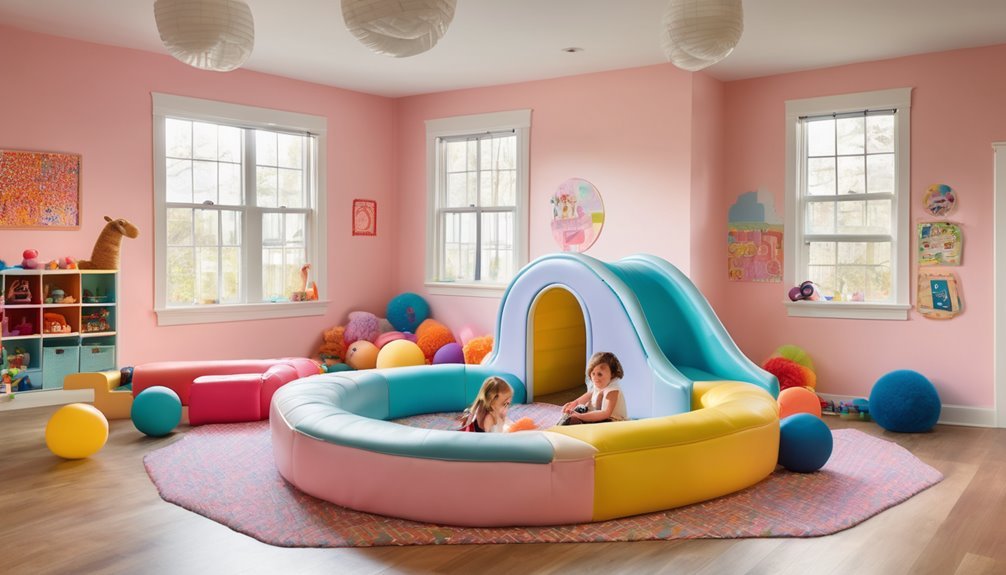
As children grow, the best soft play setup stays versatile enough to follow their changing needs, from tummy time to imaginative play and early motor skills. You’ll notice versatility indicators that signal when to adjust: height-adjustable layouts, modular elements, and open-ended components that invite different uses. By aligning choices with growth milestones—sitting, crawling, cruising, and beyond—you create a setup that expands with confidence. This approach supports ongoing exploration, social interaction, and safe risk-taking in a familiar space. You don’t need new purchases each year; instead, reconfigure and adapt existing pieces to fit current abilities. The result is a home environment that feels inclusive, responsive, and empowering, encouraging you to observe, listen, and respond to your child’s evolving curiosity.
Easy Maintenance and Longevity
A key question is how easy it is to keep soft play gear clean, safe, and durable as your toddler uses it daily. You’ll find that choosing materials with simple care routines boosts consistency and peace of mind. Look for machine-washable covers and wipe-clean surfaces, which support easy maintenance and reduce downtime. Longevity factors include sturdy stitching, closed-cell foam, and fade-resistant fabrics that withstand daily play and repeated sanitizing. Regular inspection helps you catch wear early, preventing hazards and extending use. A protective setup—proper placement, non-slip bases, and gentle use guidelines—also preserves integrity. Evidence suggests that families prioritizing straightforward maintenance experience fewer disruptions and greater confidence in long-term value. Your home benefits when maintenance becomes a predictable, low-effort habit.
Budget-Friendly Investment for Family Fun
When you choose soft play gear with cost-effectiveness in mind, you can stretch your budget as you still boosting your child’s development and safe playtime. Evidence shows multi-use options often save money over time and support various ages, creating real long-term family value. Let’s discuss which investments balance upfront cost with durable quality and ongoing family fun.
Cost-Effective Playtime
Investing in soft play at home doesn’t have to break the bank; with a few strategic choices, you can create a safe, engaging setup that supports your toddler’s development and fits your budget. You’ll find that affordable, modular options encourage exploration without overwhelming space or finances. Prioritize quality over quantity: durable mats, a simple climber, and multi-use props promote motor skills and early development while remaining economical. Tap into secondhand or DIY improvements to extend value, and integrate daily routines that reinforce safe use and supervision. Evidence highlights age-appropriate challenges build confidence and social learning, so rotate activities to maintain interest. By choosing intentional, cost-conscious investments, you create a welcoming environment where your family belongs and your child thrives through meaningful soft play experiences.
Long-Term Family Value
How can a thoughtful, budget-friendly soft play setup deliver long-term value for your family? You’re investing in a versatile, durable space that grows with your child. Over time, the initial cost blends with ongoing benefits: safer exploration, easier cleanup, and reduced screen time, all contributing to daily rhythm and stability you can trust. Research on soft play benefits points to improved balance, coordination, and tactile learning, while you observe toddler development in real time, adjusting activities as skills evolve. A modular setup fosters shared moments, cooperative play, and belonging, strengthening family bonds. With careful selection and maintenance, the equipment remains relevant for multiple ages, maximizing return on investment and supporting a consistent, nurturing environment your family relies on.
Frequently Asked Questions
How Do Soft Play Items Grow With Multiple Children Sharing Space?
Satire aside, you’ll notice growth sharing as you add pieces; soft play stacks safely, adapting to multiple kids with modular layouts. This evidence-based setup supports belonging, and safety stacking helps you monitor use, ensuring cooperative play and shared joy.
What Age Range Is the Most Suitable for Soft Play Sets?
The most suitable age range is early childhood, roughly 1–5 years. What age range fits soft play sets best? They support versatile play, during safety considerations and space optimization guide decisions, fostering belonging and evidence-based, client-centered choices.
Can Soft Play Help With Early Language Development?
Soft play benefits include supporting early language development as kids narrate actions and imitate peers, which you’ll notice when you create shared play spaces; you’re fostering belonging while evidence-based strategies nurture communication, social interaction, and confident exploration.
Are There Eco-Friendly Materials Used in Soft Play Products?
Yes, there are eco friendly materials and sustainable manufacturing in soft play products, which you can trust. You’ll feel confident choosing items that minimize waste, support responsible suppliers, and align with your values and community, safety, and belonging.
How Can I Repurpose Soft Play as Decor When Not in Use?
Yes, you can repurpose soft play as decor by stacking and draping mats creatively, then storing pieces neatly; it becomes cozy, inviting storage hidden within furniture, whereas you build belonging in your space with evidence-based, kid-friendly design choices.