
Inclusive play equipment is designed to allow children of all abilities to play together, promoting social connections and active participation. When choosing it, consider features like accessibility, adaptability for different skill levels, and sensory-rich experiences. It’s essential to understand the unique needs of your community and guarantee safety standards are met. By actively involving caregivers and stakeholders in the selection process, you can create a meaningful play space. There’s more to explore about successful inclusive play areas and their benefits.
Key Takeaways
- Inclusive play equipment allows children of all abilities to engage in play, fostering social interaction and a sense of belonging.
- Key features include universal design, mobility solutions, adaptable options, safety measures, and sensory-rich experiences for diverse needs.
- Assess community needs by analyzing local demographics, disability rates, and cultural backgrounds to ensure appropriate equipment selection.
- Familiarize yourself with accessibility standards and prioritize safety by conducting risk assessments for potential hazards.
- Involve stakeholders, including parents and local organizations, in the selection process to gather input and create meaningful play spaces.
Definition of Inclusive Play Equipment
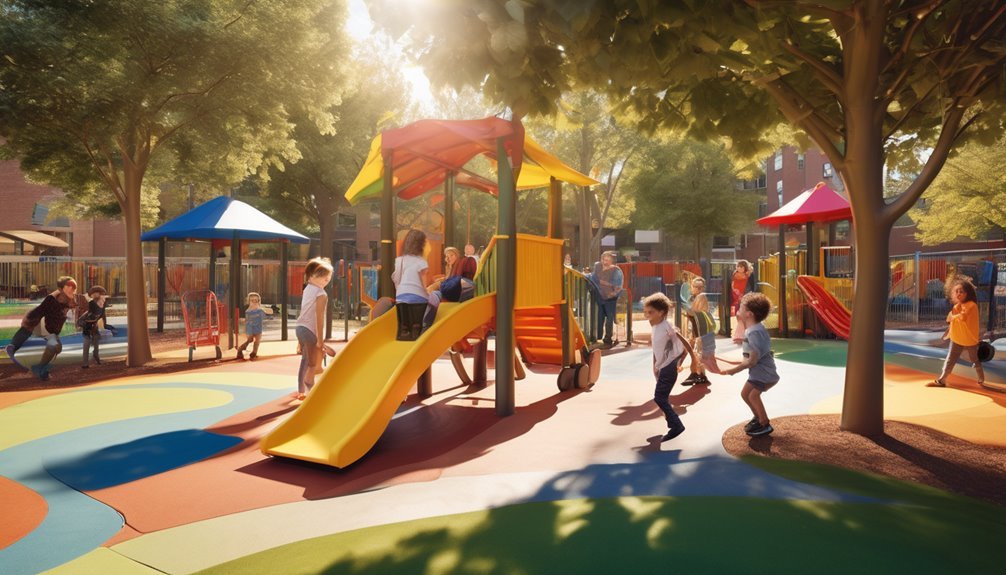
Inclusive play equipment refers to specially designed structures and tools that allow children of all abilities to participate in play together. When selecting such equipment, it is crucial to grasp inclusive design principles, which focus on creating spaces that accommodate diverse needs. These principles guarantee that every child, whether they have physical, sensory, or cognitive challenges, can participate and enjoy playtime. By considering factors like accessibility, safety, and sensory stimulation, you can create an environment where all kids feel welcomed and included. This approach promotes social interaction and builds a sense of belonging, highlighting the importance of community in play. Grasping these elements gives you a solid foundation for choosing the right inclusive play equipment for your space.
Benefits of Inclusive Play
Inclusive play offers significant benefits by enhancing social interaction among children and promoting physical activity. When kids of all abilities come together, they learn valuable social skills and cultivate friendships that might not happen otherwise. Moreover, inclusive equipment encourages everyone to be active, leading to healthier lifestyles and improved well-being.
Enhances Social Interaction
When children interact with play equipment designed for everyone, they naturally cultivate social interactions that might not occur in traditional play settings. This inclusive environment promotes the development of crucial social skills, allowing kids to connect with peers from diverse backgrounds. The interaction benefits are significant; they encourage cooperation, empathy, and communication.
| Interaction Type | Benefits |
|---|---|
| Cooperative Games | Builds teamwork skills |
| Group Activities | Nurtures friendships |
| Shared Play Experiences | Improves communication skills |
| Role-Playing Scenarios | Develops empathy |
| Inclusive Storytelling | Stimulates creativity |
Promotes Physical Activity
An environment that nurtures social interaction naturally leads to increased physical activity among children. Inclusive play equipment encourages active involvement, allowing all kids to enjoy the physical benefits of play. Here’s how it promotes movement:
- Variety of Activities: Offers diverse options like climbing, sliding, and swinging to keep kids excited.
- Encourages Team Play: Cultivates collaboration and teamwork, leading to more active participation.
- Adaptable Features: Accessible elements accommodate different abilities, ensuring everyone can join in.
- Social Motivation: Children are more likely to be active when playing with peers, enhancing their enjoyment.
Key Features of Inclusive Play Equipment
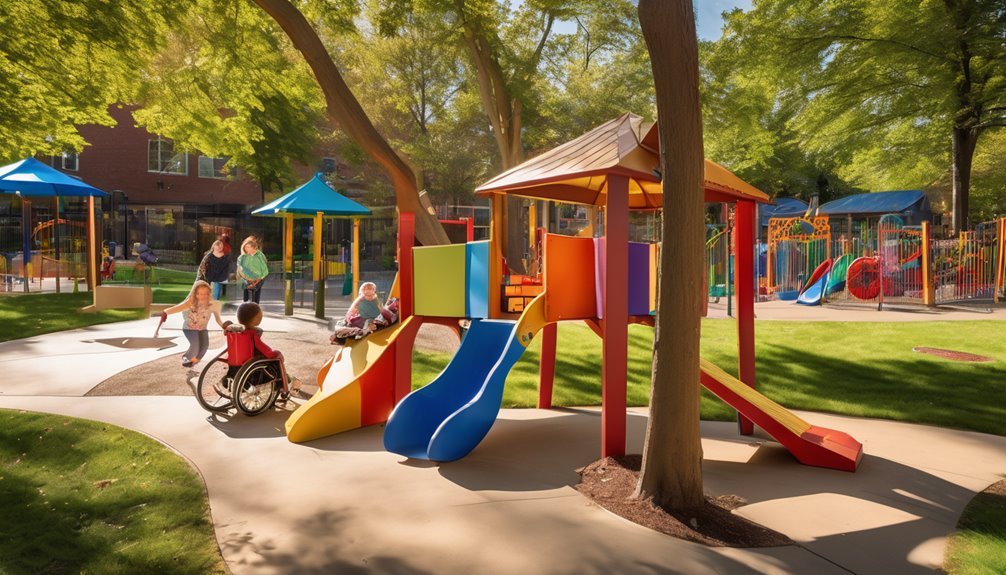
When considering inclusive play equipment, you’ll want to focus on features that guarantee accessibility for everyone. Look for designs that create sensory-rich experiences, allowing children of all abilities to participate meaningfully. Adaptive design features are crucial, enabling a wide range of play styles and needs to be met.
Accessibility for All
Although many play environments aim for fun and excitement, true inclusivity hinges on thoughtful design that accommodates all children, regardless of their abilities. When choosing inclusive play equipment, consider these key features for accessibility:
- Universal Design: Equipment should be usable by children of all abilities, providing equal access and involvement.
- Mobility Solutions: Incorporate ramps and wide pathways, allowing children with mobility challenges to maneuver freely.
- Adaptable Play Options: Select equipment that can be modified for different skill levels, guaranteeing every child can participate.
- Safety Features: Verify that surfaces are forgiving and equipment is designed to minimize risks, promoting a safe environment for all.
Sensory-rich Experiences
Creating inclusive play environments means not only addressing physical access but also enriching sensory experiences that involve all children. Sensory-rich experiences are vital for involving kids of all abilities. Look for play equipment that features sensory pathways, which guide children through varied textures and colors, encouraging exploration and interaction. Tactile panels can stimulate touch and creativity, allowing kids to utilize their senses as they develop fine motor skills. By incorporating these elements, you’re nurturing an environment where every child can feel included and valued. Make sure to choose equipment that invites imaginative play and promotes social interaction, creating a sense of belonging for all children. When play is inclusive, it becomes a joyful, sensory adventure for everyone involved.
Adaptive Design Features
Building on the importance of sensory-rich experiences, adaptive design features are crucial components of inclusive play equipment. These features guarantee that all children, regardless of ability, can participate and play together. When choosing equipment, consider these design considerations:
- Accessible Entrances: Confirm pathways and ramps are wide enough for wheelchairs or mobility aids.
- Adjustable Components: Look for swings or slides that can accommodate different heights and needs.
- Sensory Elements: Include tactile panels and auditory devices to stimulate various senses.
- Inclusive Seating: Provide options for various body types and preferences, making sure everyone can join in comfortably.
Understanding Different Abilities
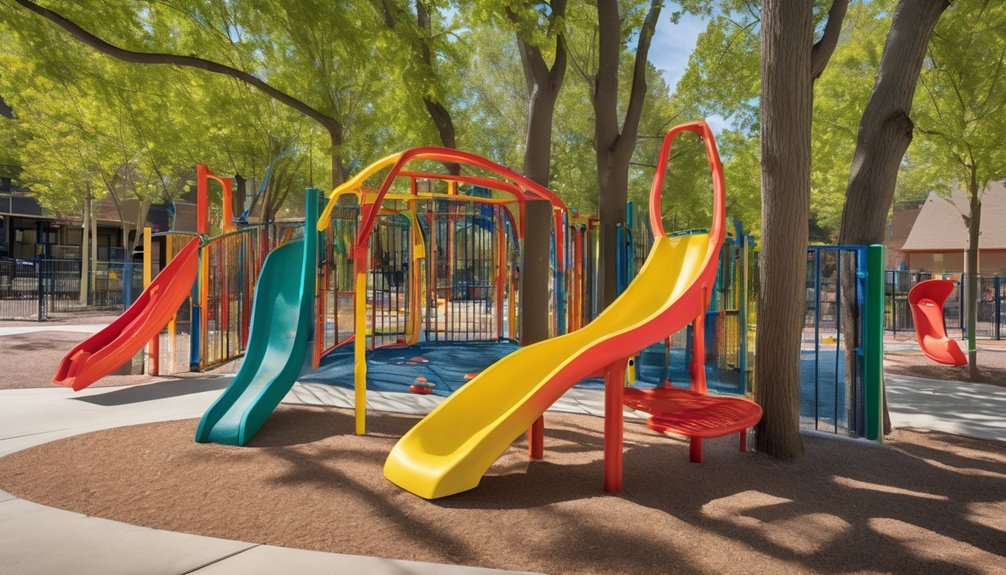
How can we truly grasp the diverse abilities of children in play settings? Realizing that each child has unique adaptive abilities is essential for promoting an inclusive environment. Some children may have physical challenges, whereas others might experience sensory sensitivities or cognitive differences. By acknowledging these diverse needs, you’ll create a space where every child feels valued and involved. For example, consider play equipment that accommodates various mobility levels or sensory play options that stimulate different senses. It’s not just about the equipment; it’s additionally about nurturing social connections among children. When you appreciate and embrace these differences, you pave the way for meaningful interactions and shared experiences, making playtime enjoyable for everyone, regardless of their abilities.
Assessing Community Needs
To create truly inclusive play spaces, you first need to identify the demographics of your community. Understand who lives in your area and what unique accessibility requirements they may have. This insight will guide your decisions and guarantee that everyone can enjoy the benefits of inclusive play equipment.
Identifying Local Demographics
As communities evolve, grasping the local demographics becomes crucial for evaluating needs related to inclusive play equipment. Comprehending community diversity through population analysis helps you identify specific requirements for your playground. Here’s how you can start:
- Age Groups: Identify the age demographics of children in your area.
- Disability Rates: Assess the percentage of children with disabilities to guarantee inclusivity.
- Cultural Backgrounds: Recognize various cultural influences that might affect play preferences.
- Family Structures: Consider different family dynamics and how they impact playtime needs.
Evaluating Accessibility Requirements
Once you’ve identified the local demographics, the next step involves evaluating accessibility requirements to guarantee every child can enjoy the playground. Start by familiarizing yourself with current accessibility standards, ensuring that your chosen equipment meets or exceeds these guidelines. It’s crucial to reflect on various disabilities, from mobility challenges to sensory sensitivities, so every child feels included. Gathering user feedback from local families can provide invaluable insights into specific needs and preferences. Interact with community members to understand their experiences and desires regarding play equipment. By prioritizing accessibility and listening to those who will use the space, you’ll create an inviting environment where all children can connect, explore, and thrive together. Building a sense of belonging starts with thoughtful planning.
Types of Inclusive Play Equipment
Even though many playgrounds feature traditional play equipment, inclusive play equipment is designed to guarantee that all children, regardless of their abilities, can participate in play together. Here are some types of inclusive play equipment you might consider:
- Inclusive Swings: These swings often have restraints or seats that accommodate children with varying needs.
- Sensory Panels: Interactive panels involve children’s senses with textures, sounds, and visuals, promoting exploration.
- Wheelchair-Accessible Ramps: These ramps allow children who use wheelchairs to access various play structures easily.
- Adaptable Climbing Structures: These structures provide multiple ways to climb, ensuring everyone can join in on the fun.
Choosing the right equipment cultivates an environment where all children feel valued and included in the joy of play.
Safety Considerations
When selecting inclusive play equipment, it is crucial to prioritize safety to guarantee that every child can enjoy the playground without risk. Begin by ensuring that the equipment meets established safety standards; these regulations are designed to protect all users, especially those with varying abilities. Conducting a thorough risk assessment is key—identify potential hazards, such as sharp edges or unstable surfaces, and address them proactively. Remember, safety isn’t just about preventing accidents; it is also about creating an environment where children can feel secure and included. Partner with playground designers and other stakeholders to make informed choices that encourage a sense of belonging. With these considerations in mind, you’ll nurture a safe, inviting space for everyone to thrive and play.
Budgeting for Inclusive Play Equipment
As you commence budgeting for inclusive play equipment, it’s essential to assess both immediate costs and long-term value. A thorough cost analysis will help you understand not just the price tag but likewise the benefits it brings to your community. Consider these key points:
- Initial Purchase Costs: Factor in the expense of the equipment itself.
- Installation Fees: Don’t forget about professional installation services.
- Maintenance Expenses: Inclusive play areas require ongoing upkeep to remain safe and functional.
- Funding Sources: Explore grants, community fundraising, and local government funding to support your budget.
Engaging Stakeholders in the Selection Process
Involving stakeholders in the selection process is crucial for ensuring that the inclusive play equipment meets the diverse needs of all community members. By including parents, children, educators, and local organizations, you cultivate a sense of belonging and community involvement. Start by organizing meetings or surveys to gather input and suggestions. Encourage open dialogue and listen to everyone’s perspectives; this not only improves stakeholder engagement but also helps identify specific needs and preferences. Share your vision for inclusive play and invite feedback, ensuring everyone feels valued. In the end, this collaborative approach creates a sense of ownership among stakeholders, leading to more effective and meaningful play spaces that truly serve your community’s diverse population.
Examples of Successful Inclusive Play Areas
Successful inclusive play areas can be found across various communities, showcasing how thoughtful design can create spaces where everyone can thrive. These inclusive playgrounds nurture community involvement and invite all children to play together. Here are four standout examples:
- Magic Playground in New York: Features sensory-rich experiences and wheelchair-accessible equipment.
- Inclusive Adventure Park in California: Offers adaptive swings and climbing structures for all abilities.
- Friendship Park in Texas: Incorporates interactive elements that encourage socialization among diverse groups.
- Unity Playground in Florida: Involves local families in the design process, ensuring it meets community needs.
These examples highlight the importance of collaboration and creativity in building inclusive spaces where every child feels a sense of belonging.
Frequently Asked Questions
How Can I Ensure Maintenance of Inclusive Play Equipment?
To guarantee your inclusive play equipment stays safe and functional, establish routine inspection schedules and maintenance strategies. Regular checks help identify issues early, promoting a sense of belonging for everyone who uses the playground.
What Are the Costs Associated With Retrofitting Existing Playgrounds?
Modifying playgrounds can vary widely in costs, so it’s essential to conduct a thorough cost analysis. Budget considerations should include materials, installation, and maintenance to guarantee a truly inclusive play environment for everyone.
How Can We Involve Children in the Design Process?
Involve children by encouraging user involvement through workshops, where they can share design feedback. This enables them to express their ideas, nurturing a sense of belonging and ensuring the final design resonates with their needs and preferences.
What Are the Best Practices for Promoting Inclusive Play?
To nurture a sense of belonging, embrace collaborative play and sensory activities. Encourage children to share experiences, create diverse spaces, and cultivate friendships, ensuring every child feels valued, involved, and included in the joy of play.
How Do We Measure the Success of Inclusive Play Areas?
To measure success, you’ll want to track inclusivity metrics like play involvement levels, user feedback, and diverse participation. Observing how different groups interact can reveal if everyone feels a sense of belonging in the space.