
Upgrading your school playground is justified when safety flaws, aging gear, and rising maintenance threaten usability and student engagement. Watch for higher repair costs, frequent fixes, and parts that aren’t available. If usage shifts and lifespans shrink, a refresh keeps pace. Use a safety, accessibility, and durability check to guide spending, then roll out upgrades in small, data-driven phases. Engage the whole school community early, and choose modular, growing equipment. Want practical steps and benchmarks to proceed?
Five Clear Triggers for Upgrading Your Playground
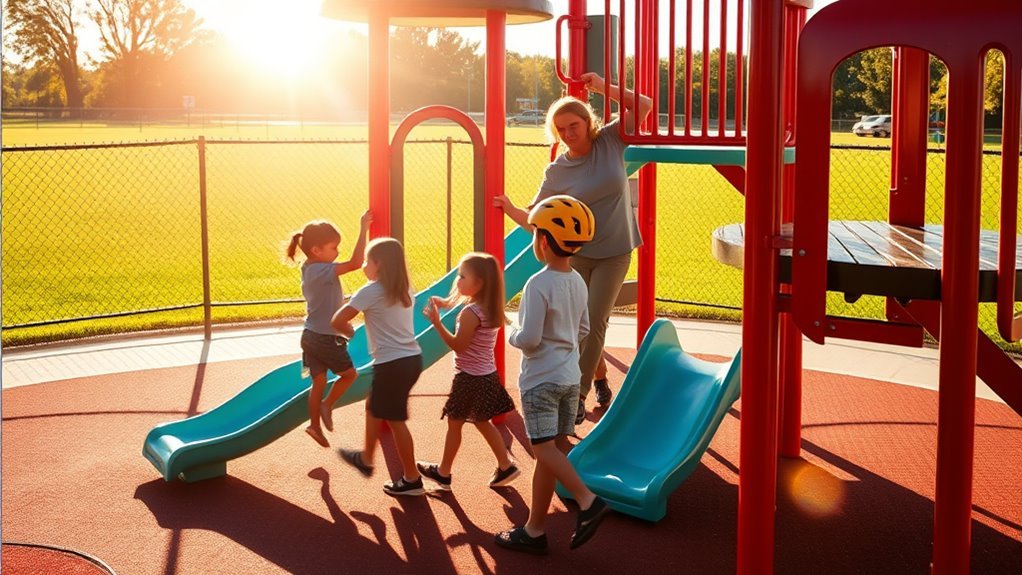
Five clear triggers signal it’s time to upgrade your playground. You notice rising maintenance costs, frequent repairs, and parts that aren’t readily available, which hints at hidden playground impacts on budgets and time. Your data shows usage patterns shifting: more students, same space, more wear, sooner than expected. Equipment lifespan is shrinking, and safety concerns grow when components corrode or loosen. You’re seeing aesthetic drift too—surfaces fade, coatings chip, edges chip—piling onto perceived quality gaps. Community feedback highlights inclusivity gaps and reduced engagement, signaling you’re missing cooperative play value. When risk of downtime increases during peak seasons, it’s a clear signal to plan. Align upgrades with budget cycles, expand capacity, and future-proof plans for long-term playground impacts and equipment lifespan.
Safety, Accessibility, and Durability: Evaluation Criteria
Are safety, accessibility, and durability the nonnegotiables you can’t overlook when evaluating playground upgrades? You’ll assess gear against safety standards, ensure inclusive design, and confirm materials endure daily use. Prioritize barrier-free access, visible fall zones, and reliable surfacing, then verify maintenance plans and warranty coverage. Data-driven checks help you compare products objectively, not emotionally, so you can defend decisions with stakeholders. Use a practical checklist to quantify risk, durability, and accessibility outcomes.
| Criterion | Measurement | Target |
|---|---|---|
| Safety standards | Compliance tests, certifications | Pass |
| Inclusive design | ADA/IA accessibility, inclusive play features | Yes |
| Durability | UV, load, corrosion tests | High |
| Maintenance | Service intervals, replacement parts | Routine |
Together, this framework anchors a confident, belonging-focused upgrade.
Plan a Budget-Friendly, Phased Rollout With Milestones
If you want to stretch your budget without sacrificing impact, start with a phased rollout that pairs clear milestones with real-world costs and timelines. You’ll map each purchase to a concrete date, so you see progress without blowing through budget constraints. Begin with a small, high-impact upgrade—like accessible surfacing or a modular play panel—then layer in larger items as you hit milestones. Use data to forecast maintenance, usage, and replacement cycles, so every dollar earns measurable value. Communicate milestones to staff and families, reinforcing a sense of shared ownership and belonging. Track monthly spend, tie purchases to approved funds, and adjust plans when costs fluctuate. This disciplined approach builds confidence, minimizes risk, and keeps the project on track toward safer, more engaging play spaces.
Engage Students, Staff, and Community Partners
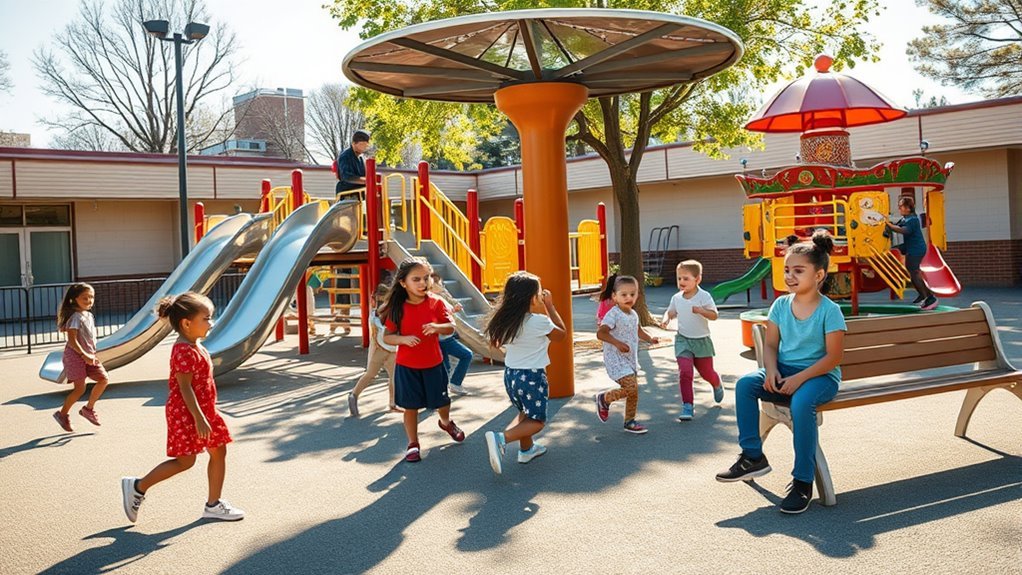
To truly maximize impact, involve students, staff, and community partners early and often, using a clear plan that taps into diverse insights and visible benefits. You’ll build buy-in through transparent goals, inclusive design, and concrete timelines, showing how every voice shapes safer, more equitable play spaces. Data-informed surveys, small-group forums, and pilot tests reveal preferences that guide decisions without waste. You’ll cultivate belonging by recognizing expertise across ages and roles, and by sharing outcomes openly with the school and neighborhood. Track progress with simple metrics, celebrate milestones, and invite ongoing feedback to sustain momentum and trust.
- Engage students in idea generation with measurable goals
- Involve staff in safety, maintenance, and access considerations
- Include community partners for funding and expertise
- Prioritize inclusive design and continuous community involvement
Choose Equipment That Grows With Your Students
Choosing equipment that grows with your students means prioritizing versatile, adjustable options that match developmental stages and changing needs. You’ll look for modular components, adjustable heights, and multi-use stations that support a range of abilities. Data shows that durable playgrounds reduce maintenance costs and downtime, so durability matters from day one. Prioritize inclusive design so every child can participate, with clear sightlines, simple transition, and cooperative play features. Plan for accessible pathways that connect classrooms to play areas and shade, ensuring usage across weather and schedules. Invest in soft, compliant fall zones and scalable challenges that adapt as skills advance. A growth minded approach creates belonging, trust, and sustained engagement for all students.
Frequently Asked Questions
How Can Funding Sources Be Diversified Beyond Grants?
Diversify funding by combining nonprofit partnerships, local business sponsorships, crowdfunding, PTA fundraising, and in-kind donations. You’ll create grant alternatives with clear ROI data, transparent timelines, and community engagement, so stakeholders feel included and invested in your playground’s future.
What Are Best Practices for Equipment Maintenance Schedules?
Best practices for equipment maintenance schedules include creating a proactive calendar, tracking inspections, and prioritizing safety. You’ll implement data-driven checks, assign clear ownership, and adjust routines to meet usage patterns, fostering belonging through reliable, well-maintained playground experiences.
How Does Playground Design Impact Student Mental Health?
Like a calm compass, thoughtful design guides you: playground design shapes student mental health by reducing stress and boosting mood. You’ll cultivate belonging, observe data-driven benefits, and implement proactive features that support inclusive, evidence-based wellness for every student.
What Metrics Prove Long-Term Learning Benefits From Play?
You’ll see long-term learning benefits evidenced by metrics and play based assessment, showing improved executive function and persistence; collect daily engage data, track task completion, and share transparent results to create a data-driven culture that welcomes everyone.
How Will Upgrades Affect After-School and Community Use?
Upgrades boost after-school and community use by expanding hours and activities; you’ll attract partnerships, optimize space, and show impact. You’ll utilize community partnerships and after school programming to sustain engagement, inclusion, and measurable, data-driven outcomes for all participants.