
You’ll want swings, slides, and climbing walls to get everyone moving safely and having fun. Add merry-go-rounds and seesaws for social play, plus monkey bars and spring riders to build strength and coordination. Toss in sandboxes and rope bridges for creative, interactive fun. Each piece encourages community connection during matching kids’ ages and abilities for safety. Ready to explore how these choices can create an exciting, inclusive park experience?
Swings
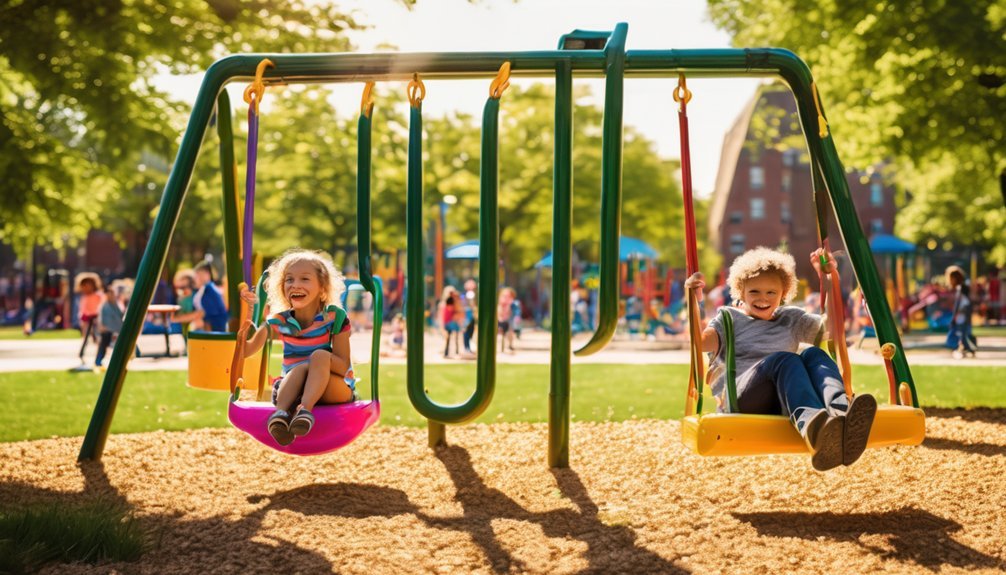
When you think about play equipment in parks, swings are often the first thing that comes to mind. You’ll find a variety of swing designs customized to different ages and abilities, ensuring everyone in your community feels included. Whether it’s traditional belt swings, bucket seats for toddlers, or adaptive swings for children with special needs, the right design encourages connection and fun. Choosing durable swing materials like galvanized steel frames and weather-resistant seats helps parks stand the test of time as they prioritize safety. By selecting swings thoughtfully, you create a welcoming space where families gather, friendships grow, and joyful memories form. Your park’s swing set can become a shared hub of happiness and community spirit.
Slides
When choosing slides for your park, it’s important to contemplate the different types available to suit various age groups and skill levels. You’ll additionally want to keep safety at the forefront, ensuring materials and designs minimize risks. Proper installation is key to creating a fun and secure experience for everyone in your community.
Types of Slides
Slides come in a variety of shapes and sizes, each designed to offer unique experiences for children of different ages and abilities. When choosing slides for your community park, consider the slide materials, such as durable plastic or metal, which impact safety and comfort. You’ll find classic straight slides that provide simple, fast fun, whereas spiral or curved slide designs encourage longer, more thrilling rides. Some parks even include wave or tunnel slides to add a sense of adventure and exploration. By selecting diverse slide designs, you cater to a broad range of kids, nurturing inclusivity and excitement. When your park offers various slide types, it becomes a welcoming space where every child can find their favorite way to play and connect with others.
Safety Considerations
Although slides provide endless fun, ensuring their safety is crucial to protect children and give you peace of mind as a community park manager. You’ll want to make sure all slides meet current safety regulations, which guide proper design, height limits, and materials used. This helps reduce risks and aids injury prevention by minimizing sharp edges and ensuring stable handrails. Regular inspections are key to spotting wear or damage early, keeping the play area secure. Additionally, consider the surfacing beneath slides—soft, impact-absorbing materials like rubber mulch can greatly reduce injury severity if falls occur. By prioritizing these safety aspects, you’re nurturing a welcoming environment where kids can enjoy themselves confidently, and community members feel assured their families are well cared for.
Installation Tips
Guaranteeing safety is the foundation before you install any play equipment, so keeping that in mind will guide you through the setup process smoothly. Applying proven installation techniques will help you create a fun, secure space your community can enjoy for years. Here’s what to focus on:
- Choose a level, well-drained surface to prevent water pooling and reduce wear.
- Follow manufacturer instructions precisely to guarantee structural integrity.
- Use proper tools and materials to anchor equipment firmly and avoid hazards.
- Plan for ongoing equipment maintenance, scheduling regular checks to catch issues early.
Climbing Walls
When choosing climbing walls for your park, you’ll want to focus on safety features and durable materials that protect kids during their play. These walls not just offer fun but likewise help children build strength, coordination, and problem-solving skills. Making sure the equipment meets safety standards keeps your community’s little climbers secure and involved.
Safety Features and Materials
While climbing walls add exciting challenges to parks, you’ll want to focus on safety features and materials that protect users of all ages. Ensuring your community’s climbing walls meet safety regulations is crucial—not only does it keep everyone safe, but it additionally builds trust among families. Look for materials with high durability to withstand weather and heavy use, so the equipment remains reliable over time. Here’s what to take into account:
- Non-toxic, slip-resistant surfaces to prevent falls
- Rounded edges and secure handholds to reduce injuries
- Impact-absorbing ground padding beneath the wall
- Regular inspections following local safety regulations
Skill Development Benefits
Since climbing walls challenge both the body and mind, they offer excellent opportunities for skill development. When you interact with climbing walls, you’re not just building strength—you’re enhancing your motor skills, coordination, and balance. This hands-on activity requires you to plan each move, promoting cognitive development as you devise routes and solve problems in real-time. In a community setting, climbing walls encourage teamwork and communication, helping you connect with others who share your enthusiasm. Whether you’re a beginner or more experienced, the progressive challenges help you grow physically and mentally. Incorporating climbing walls in parks provides a space where everyone feels included as they develop crucial skills, making it a valuable addition to nurture both individual growth and community bonding.
Merry-Go-Rounds
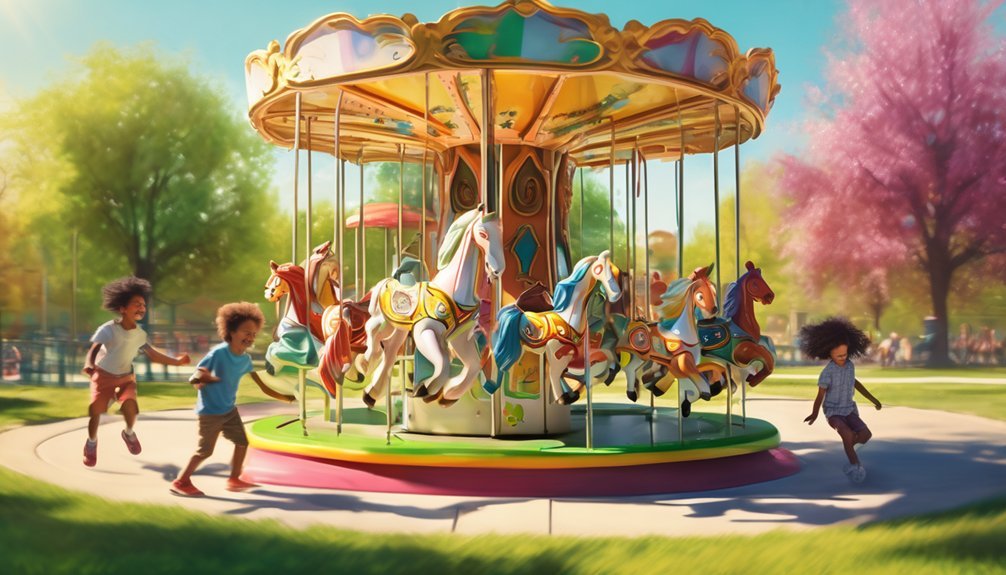
Although merry-go-rounds have been a classic fixture in parks for decades, they continue to offer unique opportunities for children to develop balance, coordination, and social skills. You’ll find that design variations keep these timeless playground staples fresh and captivating, encouraging kids to interact and play together. To boost user involvement, consider these points when choosing or maintaining merry-go-rounds:
Merry-go-rounds remain beloved playground classics, fostering balance, coordination, and social interaction through engaging, varied designs.
- Opt for designs that vary in size and speed to cater to different age groups
- Choose materials that guarantee safety without sacrificing fun
- Incorporate accessibility features to promote inclusivity within your community
- Promote group play to strengthen social bonds among children
Seesaws
When choosing seesaws for your park, you’ll want to contemplate the different types available and how they fit your community’s needs. It’s important to check safety features to keep kids protected during play. Additionally, think about the age groups that will use the seesaws to guarantee they’re appropriate and enjoyable for everyone.
Types of Seesaws
Although seesaws might seem simple, there are actually several types designed to fit different park settings and user needs. When choosing seesaw designs, you’ll want to take into account the community’s preferences and the durability of seesaw materials. Here are some common types you might find:
- Traditional plank seesaws: Classic design with a simple pivot, usually made of wood or metal.
- Spring seesaws: Mounted on a spring base for a gentle bounce, great for younger kids.
- Multi-user seesaws: Longer beams accommodating more children, promoting social play.
- Modern molded seesaws: Crafted from durable plastic or composite materials offering lively colors and ergonomic shapes.
Safety Features
Since seesaws involve movement and balance, safety features are vital to keep everyone secure and confident during play. When choosing seesaws for your community park, you want equipment that prioritizes child safety without sacrificing fun. Look for designs with smooth, rounded edges and secure handles to prevent slips and bumps. Shock-absorbing seats and ground-level springs help reduce impact, so kids can enjoy the ride safely. Additionally, consider the equipment durability—strong, weather-resistant materials guarantee the seesaw withstands frequent use and varying conditions, keeping your park’s play area dependable year-round. By focusing on these safety features, you’re not just adding a play structure; you’re creating a welcoming space where families feel comfortable and connected as kids explore and grow.
Age Appropriateness
Although seesaws can be a lot of fun, it’s important to choose equipment that matches the age group using it to guarantee safety and enjoyment. Different developmental stages require specific designs to support balance and coordination. When selecting seesaws for your park, consider these points:
- Choose seesaws designed for the intended age groups to confirm proper size and weight limits.
- Look for features that accommodate varying strength and motor skills, such as shock absorbers or softer seats.
- Verify the height and handle placement suit younger children to prevent falls.
- Create separate zones for toddlers and older kids to promote safe, inclusive play.
Balance Beams
Although balance beams might seem simple, they play a crucial role in developing coordination and confidence for kids in your park. The balance beam benefits go beyond just physical skills—they encourage focus, perseverance, and a sense of achievement. When you choose balance beam designs, aim for a variety that suits different skill levels and ages, such as low beams for beginners and slightly raised ones for more confident kids. Incorporating natural materials or bright colors can likewise make them inviting and blend well within your community space. By adding balance beams to your park, you’re not only supporting children’s physical development but also nurturing a welcoming environment where families feel connected and kids feel proud to challenge themselves safely. It’s a simple addition with a meaningful impact.
Monkey Bars
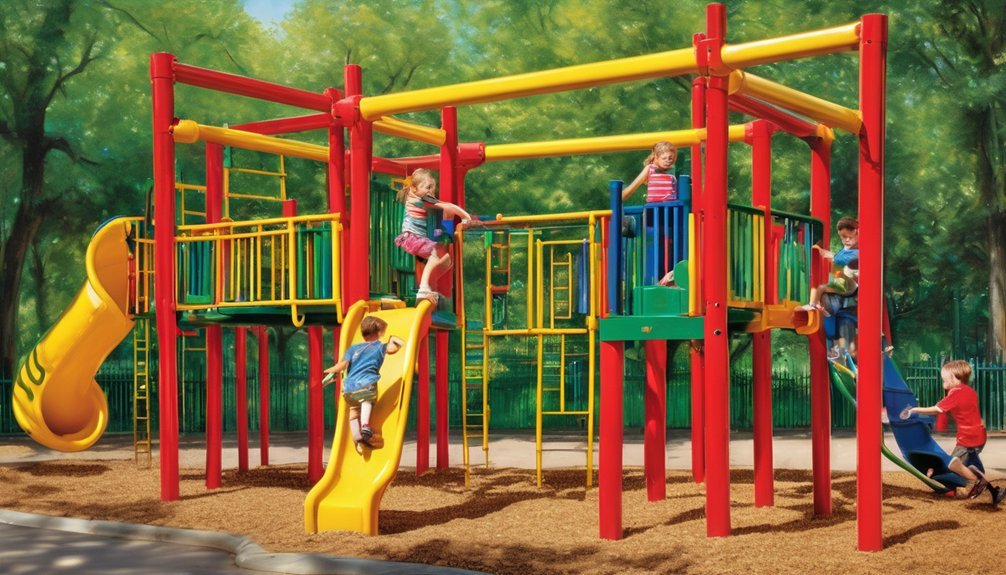
Building on the skills kids develop with balance beams, monkey bars offer a dynamic way to improve upper body strength and hand-eye coordination. When selecting monkey bar designs for your local park, consider features that involve children at various skill levels, encouraging them to challenge themselves safely. Monkey bar safety is essential; guarantee proper spacing and sturdy construction to prevent injuries and promote confidence. To create a welcoming community space, keep these points in mind:
- Choose adjustable heights to accommodate different ages and abilities
- Use non-slip materials for secure grips
- Provide soft ground surfaces underneath to cushion falls
- Incorporate clear signage with safety guidelines and age recommendations
Spring Riders
Spring riders bring a playful bounce to any park, giving kids a fun way to develop balance and coordination. When choosing spring riders, you’ll want to evaluate spring rider materials that are durable and safe for all ages—commonly powder-coated steel and high-density polyethylene guarantee longevity and weather resistance. You can find spring rider designs ranging from classic animals to imaginative vehicles, which spark creativity and encourage social play. By selecting diverse designs, you’ll create a welcoming environment that appeals to every child in your community. Plus, these compact pieces fit well in small or busy parks, making them ideal for neighborhoods aiming to maximize play space. Installing spring riders invites families to connect and kids to grow together, strengthening community bonds through shared joyful experiences.
Sandboxes
Few playground features invite as much creativity and sensory exploration as sandboxes. When you choose thoughtful sandbox designs, you create a welcoming space where kids can participate in sensory play that promotes imagination and social interaction. Sandboxes encourage children to build, dig, and cooperate, nurturing friendships and community spirit.
To make the most of your sandbox area, consider these tips:
- Opt for shaded covers to protect children and sand quality
- Use safe, non-toxic sand to guarantee health and cleanliness
- Incorporate seating around the sandbox for caregivers to join in
- Design accessible sandboxes to include children of all abilities
Rope Bridges
Though rope bridges add an exciting challenge to any playground, they similarly encourage balance, coordination, and confidence in children. When selecting rope bridge designs for your community park, it’s important to contemplate age-appropriate complexity and materials that withstand weather and wear. You’ll want to prioritize rope bridge safety by ensuring secure anchoring, non-slip surfaces, and proper tension. This not only protects kids but assures parents and caregivers feel comfortable letting their children explore. Rope bridges also bring kids together, nurturing teamwork as they traverse these dynamic structures side by side. By choosing thoughtfully designed rope bridges, you create a lively space where children build fundamental physical skills and a sense of belonging within your community. These play elements truly make parks more inviting and memorable for everyone.
Frequently Asked Questions
How Do I Maintain Park Play Equipment Safely?
You’ll want to give your equipment inspection a friendly routine, creating a maintenance schedule that keeps everything sturdy and safe. This way, your community can enjoy the park with peace of mind and shared care.
What Are the Best Materials for Durable Outdoor Play Equipment?
You’ll want durable materials like recycled plastics—they’re tough, low-maintenance, and eco-friendly options that support sustainability. Choosing these helps your community create safe, long-lasting play spaces everyone can enjoy responsibly together.
How Can Play Equipment Accommodate Children With Disabilities?
You’d think inclusive design could move mountains! By integrating sensory play and accessible features, you guarantee every child feels welcome, nurturing a community where everyone belongs and enjoys playground adventures together, no exceptions.
What Is the Average Lifespan of Park Play Equipment?
You can expect play equipment lifespan to be around 10-15 years, but regular maintenance schedules are key to prolonging it. By staying proactive together, your community guarantees safe, fun spaces that last for everyone’s enjoyment.
Are There Safety Standards for Installing Playground Equipment?
In terms of playgrounds, you can’t cut corners. You’ve got to follow strict safety regulations and installation guidelines to make sure every child in your community plays safely and enjoys the park worry-free.