
The Ultimate Guide helps you plan Bangalore playgrounds with safety, accessibility, and cost efficiency at the forefront. You’ll map safer layouts with clear sightlines, shade through canopies and trees, and permeable yet ADA-compliant surfaces for maximum supervision and comfort. Prioritize durable, modular materials, low-VOC coatings, and local sourcing to minimize lifecycle costs. Embrace inclusive design—multi-age zones, tactile paths, and sensory play—alongside governance, ROI tracking, and community-driven deployment to boost impact. More practical steps await, guiding you toward scalable, trusted outcomes.
Safety and Accessibility Essentials for Bangalore Playgrounds
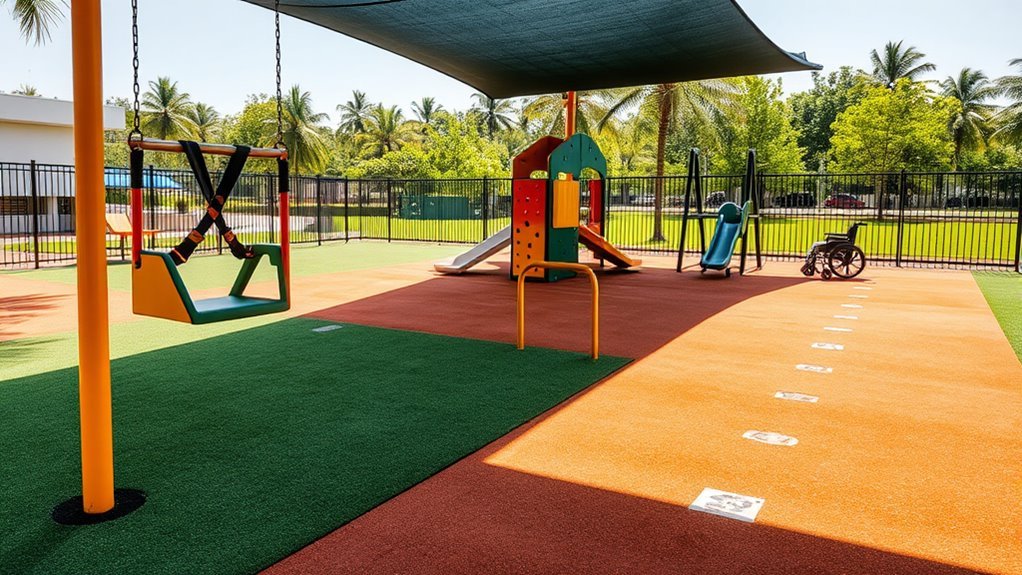
Safety and accessibility are non-negotiable when designing Bangalore playgrounds. You approach this topic with a practical mindset, focusing on concrete steps that yield measurable safety outcomes. Begin with safety audits you can perform at every stage—from site selection to final inspection. Use these audits to identify hazards, verify equipment integrity, and confirm material durability under local climate conditions. Document findings and assign accountable owners to remediation tasks, with clear timelines. Next, guarantee accessibility compliance by evaluating routes, surface materials, and equipment reachability for egress and ingress. Prioritize traction, fall zones, and user-friendly controls. Train staff and contractors in inclusive design principles so solutions serve diverse age groups and abilities. Regular re-audits uphold standards, fostering trust among communities and developers seeking responsible, welcoming playground environments.
Design Shaded, Kid-Friendly Layouts for Dense Urban Plots
Can dense urban plots accommodate kid-friendly, shaded layouts without sacrificing safety or flow? Yes, with deliberate zoning, you define clear play zones, sightlines, and circulation paths. Prioritize design shade by layering canopies, shade sails, and tree canopies that minimize glare and heat peaks during peak hours. Position play structures to maintain central, supervise-able activity hubs, while quieter corners host imaginative play and rest. Use permeable ground surfaces to balance accessibility and drainage, and ensure ADA-compliant routes weave through each zone. Integrate storage, seating, and kid-sized amenities at regular intervals to foster belonging and ease of supervision. For Bangalore developers, this approach efficiently renders dense urban plots into inclusive, safe, and engaging spaces that invite community use.
Sustainable Materials and Cost-Effective Equipment Choices
Sustainable materials and cost-effective equipment choices hinge on balancing durability, lifecycle costs, and local context. You’ll prioritize durable, low-maintenance options that suit Bangalore’s climate, while tracking total ownership costs over time. Favor modular components that can be repaired or upgraded, reducing waste and downtime. Emphasize sustainable sourcing and local supply chains to shorten lead times and support nearby vendors. Consider recycled plastics for mulching, protective casings, and benches, pairing them with steel or timber frames for strength. Choose coatings and finishes with low volatile organic compounds to protect indoor air quality and user safety. Tools: quantify lifecycle cost per unit, recyclability, and expected replacement intervals.
| Dimension | Guidance |
|---|---|
| Material Source | Sustainable sourcing, local vendors |
| Recycling/Reuse | Recycled plastics, modular components |
| Longevity | 10–15 year maintenance plan |
| End-of-Life | Upgradable, refurbishable parts |
Inclusive Design Criteria: Multi-Age Zones, Tactile Paths, and Sensory Play
How can playground design serve every user? You’ll implement inclusive design by aligning features to diverse needs without duplicating effort. Focus on three core ideas that deliver measurable access and belonging:
- Multi-age zones
- Tactile paths
- Sensory play
These elements enable seamless access, encourage exploration, and support social interaction across abilities and ages. In practice, you map activities to height ranges, ensure surface consistency, and provide contrasting textures for orientation. Prioritize clear sightlines so caregivers and kids stay connected. Use equipment with adjustable components and non-slip grips to reduce barriers. Document safety margins, color contrast, and acoustic cues to support inclusive design. The result is a cohesive play environment where every child can engage, learn, and belong, elevating developer value and community impact.
Maintenance, Approvals, and ROI for Urban Play Spaces
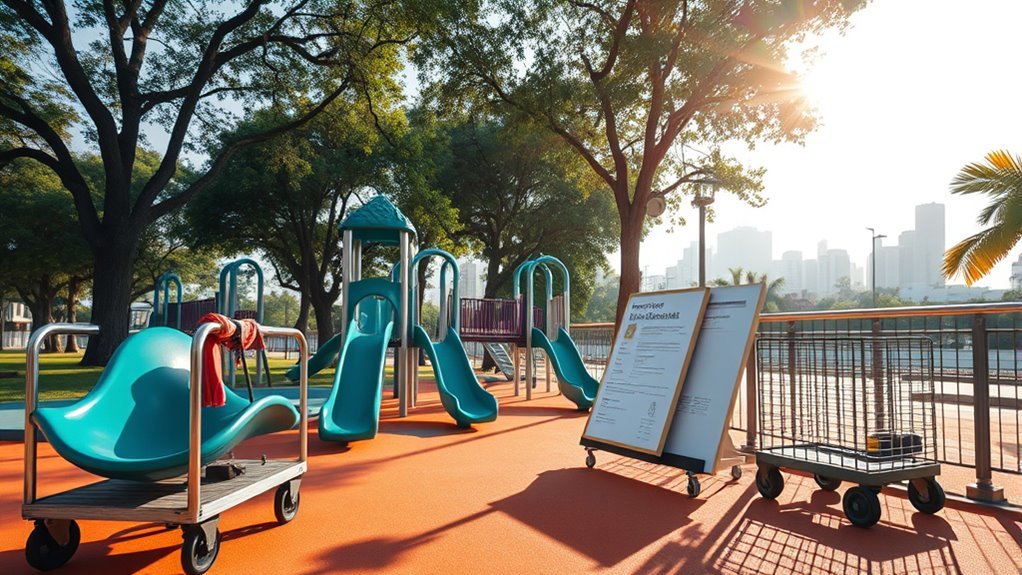
You’ll want a clear view of maintenance timelines and costs upfront to budget reliably. We’ll map the approval milestones and their typical cycle times to avoid project delays, then translate ROI metrics into actionable targets for urban play spaces. This framing keeps you focused on cost control, regulatory steps, and tangible value outcomes.
Maintenance Timelines and Costs
Maintenance timelines and costs for urban play spaces hinge on clear governance, predictable funding, and disciplined maintenance regimes. You’ll align maintenance budgeting with lifecycle timing, so every asset earns its value over time.
- Map assets to lifecycle stages, then budget for updates, replacements, and contingencies.
- Set cadence for inspections, certifications, and minor repairs to prevent costly overhauls.
- Build a transparent funding plan that ties reserve growth to usage patterns and inflation.
This approach minimizes downtime, sustains safety, and strengthens community trust. By planning for depreciation, you avoid surprise bills and preserve ROI for investors and residents alike. Regular reviews validate cost accuracy, adjust for wear, and preserve cherished spaces where families feel they belong. You gain predictability, control, and confidence in delivering durable, inviting play environments.
Approval Process Milestones
Approval milestones for urban play spaces hinge on clear governance, aligned maintenance expectations, and measurable ROI. You’ll map delays, required permits, and review timelines to stay aligned with city processes, avoid scope creep, and protect community trust. In practice, you track permit delays, anticipate stakeholder sign-offs, and confirm budget approvals before procurement begins. A disciplined schedule minimizes risk and fosters belonging among residents who rely on dependable spaces. Use the table below to visualize milestones, responsible parties, and typical durations, so you can synchronize teams and land approvals on time.
| Milestone | Responsible Party | Typical Duration |
|---|---|---|
| Concept approval | Developer/PM | 2–4 weeks |
| Zoning & permits | Municipality | 6–12 weeks |
| Design approvals | Client/City | 3–6 weeks |
| Construction plan sign-off | Engineer/City | 2–4 weeks |
| Final occupancy | Authority | 1–2 weeks |
ROI Metrics for Play Spaces
ROI metrics for urban play spaces blend maintenance realities, approval workflows, and financial returns into a single decision framework. You’ll assess ongoing costs, expected lifespans, and funding timelines to gauge true value, not just upfront price. Precision here matters: align maintenance schedules with user patterns, anticipate renewal needs, and quantify downtime costs. When shaping approvals, document risk-adjusted benefits and community impacts to accelerate buy-in. Your ROI lens should connect capital outlays to measurable outcomes—usage, safety incidents avoided, and property value uplift. Use these steps to deepen understanding:
- Map operating costs versus usage-driven revenue or savings.
- Validate regulatory timelines and permit contingencies early.
- Track user satisfaction and equity benefits alongside financials.
two word discussion ideas: ROI metrics, play spaces.
Community Engagement and Scalable Deployment in Urban Development
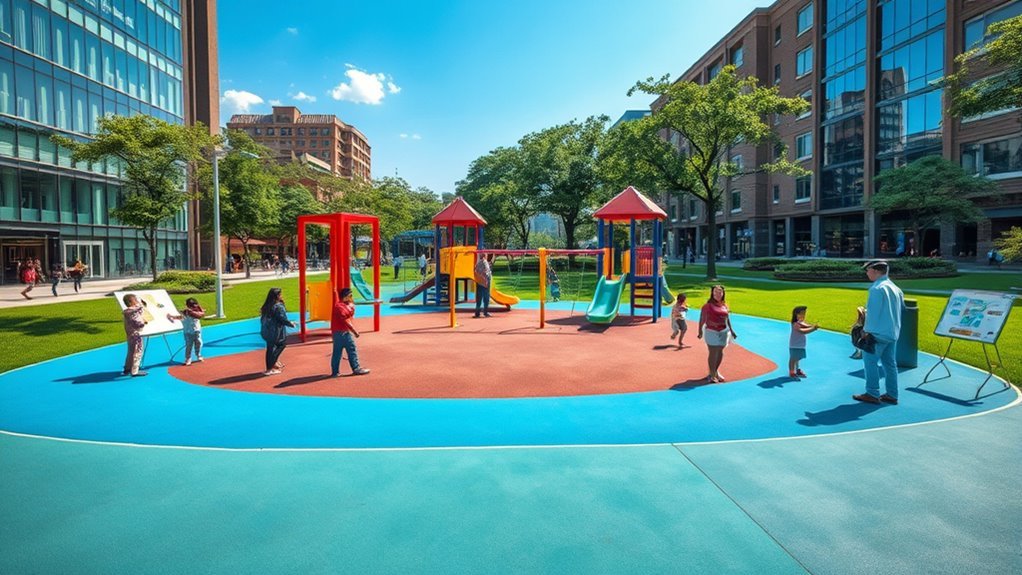
You’ll start by prioritizing Community-Driven Design to guarantee spaces reflect local needs and activate participation from residents, schools, and businesses. Next, you’ll map Scalable Deployment Strategies that correspond with zoning, funding, and phased construction to grow impact without compromising quality. Finally, you’ll track Urban Engagement Metrics to measure usage, satisfaction, and equity, enabling data-informed refinements over time.
Community-Driven Design
How can communities shape their own spaces without slowing development? You’ll unlock practical, data-driven design by centering residents early. Community benchmarking helps you compare needs, usage, and success across projects, shaping features that endure. Private public partnerships harness resources and accountability, aligning timelines with urban realities. Your approach blends input with feasibility, delivering spaces that feel owned, not imposed.
- Map stakeholders and needs through quick surveys and focus sessions.
- Prototype ideas in small, reversible formats before committing to build.
- Align milestones with funding, permitting, and maintenance plans to avoid delays.
This method fosters belonging by validating voices and translating feedback into actionable outcomes. It’s about iterative refinement, measurable impacts, and scalable deployment without compromising community trust.
Scalable Deployment Strategies
As communities push for scalable, real-world impact, we need deployment strategies that grow with demand whereas maintaining accountability. You’ll design scalable deployment plans that align with phased urban rollout, ensuring resources match uptake without overcommitting. Begin with modular infrastructure, so additions weave into existing networks without disruption. Prioritize data-informed decisioning: real-time feedback guides where to scale, what to pause, and how to reallocate funds. Establish clear governance, with defined roles, milestones, and accountability trails to uphold trust among residents and developers. Build partnerships across public, private, and community groups to share risks and responsibilities, accelerating adoption while preserving quality. Emphasize measurable outcomes—access, safety, and usability—so you can adjust iterations quickly and keep the process inclusive and transparent.
Urban Engagement Metrics
Urban involvement metrics quantify how residents interact with scalable development initiatives, turning participation into actionable data. You’ll track how urban metrics shape decisions, from usage patterns to partnership outcomes, ensuring playground partnerships translate into lasting value. By align metrics with community needs, you reinforce belonging while refining deploymentSpeed and impact. Use clear benchmarks, feedback loops, and transparent reporting to keep stakeholders informed and Correlate? engaged.
- Monitor participation rates across neighborhoods to identify underserved areas
- Correlate usage with program milestones to measure impact and sustainability
- Assess partner performance, resource allocation, and long-term maintenance readiness
This approach helps you drive accountable, inclusive growth. You’ll translate data into practical improvements, strengthen trust, and promote scalable, community-centered urban development.
Frequently Asked Questions
What Are the Best Funding Models for Playgrounds in Bangalore?
You should consider mixed funding models combining public grants, private sponsorships, and community fundraising; this playground finance approach diversifies risk, ensure accountability, and foster belonging, while sustainable maintenance funds keep the project vibrant and accessible for all residents.
How to Measure Long-Term ROI for Urban Playgrounds?
Like a compass steady in a storm, you measure long term ROI for urban playgrounds by tracking usage, maintenance costs, and social value. You analyze data, update projections, and guarantee continuous community belonging through transparent investment and outcomes.
Which Local Regulations Affect Playground Installation Timelines?
Permits timelines are influenced by city regulations and safety standards, which you must navigate to stay on track. You’ll align approvals with safety standards, schedule buffers, and build a sense of belonging by transparent, consistent communication with stakeholders.
How Can Schools Partner for Multi-Use Playground Spaces?
Schools can partner for multi-use playground spaces by forming cohorts collaboration with local education authorities and nonprofits; align goals, share funding, and ensure grant applicability, scheduling, and safety protocols, so you feel supported, included, and confident in shared community outcomes.
What Metrics Indicate Universal Accessibility Success Post-Installation?
Accessibility benchmarks and Universal QA metrics indicate success when installations meet inclusive reach, usable pathways, adaptive equipment, clear signage, and feedback loops; you’ll verify with user testing, maintenance logs, and ongoing participation data to ensure lasting belonging.