
ISO and BIS certifications matter for your Indian play equipment as they establish measurable safety and quality benchmarks before products reach schools and parks. You’ll see standardized testing for materials, edge radii, load capacity, and long-term durability, plus traceable design specs and third-party inspections. BIS confirms national market access, while ISO guarantees consistent performance across batches. This reduces injuries, lowers lifecycle costs, and speeds approvals—with transparent warranties. If you keep exploring, you’ll uncover how to choose certified gear.
Why ISO Certification Matters for Indian Play Equipment

ISO certification matters for Indian play equipment as it sets measurable safety and quality benchmarks that manufacturers must meet before products reach schools and parks. You’ll see how criteria cover material strength, edge radii, load testing, and long-term durability, giving you confidence in every play structure. The process begins with documented design specs, followed by rigorous testing protocols, third-party inspections, and traceable quality records. When you evaluate equipment, ISO certification signals consistent safety compliance across batches, suppliers, and maintenance cycles, reducing incidents and recalls. You’ll benefit from predictable performance, standardized maintenance intervals, and clearer warranties. This isn’t just paperwork; it’s a framework that harmonize production, inspection, and user experience. Belonging comes from knowing the equipment you trust meets universal safety and quality standards.
BIS Standards: Ensuring National Safety and Quality
BIS standards build on the safety and quality framework you’re already evaluating with ISO, but they center on nationwide compliance and market access in India. You’ll see systematic alignment across product categories, with nationally recognized test methods, labeling, and conformity assessment that streamline procurement and distribution. The process begins with a BIS registration, followed by product testing, factory scrutiny, and periodic surveillance to sustain certification. You’ll compare performance against standardized benchmarks, focusing on durability, risk mitigation, and user safety. This approach strengthens playground safety by enforcing consistent performance criteria and traceability across vendors. Certification benefits include reduced market barriers, clearer import controls, and increased consumer confidence. By embracing BIS, you reinforce trust, support local manufacturing, and deliver reliable, compliant equipment to communities.
Benefits for Schools, Communities, and Parents
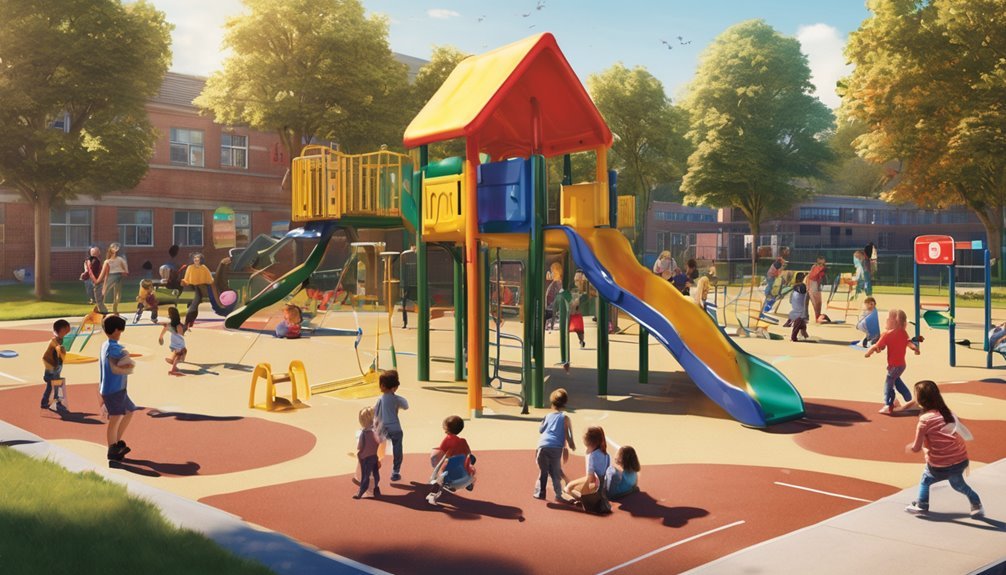
Exploring why these certifications matter, schools, communities, and parents gain measurable benefits from ISO and BIS-compliant play equipment. You’ll notice standardized safety tests, traceable production records, and consistent performance benchmarks that translate into fewer injuries and smoother procurement. For schools, lifecycle cost analyses show lower maintenance spikes and clearer budgeting paths, while standardized labeling accelerates approvals and audits. Communities see enhanced playground reliability, enabling regular, inclusive use during after-school programs and events, which strengthens local cohesion. Parents gain confidence through transparent compliance data, verifiable warranty terms, and clear supplier accountability, boosting parental trust. Together, these data-driven assurances create a dependable environment where children learn, play, and belong confidently, with measurable safety and quality outcomes reinforcing community safety.
How Certification Impacts Longevity and Maintenance
Certification directly influences how long play equipment lasts and how it’s maintained. When you follow certified standards, you reduce wear patterns, corrosion, and structural fatigue, delivering a more predictable longevity impact. You’ll also align maintenance planning with data-backed intervals, inspections, and parts replacement timelines, not guesswork.
- Inspect periodicity: schedule checks at defined milestones to catch issues early.
- Track performance data: log load tests, surface wear, and connector integrity for trends.
- Schedule proactive replacements: plan parts replacement before failure risk rises.
- Verify supplier conformity: confirm that every component meets ISO/BIS criteria before use.
This approach strengthens safety, minimizes downtime, and builds trust among users seeking reliable, durable play environments.
Choosing Certified Equipment: Guidance for Manufacturers and Buyers

Choosing certified equipment hinges on aligning capabilities with your project goals and risk tolerance. To guide you, focus on standards alignment, test reports, and traceability across supply chains. For manufacturers, establish rigorous QA processes, document certifications, and maintain ongoing compliance audits to support buyers and schools. Buyers and schools should request ISO and BIS verification, load and impact data, and lifecycle planning for safety, maintenance, and replacement cycles. Communities and parents benefit when products meet clear performance benchmarks, reducing risk and fostering trust. Use a structured selection checklist: certification scope, performance metrics, supplier history, after-sales support, and warranty terms. This data-driven approach makes choosing certified gear a collaborative, transparent decision, promoting belonging by ensuring predictable safety, durable play value, and shared accountability across stakeholders.
Frequently Asked Questions
How Often Are ISO and BIS Certifications Renewed for Play Equipment?
ISO renewal and BIS renewal timelines vary by certifying body and product category, but play equipment typically require annual surveillance or recertification every 1–3 years. You’ll track expiry dates, schedule audits before expiry, and maintain updated technical documentation. If a nonconformity arises, expect corrective actions and possible temporary suspension. In practice, plan for annual surveillance plus a formal renewal at the end of the certification cycle to ensure uninterrupted compliance.
Do Certifications Cover Accessibility and Inclusive Playground Features?
Yes, certifications cover accessibility and inclusive playground features, guiding you toward inclusive design and compliance with accessibility standards. You’ll assess equipment against tactile, auditory, and navigational criteria, ensuring paths, ramps, and surface textures meet specified thresholds. The process is data-driven: you’ll collect measurements, test with users, and document outcomes to verify inclusivity. By conforming with accessibility standards, you create spaces where you and others feel welcome, supported, and confident in shared play experiences.
Can Certification Impact Insurance Premiums for Public Play Spaces?
Yes, certification can impact insurance premiums for public play spaces. When you demonstrate strong compliance, insurers see lower risk, which can reduce premiums and improve coverage terms. Your documented adherence to standards creates data points for underwriting, shaping favorable pricing and policy options. Ongoing compliance incentives may include premium credits and easier renewal processes. Track incidents, maintenance, and audits closely so your risk profile shows steady improvement, reinforcing insurance confidence and long-term cost stability.
Are There Regional Exemptions or Differences in BIS Standards Nationwide?
There aren’t major regional exemptions in BIS standards nationwide, but you’ll encounter minor variations in understanding and adoption timelines. You’ll benefit from regional variations being synchronized toward nationwide harmonization, reducing compliance guesswork. Your process should map local codes, track deviations, and harmonize testing labs accordingly. By pursuing harmonization, you’ll gain predictability, smoother audits, and stronger procurement confidence, helping you feel a stronger sense of belonging in a uniform regulatory community across the country.
What Documentation Is Required for Rapid Certification Audits?
You’ll need the documented evidence package for rapid audits, including completed application forms, risk assessments, test reports, supplier declarations, and traceability records. Ensure your quality manual, process flows, and nonconformity logs are current. Provide calibration certificates, factory inspection reports, and witnessed test summaries. Prepare a concise conformity checklist, change control notes, and corrective action closures. With thorough documentation requirements, you’ll accelerate approvals, foster trust, and feel you belong in a compliant, data-driven operations community.