
Quality play equipment signals safety, modernity, and holistic development, influencing enrollment decisions in Bangalore. Data show parents respond to durable, inclusive designs, modular layouts, and well-maintained spaces with longer site visits and higher inquiry-to-application conversion. Schools with shade, clear sightlines, and proactive maintenance dashboards build trust and may boost applicant pools. With durable materials and bulk-sourced, lifecycle-managed purchases, districts can sustain momentum and enrollment gains. If you keep exploring, you’ll uncover how to implement these insights effectively.
Why Bangalore Schools Must Invest in Play Facilities (Enrollment Impact)
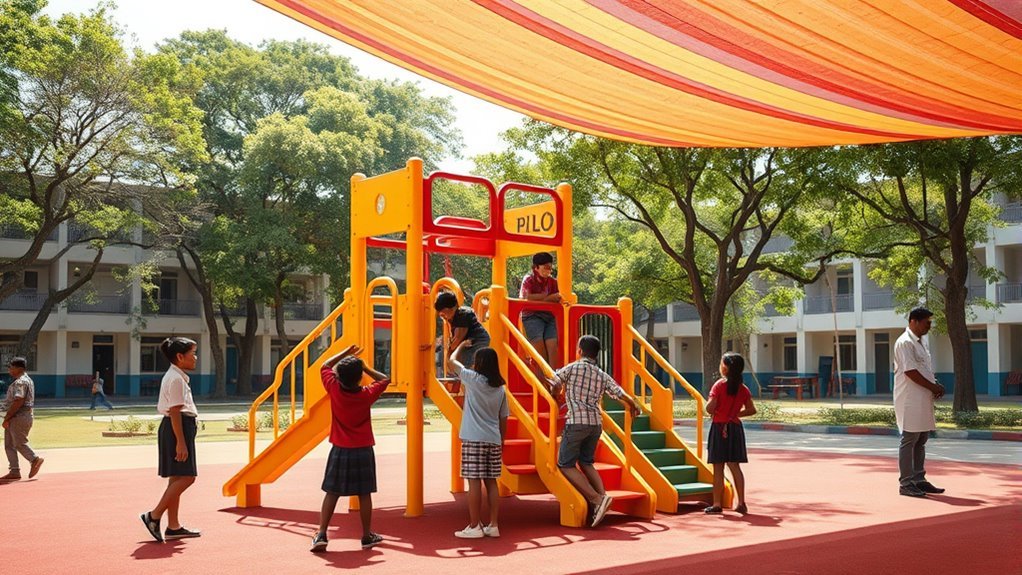
Investing in quality play facilities is not a luxury for Bangalore schools; it’s a strategic lever for enrollment growth. You’ll see enrollment signals tied to sturdy play spaces: higher inquiry rates from parents seeking holistic environments, longer site visits, and increased likelihood of application submission. Data show districts with upgraded playgrounds report improved perceived school quality, narrowing the gap with private peers. Play facilities influence branding, with playground aesthetics conveying care, safety, and modernity in a single glance. Partnerships with local brands can extend funding, maintenance, and perpetual modernization, reducing capex risk while signaling community investment. Policy-wise, allocate dedicated capital for age-appropriate equipment, safe surfacing, and accessible design, then monitor metrics like inquiry-to-application conversion and waitlist changes. Your institution strengthens belonging through tangible, well-maintained spaces that attract diverse families.
How Play Space Quality Affects Student Well-Being and Attendance
Play space quality isn’t just about aesthetics—it’s tied to concrete outcomes in student well-being and attendance. You’ll see measurable benefits when spaces reduce stressors and promote safety, with improved focus, mood, and social interaction among peers. Data from Bangalore schools show lower absenteeism linked to well-designed play areas that encourage consistent micro-breaks and active engagement between classes. They also correlate with higher self-regulation and classroom readiness, supporting district-wide wellbeing targets. Policy implications include prioritizing durable equipment, accessible layouts, and noise management to sustain attention and reduce fatigue. Consider how playground acoustics affect conversations, collaboration, and perceived safety in corridors after recess. Parent testimonials reinforce the value, highlighting calmer afternoons and a sense of belonging that motivates regular attendance choices.
What Signals Do Safe, Well-Maintained Play Areas Send to Families?
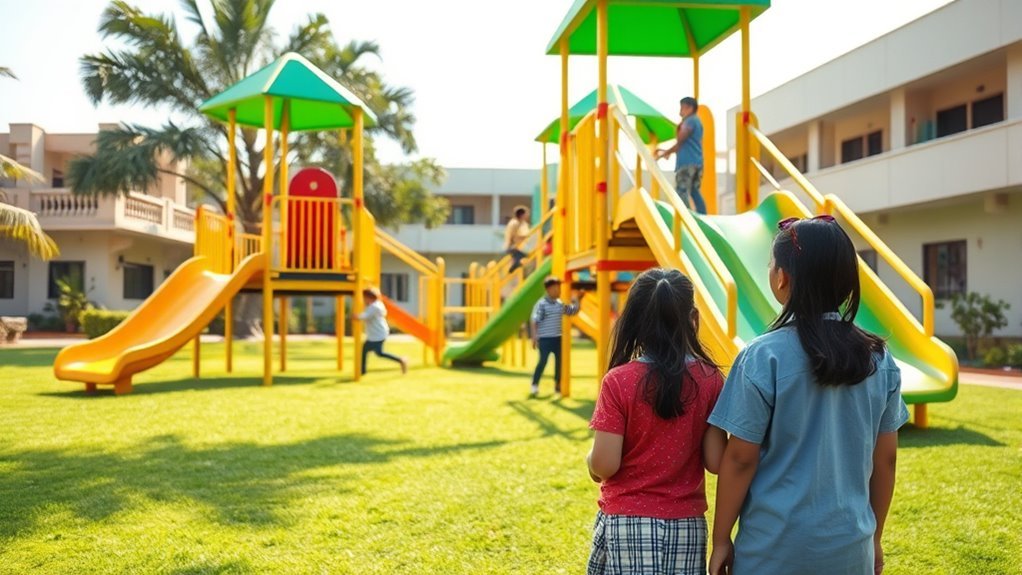
You’ll see safety signals that reassure families about risk management and supervision, which can influence enrollment decisions. Maintenance reflects commitment, with consistent upkeep signaling long-term investment in student well-being and campus safety. Quality play and clear safety practices together support stronger enrollment by demonstrating responsible governance and a data-informed approach.
Safety Signals For Families
What signals of safety and maintenance do families notice first, and why do they matter? You spot clear sightlines, visible repairs, and organized equipment placement, which shape trust before enrollment decisions. Safety signals matter because they translate into families perceptions of risk and care; if paths are unobstructed and surfaces are clean, you infer routines that prevent injuries and disruptions. Data show that well-marked zones, shade structures, and shaded waiting areas reduce heat exposure concerns, boosting comfort during visits. Transparent supervision practices and posted safety rules reinforce credibility. You’ll assess safety signals alongside accessibility, including gate controls and fencing that delineate play zones. When these elements align with documented maintenance schedules, families perceive a proactive culture and inclusive environment, supporting return visits and overall enrollment appeal.
Maintenance Reflects Commitment
Maintenance signals commitment: when families see consistent upkeep—clear sightlines, fresh paint, regular fence and surface repairs, and stocked maintenance logs—they infer a disciplined safety culture and reliable program governance. In your district, data show higher trust in schools that publish routine maintenance cycles and incident dashboards, supporting enrollment stability. You’ll communicate accountability through quarterly audits, transparent contractor oversight, and prompt remediation timelines, all aligning with budget optimization goals. When playground aesthetics are orderly, parents perceive predictable quality and lasting value, reinforcing belonging without the need for extravagant capital spend. Clear policies on routine inspections, safety checks, and responsive fixes signal longevity of investment and care. This clarity helps families feel welcome, included, and confident in the school’s commitment to student well-being.
Quality Play, Strong Enrollment
Quality play environments signal both safety and value to families, reinforcing enrollment stability by showing that students can learn and explore with confidence. You’ll see how playground design influences parent perception, shaping decisions about where children belong. Data show safer, well‑maintained spaces correlate with higher retention and voluntary enrollment growth, especially in Bangalore’s competitive schools. Policy emphasis should target regular inspections, clear maintenance schedules, and inclusive equipment that supports diverse learners. Families assess risk, supervision, and the opportunity to develop social-emotional skills during recess. By prioritizing robust safety standards and engaging communities in governance, you reduce uncertainty and strengthen belonging. These signals matter for sustainable enrollment and positive school climate.
| Playground design | Parent perception |
|---|---|
| Safer, well‑maintained areas | Trust in school care |
| Inclusive equipment | Confidence in learning culture |
Top Play Equipment That Attracts Urban Indian Families
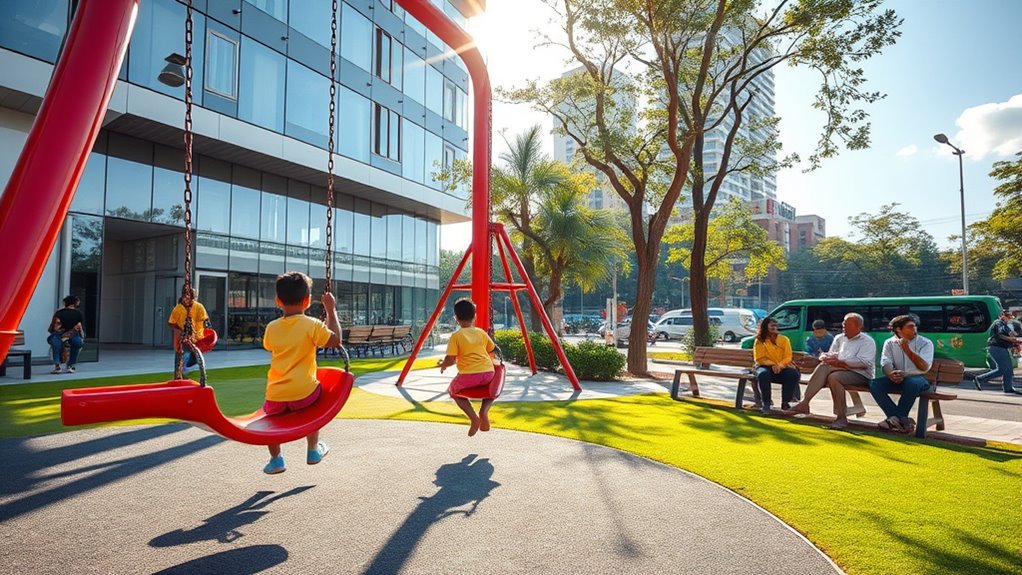
Urban Indian families prioritize play equipment that combines safety, durability, and developmental value, with data showing that well-designed outdoor and modular play structures correspond with higher school enrollment and longer campus visits. You’ll see that equipment emphasizing age-appropriate challenges, loose-pour safety surfaces, and modular, scalable layouts attracts families seeking consistent campus engagement. In practice, top features include zip-and-climb elements, inclusive swings, climbers, and programmable activity panels that support social-emotional growth. You should note how data points from randomized sampling across neighborhoods reveal higher inquiry rates when parks integrate shaded seating and wayfinding that reduces decision fatigue. The takeaway is a clear link between quality play options and enrollment interest, guiding policy and procurement toward durable, adaptable systems rather than unrelated concept substitutes.
Safety and Accessibility Benchmarks Parents Expect in School Play Spaces
Are parents rightfully cautious about safety and accessibility; what benchmarks do they expect for school play spaces in Bangalore? You’ll see a data-driven map of expectations, focusing on playground safety and accessibility benchmarks that influence enrollment decisions. Policy implications emphasize consistent maintenance, certified equipment, and inclusive design to support all learners.
- Regular risk assessments with publicly available results
- ADA/BDA-like accessibility standards and inclusive equipment access
- Certified playground installers and warranty-backed components
- Clear incident reporting, maintenance schedules, and responsive remediation
Adhering to these benchmarks builds trust and signals belonging to families seeking safe, equitable spaces. When schools meet these criteria, you quantify safety, demonstrate accountability, and align with local guidelines, enhancing enrollment potential while protecting student well-being.
Budgeting for Durable, High-Impact Play Environments in Bangalore
You’ll need a budget that prioritizes durability and high-impact play enclosures to maximize lifecycle value in Bangalore schools. By aligning procurement strategies with local supplier data and lifecycle cost analyses, you can forecast long-term maintenance and replacement needs more accurately. This discussion kicks off with how data-driven budgeting and targeted procurement approaches shape durable, high-usage play environments.
Budgeting For Durability
Budgeting for durable, high-impact play environments in Bangalore hinges on forecasting long-term value. You’ll align capital decisions with durability metrics and predictable maintenance costs, ensuring community trust and long-term enrollment stability.
- Identify lifecycle costs across equipment categories to compare total cost of ownership.
- Establish milestone-based funding reserves for replacements and upgrades.
- Link budget lines to clear performance standards and safety compliance data.
- Track outcomes against enrollment shifts and community satisfaction indicators.
High-Impact Play Environments
High-impact play environments require intentional budgeting that prioritizes durability, safety, and sustained enrollment gains in Bangalore. You’ll evaluate cost-per-outcome, emphasizing long-term maintenance contracts, modular components, and scalable layouts that adapt to cohort growth. Data indicate durable materials reduce replacement cycles by up to 40%, while certified safety standards correlate with higher parental trust and attendance stability. Prioritize playground ergonomics to minimize injury risk and support inclusive use by students of varied abilities. Plan for noise mitigation through strategic landscape buffers and enclosure designs to maintain classroom focus nearby. Align budget with lifecycle analyses showing lower total cost of ownership when equipment supports year-round use and community events. This approach builds credible, policy-aligned value that nurtures belonging and sustained enrollment.
Bangalore Procurement Strategies
How can Bangalore schools optimize procurement to fund durable, high-impact play environments while safeguarding budget integrity and enrollment stability?
You’ll align procurement with clear policy goals and measurable outcomes, prioritizing playground ergonomics and budget optimization. By consolidating needs, you reduce duplication and leverage bulk pricing, preserving funds for durable equipment. Transparent vendor criteria ensure quality, safety, and long-term value, reinforcing community trust and enrollment confidence.
- Define durable specs and ergonomic standards to guide every purchase
- Use competitive bidding, multi-vendor sourcing, and performance-based contracts
- Audit lifecycle costs and warranty terms to protect ongoing maintenance budgets
- Track enrollment and satisfaction data to adjust priorities without overspending
Maintenance Practices That Sustain Enrollment Momentum
Maintaining quality play equipment is essential to sustain enrollment momentum, and clear maintenance practices help schools demonstrate reliability to parents and communities. You’ll track inspection frequencies, prioritize hazard mitigation, and publish dashboards showing completion rates. Data indicates districts with scheduled servicing report fewer outages and higher student participation in after-school activities, reinforcing trust. Policy-wise, mandate quarterly safety checks, annual certifications, and budget allocations that correspond with lifecycle replacements. You’ll optimize procurement to support durable components, reducing long-term costs while preserving safety margins. Consider playground aesthetics and color psychology when scheduling renovs, ensuring accessible, inviting spaces that reinforce belonging. Transparent incident logs and response times foster confidence among families and staff, turning maintenance discipline into a competitive differentiator that sustains enrollment momentum.
Case Studies: Bangalore Schools With Standout Playgrounds
You’ll see how standout playground features—like age-appropriate zones, durable equipment, and inclusive layouts—align with enrollment goals. Early data from Bangalore cases show a link between engaging play spaces and higher student interest and retention. This section will compare features and provide enrollment-impact evidence to guide policy and investment decisions.
Standout Playground Features
Among Bangalore schools with standout playgrounds, the unique features—robust safety fencing, modular play zones, and water-smart landscaping—illustrate how design choices relate to higher student participation and enrollment stability. You’ll see how playground aesthetics guide engagement, while color psychology subtly influences mood and pacing throughout the day. Data shows schools with clear safety boundaries and adaptable zones foster frequent usage, translating to steady enrollments and consistent attendance.
- Safety-first zoning enhances supervision efficiency and reduces incidents.
- Modular zones support scalable activity options for diverse age groups.
- Water-smart landscaping lowers maintenance costs and environmental impact.
- Color-coordinated elements reinforce wayfinding and inclusive play experiences.
Enrollment Impact Evidence
What do enrollment trends reveal when Bangalore schools invest in standout playgrounds? Case studies show measurable gains where playground aesthetics align with academic programs and community outreach. You’ll see higher inquiry rates, stronger applicant pools, and improved retention in schools that publicly report outdoor investment alongside academic outcomes. In these districts, enrollment upticks correlate with transparent budgeting for equipment, maintenance cycles, and inclusive play spaces that support diverse learners. Policy implications point to recognizing playgrounds as strategic assets, not add-ons, with data suggesting modest fiscal incentives can amplify enrollment momentum. When schools share dashboards detailing usage, safety metrics, and cost-benefit analyses, families feel welcome and confident. This evidence supports targeted investments, coordinated with district enrollment strategies and community partnerships.
Aligning Play Spaces With Holistic Development Goals in Schools
Coordinating play spaces with holistic development goals in schools requires a clear linkage between design choices and student outcomes. You’ll align equipment, supervision, and spaces with developmental targets and safety standards, using data to justify investments. This approach supports belonging by showing every child can thrive through intentional environments.
- Prioritize outcomes: map play features to social-emotional and cognitive milestones, with measurable indicators.
- Align budgeting: use budget forecasting to balance safety, accessibility, and long-term maintenance.
- Embed safety: integrate clear sightlines, soft fall zones, and age-appropriate equipment into planning.
- Establish governance: create cross-functional oversight that reviews data, updates goals, and communicates progress to families.
Measuring Enrollment Impact: Metrics, Tools, and Next Steps
Measuring enrollment impact starts with defining clear, data-driven metrics that link play initiatives to school choice. You’ll track enrollment metrics like new student inquiries, applications, and admissions shares alongside changes in attendance and retention after installing play equipment. Use dashboards that align facilities data with demographic and feeder-school trends, so policy decisions reflect what families value about safe, engaging spaces. Tools include surveys, GIS maps, and spaced-out A/B tests for different playground configurations. Next steps focus on transparent reporting, stakeholder briefings, and iterative adjustments to maximize belonging. Emphasize equitable access, monitor implementation quality, and publish results to inform district-wide decisions about resource allocation and enrollment strategies.
| Metric focus | Data source/Method |
|---|---|
| New inquiries | Front-d desk logs, CRM |
| Applications | SIS, enrollment reports |
| Retention | year-to-year attendance |
| Satisfaction | parent surveys, interviews |
| Equity | demographic breakdowns |
Frequently Asked Questions
How Do Play Spaces Influence Family Perceptions Beyond Academics?
Play spaces shape family perceptions by signaling safety, social value, and holistic development, you’ll value play satisfaction and align with parent priorities; data show enhanced belonging, reduced stress, and stronger school trust guiding long-term enrollment decisions.
Which Play Features Most Impact Enrollment Decisions in Bangalore?
Quality playgrounds drive enrollment in Bangalore: you’ll notice families cite School perception of safety, inclusivity, and maintenance. Data suggests well-maintained facilities boost trust, belonging, and repeat attendance, shaping policy priorities toward durable, accessible equipment and inclusive play spaces.
Do Play Areas Affect School Reputation and Brand Value?
Play areas boost school reputation; 68% of parents cite playground branding in choosing a school. You’ll strengthen facility perception by highlighting safety, maintenance, and inclusive features, reinforcing belonging as you harmonize policy and data-driven branding strategies.
What Role Does Community Safety Perception Play in Enrollment?
Community safety perceptions influence enrollment decisions; when families feel secure, enrollment impact rises. You’ll see data showing lower perceived risk correlates with higher applications, better retention, and stronger community trust, guiding policy toward transparent safety investments and inclusive neighborhood engage.
How Quickly Can Improved Play Facilities Influence Enrollment Numbers?
Like a well-tuned engine, you’ll see effects quickly: play facility timelines shape enrollment impact dynamics, with noticeable gains within months. You’ll observe measured, policy-aligned data guiding decisions, reinforcing belonging and timely improvements for your community.