
Multi-action play systems support early development by integrating varied actions, materials, and goals that spark curiosity, motor mastery, and social-emotional growth. You’ll see cognitive gains as children reconfigure tasks, plan moves, and test outcomes, while flexible play models model self-regulation and cooperative negotiation. Space design and safety enable sustained exploration and inclusion for diverse learners. Outcomes include improved attention, smoother transitions, and shared problem-solving. If you keep exploring, you’ll uncover how these dynamics drive lasting growth.
The Value of Versatile Play in Early Childhood
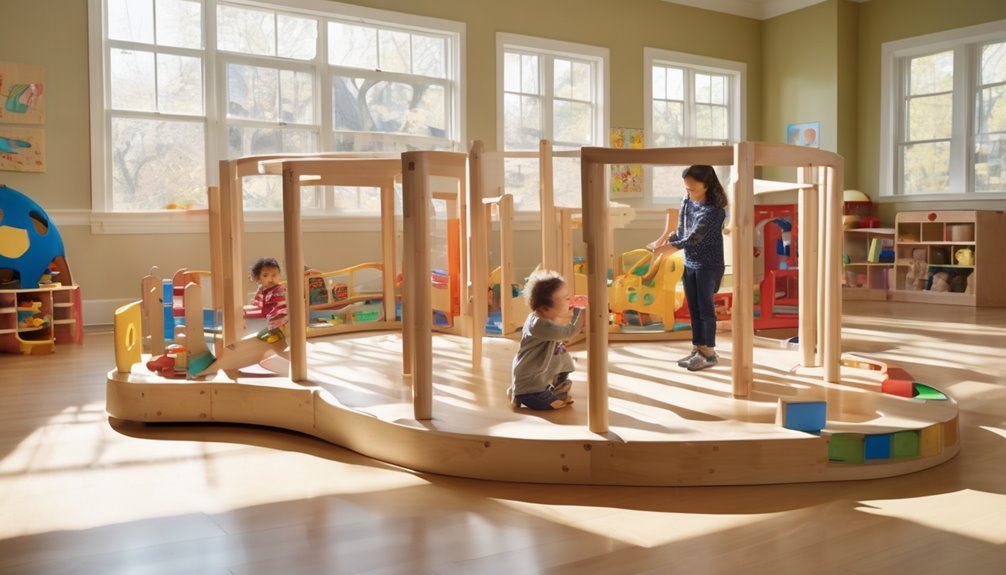
Versatile play supports multiple development pathways by allowing children to explore, experiment, and revise understanding across domains. In this section, you’ll see how your child’s play choices reveal robust learning across cognitive, social, and physical domains. You observe curiosity ignition when a simple block task becomes a question about balance, cause, and effect, guiding thoughtful experimentation. Motor mastery emerges as moves become more deliberate, coordinated, and efficient, supporting independence and confidence. Versatile play also models flexible thinking: you adjust rules, substitute materials, and test outcomes, reinforcing adaptive problem solving. This approach fosters belonging by validating individual interests while connecting with peers and caregivers in shared activities. The evidence highlights how varied, open-ended play supports holistic growth, not just isolated skills.
How Multi-Action Sets Stimulate Curiosity and Exploration
Multi-action sets spark curiosity by presenting tasks that require integrating multiple steps, materials, and goals. You’ll notice how these challenges invite sustained attention, pattern recognition, and hypothesis testing as you plan, execute, and adjust approaches. Curiosity stimulation emerges when children see connections between tools and outcomes, not merely when they complete a single action. By combining blocks, strings, and symbols, you create rich problem spaces that reward prediction and revision, reinforcing iterative thinking. Exploration triggers arise as children test ideas, compare results, and seek alternative solutions within a cohesive activity. This process promotes confident agency and peer collaboration, as you share strategies, negotiate roles, and validate each other’s thinking. The outcome is deeper engagement, persistent inquiry, and a sense of belonging within a collaborative learning community.
Building Motor Skills Through Modular Play
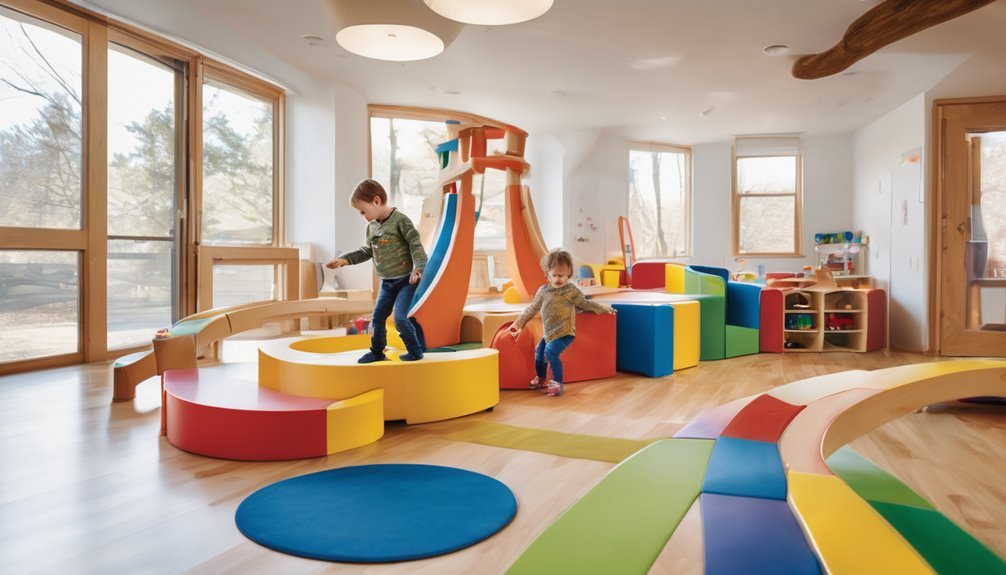
How does modular play advance motor development in early childhood? In this section, you’ll see that motor skills improve through purposeful, task-specific exploration. Modular play components provide manageable challenges that scale with age and ability, allowing repeated practice of grip, reach, rotate, and coarse to fine motor transitions. When you participate with modular play, you organize sectors that encourage bilateral coordination and cross-limb integration, supporting proximal stability and distal control. Clear progression—from simple snaps and slides to more complex assemblies—yields measurable gains in dexterity and steadiness. You’ll notice increased endurance during active manipulation and quicker postural adjustments, both essential for overall motor development. Modular play offers structured variability, sustaining motivation while preserving safety and alignment with developmental norms.
Social-Emotional Growth in Collaborative Play Environments
Collaborative play environments promote social-emotional growth by providing structured opportunities for interaction, regulation, and shared problem-solving. You observe children negotiating roles, turn-taking, and empathic listening as they pursue common goals. In these settings, social emotional competencies emerge through guided collaboration, reflective feedback, and predictable routines that reduce anxiety and increase engagement. You’ll see calmer regulation during transitions, clearer expression of needs, and more adaptive responses to frustration, indicating growing self-awareness and peer sensitivity. The environment’s design supports inclusive participation, reinforcing a sense of belonging and mutual respect. You experience measurable indicators of growth, such as increased cooperative language, slower conflict escalation, and joint goal attainment, all contributing to a supportive classroom climate and collaborative growth.
- Structured interaction cues promote engagement
- Turn-taking and empathy strengthen peer bonds
- Shared goals enhance inclusion and belonging
Cognitive Gains From Diverse, Reconfigurable Activities
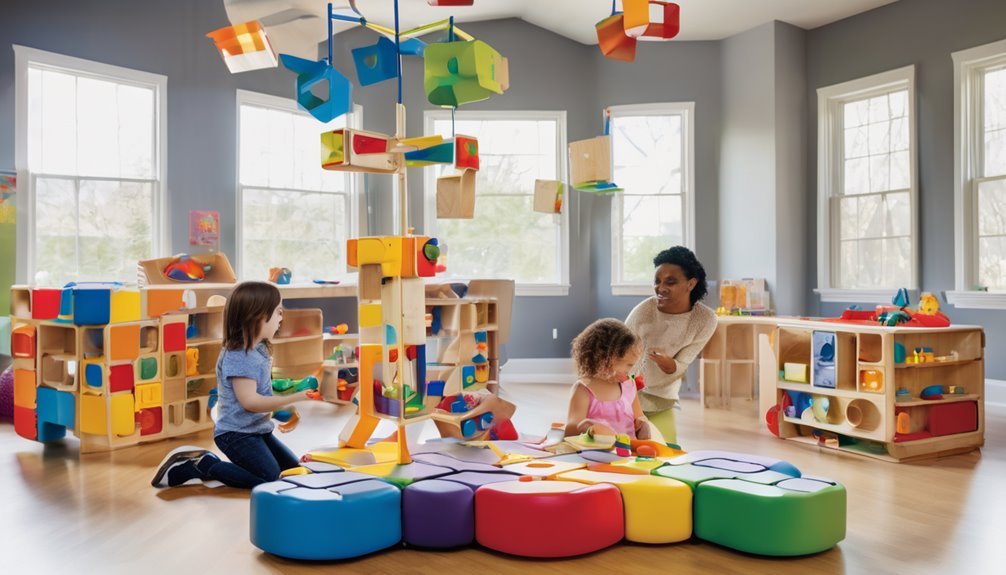
What cognitive benefits arise when children engage in diverse, reconfigurable activities, and how do these benefits unfold across different play contexts? You observe that exposure to varied stimuli supports cognitive exploration by challenging attention, working memory, and flexible thinking. In self-directed, reassembled tasks, you adapt rules and sequences, strengthening planning and inhibitory control. Across contexts—from solitary exploration to collaborative construction—the benefits stabilize as you shift goals, test hypotheses, and monitor outcomes. You notice gains in diverse problem solving, with children negotiating strategies, evaluating feedback, and integrating prior experiences. This pattern persists when tools, roles, and materials change, fostering transfer across activities. The result is scalable, incremental growth in executive function, persisting beyond the moment of play and enriching daily learning interactions.
Theoretical Foundations Linking Play and Development
Play and development theories frame how children learn through action, signaling that growth emerges from interactive, goal-directed exploration. You’ll see action-oriented learning principles connect motor engagement with cognitive and social outcomes, guiding how multi-action play systems support adaptive skills. This section establishes the empirical links that underpin why intentional, varied play experiences matter for development.
Play and Development Theory
Comprehending how children learn through play rests on theories that map developmental milestones to ongoing, playful involvement. You’ll see how play theory ties observable actions to broader growth in child development, linking motor, language, and social-emotional progress with structured, experiential practice. The empirical basis emphasizes repeated, varied play cycles that reinforce skills and internalize norms, while avoiding overstated claims about immediate outcomes. You’ll recognize that development unfolds through guided exploration, feedback, and authentic collaboration with peers and adults. Purposeful play systems enable you to observe gradual shifts in attention, problem-solving, and self-regulation as indicators of maturation, not merely activity. In practice, you’ll align activities with developmental stages, documenting progress to support informed decisions about learning trajectories.
- Theoretical connections between play and growth are observable in routine, qualitative change
- Developmental milestones map onto sustained, meaningful engagement in varied play contexts
- Child development indicators emerge through systematic observation and reflection on play experiences
Action-Oriented Learning Foundations
Action-oriented learning rests on the premise that purposeful actions drive cognitive and social development, with theoretical foundations linking intentional activity to measurable growth in children. You engage with this framework by observing how task-focused play contexts structure problem solving, hypothesis testing, and social negotiation. Empirically, learning emerges when children repeatedly manipulate affordances that align with developmental milestones, enabling gesture, language, and planning to co-evolve. You should assess how action sequences reveal causal understanding, not just outcome success. Design principles matter: materials should support safe exploration, permit varied strategies, and minimize extraneous constraints. Emphasize material safety to reduce risk and foster confident participation. This foundation fosters inclusive belonging, as every child’s concrete interactions contribute to shared knowledge, mutual respect, and incremental mastery within multi-action play environments.
Practical Tips for Selecting and Arranging Play Spaces
You should prioritize space organization tactics that delineate distinct play zones while maintaining clear sightlines for supervision. Ensure spaces are safe, with age-appropriate materials stored securely and outlets protected, and arrange stimuli to avoid overload. Use stimulating yet predictable setups that invite exploration while encouraging safe, independent play.
Space Organization Tactics
How can you shape a safe, engaging play area? When you plan a space, focus on space organization and a clear play layout that supports varied actions without crowding. Establish zones for quiet, construction, and dramatic play, using low furniture and visual boundaries to guide movement. Prioritize sightlines so caregivers can monitor all activities, and select durable, washable materials to reduce maintenance. Label areas with simple cues to invite participation, not competition. Ensure transitions are smooth, with unobstructed paths and age-appropriate ergonomics. Regularly rotate materials to sustain curiosity and reduce clutter. By aligning layout with developmental goals, you foster belonging and confident exploration for every child.
- Define zones with intentional spacing to sustain engagement
- Use durable, easy-to-clean materials for reliable space organization
- Rotate resources to refresh play layouts and invite collaboration
Safe, Stimulating Arrangements
A well-designed play space combines safety with stimulation by using intentional layout, accessible materials, and clear cues that invite exploration without overstimulation. You’ll create zones that balance safety and curiosity, using low shelving, rounded edges, and non-slip floors to reduce risk while encouraging independent play. Arrange materials by function and complexity, ensuring easy reach for children and adults alike. Use visual cues—color, texture, and signage—to signal appropriate use and to guide transitions between activities, promoting smooth, self-directed play. Limit clutter to preserve focus, yet offer playful options that invite experimentation. Regular checks ensure safety and material freshness, maintaining trust. When spaces feel organized and welcoming, children engage with confidence, practicing social sharing, problem solving, and creative playfulness within a safe, stimulating environment, enhancing belonging.
Adapting Systems for Diverse Learners and Settings
Adapting systems for diverse learners and settings requires a flexible framework that accounts for cognitive, linguistic, cultural, and environmental differences across children and classrooms. You’ll implement data-informed adjustments to activities, equipment placement, and instructional pacing, ensuring accessibility without compromising integrity of play. In practice, adapting systems means documenting learner profiles, monitoring engagement, and iterating design to reduce barriers for all participants. You’ll align outcomes with inclusive goals, verify that materials reflect multiple languages and cultures, and adapt safety standards for varied contexts. When you prioritize feedback loops, you reinforce belonging and equitable opportunity for growth.
- Baseline assessments guide personalization without labeling
- Structured observation flags access gaps across environments
- Continuous refinement strengthens inclusion of diverse learners
Frequently Asked Questions
What Ages Benefit Most From Multi-Action Play Systems?
A growing butterfly, you’ll see, as multiple ages benefit. Toddlers and preschoolers gain most, roughly ages 1 to 5, with ongoing advantages in early school years. You’ll notice sensorimotor exploration and fine motor development flourish as you introduce varied, multi-action play. In your setting, you’ll observe richer body awareness, collaboration, and belonging, because activities invite exploration and predictable success. You’ll keep asking questions, measure progress, and tailor challenges to support each child’s steady growth.
How Do We Measure Long-Term Developmental Impact?
Long-term impact is measured through long term metrics collected over time, using longitudinal studies that track growth across cognitive, social, and motor domains. You’d implement standardized assessments at multiple intervals, control for confounders, and compare with matched peers. Consistency in data collection, transparent reporting, and participant retention are crucial. You’ll value findings that show sustained gains, enabling you to build inclusive programs. This approach confirms whether benefits persist as children mature and integrate skills into everyday functioning.
Are There Safety Concerns With Modular Components?
Yes—there are safety concerns with modular components, especially if connections loosen or edges aren’t rounded. You should verify safety certification and inspect joints regularly, replacing worn parts promptly. Consider material durability in your ongoing checks, since weaker plastics or corroded fasteners can fail under play, posing risk. When choosing equipment, prioritize products with clear safety certification, robust hardware, and durable, non-toxic materials to help you feel confident and included in shared play.
How Can Caregivers Balance Structure and Open-Ended Play?
Caregiver pacing balances structure and open-ended play by alternating clear goals with flexible prompts. You set routines to offer predictability, then pause to invite discover with open-ended prompts, letting child curiosity lead. Use a steady tempo, monitor engagement, and adjust complexity as needed. This approach values belonging, ensuring kids feel safe while exploring. Visualize a compass: structure guiding exploration, open-ended prompts widening the map, all steering toward confident, independent play.
What Roles Do Educators Play in Facilitating Transitions Between Setups?
Educators play a guiding role, coordinating transitions between setups with clear safety protocols and supportive cues. You assess pacing, communicate expectations, and provide real-time feedback, ensuring children feel secure as activities transition. You monitor safety protocols, adjust spaces, and use dashboard tracking to reflect progress and needs. You prompt reflective discussion, invite input, and model adaptable routines. You center belonging by validating choices, easing transitions, and offering inclusive options that accommodate diverse learners and comfort levels.