
The evolution of outdoor play equipment moves you from classic wooden swings and slides to timberframe and glulam structures, steel and modular climbers, and rope-based high-adventure courses. You’ll see more durable, low-maintenance designs that support safe exploration, autonomy, and inclusive play. Equipment now emphasizes learner-led choices, clear supervision, and accessible layouts. You get predictable physics, safer risk-taking, and community spaces that invite collaboration. If you keep exploring, you’ll uncover how these shifts shape child-centered, evidence-based play experiences.
The Classic Swing and Slide Era
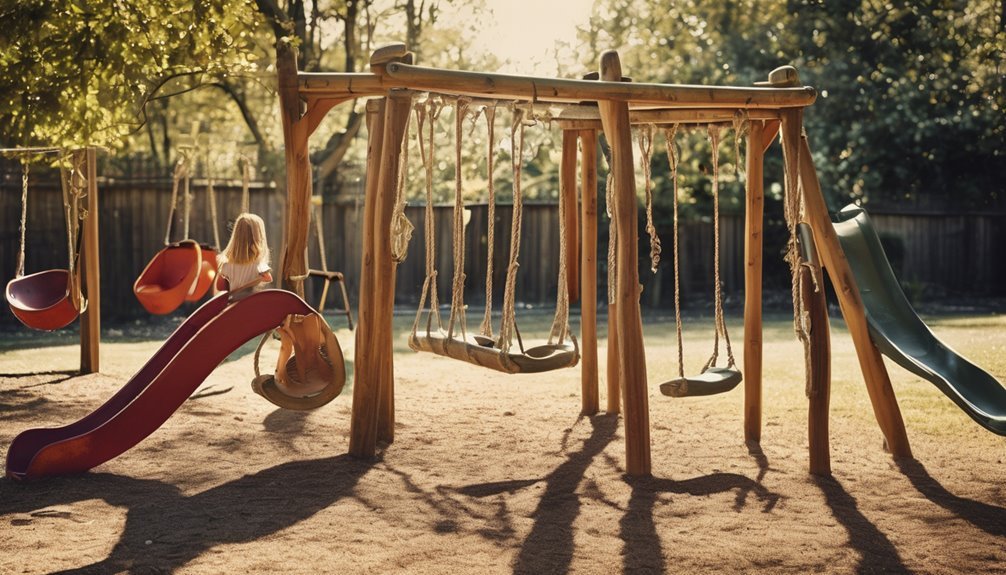
In the Classic Swing and Slide Era, playgrounds centered on simple, durable structures that invite immediate, repetitive play. You’ll notice how classic swings and playground slides offer predictable, safe motion that supports confidence and autonomy. Repetition helps you feel mastery as you pump, push, and glide, building motor skills and spatial awareness without complexity. This era emphasizes accessibility, so you can join in with peers across ages, cultures, and abilities, nurturing belonging and collaboration. Evidence shows that durable materials reduce injury risk and sustain long-term use, while open-ended design encourages creative, self-directed exploration. Your experience matters: the rhythm of timing, the joy of release, and the shared laughter around the apparatus strengthen community bonds. Classic swings, playground slides, and everyday games ground your active, connected childhood.
Wooden Frame Innovations
Wooden frame innovations reshape how kids interact with play spaces, offering sturdy Timberframe adaptations, flexible Plywood Modular Systems, and the proven Glulam strength that supports longer spans. You’ll see how these choices boost safety, durability, and adjustable layouts that fit different yards and ages. This sets a clear, evidence-based path for designing functional, kid-centered play structures.
Timberframe Adaptations
What makes timberframe adaptations so effective for outdoor play? You benefit from sturdy, breathable structures that invite exploration without overwhelming your senses. Timberframe aesthetics blend naturally with trees and grass, helping kids feel connected to the landscape rather than isolated from it. The design emphasizes joinery durability, so joints stay strong through active climbing, swinging, and pretend plays, reducing wobble and risk. You’ll notice simpler maintenance routines: seasonal checks, treat-timed inspections, and clear labeling of weight limits keep the space safe and inviting. Child-centered use emerges as children learn through hands-on problem solving—adjusting routes, choosing safe paths, and collaborating with peers. Functional-focused details support independence, confidence, and a sense of belonging within a shared, outdoor playground that stands up to weather and wear.
Plywood Modular Systems
Plywood modular systems build on the sturdy, adaptable ethos of timberframe designs during offering quick, configurable layouts that fit diverse outdoor spaces. You dive how plywood modulars simplify assembly, enabling you to tailor layouts for safety, sightlines, and supervision. These systems use durable composites that resist moisture and wear, reducing maintenance while supporting active play. You’ll notice consistent panel performance, predictable bolt patterns, and clear labeling that minimizes setup time. By prioritizing modular reuse, you foster a sense of belonging as families revisit configurations for birthdays, school visits, and neighborhood gatherings. Evidence shows stable, child-centered structures encourage imaginative play without compromising durability. You gain confidence in evolving playgrounds that adapt with age, promoting inclusion, accessibility, and sustained engagement for every child and caregiver.
Glulam Strength Benefits
Glulam, or glued-laminated timber, brings standout strength to wooden-frame playgrounds, enabling longer spans and taller structures without sacrificing safety. You’ll notice steadier play zones, fewer wobbles, and quicker time to build community spaces where kids feel supported and included. The material’s core benefit is glulam durability: engineered layers resist bending, weather, and wear, so a swing set or climbing frame stays solid year after year with less maintenance. Because joints are pre-assembled, safety checks focus on connections rather than deformations, reducing risk for curious learners. Glulam aesthetics also matter: warm, natural tones blend with trees and colors, helping children feel connected to nature. With reliable performance and inviting design, you gain both lasting function and a welcoming sense of belonging in the playground.
Steel and Metal Outdoor Structures
Steel and metal outdoor structures provide durable, low-maintenance options that support safe, active play. You’ll see how recycled steel offers strong, sustainable framing, while coating durability protects surfaces from weather and wear. This evidence-based, child-centered view shows how metal structures sustain repeated use, supporting social play and inclusive participation. You’ll notice straightforward maintenance routines that minimize downtime, so kids stay engaged and families feel confident in safety. Functional design emphasizes accessible access points, sturdy handholds, and predictable behavior under load, guiding children to explore with peers. To visualize the environment, see the table below.
| Material | Benefit | Consideration |
|---|---|---|
| Recycled steel | Sustainability, strength | Inspect for corrosion |
| Coating durability | Weather resistance | Reapply as needed |
| Metal joints | Durability | Regular checks |
Modular Climbers and Play Systems
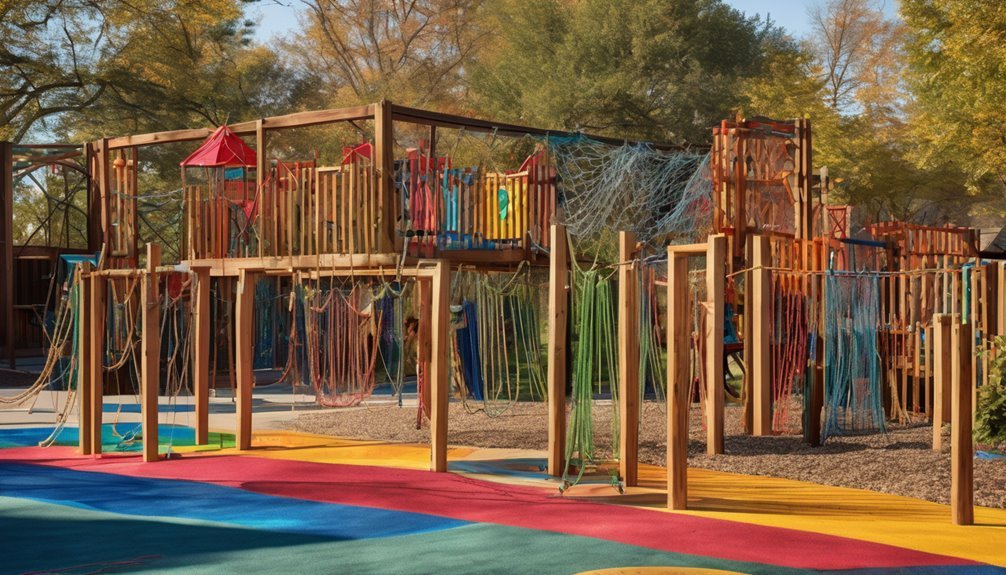
Are modular climbers and play systems the key to flexible, engaging outdoor spaces? You’ll find these setups support diverse play, steady skill progression, and inclusive participation. Modular climbers adapt to yard sizes, ages, and abilities, letting you reconfigure layouts as needs shift. Play systems emphasize practical challenge, safe risk, and goal-oriented exploration, fostering autonomy and self-confidence. When thoughtfully designed, they build a sense of belonging by inviting repeated, cooperative play rather than one-off activity bursts. Evidence shows such systems promote motor development, problem-solving, and cooperative play without overwhelming kids. You can integrate rope course-inspired elements gradually, aligning with safety standards and supervision. For families seeking accessible adventure, modular climbers and play systems offer durable, scalable, high-adventure options that grow with you.
Rope Courses and High-Adventure Elements
Rope courses and high-adventure elements build on modular climbers by adding elevated, challenge-focused experiences that still prioritize safety and supervision. You engage in measured risk, supported by trained staff and standardized harness checks, which reinforces trust and belonging. Evidence shows climbs boost balance, coordination, and confidence when goals are tiered and feedback is positive. You’ll experience peer modeling, cooperative problem-solving, and gradual progression, all under clear safety protocols and accessible choice. The approach centers child needs: autonomy, mastery, and social connection. A well-designed course respects age and ability, offering alternative paths when necessary. rope courses, high adventure become inclusive opportunities that celebrate persistence and shared achievement.
| Benefit | Example |
|---|---|
| Safety framework | Harness checks |
| Social learning | Buddy system |
| Skill development | Progressive climbs |
| Inclusion | Varied routes |
Zip Lines and Aerial Challenges
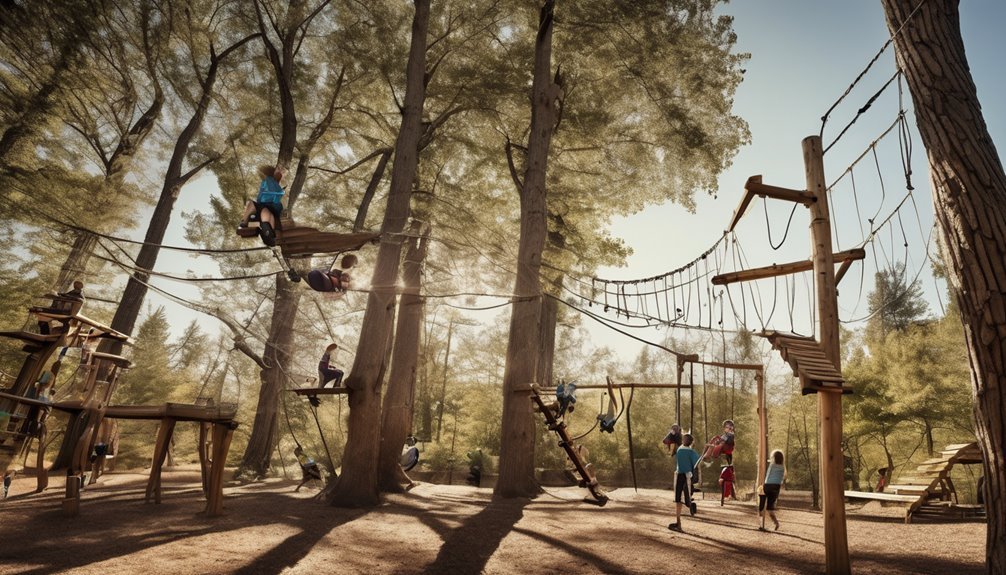
Zip lines and aerial challenges offer thrills while emphasizing grip, balance, and safe braking, helping you build core motor skills in real-world contexts. You’ll see how line dynamics, equipment checks, and path planning support confident, independent play with appropriate supervision. Together, we can explore evidence-based practices that keep kids safe while fostering problem-solving and spatial awareness.
Zip Line Dynamics
Zip lines offer thrilling aerial challenges, but their value goes beyond excitement: they help kids build confidence, balance, and risk awareness in a controlled setting. You’ll see predictable physics in action, with smooth deceleration at the rope edge and clear, repeatable experiences that reinforce safe behavior. This is not just play; it’s structured exploration that supports motor and social development.
- Assess equipment and environment before riders use it.
- Practice proper bracing and body position for control.
- Supervise transitions and celebrate cautious risk-taking.
- Review post-ride reflections to reinforce learning.
Aerial Challenge Skills
Aerial challenge skills blend thrill with real learning, but how do kids master these adventures safely and confidently? You’ll notice how craft is about practice, supervision, and gear that fits growing bodies. When you engage with zip lines and aerial tasks, focus on progressive challenges that build aerial dexterity—starting with low, controlled games before moving higher. Safe routines, proper harness fit, and double-checking anchors matter as much as excitement. Educators and families share clear expectations: respect equipment, listen to directions, and communicate clearly. Crafty ropeways encourage problem-solving, coordination, and peer support, turning risk into measured, meaningful play. With intentional design and supportive teams, you belong in a community that values safe exploration, resilience, and confident, joyful movement.
Safety Standards and Learner-Led Design
Who decides what counts as safe and fun when kids design their own outdoor spaces, and how can we balance risk with exploration? You’ll anchor safety standards while honoring learner led design, using clear criteria and child-centered goals. You’ll measure risk with purposeful supervision, durable materials, and accessible layouts that invite exploration without unnecessary hazards. The approach respects autonomy, yet remains grounded in evidence about development, play benefits, and injury prevention.
- Safety standards-informed choices harmonize with curiosity
- Learner led design guides iterative testing and reflection
- Clear, kid-friendly guidelines support confident risk-taking
- Documentation and feedback ensure ongoing safety improvements
Community Spaces and Immersive Play Experiences
How can outdoor spaces become more than just playgrounds—transforming into immersive, community-centered experiences that invite every child to participate? You’ll see spaces designed for shared exploration, where equipment supports collaboration and storytelling. Evidence shows that inviting, well-planned gaps in play zones foster social skills, belonging, and inclusive participation. A design focus on multi-use features encourages neighborhood collaboration, enabling families to co-create events, reading corners, and collaborative games that reflect local culture. Clear sightlines and accessible paths reduce barriers, supporting all children and caregivers. Incorporate community storytelling through wall panels, plantings, and schedules that celebrate diverse voices. When spaces reflect local needs and values, participation grows, relationships deepen, and children learn through equitable, enjoyable immersion.
Frequently Asked Questions
How Do Seasons Affect Outdoor Play Equipment Longevity?
Seasonal wear slows longevity, especially for wood, metal, and fabrics, so you’ll notice more cracking, rust, or fading as seasons shift. To maximize lifespan, perform regular inspections and weatherproofing considerations, reseal wood, lubricate moving parts, and store or cover equipment during harsh months. You’ll maintain safety and play value by addressing moisture, salt, and UV exposure promptly. With consistent upkeep, you’ll keep equipment welcoming, functional, and durable for your kids’ seasonal adventures.
What Funding Options Support New Play Installations?
Yes—government grants, foundation funding, corporate sponsorships, and community fundraising are common funding options that support play installations. You can pair these with in-kind donations, local bonds, and public-private partnerships to maximize impact. Approach with a child-centered plan, showing safety, accessibility, and inclusive design. Present evidence of benefits, budget details, and maintenance plans to foster belonging and community buy-in, ensuring every funded play installation serves kids today and long-term resilience.
How Is Accessibility Integrated Into Adventure Courses?
Adventure courses weave accessibility into every rung, like a staircase you can trust. You’ll see universal design elements—gentle gradients, harness-friendly routes, and adjustable grips—so everyone can participate. Sensory integration is considered, with varied textures and subtle, non-overwhelming noises to support focus. You’ll feel belonging as you navigate challenges at your own pace, supported by staff and peers. It’s evidence-based, child-centered, functional-focused, and invites you to grow confidence through inclusive, shared exploration.
What Maintenance Schedules Maximize Safety and Lifespan?
Maintenance intervals should be scheduled routinely, with weekly visual checks and monthly functional tests to maximize safety and lifespan. You’ll prioritize clear records, log safety audits, and prompt repairs when wear is found. Regular sling, rope, and anchor inspections protect kids and nurture trust. Implement evidence-based intervals, adjust for weather and usage, and involve caretakers in safety audits. By staying consistent, you create a welcoming, inclusive space where every child can explore confidently and belong.
How Do Designs Address Inclusive Play for All Ages?
Inclusive design ensures playgrounds accommodate diverse abilities, ages, and sizes, so you can play together safely. You’ll see features like adjustable equipment, low-height panels, and clear sightlines that support age inclusive play. Evidence-based layouts prioritize inclusive access routes, transfer zones, and reduced choke points. You feel a sense of belonging when pathways and activities invite everyone to contribute, adapt, and explore, reinforcing social connection while maintaining functional safety for all ages.