
A safe nursery play zone in Karnataka starts with formal safety audits to identify hazards, then fixes with documented findings and timelines. Use age-appropriate, non-toxic toys, and label storage at child height. Design indoor and outdoor spaces with clear sightlines, rounded furniture, and low clutter. Maintain verified staff-to-child ratios, rotate materials, and use color-coded supervision roles for rapid hazard detection. Adapt for monsoon risks and local culture; more details will help you refine your plan.
Safety Standards and Compliance in Karnataka Early Years Settings
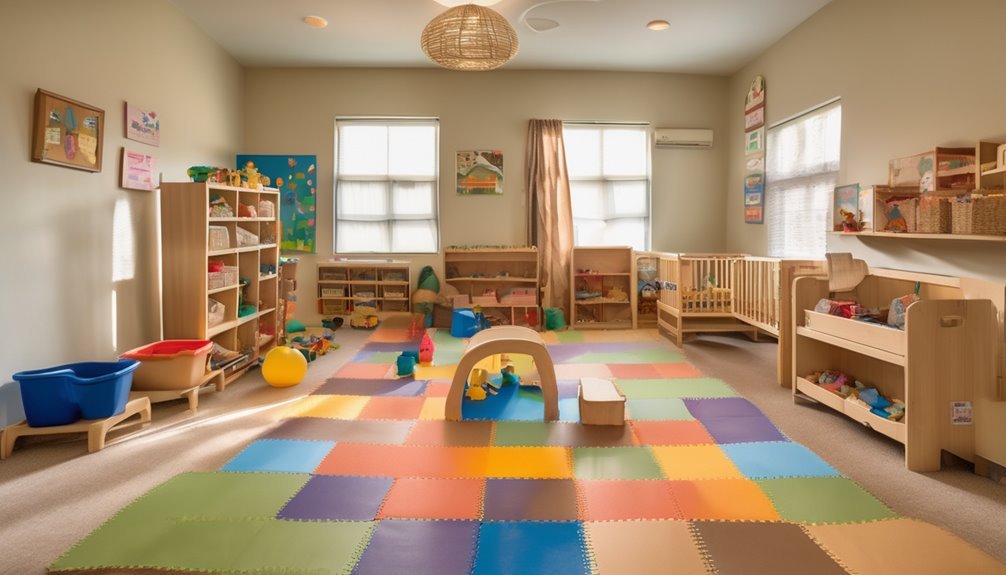
In Karnataka, safety standards for early years settings are governed by state rules, local panchayat regulations, and national guidelines that emphasize hazard identification, staff training, and regular inspections. You’ll align practices with documented policies, ensuring every space minimizes risk and supports inclusive participation. Start with formal safety audits to identify hazards, then implement corrective actions, recording findings and timelines. Compliance training for all staff reinforces consistent procedures, from supervision ratios to incident reporting. Regular inspections verify that equipment, storage, and play areas meet standards, with evidence-based checklists guiding revisions. Foster a culture of belonging by inviting caregiver input during reviews and clearly communicating safety goals. When you document improvements and training outcomes, you reinforce trust and demonstrate ongoing commitment to protecting every child.
Age-Appropriate Play Equipment and Materials
When selecting age-appropriate toys, choose items that match developmental stages and reduce choking risks, sharp edges, and small parts. Opt for safe material choices, favor non-toxic, durable, and easy-to-clean options, with labeling that reflects recommended ages. Ensure easy-access storage so caregivers can supervise and rotate materials without clutter or hazards.
Age-Appropriate Toys
Are age-appropriate toys the safest way to spark learning and development in a nursery? Yes, when you align choices with children’s developmental stages and safety standards. By selecting toys that match age bands, you support exploration without overwhelm, reducing frustration and promoting focused play. Use evidence-based criteria: size, finish, and complexity matter for safety and grasp. Here’s a concise guide:
- Choose age-appropriate toys that invite problem-solving and cooperative play.
- Prioritize non-toxic finishes, smooth edges, and sturdy construction to support toy safety.
- Rotate items to sustain engagement while limiting overcrowding and hazards.
- Observe children’s responses, pausing use if parts loosen or choking risks emerge.
Safe Material Choices
Safe material choices for age-appropriate play gear reduce exposure to hazards and support healthy development. You’re selecting equipment and toys that align with local safety standards, load limits, and infant-to-toddler transitions. Prioritize durable, smooth-surfaced items with rounded edges and minimal small parts to prevent choking. Choose finishes that are non toxic finishes and free of formaldehyde, heavy metals, and volatile organic compounds, verified by credible labels. Wood should be untreated or sealed with non toxic finishes, and plastics should meet safety norms for toy use, with no sharp edges or entrapment risks. Secure batteries and cords, and avoid magnetic or loose components. Regularly inspect for cracks, splinters, and wear, discarding compromised items promptly. This mindful approach reinforces belonging, trust, and safe exploration for every child.
Easy-Access Storage
Accessible, age-appropriate storage is essential for safe play and smooth transitions between materials. You’ll keep kids engaged and parents confident when you implement a clear, reachable system for easy-access play gear.
- Label bins at child height to support safe use storage and quick cleanup.
- Group by activity, not by color alone, to minimize rummaging and clutter free organization.
- Use closed storage for small parts and offer lids that stay open when needed.
- Audit weekly to remove damaged items and rotate materials for age-appropriate challenges.
This approach reduces hazards, supports independence, and reinforces belonging through predictable routines. Maintain access controls for sharp or heavy items, and document changes so staff and families trust your safety practices.
Indoor Play Area Design for Small Children
Designing an indoor play area for small children hinges on safety, sightlines, and age-appropriate activities that reduce risk while promoting exploration. You’ll prioritize clear visibility across the space to supervise without intrusive barriers, enabling quick intervention if needed. Use rounded furniture and low-height storage to minimize tripping hazards and allow easy reach for curious explorers. Implement compact zoning to separate active play, quiet corners, and sensory stations, ensuring pathways remain open and uncluttered. Select age-appropriate materials with smooth edges and non-slip surfaces, and verify toy standards for small parts. Prioritize indoor acoustics to manage noise levels and support communication. Establish routines, labeling, and predictable layouts to foster belonging and confidence, while documenting maintenance checks and worker training for consistent safety.
Outdoor Play Zone Layout and Hazard Prevention
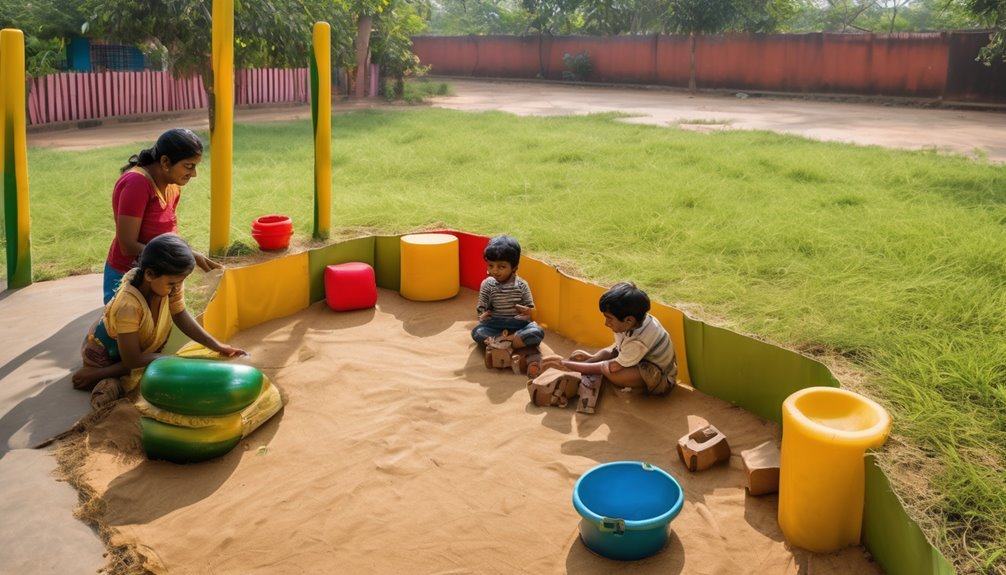
Start with a clear, fenced boundary that allows supervision from multiple angles and reduces off-site wander. In this outdoor layout, you’ll align equipment to minimize crowding and ensure clear sightlines for quick hazard response. Prioritize safe surfacing, anchor play structures, and maintain defined pathways to prevent collisions and trips. Regularly inspect for wear, protrusions, and weather-related hazards, documenting findings and actions. Now, implement a practical hazard prevention plan with these steps:
1) Establish age-appropriate zones, separating water, climbing, and pretend-play areas.
2) Use impact-absorbing surface materials and keep clearance around all equipment.
3) Secure loose parts, jagged edges, and protrusions; remove or repair promptly.
4) Schedule daily checks and monthly deep-dives to update risk controls and safe-staging routines.
Supervision Strategies and Staff Roles
You should establish clear supervisor roles so every staff member knows their exact duties during play time. Maintain appropriate staff-to-child ratios and document them to guarantee quick response and accountability. Use real-time monitoring methods, such as live observation checklists or digital dashboards, to detect hazards and adjust supervision as needed.
Clear Supervisor Roles
Clear supervisor roles are fundamental to consistent, safe play areas; with clearly defined supervision strategies and staff responsibilities, caregivers can respond quickly and effectively to both routine activities and potential hazards.
- Define responsibilities for each role to transition coverage during transitions and outdoor play.
- Align supervision duties with task complexity, age groups, and activity risk levels.
- Establish clear communication protocols for reporting incidents, hazards, and near misses.
- Provide ongoing, evidence-based training to reinforce consistent expectations and response methods.
Staff-To-Child Ratios
How do staff-to-child ratios shape supervision quality in nursery settings? You maintain clear, verified ratios to guarantee continuous supervision, timely intervention, and consistent safety standards. When you commit to appropriate staff to child ratios, you bolster quick decision-making, reduce risk of injury, and support transitions between activities. Guarantee assignments reflect developmental needs, with trained adults positioned to observe blind spots, corridors, and play areas. Regularly review ratios during peak times, such as arrival and cleanup, to sustain vigilance. Documented policies should define minimums, backup coverage, and permissible multitasking limits, safeguarding adherence to safety standards. By prioritizing these practices, you cultivate belonging and trust among families while demonstrating responsible stewardship of resources and high-quality, evidence-based care.
Real-Time Monitoring Methods
Real-time monitoring in nursery settings hinges on proactive supervision strategies and clearly defined staff roles to maintain continuous safety oversight. You’ll implement structured shifts, rotate sightlines, and pair staff for overlapping coverage, ensuring any hazard is caught quickly. Digital checklists support real time monitoring by documenting checks, incidents, and responses for accountability and learning.
- Assign specific, visible roles for each area and use color-coded vests to reinforce presence.
- Use digital checklists to log floor hazards, toy completeness, and supervision gaps in real time.
- Establish a rapid communication protocol for immediate escalation of concerns.
- Schedule brief, post-activity debriefs to review near-misses and reinforce safe practices.
Maintenance, Cleaning, and Non-Toxic Materials
To guarantee ongoing safety in the nursery, implement a regular maintenance schedule that covers all play areas, furniture, and toy storage, with emphasis on stable surfaces, properly fastened components, and intact fasteners. You’ll document inspections, tighten hardware, and replace worn parts promptly to minimize gaps where injuries could occur. Cleaning protocols should use child-safe, non-toxic cleaners and sealed storage to prevent chemical exposure. Establish clear rotation for toys and materials, washing hands or sanitizing before handling shared items. Choose non toxic finishes and finishes with low VOCs for furniture, and avoid flaky coatings. Training staff and caregivers on maintenance routines reinforces consistency, belonging, and trust, ensuring families view your environment as safe, predictable, and supportive of healthy development. Regular audits sustain ongoing safety.
Seasonal Adaptations: Monsoon Readiness and Climate Considerations
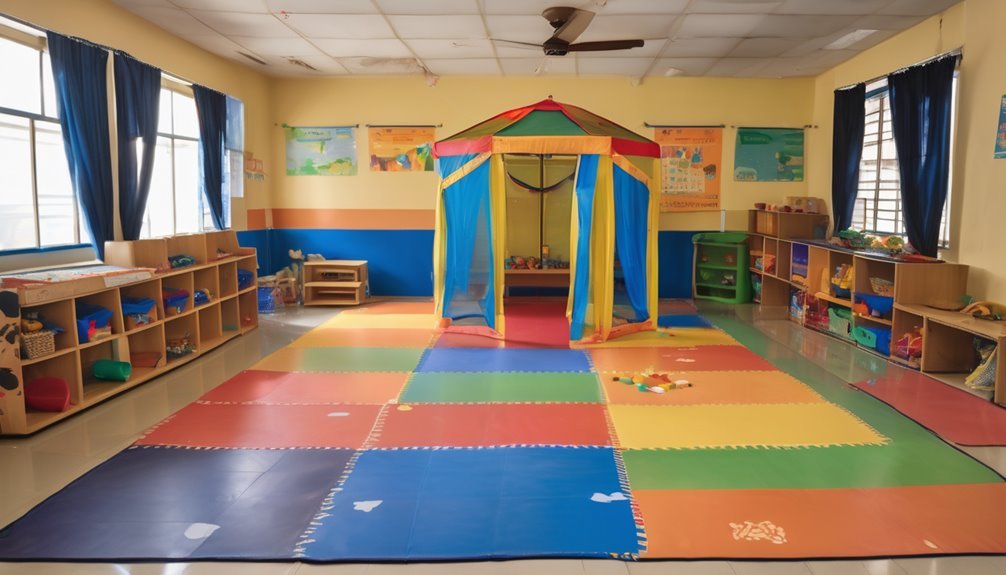
Seasonal adaptations for monsoon readiness require aligning climate considerations with established safety practices from the maintenance and cleaning topic. You’ll implement practical, evidence-based steps that reduce slip risks, moisture damage, and mold growth while preserving a welcoming space.
Seasonal monsoon readiness blends climate insight with safety practices to curb slips, moisture, and mold.
- Assess surfaces for traction and seal gaps to prevent water ingress, using climate adaptive materials where possible.
- Elevate electrical outlets and ensure drainage paths, so rainwater doesn’t create hazards or damp zones.
- Store soft furnishings in breathable covers during heavy rains and dry promptly to prevent mold.
- Schedule regular checks after storms, updating maintenance logs and coordinating with caretakers to sustain a safe, inclusive play zone.
Monsoon readiness hinges on proactive planning, clear communication, and consistent upkeep.
Cultural and Locational Considerations for Karnataka Classrooms
Cultural and locational considerations in Karnataka classrooms require embracing local languages, festivals, and family dynamics to transition inclusive learning spaces while maintaining safety standards; understanding community norms helps tailor routines, transitions, and supervision without compromising child protection and accessibility. You’ll integrate cultural rituals respectfully into play areas, ensuring consent and age-appropriate participation. Language integration supports communication with children and families, boosting engagement and safety reporting. Geography specific classroom design accounts for physical layout, traffic flow, and storage that align with local daily patterns and mobility needs. Regional weather considerations drive material selection, shade, ventilation, and moisture control to prevent hazards. Ground routines in clear safeguarding guidelines, promoting belonging while preserving flexibility for diverse traditions and experiences. This approach enhances safety, inclusion, and learning outcomes.
Frequently Asked Questions
How to Handle Space Constraints in Small Karnataka Classrooms?
To handle space constraints in small Karnataka classrooms, you’ll prioritize space optimization and compact storage. You’ll rearrange furniture to create clear walkways, use modular, multi-purpose shelving, and store toys in labeled bins that fit under benches. You’ll assign a daily rotation so materials stay relevant, and you’ll engage caregivers in ongoing safety checks. You’ll ensure surfaces are smooth, edges padded, and supervision is constant, fostering a safe, inclusive environment where everyone belongs.
What Budget-Friendly Safety Upgrades Are Most Effective Locally?
Budget-friendly safety upgrades that work best locally include securing furniture to walls, padding sharp edges, installing anti-slip mats, adding corner guards, and using non-slip flooring where possible. You’ll want affordable doorstoppers, outlet covers, and simple, clear signage for zones. Prioritize consistent supervision and routine checks. These upgrades reduce injuries, fit tight budgets, and foster a sense of belonging by showing you value kids’ safety and community wellbeing. You’ll notice fewer incidents and more confident play.
Which Local Vendors Supply Non-Toxic Play Materials?
Yes—local suppliers offer non-toxic play materials, and you should choose carefully from trusted non toxic vendors. Look for certified, child-safe plastics, paints, and fabrics, and verify ingredient disclosures. Ask vendors for MSDS sheets, test reports, and third-party certifications. Compare costs, delivery reliability, and return policies. Build relationships with local suppliers to ensure ongoing safety updates. You’ll feel confident knowing you’ve selected non toxic vendors that meet rigorous standards for your nursery play zone.
How to Engage Parents in Ongoing Safety Practices?
Involve parents through regular, structured engagement check-ins, and model parental transparency in all safety updates. You’ll build trust when you share incident data, safety improvements, and daily routines, inviting questions and feedback. I once compared a daily safety log to a family photo album—visible, shared, and comforting. When you invite involvement, you enable caregivers to participate in risk assessments, reinforce routines, and sustain a culture of belonging as keeping children safe.
What Emergency Drill Routines Suit Karnataka Climates?
In Karnataka, you should implement frequent, clearly practiced emergency drill routines that align with local climate patterns. Schedule monthly fire and earthquake drills, and quarterly shelter-in-place or flood-response rehearsals, adjusted for seasonal intensity. Use simple, step-by-step roles and post-Drill briefings for continuous climate readiness. You’ll build trust and belonging by inviting caregiver feedback, documenting outcomes, and iterating. Ensure accessibility for all children, including those with special needs, and reinforce calm, decisive responses.