
Safety standards for playground gear span EN1176 and ASTM, guiding design, testing, and maintenance to protect users. You’ll see scope on structural integrity, stability, and clear assembly, plus field-use conditions and maintenance intervals. ASTM adds environment-driven load tests, surface criteria, and durability benchmarks, with traceable data and real-world testing. Compare impact attenuation, fall zones, and surface safety across both, ensuring transparent documentation and accountability. If you keep exploring, you’ll uncover concrete, site-specific alignment strategies for safer playgrounds.
Understanding EN1176: Scope and Key Requirements
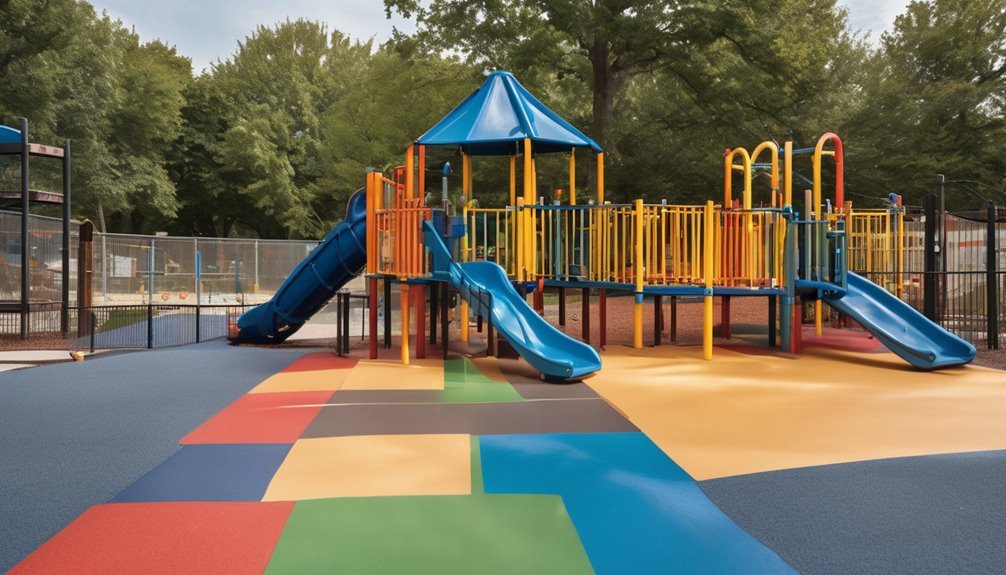
EN1176 sets out the baseline for playground equipment safety by defining the scope of what is covered and the performance criteria devices must meet. You’ll notice the standard delineates structural integrity, stability, and risk mitigation, framing how components interact within intended environments. This scope guides assessment, ensuring consistency across manufacturers and jurisdictions. Key requirements emphasize user safety, durability under expected loads, and clear assembly instructions to reduce misuse. You’ll also encounter field-of-use statements that clarify applicable conditions, seasons, and maintenance intervals, sharpening accountability for operators. Two word discussion ideas emerge as you compare performance expectations, design choices, and real-world outcomes. Addressing safety myths becomes a shared responsibility, enabling informed decisions and fostering belonging through transparent, evidence-based practices. This analytic approach prepares you for deeper EN1176 interpretation without overstepping into ASTM topics.
Overview of ASTM Standards for Playground Equipment
You’ll map the key ASTM standards to how playground equipment is tested, installed, and maintained. This section highlights the safety benchmarks used to verify structural integrity, accessibility, and impact performance. By clarifying these benchmarks, you set a precise framework for evaluating equipment quality and compliance.
Key ASTM Standards
ASTM standards for playground equipment provide a structured framework that defines safety requirements, test methods, and performance criteria; this clarity helps manufacturers, testers, and operators ensure consistent quality across products. You analyze scope, methods, and acceptance criteria to align design decisions with performance expectations, reducing risk and variation. The section highlights key standards governing impact attenuation, surface criteria, and restraint energies, guiding material selection and component interfaces. By following referenced test protocols, you validate durability and user safety under typical conditions, including environment-driven load scenarios. The rhythm below reinforces critical links between specification, testing, and documentation, inviting you to internalize best practices while fostering a sense of belonging to a safety-minded community.
| Criterion | Purpose |
|---|---|
| Impact Attenuation | Protects users from head injuries |
| Surface Criteria | Defines playground interaction friction and compliance |
| Durability | Ensures long-term reliability |
Equipment Safety Benchmarks
Are these standards the key to harmonizing safety goals with practical design? You assess Equipment Safety Benchmarks by mapping ASTM playground equipment requirements to real-world use. You’ll compare impact, spacing, head protection, and fall-zone calculations with field observations, documenting gaps without guesswork. This approach emphasizes repeatable criteria, objective testing, and traceable data, so your team can justify design choices to stakeholders. You consider material tolerances, surface performance, and routine maintenance as integral benchmarks, not afterthoughts. You’ll note how unrelated topic considerations or incidental trends don’t override established thresholds, preserving consistency. By aligning testing protocols with construction and inspection cycles, you foster confidence, shared ownership, and continuous improvement, ensuring users feel a sense of belonging to a rigorously safe play environment, even when random debris appears.
Design and Material Considerations for Safer Play
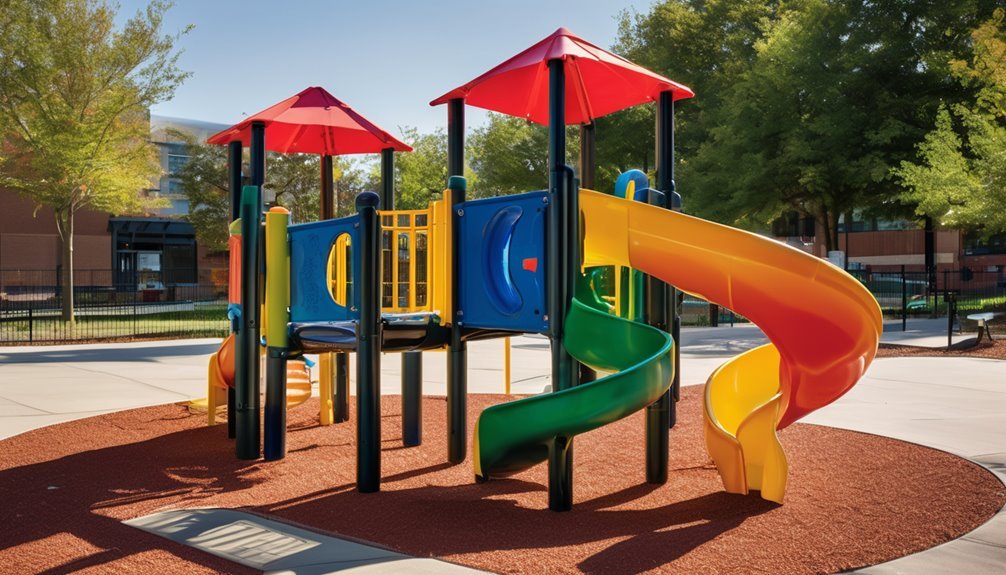
Design and material choices shape how safely a playground performs over time, so you’ll assess durability alongside user exposure, wear patterns, and maintenance needs. Consider how material durability tips influence resistance to weather, corrosion, and impact, ensuring components stay intact under typical loads. You’ll also examine joint safety considerations to minimize pinch points, sharp edges, and connection failures that could create risk during play.
Material Durability Tips
What materials best withstand the daily wear and environmental exposure of playground use, and how should their properties guide design choices? You approach material durability with a systematic lens: evaluate substrate hardness, UV stability, and fatigue resistance before selecting components. Prioritize corrosion resistance for metal elements and low-maintenance finishes that resist chalk, sap, and abrasion. Assess composites for moisture tolerance and thermal cycling, ensuring joints won’t become brittle or warp. For fasteners, choose coatings with proven adhesion and salt-spray performance, reducing loosening over time. Document expected loads and impact events, then verify that chosen materials maintain form and function in outdoor conditions. Material durability hinges on matching environmental exposure to performance data, ensuring long-term safety, reliability, and a shared sense of belonging in the play environment.
Joint Safety Considerations
Joint safety hinges on how joints manage loads, movement, and environmental stress without compromising user protection. You’ll assess hinge design, material compatibility, and fastener reliability to minimize snagging, pinch points, and corrosion. Aim for smooth articulation, predictable failure modes, and quiet operation—hug safety and noise control guiding choices. Use durable polymers or stainless steel with appropriate coatings, and ensure compatible tolerances to reduce joint play. Consider maintenance intervals, inspection protocols, and replacement cycles to sustain safety margins over time.
| Factor | Effect on safety |
|---|---|
| Load distribution | Reduces peak stresses |
| Noise control | Improves user comfort |
| Material compatibility | Prevents wear, corrosion |
| Maintenance cadence | Preserves performance |
Surface Safety, Impact Attenuation, and Fall Standards
How do surface safety, impact attenuation, and fall standards integrate to protect playground users? You assess how materials absorb energy, how cushioning distributes impact, and how fall heights align with age group needs. You compare EN1176 and ASTM criteria to determine appropriate surface padding, maintenance, and configuration, ensuring consistent performance across equipment. You also consider sanitation implications, because pristine surfaces support safer play and longer usability through playground sanitization practices. Your approach combines empirical criteria with practical routines, balancing safety margins with usability. You document measurements, surface resilience, and ongoing inspections to validate protection levels while fostering a sense of belonging through shared, safe spaces.
Surface safety blends energy absorption, cushioning distribution, and age-appropriate fall heights with EN1176 and ASTM standards, plus sanitation.
- Surface padding selection aligned with activity level and age range
- Regular inspections and maintenance protocols for consistency
- Sanitation routines integrated into safety checks
- Documentation of performance metrics and corrective actions
Testing Methods and Certification Processes
Testing methods and certification processes build on established surface safety and impact criteria to verify that play equipment meets defined performance thresholds. You engage standardized test protocols, documenting material properties, load applications, and dynamic responses with rigorous traceability. Certification bodies evaluate test results against EN1176 and ASTM criteria, ensuring repeatability, reproducibility, and documented compliance. You’ll encounter performance verifications for stability, structural integrity, and functional safety, plus environmental considerations that affect long-term reliability. Urban noise exposure and weather corrosion emerge as endurance indicators, informing durability claims and service life expectations. You assess quality-control records, production variability, and lab accreditation, building confidence among users seeking belonging in safe playground systems. The process culminates in transparent certificates, labeling, and maintenance recommendations that support ongoing safety performance.
Installation, Maintenance, and Inspection Protocols
Effective installation, maintenance, and inspection protocols are ensure to sustaining safety, reliability, and compliance with EN1176 and ASTM standards. You’ll approach each task methodically, documenting steps, materials, and conditions to ensure repeatable outcomes and traceable safety. When installing energized playground systems, verify anchor integrity, surface compatibility, and barrier clearances, then test functionality before opening to users. Routine maintenance follows a strict schedule: inspect fittings, replace worn components, reseal protective coatings, and manage drainage to prevent corrosion or trip hazards. Inspections emphasize hazard identification, corrective actions, and recordkeeping, enabling rapid response should standards drift. Security audits and offsite training reinforce capabilities, ensuring staff consistently apply procedures, maintain calibration, and validate performance after upgrades. Regular reviews promote confidence, belonging, and shared responsibility among operators, users, and communities.
- Installation verification checklist
- Preventive maintenance calendar
- Inspection reporting templates
- Post-upgrade validation steps
Compliance Across Manufacturers, Operators, and Parents
Compliance across manufacturers, operators, and parents hinges on clear roles, shared expectations, and coordinated accountability. You map responsibilities to each stakeholder group, ensuring transparency in safety-training requirements and ongoing assessments. Manufacturers provide explicit specifications, verifiable certifications, and user-friendly maintenance data to minimize ambiguity. Operators implement routine checks, document incidents, and enforce access controls that align with EN1176 and ASTM standards. Parents contribute by adhering to posted guidelines, supervising children, and reporting concerns promptly. This collaborative framework reduces liability exposure through documented safety training, standardized response protocols, and consistent communication. Liability coverage becomes a shared instrument: each party maintains appropriate policies, evidences compliance, and participates in regular audits. When you synchronize actions and expectations, you foster a culture of safety, trust, and collective accountability across the playground ecosystem.
Aligning EN1176 and ASTM: Practical Implications for Safer Playgrounds
Aligning EN1176 and ASTM brings a practical framework for safer playgrounds by translating broad safety principles into actionable, site-specific measures. You’ll translate standards into concrete design choices, ensuring compatibility across products, surfaces, and layouts. The process hinges on clear risk communication and purposeful design collaboration, so stakeholders concur on priorities and constraints. Expect a disciplined evaluation of fall zones, impact attenuation, and maintenance cycles, with documentation that supports auditing and continuous improvement. Procedural rigor reduces ambiguity, enable you to justify trade-offs and iterations without sacrificing safety. You’ll cultivate shared ownership among designers, operators, and regulators, reinforcing trust in the upgraded playground. The result is a coherent, measurable approach that translates standards into safer, more inclusive play experiences for every child.
- design collaboration
- risk communication
- site-specific implementation
- continuous verification
Frequently Asked Questions
How Often Are EN1176 Standards Updated and Revised?
EN1176 standards are updated irregularly, not on a fixed schedule. You should track EN1176 updates through official channels, as revisions occur when consensus and testing data justify change. Certification timelines shift with each edition, so you’ll need to reverify products and suppliers whenever a new version is released. You’ll benefit from monitoring formal announcements and align procurement plans accordingly, ensuring your project reflects current EN1176 updates and adheres to the latest Certification timelines.
Do EN1176 and ASTM Require Third-Party Certification?
Yes, EN1176 and ASTM often require third-party certification under certain schemes. You’ll find certification requirements emphasize independent testing, factory surveillance, and conformity assessment to verify safety Performance. You should understand that third party certification isn’t universal across all products, but it’s common for critical components and market-specific deployments. By pursuing this route, you align with quality expectations and foster a sense of belonging among stakeholders who trust rigorous, objective verification.
How Do You Verify Compliance for Imported Playground Equipment?
To verify compliance for imported playground equipment, you follow a structured process: confirm supplier documentation, request third-party test reports, and review labeling for country of origin, standards, and batch numbers. Conduct traceability checks, inspect sample units, and verify import requirements with customs and regulatory bodies. Maintain a compliance log, address any gaps promptly, and require ongoing supplier audits. This methodical approach ensures compliance verification and aligns with belonging to a safety-conscious community of practice.
What Are Common Exemptions Under EN1176 or ASTM?
Exemption examples under EN1176 or ASTM are limited and highly specific, often tied to non-structural components or temporary installations. You’ll find scope limitations, such as certain distance/usage exemptions or equipment-replacements that don’t alter safety claims. You should assess exemptions critically, documenting why they apply and where they don’t. In practice, you’ll verify inclusions while acknowledging scope limitations, ensuring your approach conjoins with compliance goals and reinforces a sense of belonging through rigorous, transparent methods.
Are There Cost Differences Between EN1176 and ASTM Compliance?
Yes, there are cost differences: En1176 costs and ASTM costs typically vary by project scope, certification scope, and region. You’ll typically see higher upfront testing and documentation fees for En1176, while ASTM costs can be more modest but still add for material and lab work. You’ll want to compare test suites, sample counts, and ongoing surveillance. By planning thoroughly, you’ll optimize budgets and feel confident in choosing the standard that corresponds with your goals.