
For toddlers ages 1 to 3, choose safe, open-ended options that support motor skills and problem solving. Look for low-to-ground, sturdy climbers with rounded edges, cushioned blocks and foam mats, and sensory stations that offer real-time feedback without overwhelm. Include pretend spaces like mini kitchens and houses with washable, labeled zones to reduce mess. Rotate materials to sustain interest, and keep supervision close. Want practical setup ideas and safety tips that grow with your child? You’ll find them next.
Top Picks for Indoor Play Equipment
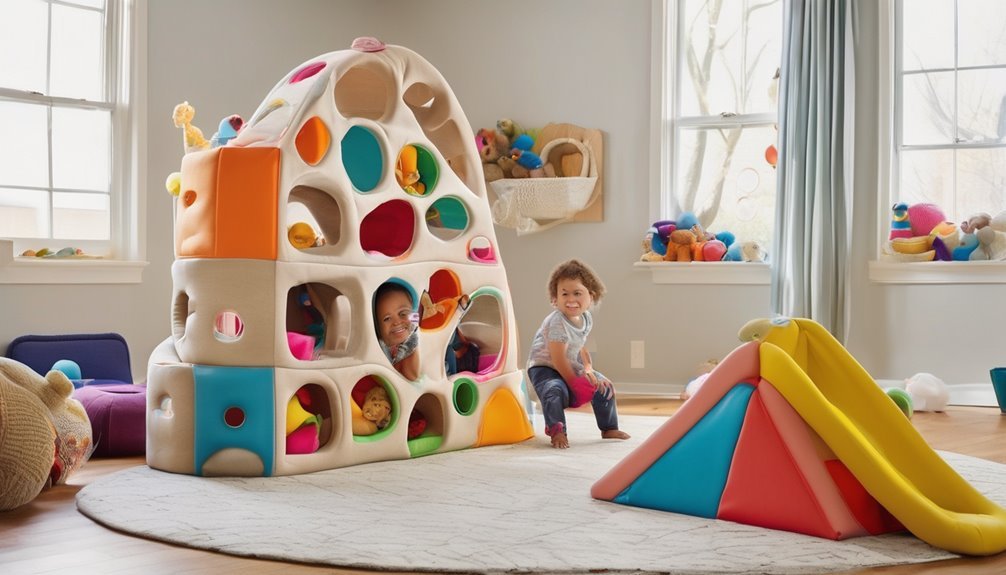
Are you wondering which indoor play items truly support development and safety for toddlers 1 to 3? When you choose Top Picks for Indoor Play Equipment, you’re prioritizing evidence-based design, age-appropriate challenges, and sturdy construction. Look for items that promote fine motor skills, balance, and problem-solving without sacrificing safety. Prioritize indoor safety features like rounded edges, stable bases, and non-slip surfaces. Consider toddler furniture that doubles as exploration tools—low shelves, child-sized tables, and accessible storage to foster independence. Favor open-ended toys that adapt as your child grows, facilitating social interaction and imaginative play. Avoid bulky, heavy pieces and ensure assembly follows manufacturer guidance. By selecting thoughtful, well-rated options, you create a secure space where belonging, curiosity, and healthy development thrive.
Safe, Child-Sized Climbers and Slides
When choosing safe, child-sized climbers and slides, you’re building on the idea that development flourishes with appropriate challenges and solid safety features. In early years, safe climbers support crawling, pulling, and upright balance, while child slides nurture directionality, spatial sense, and confidence. Look for low-to-ground designs with stable bases, rounded edges, non-slip surfaces, and non-toxic finishes. Adjustable heights and accessible handholds help kids progress at their own pace, reducing frustration and promoting mastery. Space should allow supervision within arm’s reach and easy exit routes to prevent falls. Choose products that meet established safety standards and are labeled for toddlers. Prioritize simple, durable materials and age-appropriate play value, so your child feels secure, included, and eager to explore safe climbers and child slides.
Cushioned Blocks and Building Sets
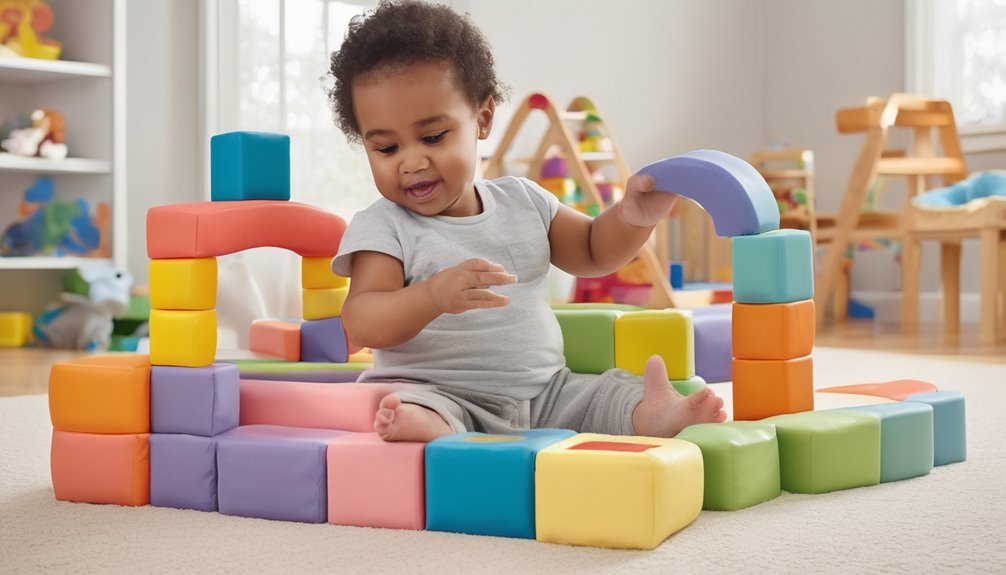
Cushioned blocks and building sets offer a calm, tactile way to explore spatial sense and fine-motor control whereas reducing impact on little falls. You’ll find that, with age-appropriate choices, these tools support purposeful play that builds confidence and task persistence. Use cushioned blocks to model simple shapes and sequences, guiding problem-solving without overstimulation. Pair building sets with soft foam mats to create safe, inviting surfaces that encourage exploration and repetition. Modular fort kits invite cooperative play, promoting turn-taking and shared goals while you observe evolving planning skills. Prioritize pieces labeled for toddlers and check for small-part risks. Clean regularly and store neatly to sustain a sense of belonging and routine. When chosen thoughtfully, cushioned blocks, building sets, soft foam mats, and modular fort kits support development and safety.
Sensory Toys That Engage Toddlers
You’re guiding your toddler through textured play, exploring how different surfaces feel and respond to touch to support fine motor and sensory development. Simple cause-and-effect toys help them learn action and reaction safely, whereas auditory exploration tools introduce sound patterns and attention skills. Choose durable, age-appropriate options and supervise to prevent choking or overstimulation as you assess which textures, sounds, and mechanisms best support your child’s growth.
Textured Sensory Play
Textured sensory play uses a variety of surfaces and materials to support toddlers’ exploration, touch discrimination, and early problem-solving in a safe, age-appropriate way. You’ll notice how texture exploration boosts neural connections while you supervise closely, ensuring development stays within a supportive frame. By inviting varied sensory textures, you help them form meaningful, confident interactions with everyday objects.
- Promotes safe tactile curiosity through different materials
- Supports language as you label rough, smooth, bumpy, soft
- Encourages fine-motor strength with squeezing, pulling, and pressing
- Builds self-regulation by guiding slow, intentional exploration
Remember to sanitize high-touch items, choose non-toxic options, and tailor prompts to their pace. Your attentive presence reinforces attachment and belonging while stimulating healthy, evidence-based growth.
Cause-And-Effect Toys
Wondering how simple cause-and-effect toys support toddlers’ growing brains, hands, and confidence? You’ll find these toys strengthen problem-solving skills by prompting intentional actions and quick feedback. When a button pops, lever moves, or blocks topple, you observe real-time cause and effect, reinforcing memory and predictive thinking in safe, age-appropriate ways. Choose toys with large, rounded components, stable bases, and non-toxic materials to support toy safety while reducing choking risks. Favor simple mechanisms that reward effort with visible results to boost persistence and autonomy. Integrate play into daily routines to build consistency and belonging within your family. Always supervise, inspect for wear, and replace damaged pieces. Clear labeling and soft edges help you trust what your child explores and learns.
Auditory Exploration Tools
Auditory exploration tools invite toddlers to listen, compare sounds, and connect actions with responses, supporting language development and auditory processing in a safe, age-appropriate way. You’ll find that sound based exploration builds memory, attention, and social interaction as you play together.
- Develops listening skills with varied tones and rhythms
- Encourages cause-and-effect understanding through responsive toys
- Supports safe, gentle self-regulation in noisy environments
- Promotes belonging by sharing music and sound experiences as a family
Choose sturdy, non-toxic options with volume controls and soft, rounded edges. Prioritize simple, open-ended designs that invite experimentation rather than overwhelm. Integrate with daily routines to reinforce language cues, labeling sounds and actions. Inspect cords and batteries regularly, and supervise closely to keep the play safe and meaningful for your little one.
Pretend Play: Little Houses and Kitchens
Pretend play with little houses and kitchens supports toddlers’ growing independence and language skills, whereas giving them safe, structured ways to imitate daily routines. When you provide a simple play kitchen and modular pretend houses, you invite everyday moments—grocery shopping, cooking, doll care—into a familiar, controlled space. This supports social–emotional growth as they practice turn-taking, asking for items, and narrating actions, boosting vocabulary and narrative skills. Prioritize sturdy, washable materials, rounded edges, and clear play boundaries to prevent hazards. Rotate props to maintain interest and avoid overstimulation, while maintaining predictable routines that foster security. Encourage collaborative scenarios with peers or caregivers to reinforce belonging and cooperation. Remember: pretend play, little houses kitchens, pretend play cultivate confident, curioustoddlers in a safe, supportive setting.
Art and Fine Motor Stations
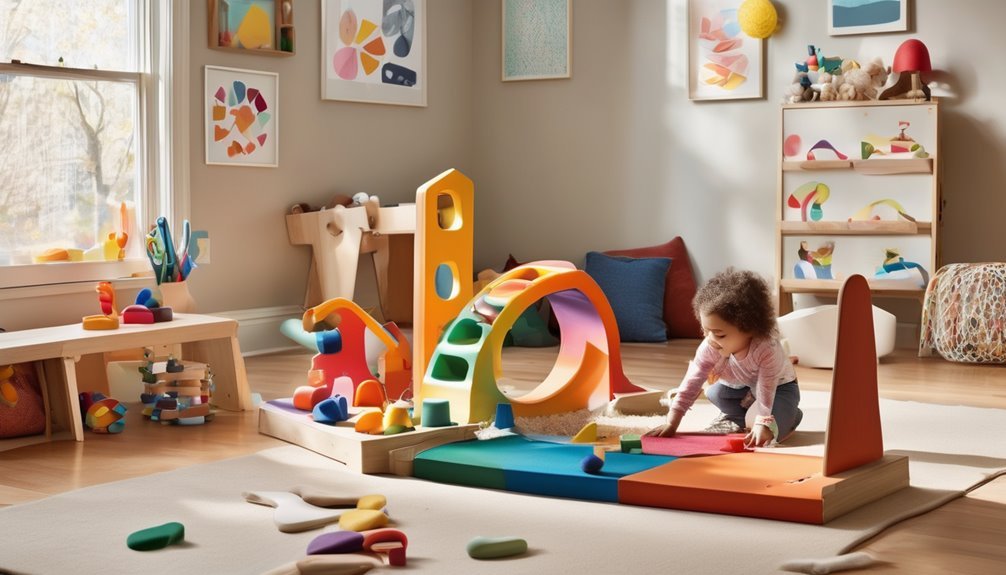
You’ll explore fine motor development through hands-on art activities that support grip, hand-eye coordination, and precision. Opt for mess-minimizing stations with non-toxic materials, easy cleanup, and secure, age-appropriate tools. Prioritize safety by supervising sessions, using labeled storage, and selecting evidence-supported activities like grippy crayons and chunky brushes.
Fine Motor Playways
What makes fine motor play invaluable for toddlers ages 1 to 3? You’re building precision, hand strength, and coordination in safe, joyful ways that support future writing and self-help skills. By using tiny tools and exploring squeaky textures, you observe curiosity fuel focus and persistence. This play should feel welcoming, inclusive, and lightly challenging to promote a sense of belonging.
- Supports pincer grasp refinement and dexterity with age-appropriate tools
- Encourages sensory exploration through varied textures, including squeaky textures
- Provides clear, simple goals that respect toddler autonomy
- Promotes safe decisions and caregiver guidance in labeled, low-mischun environments
Art Mess-Minimizers Stations
Art mess-minimizers stations offer purposeful, teacher-guided opportunities for toddlers to explore color, texture, and mark-making with minimal cleanup. You’ll set up age-appropriate, low-mulk clutter activities that support fine motor growth while reducing chaos, promoting a toddler clutter free environment. Evidence indicates structured stations boost concentration, collaboration, and safety awareness, as children practice tools, grip, and hand-eye coordination with supervision. Design tips emphasize washable, non-toxic choices and clearly labeled zones to minimize spills and misunderstandings. For belonging, use peer modeling, short model demonstrations, and predictable routines. Materials rotate to maintain interest without overwhelming. Art mess minimizers, toddler clutter free, align with developmentally appropriate practice, fostering independence and confidence in a calm, inclusive setting.
| Station | Purpose/Materials |
|---|---|
| 1 | Crayon traces, sturdy board |
| 2 | Stampers, foam shapes |
Space-Saving Ideas for Small Homes
Small spaces don’t have to limit play opportunities for toddlers; with thoughtful, safety-forward design, you can create engaging zones that fit a condo or tiny home.
Space saving hacks can still support development. By prioritizing age-appropriate, grounded play, you promote exploration without clutter. Use modular furniture, low shelves, and clearly defined paths so toddlers learn attention, autonomy, and safety. Consider integrated storage in play furniture to reduce transitions and encourage independence.
- Multi-use furniture that doubles as play surface and seating
- Wall-mounted activities to free floor space
- Transparent barriers for visibility and supervision
- Zoning with color cues that guide safe, contained play
Tiny apartment layouts thrive when effortless organization meets repetitive routines, nurturing belonging, consistency, and confidence in every small space.
Cleaning and Maintenance Tips for Busy Families
Juggling chores and childcare can feel overwhelming, but with practical routines and safety-minded habits, busy families can keep homes clean without sacrificing time with kids. You’ll benefit from simple cleaning schedules that fit toddler rhythms: wipe-downs after play, quick vacuum for crumbs, and weekly sanitizing of high-touch surfaces. Use washable mats and a dedicated play corner to ease maintenance and minimize mess spread. Prioritize stain prevention by treating spills promptly with a gentle, child-safe cleaner and keeping a small, accessible kit on standby. Establish routines that your child can imitate, reinforcing safe play and order. Regular checks for loose screws or unstable equipment protect tiny climbers, while clear labels help everyone share chores. Consistency builds confidence, belonging, and a calmer home.
Frequently Asked Questions
How Can I Childproof Indoor Play Areas Effectively?
You should start by identifying childproofing hazards and then implement safety proofing steps like securing furniture, outlet covers, and door thresholds, while supervising closely; this evidence-based, developmental-minded approach helps you foster belonging and reduce risks for your toddler.
What Are the Best Height Recommendations for Toddlers?
Like a steady heartbeat, you should follow age-appropriate height guidelines for toddlers, aiming at low shelves and accessible surfaces. Prioritize toddler safety with stable furniture and rounded edges, ensuring consistent supervision and developmentally supportive environments.
How Often Should We Rotate Toys to Maintain Interest?
You should rotate toys every 1–2 weeks to sustain interest, balancing rotation frequency with toy variety. This supports development and safety by refreshing challenges, while fostering belonging as you explore play together with your toddler.
When Is Indoor Playtime Unsafe Due to Weather or Illness?
When indoor play becomes unsafe because of weather or illness, you skip it; monitor safety considerations, avoid crowded spaces, and prioritize rest. Weather related illness hazards rise with fever, fatigue, or contagious symptoms; postpone until recovered and symptom-free.
How Can I Balance Screen-Free Play With Supervision?
You balance screen-free play with supervision by designating safe, engaging activities and clear roles, using supervision strategies like brief check-ins and hands-on guidance, and choosing screen-free ideas that support exploration, language, and social bonding with your child.