
To rust-proof outdoor swings and slides, start with weatherproof materials and ensure coating compatibility across components, minimizing differential expansion. Use primers and exterior topcoats with corrosion inhibitors, plus sealants on aluminum or galvanized parts to block moisture. Schedule biannual inspections of fasteners, joints, and rails, looking for halos, pitting, or coating wear. Treat early signs promptly and maintain protective coatings after cleaning. With regular documentation and proactive replacements, you’ll extend safety and lifespan—and there’s more you’ll want to uncover.
Choosing Weatherproof Materials for Outdoor Play Equipment
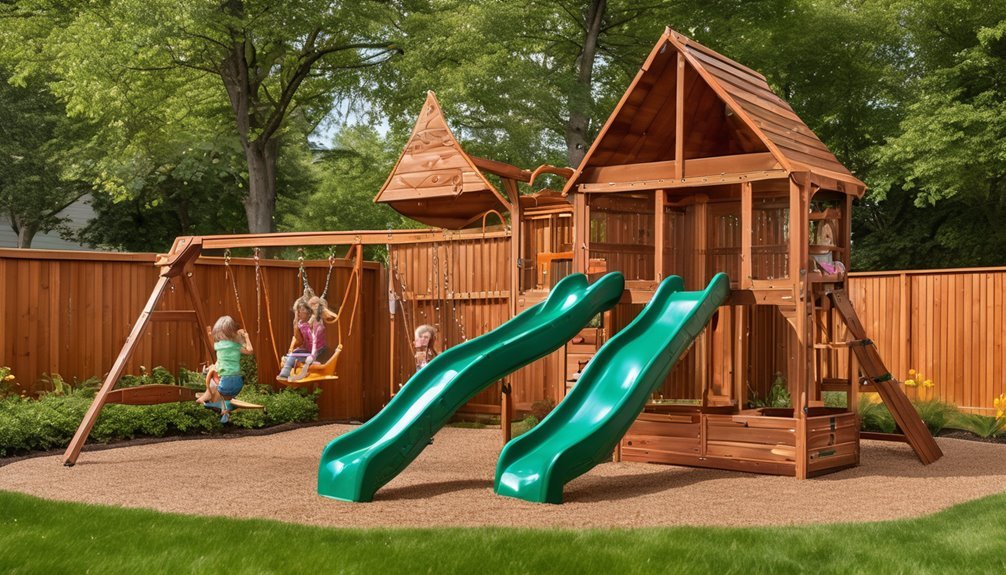
Choosing weatherproof materials for outdoor play equipment hinges on selecting substrates and finishes that resist moisture, UV exposure, and temperature swings. You’ll evaluate substrate consistency, load capacity, and long-term wear, then compare metals, polymers, and composites for compatibility with fasteners and joints. Systematic testing of weathering cycles informs choices, revealing how each material behaves under repeated sun, rain, and freeze–thaw conditions. You’ll prioritize material compatibility across components to minimize differential expansion, corrosion risk, and delamination. Your approach combines evidence from durability studies and practical field observations, ensuring performance aligns with safety expectations. By prioritizing well-muited substrates and proven finishes, you foster a sense of belonging and trust among users who value reliability, maintenance efficiency, and lasting play experiences.
Protective Coatings and Finishes That Ward Off Rust
Are rust threats overrated or avoidable with the right coatings? You can guide your playground’s longevity by selecting proven protective coatings and finishes. Systematic steps matter: identify metal substrates, assess existing corrosion, and choose coatings with corrosion inhibitors, UV stability, and flexible top layers. For steel components, apply primers designed for outdoor exposure, then a durable topcoat labeled for exterior rust prevention. Aluminum or galvanized parts benefit from sealants that block moisture without trapping heat. Apply in thin, even coats, allowing proper curing times between layers. Recoat as needed by manufacturer recommendations, particularly after abrasion or cleaning. Document your choices to compare performance over seasons. By prioritizing protective coatings, you reinforce belonging through safer play and longer-lasting equipment.
Regular Hardware Inspections: What to Look For
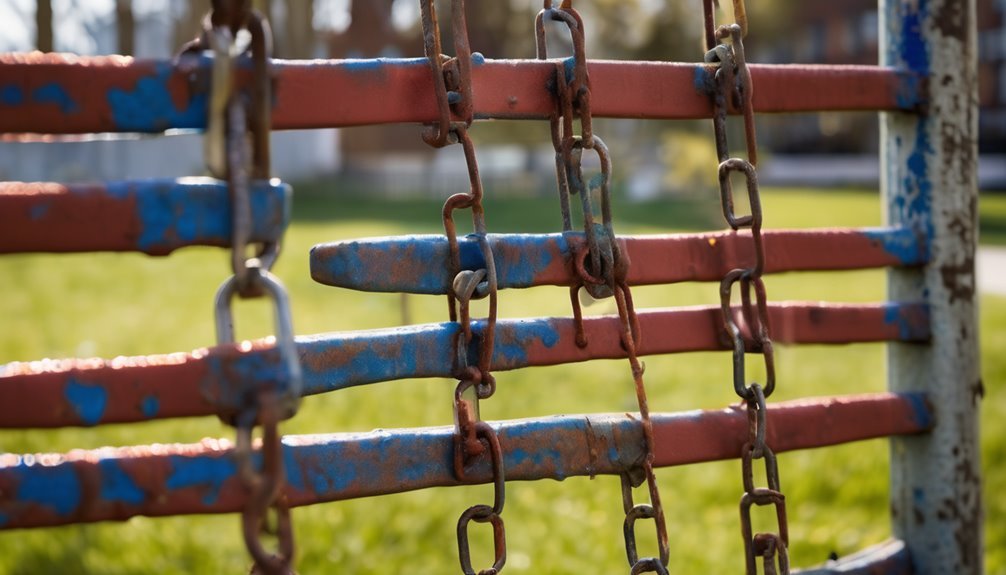
Regular hardware inspections are crucial for catching issues before they become hazards. You’ll systematically check fasteners, connections, and structural members for looseness, wear, or corrosion, noting any changes since the last review. Look for dark halos, pitting, or flaked coating that signals rust maintenance needs. Tap test joints to listen for hollow sounds, and verify that safety barriers remain intact. Document findings with dates and action steps, and prioritize repairs to protect every user. Consistency builds trust, so follow a fixed schedule and standardized checklist. Involve household members or neighbors to foster shared responsibility and belonging. Table summarizes focus areas:
| Area | What to Observe | Action Threshold |
|---|---|---|
| Fasteners | Looseness, rust, missing heads | Tighten or replace |
| Joints | Play, corrosion pockets | Tighten, reseal |
| Coatings | Adhesion failure, rust trails | Recoat or replace |
| Rails/Supports | Bends, cracks, wobble | Stabilize, reinforce |
| Ground Contact | Shifts, settlement | Realign, anchor |
Preventing Rust Hotspots on Rails and Joints
To prevent rust hotspots, you’ll start by inspecting Rails & Joints for early corrosion signs and tight, unobstructed movement. Regularly treat exposed metal with a proven rust-inhibitor and recoat according to manufacturer guidelines to maintain protective barriers. This approach combines targeted observation with disciplined maintenance to sustain performance and safety over time.
Rust Hotspot Prevention
Rust hotspots on rails and joints can undermine structural integrity quickly if left unchecked. You’ll want a systematic approach that blends routine inspection with proven prevention strategies, guided by evidence and care for your community of readers. Focus on rust prevention and coating options to create lasting protection without fuss. Use tested materials, monitor moisture exposure, and select coatings that tolerate outdoor wear. The goal is a cohesive, inclusive plan you can trust and share.
- Inspect for early corrosion signs and address promptly
- Choose rust-resistant alloys or compatible primers and topcoats
- Apply coatings evenly, follow manufacturer guidance, and recoat as needed
- Schedule seasonal checks to maintain a durable, safe playground
Rails & Joints Care
Have you ever wondered how tiny rust spots on rails and joints become big safety concerns unless caught early? In Rails & Joints Care, you’ll assess exposed metal, focusing on vulnerable seams and fasteners. Systematic inspection flags rust protection gaps, especially at welds and corners where moisture concentrates. Prioritize preventive measures: select corrosion-resistant coatings, ensure proper drainage, and seal joints to limit water ingress. Joint design matters: smooth transitions reduce crevice traps; replace damaged components with compatible, non-galling hardware. Document each observation, noting frequency and severity to guide maintenance intervals. Use evidence-based protocols—clean with appropriate solvents, dry thoroughly, and reapply protective finish per manufacturer specs. Regular, collaborative checks reinforce belonging to a safety-first community dedicated to long-lasting, rust-resistant play structures.
Maintenance Routines for Different Climates
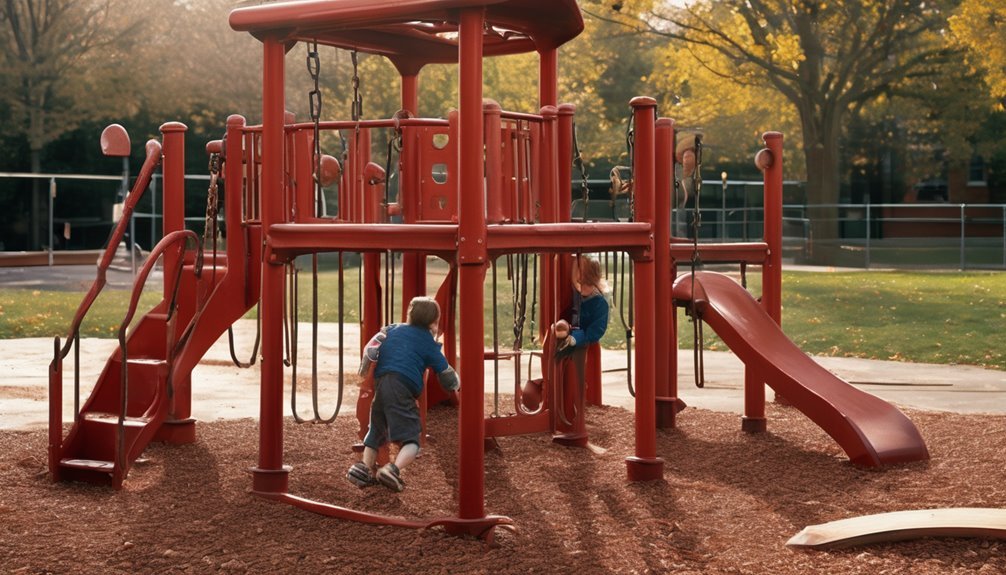
Different climates demand customized maintenance routines to keep outdoor swings and slides safe and durable. You’ll transition checks with seasonal patterns, prioritizing corrosion risks, material expansion, and traction needs. Evidence-based steps help you sustain weather durability and coating longevity over years.
- Inspect fasteners seasonally for loosening and corrosion, tightening as needed
- Apply appropriate protective coatings after weather alignments, matching climate risks
- Clean and drain assemblies to prevent moisture buildup and rust pockets
- Schedule proactive lubrication and seal checks before peak cold or heat waves
Following these routines builds a sense of belonging—knowing your playset is prepared for rain, sun, or snow. You’ll document findings, adjust timelines, and share outcomes with family, reinforcing durable, safe fun for everyone involved.
Safe Cleaning and Rust Removal Methods
Clean, safe cleaning and rust removal start with a methodical assessment of metal surfaces, then proceed with gentle, plant-safe cleaners and rust-inhibiting treatments. You’ll inspect for pitting, flaking, and loose paint, noting affected areas before any action. Use mild soap, water, and a soft brush to remove grime; avoid abrasive tools that can scratch protective layers. For rust, apply a phosphoric acid–free rust converter or a citrus-based remover, following label directions, and wipe clean. After treatment, thoroughly dry to prevent reseating moisture. Refinish with a weatherproof coating designed for outdoor metal, ensuring even coverage and proper curing time. Regularly inspect treated areas for early signs of corrosion. This approach supports rust prevention, maintains aesthetics, and reinforces a community of care among caretakers seeking lasting safety.
How to Schedule Seasonal Checkups and Replacements
Seasonal checkups and replacements should be planned with a clear, evidence-based schedule that ensure with material wear and environmental exposure. You’ll align inspections with local seasons, documenting outcomes to refine timing, and you’ll schedule replacements before failure-prone components become unsafe. This disciplined cadence supports rust prevention and extends life by catching issues early.
Seasonal checkups and replacements follow an evidence-based cadence, aligning with seasons to preempt rust and prolong life.
- Establish a biannual inspection cadence tied to weather patterns and coating life
- Log findings, schedule timely rust prevention measures, and pre-order parts
- Prioritize high-stress joints for earlier checks and replacements
- Review previous cycles to fine-tune timing and materials for durability
This systematic approach creates belonging through proactive care, reduces downtime, and ensures safe play structures that endure season after season.
Signs of Early Rust and When to Act
Early rust shows up as small, surface-level indicators that you can’t ignore. You’ll notice faint specks, tiny bubbles, or discoloration on metal surfaces where friction and moisture meet. These rust indicators are your first warning that corrosion is beginning to compromise strength and safety. Track patterns: isolated spots may stay minor with promptly maintenance, while spreading patches signal accelerated decay. Act promptly when you see any change in texture, color, or drilling-like flaking under paint. Schedule maintenance timing that prioritizes cleaning and protective coating before rust penetrates deeply. Document dates and observed signs, then repeat inspections on a consistent cadence. By staying attentive, you reinforce a culture of ownership and resilience for your playground—protecting neighbors, family, and your shared space.
Budget-Friendly Tips to Extend Lifespan of Swings and Slides
To extend lifespan effectively, start with sealing and protecting exposed metal and wood to prevent moisture ingress. Regularly inspect for signs of wear and address small issues before they escalate. When components show fatigue, replace worn parts promptly to maintain safety and performance.
Seal and Protect
Seal and Protect: budget-friendly ways to extend the lifespan of your swings and slides start with a simple, systematic approach to sealing gaps and shielding surfaces. You’ll boost coating durability and invite long-term confidence by choosing basic, proven methods over flashy add-ons. Focus on minimal, effective steps that respect your budget and sense of belonging to a well-kept outdoor space.
- Inspect joints for gaps and seal with affordable caulk or silicone, prioritizing flexible, outdoor-grade options
- Clean surfaces thoroughly to maximize adhesion before any coating or sealant
- Apply a light, even coat that resists moisture without trapping heat
- Consider new materials or refresh coatings with durable formulations designed for outdoor play equipment
This plan emphasizes clarity, evidence-based choices, and shared care.
Inspect for Wear
Have you checked your swings and slides lately for signs of wear? In this section, you’ll follow a methodical checklist to spot early issues before they worsen. Begin with routine maintenance: inspect joints, bolts, and fasteners for looseness or corrosion, tightening where safe. Look for rust indicators on metal components, especially under seats, rails, and frame corners. Examine plastic and wooden parts for cracking, splitting, or warping that could indicate material fatigue. Assess swing chains or ropes for fraying and wear; replace or adjust as needed. Test movement for unusual stiffness or grinding sounds, which may signal hidden damage. Document findings briefly, and prioritize repairs by safety risk. This disciplined approach empowers you to extend lifespan while maintaining a sense of belonging and shared care.
Replace Worn Parts
If you spot worn parts, replace them quickly with budget-friendly options that don’t compromise safety. You’ll maximize lifespan by selecting compatible replacement parts and prioritizing quality over price. Confirm manufacturer specs, then document part numbers for easy future buys, and inspect mounting points for hidden wear before revising assembly. Rust prevention starts with clean connections and corrosion-resistant hardware. Maintain a tight fit to minimize movement that accelerates wear, and cycle components to test reliability after replacement.
- Choose generic or OEM-compatible replacement parts that meet safety standards
- Use rust-resistant fasteners and protective coatings
- Inspect surrounding hardware for signs of wear and replace as needed
- Record maintenance dates and part lifespans to plan timely refreshes
Frequently Asked Questions
How Long Do Rustproof Coatings Last on Playground Equipment?
Rust longevity varies, but with proper coating maintenance, expect 5–10 years of effective protection for playground equipment. You’ll notice slower rust progression and preserved aesthetics when surfaces are clean, inspected, and re-coated as needed. Regular inspections help you address chips and wear promptly. To maximize lifespan, follow manufacturer guidelines, choose durable barriers, and maintain a consistent maintenance schedule. This approach supports your sense of belonging to a well-kept, safe community space.
Can Rain Gutters Affect Metal Swings and Accelerate Rusting?
Yes, rain gutters can affect metal swings and accelerate rusting. When gutters leak or overflow, rain exposure concentrates moisture near metal, promoting gutter corrosion and transfer to nearby hardware. Improper drainage can trap water against posts, increasing corrosion risk. Regularly inspect joints, seal leaks, and ensure downward flow away from play structures. By staying vigilant, you belong to a community that keeps equipment safer and longer-lasting, reducing rust-inducing moisture exposure and protecting everyone.
Is Rust-Proofing Safe for Kids’ Playground Materials?
Yes, rust-proofing can be safe if you choose kid-friendly products and follow manufacturer instructions. You’ll want to verify that coatings are non-toxic, low VOC, and approved for kids’ playground materials safety. Apply in well-ventilated areas and allow full curing. Regularly inspect for chipping and recoat as needed. If unsure, consult a professional. You’ll feel confident, supported, and connected to a safer play space for your family and community.
Should I Seal Joints After Rust Removal or Repaint?
Yes, you should seal joints after rust removal and then repaint. Start with a clean, dry surface, apply a rust-inhibiting primer, then seal joints to prevent moisture ingress. Repainting joints provides a protective barrier and uniform appearance. Evidence-based practice shows sealing joints reduces corrosion resurgence, while repainting sustains aesthetics and longevity. You’ll feel more confident knowing you’ve created a cohesive, protective system for your playground. Maintain periodic inspections to catch future wear early.
Do Aluminum Components Rust at All in Coastal Climates?
Yes, aluminum components can corrode in coastal climates, though they’re less prone than steel. You’ll want to assess aluminum corrosion risk by noting salt spray, humidity, and protective coatings. Coastal rusting potential increases with improper anodizing or damaged paint. Systematically inspect, clean with mild detergent, and refinish promptly. You’ll reduce corrosion by using compatible sealants and avoiding galvanic pairs. Regular maintenance builds belonging and confidence in safety for years.