
When choosing between rope climbers and traditional ladders for school physical education, consider what you want your students to gain. Rope climbing vigorously develops upper body and grip strength, coordination, and confidence, though it requires careful supervision. Traditional ladders, conversely, emphasize leg strength and coordination, offering a more predictable challenge. Both build muscular endurance and a sense of accomplishment, but their skill development components differ, so tailoring your choice to age and ability is key. Further insights will clarify your decision.
Rope Climbing vs. Ladder: Key Differences for PE

Ladder climbing, conversely, typically emphasizes leg strength and coordination. You primarily use your legs to ascend, with your arms acting more as stabilizers. Though it’s a great way to improve overall fitness and develop functional movement, the muscle development component is distributed differently. Both activities contribute to manual labor, but the nature of the involvement sets them apart, offering diverse benefits for students traversing their PE excursion.
Rope Climbing: Pros, Cons, and Target Skills
Why might rope climbing be a valuable addition to a school’s physical education curriculum? It offers a unique challenge that cultivates crucial physical literacy. You’ll find it’s a fantastic way to build upper body strength and core stability. The dynamic movement involved involves multiple muscle groups simultaneously, promoting a complete workout.
Here’s a breakdown of what you can expect:
- Pros: Develops significant upper body and grip strength, boosts coordination, and boosts confidence. It additionally improves muscular endurance.
- Cons: Requires proper supervision owing to fall risk, may be intimidating for some students initially, and needs adequate space.
- Target Skills: Grip strength, pulling might, core involvement, and self-efficacy.
- Benefits: Promotes a sense of accomplishment and can be adapted for various fitness levels, ensuring everyone feels included.
Traditional Ladders: Benefits and Skill Development

As a staple in many physical education programs, traditional ladders present a distinct set of advantages for student development. You’ll find they offer a predictable challenge, allowing students to build confidence as they master vertical ascent. The established ergonomics of grip on ladder rungs are familiar and accessible, promoting a sense of security. This familiarity additionally translates to consistent muscle engagement across the upper body and core as you ascend rung by rung. You’re developing strength and coordination in a controlled environment. You’ll notice how your grip strength improves with each successful climb, and how different muscle groups activate to keep you stable and moving upward. It’s a fundamental way to build foundational climbing skills.
Age and Ability: Choosing the Right Fit for Students
When selecting between rope climbers and ladders for your physical education curriculum, it’s essential to think about the diverse age ranges and varying abilities within your student population. Certain apparatus might better suit specific developmental stages and their corresponding body mechanics. You’ll want to confirm that all students feel capable and included, regardless of their current proficiency. Consider these points:
Consider student age and ability when choosing between rope climbers and ladders for PE.
- Younger students: May benefit from ladders initially as they develop foundational grip strength and coordination.
- Older students: Can often tackle rope climbing, challenging their strength and body awareness.
- Varied abilities: Offer modifications. Ladders can be used with fewer steps, and ropes can be lowered.
- Goal: Promoting inclusivity and cultivating a sense of accomplishment for everyone.
Safety and Implementation: Best Practices for Both
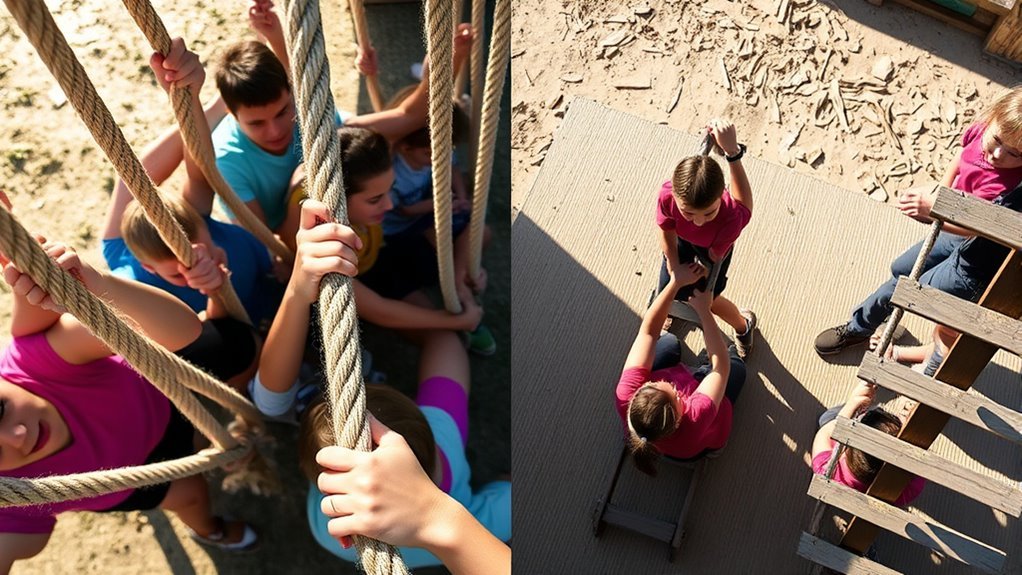
Since safety’s paramount, it’s critical to implement both rope climbers and ladders with thorough best practices. You’ll want to guarantee consistent supervision and adequate matting beneath climbing areas to cushion any falls. For rope climbers, check ropes for wear and tear regularly, and teach proper gripping techniques to prevent slippage. With ladders, verify stability and guarantee they’re securely anchored.
Effective classroom integration relies on clear lesson plans and established routines. Don’t overlook the importance of expansive teacher training. Equipping educators with the knowledge to instruct students safely and effectively enables them to cultivate an inclusive environment where everyone feels supported and can participate with confidence. This preparation guarantees your students feel ready to tackle these exciting challenges.
Frequently Asked Questions
How Often Should Rope Climbing Be Practiced?
You’ll want to incorporate rope climbing regularly in your physical education program. Aim for it at least once a week, depending on your students’ current fitness levels. Always prioritize safety considerations, ensuring proper supervision and technique instruction. Implementing training progressions is key, starting with assisted climbs and gradually increasing difficulty as students build strength and confidence. This approach helps cultivate a sense of accomplishment and belonging for all participants.
Can I Use Rope Climbing for Assessment?
You absolutely can use rope climbing for assessment. Envision a student demonstrating their strength and coordination, their muscles working in unison as they ascend. When considering it, you’ll want to look closely at safety concerns, ensuring clear guidelines and proper spotting techniques are in place. Assess their overall skill progression, noting improvements in grip strength, body control, and efficiency. It’s a fantastic way to gauge development.
What Are Alternative Upper Body Exercises?
You’re looking for upper body exercise alternatives. For thorough development, consider incorporating strength training like push-ups, pull-ups (assisted if necessary), and dumbbell rows. To build endurance drills, think about circuit training with exercises like medicine ball slams or battle ropes. These options offer variety and involve different muscle groups, ensuring everyone can find activities that help them connect with their fitness goals.
Are There Professional Rope Climbing Certifications?
Though you might be curious about professional rope climbing certifications, the answer isn’t a simple yes or no. There aren’t many widely recognized, standalone certifications particularly for rope climbing itself. Nevertheless, you’ll find that obtaining certifications in related fields, like safety training for aerial arts or circus instructors, often covers critical rope techniques. These certifications emphasize skill progression, ensuring you’ve mastered safe practices and effective teaching methods before guiding others.
What Is the Historical Significance of Rope Climbing?
You’ll find rope climbing‘s historical significance steeped in both tradition and necessity. It evokes childhood nostalgia through playground days, yet its roots furthermore lie in rigorous military training. You see, it’s always been a reliable way to build incredible upper body strength and functional fitness, a skill that’s served generations well and continues to connect you to a legacy of physical prowess.