
NEP 2020 champions outdoor play as indispensable for your child’s holistic development, a vision Karnataka schools are adopting. You’ll find it augments cognitive skills through nature’s classroom, nurtures social-emotional growth on playgrounds, and builds physical strength. Practical integration, like flexible scheduling and cross-curricular links, addresses challenges ensuring active, experiential participation. Uncover how this educational transition sparks intrinsic motivation and develops essential skills for lifelong learning.
NEP 2020: Why Outdoor Play Is Key for Karnataka Schools
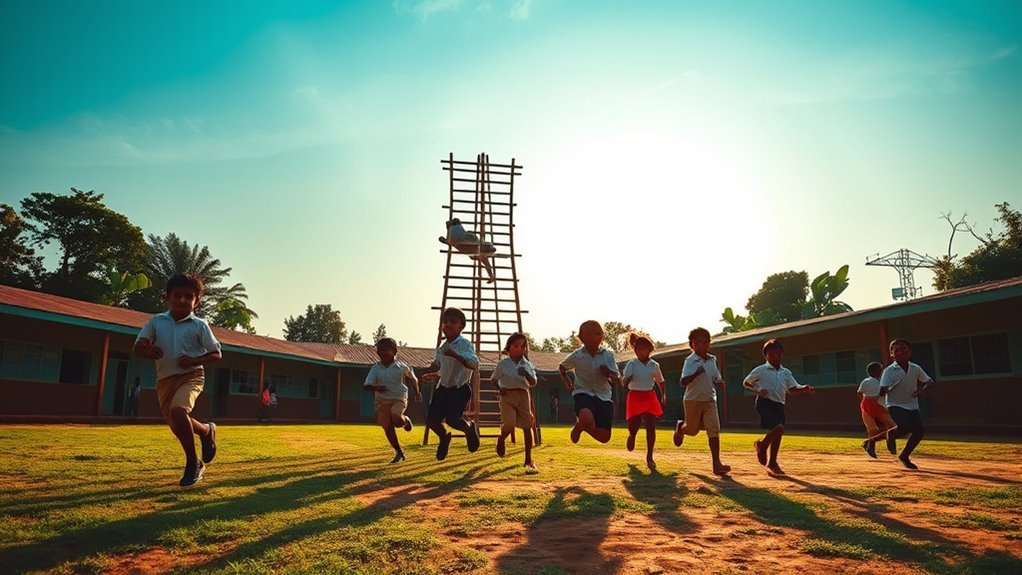
The National Education Policy (NEP) 2020 champions a transformative approach to education, recognizing outdoor play not as a mere recreational activity, but as a cornerstone of holistic child development. You’ll find that this policy deeply values how unstructured play contributes to your child’s overall growth. It’s about realizing that these experiences are integral to cultivating your child’s early childhood development.
Nature’s Classroom: Boosting Cognitive Skills Through Play
Embracing outdoor play‘s role in early childhood development naturally leads us to explore how it cultivates young minds. Nature’s classroom offers a uniquely rich environment for cognitive growth. Through active involvement, children develop vital problem-solving skills with exciting problem solving games. They learn to experiment, hypothesize, and adapt, all whilst traversing the natural world.
The sensory exploration inherent in outdoor play—touching rough bark, feeling the wind, observing insects—stimulates neural pathways. This direct interaction with diverse elements sharpens observation and analytical abilities. You’ll notice how children, immersed in these experiences, naturally build a stronger connection to their learning, feeling enabled as they reveal new insights and abilities within this colorful, outdoor setting.
The Playground as a Social Lab: Building Stronger Bonds
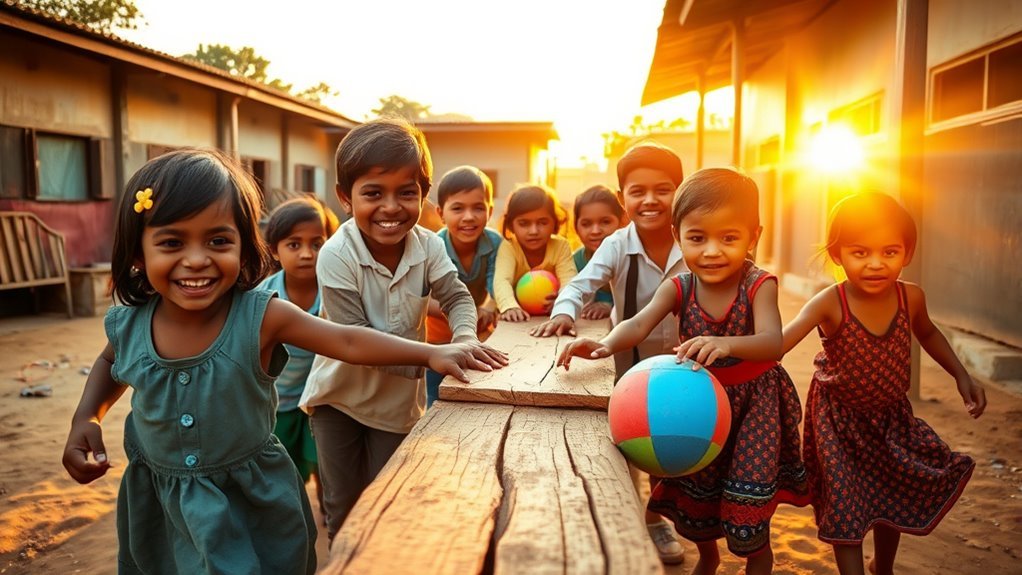
Beyond cognitive benefits, children’s participation in outdoor play, particularly on the playground, functions as an essential social laboratory for developing fundamental interpersonal skills. You’ll uncover that these shared experiences nurture a strong sense of community, helping you connect with your peers and feel a sense of belonging. The dynamic environment of the playground is a prime ground for imagination incubation, where you can collectively build worlds and stories.
Here’s how you build bonds:
- You learn to negotiate and compromise during games, enhancing conflict resolution.
- Teamwork becomes a natural instinct as you join forces on play activities.
- Sharing equipment and space develops empathy and consideration for others.
- You develop communication skills by expressing ideas and listening to friends.
Physical Wins: How Outdoor Play Sharpens Young Bodies
You’ll uncover how engaging in open-air activities directly contributes to your students’ body strengthening and coordination, leading to improved motor skills development. This section will connect the physical demands of outdoor play to observable improvements in their overall dexterity and physical competence. Understand the foundational role of these literal “wins” in building powerful, capable young bodies.
Body Strengthening And Coordination
Numerous studies demonstrate that active involvement in outdoor play is fundamental for children’s physical development, directly contributing to improved body strengthening and coordination. When you’re out playing, you’re not just having fun; you’re building a stronger physique.
Here’s how outdoor play boosts your physical prowess:
- Enhanced Muscle Endurance: Running, jumping, and climbing all work your muscles, increasing their stamina.
- Improved Balance: Traversing uneven terrain and playground structures naturally promotes your balance improvements.
- Core Strength Development: Engaging in activities like crawling or swinging strengthens your stabilizing muscles.
- Bone Density: Weight-bearing activities, such as hopping and skipping, contribute to healthier bones.
Embracing these physical wins through outdoor play helps you feel capable and connected within your school community.
Motor Skills Development
Building upon the foundation of strengthened muscles and bones, outdoor play further refines a child’s physical capabilities by cultivating advanced motor skills. You’ll see this in action as you encourage children to participate with nature. Climbing trees and traversing uneven terrain naturally hone their gross motor skills, improving balance, agility, and spatial awareness. These aren’t just random movements; they’re calculated actions that build confidence.
Furthermore, activities like collecting small stones, planting seeds, or drawing in the dirt with a stick provide crucial opportunities to develop fine motor skills. This intricate control allows for precise hand-eye coordination, key for tasks like writing and manipulating small objects. By embracing these outdoor experiences, you’re helping every child uncover their potential and feel a strong sense of accomplishment and belonging in their physical adventure.
Integrating Outdoor Play: Practical Strategies for Schools
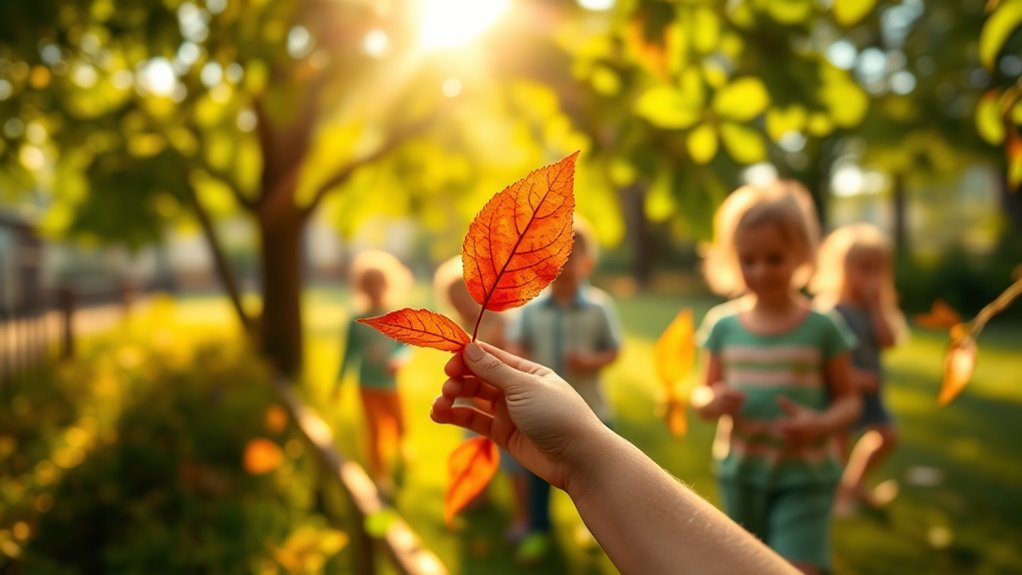
As we progress to practical strategies for integrating outdoor play, it is pressing to acknowledge that successful implementation hinges on a school’s commitment to reimagining its physical and pedagogical environments. Your role as an educator is essential in cultivating a sense of belonging for every child as they connect with nature and each other. By embracing these approaches, you’ll actively combat childhood obesity and nurture mental wellness.
Here are four practical strategies you can implement:
- Flexible Scheduling: Incorporate “play breaks” into the daily routine, treating them with the same importance as academic lessons.
- Resourceful Spaces: Don’t limit yourself to large playgrounds. leverage existing spaces like courtyards, rooftops, or even designated classroom corners for nature-based activities.
- Teacher as Facilitator: Guide, observe, and participate alongside students, encouraging exploration and problem-solving during outdoor sessions.
- Cross-Curricular Integration: Weave outdoor play into subjects like science, art, and even language, making learning more dynamic and hands-on.
Tackling Challenges: Making Outdoor Play Work
Frequently, schools find that integrating substantial outdoor play opportunities into their curriculum presents unique hurdles that require thoughtful consideration and strategic planning. You’re not alone in facing these, and apprehending them helps us build solutions together. Effective implementation hinges on solid teacher training to equip educators with the skills and confidence to enable these experiences. Furthermore, cultivating strong parent interplay is crucial for a supportive school community.
| Challenge | Strategy | Key Stakeholders |
|---|---|---|
| Limited space | Creative utilization | Administration, Staff |
| Safety concerns | Clear guidelines, supervision | Staff, Parents |
| Time constraints | Integration into lessons | Staff, Curriculum |
| Lack of resources | Community partnerships | School, Parents |
| Teacher preparedness | Targeted professional development | Teachers, Mentors |
Karnataka’s Trailblazers: Innovative Outdoor Learning
- Nature Trails and Local Flora: Schools are developing trails showcasing *local flora*, encouraging hands-on exploration and scientific inquiry.
- Cultural Heritage Integration: Outdoor classrooms are being designed to reflect and teach about *cultural heritage*, making learning more meaningful.
- Community Gardens: Students participate in planting and tending gardens, learning about sustainability and teamwork.
- Storytelling Under the Sky: Utilizing natural amphitheaters for storytelling sessions that connect with Karnataka’s rich traditions.
Beyond Recess: NEP 2020’s Vision for Holistic Growth
Something fundamental altered with NEP 2020’s implementation, transforming outdoor spaces from mere areas for recreation into integral components of a child’s holistic development. You’ll find that it champions learning through active, experiential engagement, nurturing not just intellectual but further emotional and physical well-being. This framework encourages you to see outdoor settings as lively classrooms, supporting vital skills like emotional regulation and mindfulness exploration.
| Domain | NEP 2020 Focus | Outdoor Integration Example |
|---|---|---|
| Cognitive | Problem-solving | Nature scavenger hunt |
| Social-Emotional | Cooperation, empathy | Group building activities |
| Physical | Gross motor skills | Obstacle courses |
| Creative/Sensory | Imagination, exploration | Natural art creation |
This transition enables you to embrace the interconnectedness of learning, making every outdoor moment count for your whole development.
Lasting Impact: The Future of Play-Based Education
As we’ve observed how NEP 2020 redefines outdoor spaces as dynamic learning environments, it’s vital to acknowledge the enduring influence of this play-based approach. You’re not just witnessing a temporary transition; you’re embracing a fundamental change in educational philosophy. This integration of playful pedagogy promises to nurture deeper insight and a lifelong love for learning, ensuring that every child feels connected to their educational voyage.
What this means for your future in education:
- Cultivating intrinsic motivation through engaging, play-driven activities.
- Developing critical socio-emotional skills within collaborative outdoor settings.
- Encouraging creativity and problem-solving organically, not through rote instruction.
- Building a strong sense of community, as children learn and grow together, outside.
Frequently Asked Questions
What Are Local Weather Challenges for Play?
You’ll face local weather challenges for play, particularly with seasonal changes. Extreme heat can make afternoons unbearable, during monsoon disruptions mean you’ll miss outdoor time altogether. You’ll need adaptable strategies to guarantee active participation isn’t halted by nature. We’re all in this together, finding ways to keep you moving and learning, rain or shine, heat or cool.
How to Fund Outdoor Play Initiatives?
Coincidentally, funding your outdoor play initiatives is achievable! You’ll build strong community partnerships, tapping into local businesses and parent groups. Organize engaging fundraising events, like school fairs or sponsored walks, that everyone can join. Integrating these efforts cultivates a sense of belonging as you collectively invest in joyful, active learning for your students. This collaborative approach guarantees sustainable resources.
What Teacher Training Is Needed?
You’ll need thorough teacher training focused on early childhood development. This will equip educators to effectively utilize outdoor play, fostering holistic learning. Critically, you’ll need training on interdisciplinary curriculum integration, showing how play seamlessly connects subjects. This approach guarantees you’re not just facilitating fun, but building a strong foundation for every child’s path, making them feel they truly belong.
Who Monitors Outdoor Play Safety?
You’ll find that your school community actively monitors outdoor play safety. This involves strong oversight systems where designated staff, trained in safeguarding, guarantee children’s well-being. Regular apparatus examination is paramount, with clear procedures for identifying and rectifying any hazards. This integrated approach cultivates a secure and welcoming environment for all our learners to explore and grow together.
Can Outdoor Play Help Learning Disabilities?
Yes, outdoor play can notably aid children with learning disabilities. You’ll find it boosts sensory integration, allowing them to process a wider range of stimuli in a more natural setting. Development of gross and fine motor skills comes with exploration and physical challenges. This integrated approach nurtures confidence and supports their learning path, helping them feel more connected and capable within their educational environment.