
You’ll create resilient urban playgrounds by integrating living elements, textured surfaces, and nature-inspired loose parts through careful design, safety, and maintenance that respond to microclimates, accessibility, and lasting play value. Design with trees, logs, and plantings for canopy, interaction, and texture, while using water features to shape rhythm and exploration. Ground textures should balance grip and softness, with uniform depths and safe edge cues. Equitable access and clear sightlines matter, and proactive maintenance keeps curiosity alive—more ideas await as you explore further.
Designing With Living Elements: Trees, Logs, and Plantings
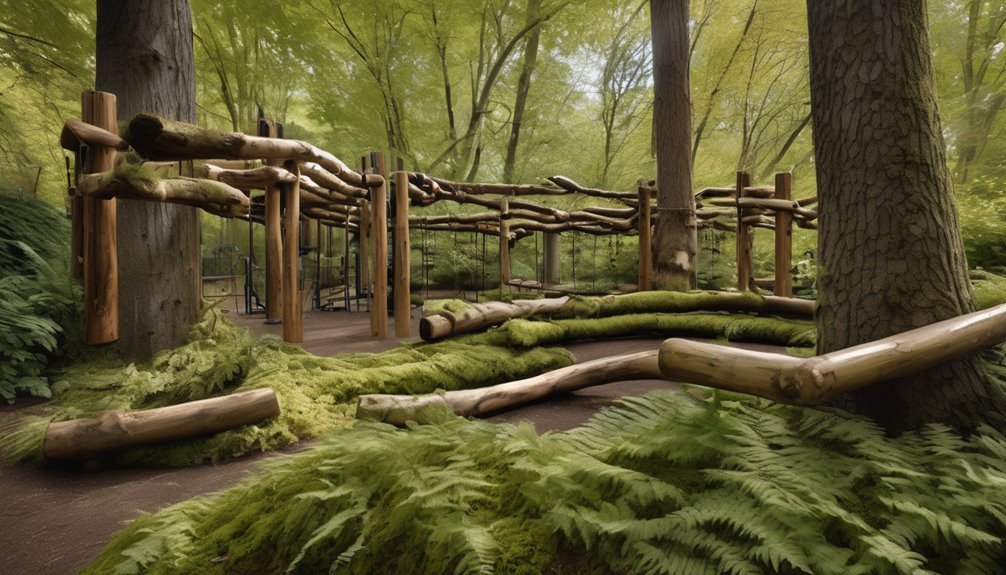
Designing with living elements—trees, logs, and plantings—starts by aligning spectacle with safety and maintenance. You’ll approach the site as a designer craftsman, valuing tactile variety, evolving shade, and seasonal change. In practice, your method centers on designing with living, where form supports function and long-term health. Integrating trees for canopy, logs for interaction, and plantings for texture creates resilient play conditions that age gracefully. Prioritize species selection, spacing, and compatible maintenance routines to minimize hazards while maximizing sensory engagement. Track microclimates, soil health, and circulation paths to guide integration decisions. This evidence-based, design-driven approach fosters belonging: families see thoughtful care, children explore confidently, and communities trust the space as a shared living classroom—where elements integration sustains curiosity and safety.
Water Features and Sensory Experiences in Small Spaces
Water features in small spaces can be surprisingly potent design drivers, shaping microclimates, play patterns, and sensory engagement without demanding vast footprints.
You’ll craft moments of wonder with water cascade structures and tidal sensory cues that invite exploration, sound, and touch. Evidence-informed choices favor durable materials, slip-resistant textures, and accessible interfaces that welcome all children into the flow of discovery.
- Water cascade elements guide movement and focus, creating rhythm and anticipation.
- Tidal sensory features amplify soundscapes, offering calm or energized responses as needed.
- Contained micro-basins support safe, repetitive experimentation with splashes and spray.
- Seasonal variability adds texture, light reflections, and tactile contrast that deepen belonging.
In small scales, precise detailing yields lasting, inclusive joy and resilient play environments.
Soil, Mulch, and Natural Textures for Safe Exploration
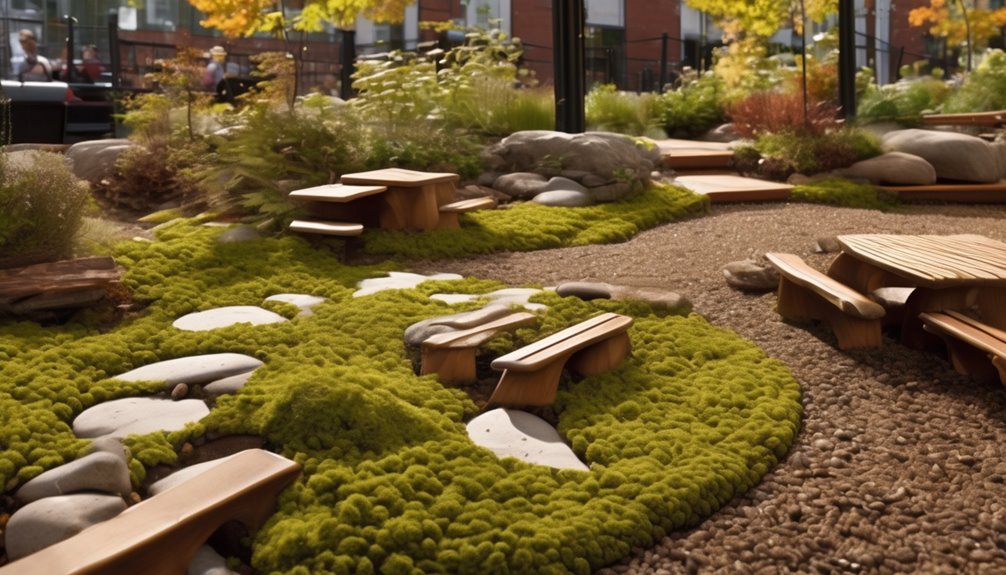
Soil, mulch, and natural textures aren’t just ground material—they’re tactile avenues for safe, exploratory play that invites kids to test hypotheses, balance steps, and dig into explore. You design with purposeful texture—coarse soil textures for grip, fine grains for precision, and cushioned mulch layers to soften landings without hindering movement. Ground choices should support varied risks, from toe-toe walking to subtle jumps, while maintaining clear sightlines for supervision. Evidence favors uniform depth ranges and gradual grade changes to minimize slips, with edge treatments that cue boundaries without sharp transitions. Prioritize mulch safety by selecting size-graded, untreated materials free of contaminants, and maintain regular raking to keep a consistent surface. Document outcomes to refine materials mix, ensuring inclusive, welcoming play spaces for all.
Nature-Inspired Loose Parts and Open-Ended Play
Nature-inspired loose parts invite kids to repurpose natural materials—twigs, pine cones, shells, bark shards, seeds, and stones—into evolving play scenarios. You’ll see how open-ended play ideas emerge when comparing textures, weights, and forms, sparking curiosity and collaboration with nature. This craft-forward approach rests on evidence: loose parts exploration supports problem-solving, creativity, and social bonding, while design-minded setups invite repeated experimentation. The goal is resilient, playful spaces that celebrate natural materials collaboration and flexible use. Use the following ideas to seed engagement:
- Create shifting climbers from branches and logs.
- Build micro-habitats with stones, seed pods, and bark bits.
- Layer loose parts to invite narration and role-play.
- Thread natural elements into simple, evolving puzzles.
Safety, Maintenance, and Equity in Urban Nature-Based Facilities
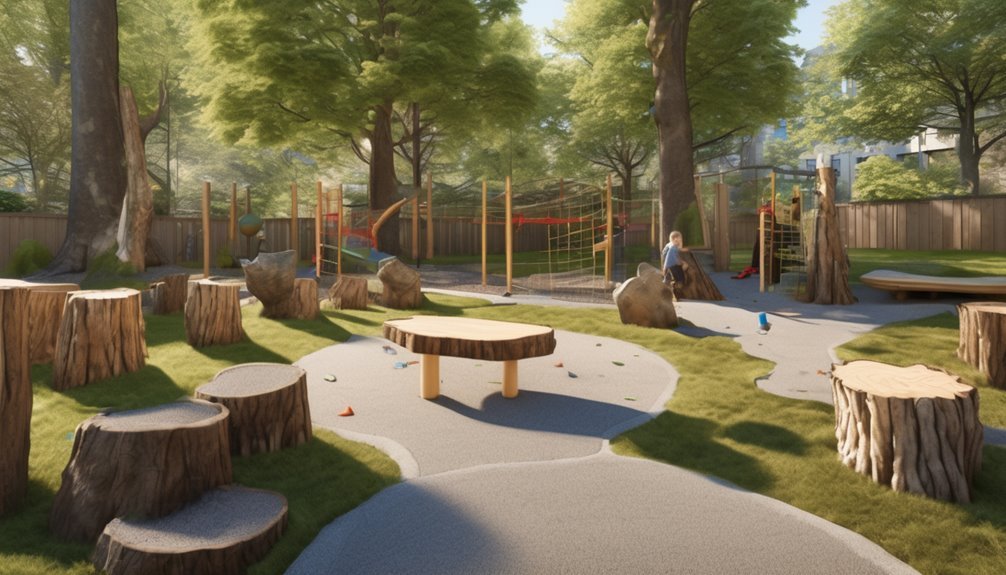
How can we balance safety, maintenance, and equity when designing urban nature-based facilities? You design with care, grounding decisions in evidence and craft. Begin with durable materials, soft-to-hard transitions, and clear sightlines that support safe play while inviting exploration. Plan maintenance into every detail—accessible tool storage, predictable inspection cycles, and durable surface choices that reduce replacement frequency. Prioritize equitable access by locating facilities along transit routes, including mixed-ability paths, and providing inclusive play elements that welcome diverse ages and cultures. Align safety standards with flexible use, avoiding over-guarding that stifles curiosity. Document responsibilities, budget, and monitoring so communities see ongoing commitment. With transparent processes and resilient design, you achieve safe maintenance and equitable access that foster belonging and shared stewardship.
Frequently Asked Questions
How Do You Measure the Long-Term Ecological Impact of a Playground?
To measure long-term ecological impact, you track indicators like meadow microclimates and soil biodiversity over time, using baseline data and repeat sampling. You’ll monitor vegetation change, soil organic matter, and pollinator activity, aligning methods with design goals. You’ll document maintenance responses and adaptive tweaks. You’ll interpret results collaboratively, shaping decisions that foster belonging, resilience, and stewardship. Your evidence-based approach guides craft-focused, durable improvements, ensuring the playground supports ecosystem health while inviting communities to care and belong.
What Funding Models Sustain Maintenance for Nature-Based Facilities?
Funding partnerships sustain maintenance for nature-based facilities by aligning shared stewardship with ongoing costs, while community stewardship keeps programs relevant and cared for. You’ll build long-term resilience through collaborative budgets, in-kind support, and diversified grants. Design a maintenance plan with predictable cycles, and embed feedback loops so funding stays aligned with evolving needs. This craft-driven approach fosters belonging, showing you’re part of a living, cared-for space that thrives because you participate and invest together.
How Can Schools Integrate Forest-Bath Experiences Into Daily Routines?
Forest bath integration can become part of daily routines by designating short, cue-based moments before classes, transitions, and outdoor breaks. You’ll guide students through simple breath and sensory checks, anchoring attention to textures, sounds, and sights. This daily mindfulness supports focus, reduces stress, and strengthens belonging. Pair routines with reflective prompts and lightweight materials for easy repetition, so teachers feel confident facilitating. Evidence-based, craft-driven trials show calm, curious learners engage more deeply and collaborate more compassionately.
What Criteria Ensure Inclusive Accessibility Beyond Standard ADA Guidelines?
Inclusive pathways hinge on more than ADA basics: you should design for varied mobility, sensory needs, and cognitive access from intake to exit. Prioritize smooth transitions, consistent tactile cues, and adjustable lighting. Ensure accessible interfaces are intuitive, paired with multilingual, high-contrast signage. Build for collaboration, test with diverse users, and document outcomes. Your evidence-based, craft-driven approach creates belonging by removing barriers, inviting everyone to engage deeply with nature, play, and community.
How Do Seasonal Changes Affect Play Value and Safety Strategies?
Seasonal changes shift play value by altering surfaces, textures, and light, so you’ll adjust activities to maintain engagement and safety. You’ll monitor safety thresholds as temps, precipitation, and wind influence risk, traction, and visibility. Seasonal weary elements—leaf litter, frost, mud—become design cues, not barriers, inviting adaptive materials and routines. Ground rules evolve with seasons, reinforcing belonging through inclusive, evidence-based trials, documented outcomes, and clear maintenance. Your craft-focused approach sustains safe, meaningful play year-round.