
Inclusive playgrounds empower every child to join in by design. You’ll blend universal design with versatile equipment and thoughtful layout so movement, sensory needs, and supervision align for belonging. Start with accessible pathways, adjustable grips, and modular play elements that adapt to diverse abilities. Use cross‑team champions, data tracking, and family partnerships to sustain progress. Schedule inclusive playtime and keep safety checks steady. If you want practical steps and real cases, you’ll discover more practical guidance ahead.
Designing for Accessibility From the Ground up
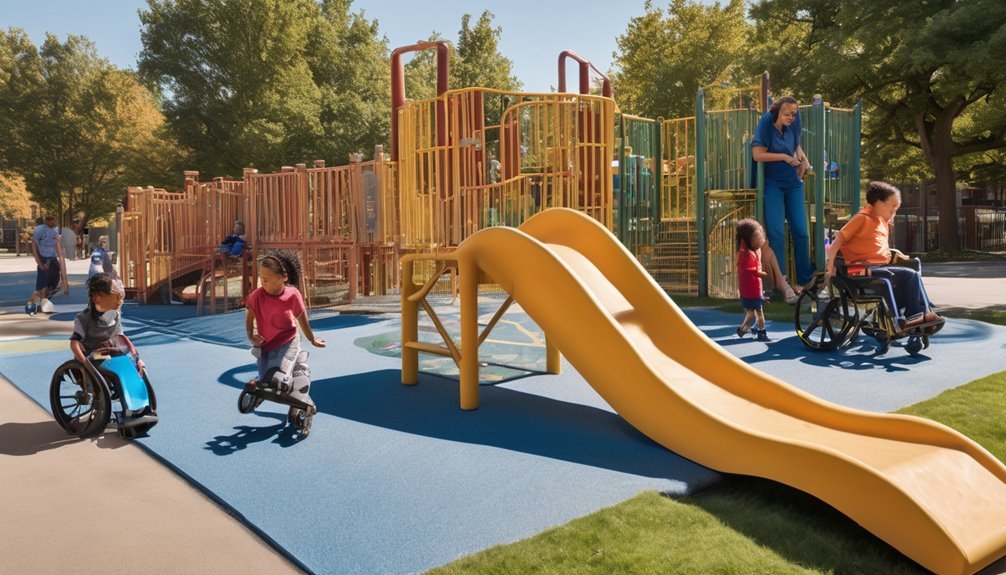
Designing for accessibility from the ground up means building playgrounds that work for every child, not just most of them. You begin by embedding universal design principles into the layout, so every path invites exploration without barriers. Accessible pathways guide movement calmly and predictably, enabling kids to approach equipment confidently and independently. You’ll map sightlines for supervision and ensure seating and shade support caregivers as well. Inclusive gear isn’t an afterthought; it’s woven into the core design, offering switches, grips, and controls that accommodate varied motor and sensory needs. By prioritizing smooth transitions, tactile cues, and low-pile surfaces, you create spaces where belonging is automatic, not earned. The result is a schoolyard that invites participation, collaboration, and evidence-based practice that respects every learner’s dignity.
Selecting Equipment That Supports Movement and Sensory Needs
To put accessibility into action, you’ll choose equipment that supports varied movement patterns and sensory experiences. When selecting, prioritize inclusive equipment that accommodates diverse abilities, encouraging participation for all students. Look for modular designs that adapt to different sensory needs, enabling quiet, tactile, vestibular, and proprioceptive engagement without overstimulation. Evidence supports multisensory playground features for enhanced sensory integration, which can help self-regulation and focus during lessons. Choose components with adjustable resistance, varied textures, and predictable, debounced inputs to reduce anxiety and promote confidence. Ensure surface safety and accessible pathways around play zones to sustain inclusive use. Seek durable, easy-to-clean materials and clear usage guidance for staff. By aligning choice with evidence and belonging, you create spaces where every child can move, explore, and belong.
Inclusive Supervision and Social-Emotional Support
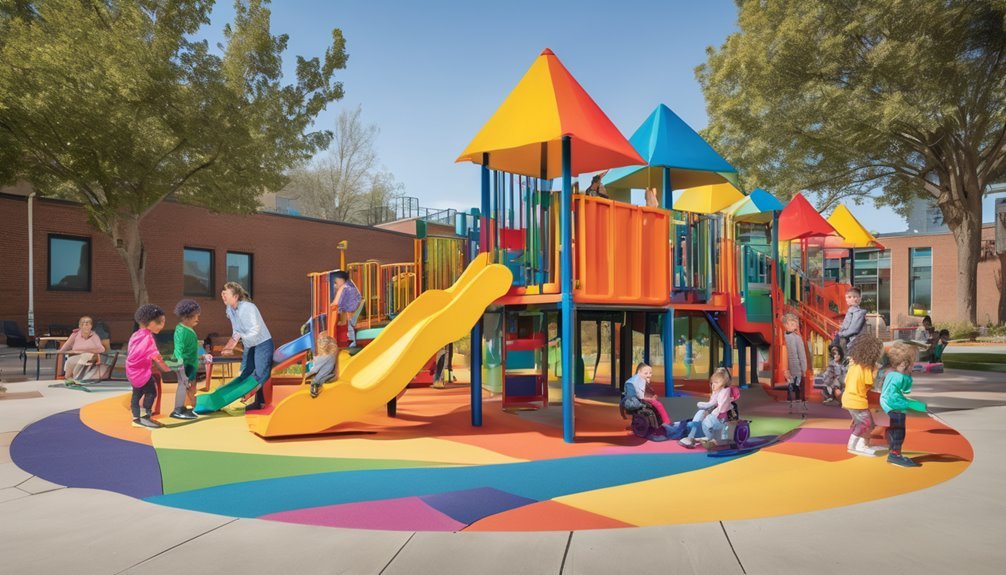
You’ll set the tone with gentle, inclusive supervision that understands each child’s needs and strengths. Evidence-based social-emotional strategies—like proactive support, clear expectations, and calm de-escalation—help all kids feel seen and safe. Explore quiet-play options and inclusive methods that invite participation, reduce barriers, and foster peer empathy from the first moment.
Gentle, Inclusive Supervision
So how can quiet, inclusive supervision transform playground time into a safer, more welcoming space for every child? You’ll prioritize gentle supervision that guides interactions without overt control, modeling calm decision-making and respectful listening. This approach supports inclusive supervision by recognizing diverse play styles and needs, allowing kids to take turns, negotiate rules, and build peer support. Use presence, not pressure: circle the play area, acknowledge emotions, and validate feelings with brief, concrete language. Your goal is to de-escalate calmly, redirect without shaming, and reinforce safety routines collaboratively with students and staff. Track patterns to inform proactive adjustments—layout, materials, and supervision shifts—that reduce conflicts. This evidence-based mindset strengthens belonging, helping every child feel seen, valued, and empowered to participate fully.
Social-Emotional Support Tactics
Building on gentle supervision, social-emotional support tactics weave calm guidance with concrete skills that help every child regulate emotions, communicate needs, and cooperate in play.
You implement proactive strategies that model emotion naming, turn-taking, and collaborative problem solving, reinforcing inclusive supervision and belonging. Evidence shows that structured routines and brief check-ins reduce conflicts and boost self-regulation, while peer-support roles foster empathy. You’ll use visual supports and simple language to validate feelings and guide requests, not punish impulses. This approach strengthens trust, encourages prosocial choices, and helps every child contribute to play.
| Skill | Observable Behavior | Benefit |
|---|---|---|
| Emotion naming | Child labels feelings | Builds awareness |
| Co-regulation | Adult matches pace | Calms arousal |
| Help-seeking | Requests support | Increases inclusion |
| Turn-taking | Shares space | Promotes fairness |
| Problem-solving | Groups generate solutions | Sustains play |
Quiet-Play and Inclusion Methods
How can quiet-play spaces become influential inclusion tools for your school? You’ll design quiet spaces that reduce overstimulation while preserving agency. Research shows sensory-friendly environments support self-regulation, attention, and peer engagement, helping all students feel seen. Implement predictable routines, clear visual cues, and staffed “check-in” points to promote inclusive supervision without singling anyone out. Use trained staff to model calm, empathetic conversations that validate emotions and offer steps for re-entry into group play. Provide accessible materials and flexible seating so students choose how to participate. In practice, quiet-play becomes a bridge—not a retreat—connecting social-emotional skills with daily interactions. When families witness consistent, compassionate support, belonging becomes measurable, sustainable, and proudly shared across the school community.
Budgeting, Funding Sources, and Cost-Effective Solutions
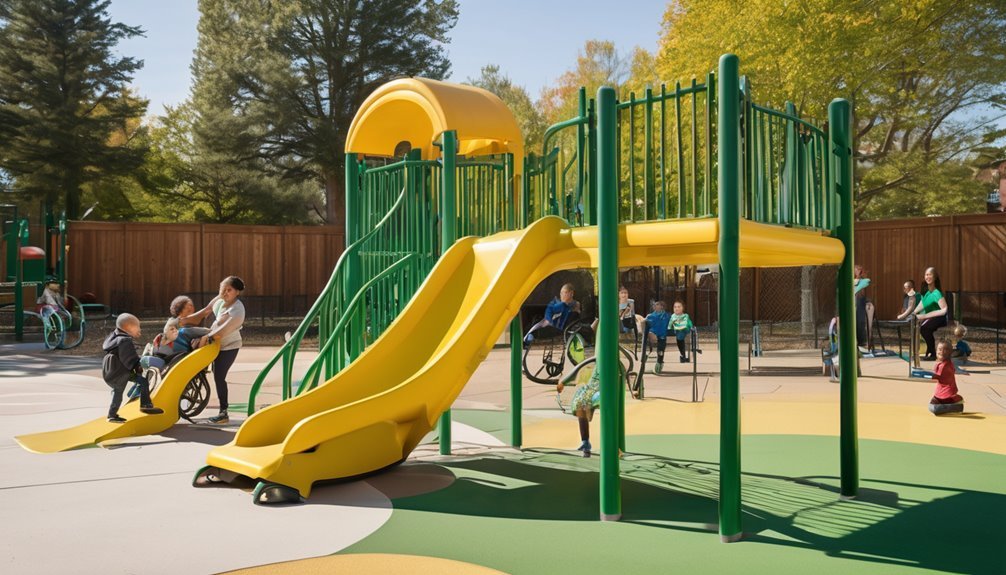
You can begin by identifying cost-effective funding options, emphasizing grants, partnerships, and school-based budgets that align with inclusive playground goals. Evidence shows that targeted grants and community collaborations often amplify impact without inflating costs, so prioritize proposals that demonstrate measurable outcomes for all students. Start a practical plan: map needs, shortlist credible funding sources, and establish a transparent timeline and accountability measures.
Cost-Effective Funding
There are practical, proven ways to fund inclusive playgrounds without breaking the budget. You’ll begin with a clear cost assessment, prioritizing design accessibility and durable, low-maintenance elements. By mapping needs to outcomes, you identify high-impact upgrades that fit your community’s resources, avoiding overreach. Tap multiple funding sources: district allocations, phased designs, and community fundraisers that emphasize belonging and shared responsibility. Seek cost-sharing with parent groups, local businesses, and service clubs, presenting a transparent budget plan with milestones. Choose equipment diversity that delivers inclusive play without duplication, leveraging modular components and recycled materials where appropriate. Document measurable benefits—physical activity, social integration, and academic focus—to build ongoing support. Regularly review expenses, track savings from preventive maintenance, and communicate progress to sustain momentum.
Grants and Partnerships
Grants and partnerships can be the engine that makes inclusive playgrounds affordable and sustainable. You’ll uncover that strategic budgeting, diverse funding sources, and community co-ownership reduce costs while expanding impact. Start with a clear cost baseline and realistic timelines, then map grant opportunities to each project phase, coordinating outcomes with funder priorities. Embrace grant partnerships that utilize in-kind contributions, matched funding, and volunteer labor to maximize every dollar. Build a compelling narrative that evidences benefits for ALL students—safety, access, and social belonging—backed by local data and case studies. Pair this with transparent fundraising strategies that invite staff, families, and local businesses to participate. By coordinating efforts, you create durable funding streams and a school culture where every child belongs.
Real-World Case Studies and Practical Implementation
What do real-world examples reveal about making inclusive playgrounds work in schools, and how can you apply those lessons effectively? Case studies show that modest, well-coordinated changes yield big gains. You’ll see inclusive planning translate to space reallocation, equipment swaps, and scheduled inclusive playtime that respects diverse play styles. With pervasive accessibility, campuses become navigable for everyone, from walkers to wheelchairs, while universal design supports all abilities without singling anyone out. Evidence supports collaboration among teachers, families, and therapists to tailor goals, measure progress, and scale what works.
- Build cross-team champions who model inclusive planning and feedback loops.
- Start with versatile, multi-use equipment enabling diverse play styles.
- Pilot small, scalable changes, then expand, ensuring pervasive accessibility is maintained.
Maintenance, Evaluation, and Sustaining Engagement
How can ongoing maintenance and continuous evaluation keep inclusive playgrounds thriving and engaging? You’ll build ownership by neighbors, teachers, and students who see value in upkeep, regular safety checks, and adaptive design. With clear maintenance strategies, you reduce downtime and model shared responsibility, turning care into a team effort. Evaluation metrics guide decisions, ensuring programs reflect diverse needs and evolving abilities. Data-driven adjustments sustain belonging—not as a burden, but as a path to better experiences for every child.
| Purpose | Action |
|---|---|
| Safety assurance | Implement routine inspections and prompt repairs |
| Participation growth | Track usage patterns, adjust access, and invite feedback |
Frequently Asked Questions
How Can Inclusive Playgrounds Accommodate Different Cultural Play Values?
Inclusive playgrounds can honor cultural play values by offering varied, adaptable activities that reflect traditions, languages, and social norms, while applying inclusive design principles to guarantee access for all. You’ll create spaces where diverse games, rhythms, and storytelling coexist, contextualizing equipment and routines with community input. Evidence shows engagement rises when everyone sees themselves reflected. You’ll observe, adapt, and invite feedback, centering belonging and equity as core inclusive design principles.
What Metrics Show Social Inclusion Improvements After Installation?
You’ll see inclusive metrics like increased peer interactions and reduced exclusion, and social outcomes such as shared play, cooperative games, and mentor-like peer leadership. After installation, you’ll track participation rates across diverse groups, time spent in inclusive play, and stakeholder sentiment surveys showing belonging. These indicators empower you, offering evidence-based proof that your space supports every child. You’ll demonstrate progress, adjust practices, and celebrate authentic inclusion through consistent, transparent measurement of social outcomes.
How Do You Handle Language Barriers in Playground Programs?
How do you handle language barriers in playground programs? You prioritize language access by offering translated materials, bilingual staff, and real-time interpretation so every child can participate. You’ll use multilingual signage, visual cues, and simple, inclusive prompts to guide activities. Evidence shows clear communication boosts engagement and safety. You’ll measure feedback from families, adapt accordingly, and foster belonging where everyone’s voice is heard, understood, and valued.
Are There Risks or Safety Trade-Offs With Adaptive Equipment?
Yes, there are risks and safety trade-offs with adaptive equipment, but you can minimize them with thoughtful design and ongoing oversight. You’ll prioritize safety considerations, selecting evidence-based devices, proper installation, and regular maintenance. You’ll balance accessibility with supervision, clear usage rules, and inclusive staff training. By documenting risk assessments and involving families and students, you create belonging while reducing harm. You’ll continuously review data, adjust practices, and enable every child to participate confidently.
How to Involve Students in Ongoing Playground Redesigns?
You can involve students in ongoing playground redesigns by forming Inclusion design committees and embedding student leadership into every phase. You’ll gather ideas, prototype a plan, and test with peers, using evidence-based checks for safety and accessibility. You’ll empower voices across ages, track progress, and iterate, ensuring inclusion remains central. Your approach demonstrates belonging, engages diverse talents, and teaches collaboration. Together, you’ll co-create spaces that reflect every student’s needs and celebrate inclusive play.