
To keep kids safe on the playground, you should supervise proactively with clearly defined roles, rotating observers every 15 minutes to avoid fatigue, and use simple help signals for calm interventions. Regularly inspect equipment, maintain a real-time maintenance log, and address wear or hazards with quick checklists. Ensure age-appropriate use and adaptive gear, plus uniform, non-slip ground surfaces with good drainage. Enforce fair policies, report incidents accurately, and run drills with clear roles—more practical steps await.
Supervising Strategies for Safe Play

Supervising play effectively hinges on clear roles and close participation. You’ll implement supervision strategies that emphasize proactive presence, rotation, and situational awareness, so kids feel safe and seen. Assign specific observers for different zones, and rotate every 15 minutes to prevent blind spots and fatigue. Establish concise signals for help, and ensure staff know how to intervene calmly without escalating tensions. Communicate play area boundaries clearly to students, using simple cues and visible markers. Maintain consistent routines: start with a quick roll call, then monitor transitions between activities. Document incidents and near-misses to refine strategies, not assign blame. With predictable coverage and explicit boundaries, you create a sense of belonging where children trust adults to keep them safe.
Equipment Inspection and Maintenance
Regular checks should be scheduled for all playground equipment, with a clear, documented maintenance log kept on site. You’ll implement a routine that targets wear, loose fixtures, and surface hazards, then record findings and actions in real time, building a sense of shared responsibility. This equipment inspection becomes a daily discipline, supported by a formal maintenance schedule that prioritizes critical components first. Addressing minor faults early prevents major failures and reinforces safety culture among staff, students, and families. Use quick, standardized checklists to streamline tasks and foster belonging through transparent processes.
| Area | Action |
|---|---|
| Frames & Fasteners | Inspect for cracks, rust, looseness |
| Surfacing & Edges | Check padding, seams, sharp edges |
Age-Appropriate Play and Equipment Use
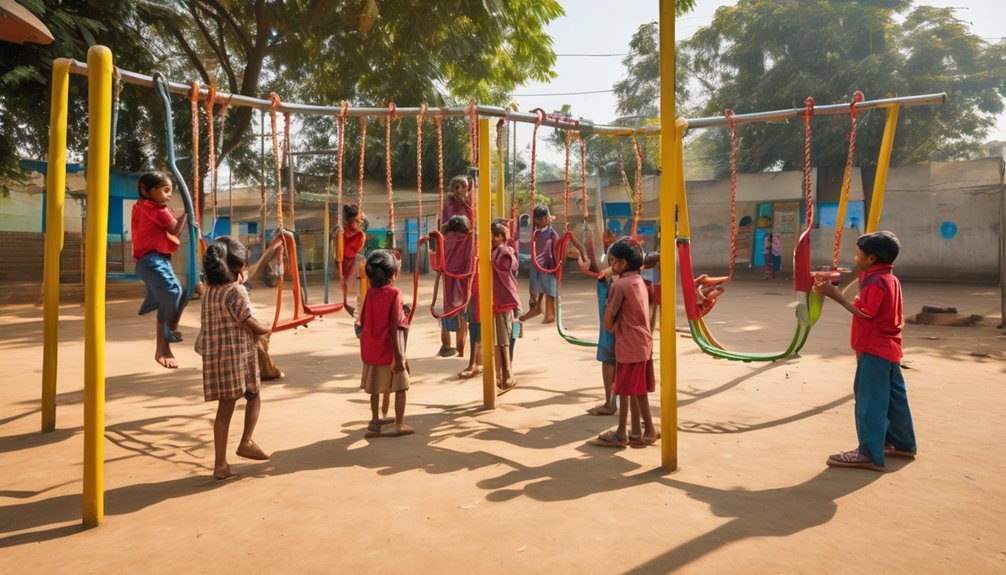
You should align play activities with age and developmental stage, ensuring equipment choices match capabilities and space. Follow clear guidelines on age-appropriate use, access, and supervision to minimize risks and maximize safe, constructive play. Regularly review supervision practices to balance freedom with safety, while keeping gear accessible only to the intended age groups.
Age-Appropriate Play
How does age shape play in Karnataka schools? You tailor activities to development, ensuring every child engages safely and meaningfully. Age-appropriate play hinges on recognizing milestones, attention spans, and social needs, then align equipment and space accordingly. You’ll prioritize simple, cooperative tasks for younger groups and challenge for older ones, while preventing crowding and frustration. Clear expectations, close supervision, and adaptive routines keep everybody included and confident. You’ll rotate activities to match growth, track progress, and adjust for individual pace. The goal is belonging, where every student feels capable and valued through play that suits their stage.
- Match activities to age and skill level to sustain engagement
- Scaffold tasks from simple to complex, gradually increasing challenge
- Observe interactions to guide inclusive participation
- Monitor safety during transitions and equipment use
- Provide choices to foster autonomy and belonging
Equipment Use Guidelines
Equipment use matters as much as the activity itself: age-appropriate gear reduces risk and boosts participation by matching size, weight, and complexity to students’ developmental stages. You’ll establish clear equipment selections and inspection routines, ensuring items suit diverse abilities while remaining durable and easy to replace. Prioritize organized storage, labeled checkpoints, and predictable paths to minimize congestion and confusion. Your approach should define minimum weight limits, grip requirements, and surface considerations so students can engage confidently. Emphasize routine checks before use and quick removal of damaged gear. Integrate supervision strategies that stay proactive, not punitive, guiding students through proper handling, safe mounting, and dismounting techniques. This fosters belonging, accountability, and consistent safety habits across playground activities.
Supervision and Access
Are supervision strategies truly proactive, not punitive, when it comes to age-appropriate play and equipment use? You’ll focus on closing supervision gaps and strengthening access control so every child engages safely. You’ll align supervision plans with developmental stages, ensuring staff-to-child ratios fit activity risk. You’ll pair clear sightlines with active engagement, guiding behavior without shaming. You’ll tag high-risk zones and rotate monitors to maintain consistency, fairness, and trust. You’ll empower caregivers to report hazards promptly, closing gaps before incidents occur. You’ll document routines, drills, and checks to sustain confidence and belonging across your school community.
- Map supervision gaps by activity and time
- Define access control per equipment and area
- Assign trained, visible monitors during peak times
- Use clear, friendly language in rules
- Review safety data and adjust promptly
Ground Surface and Spill/Weather Considerations
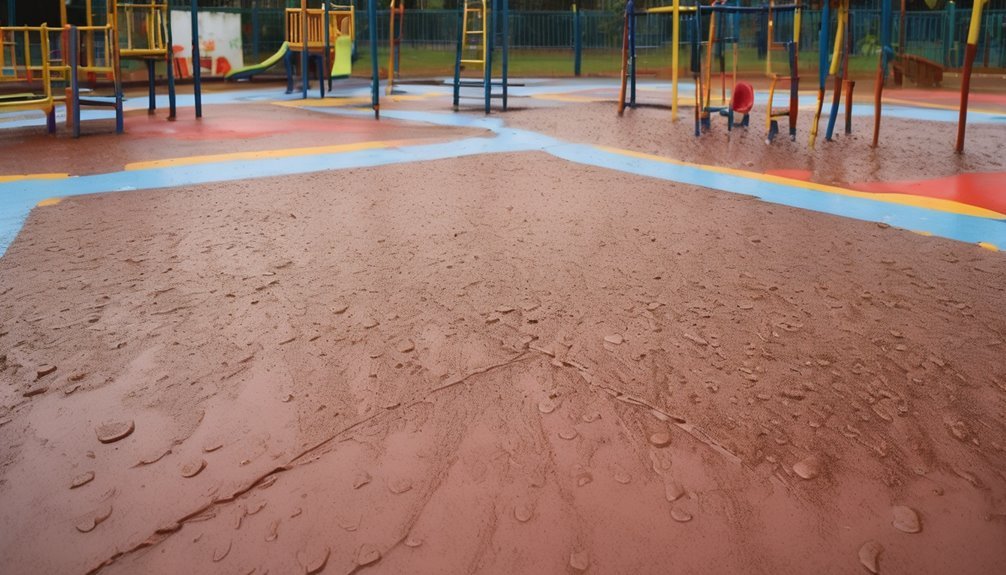
Ground surfaces should be uniform, non-slip, and free of hazards; inspect playground areas daily for cracks, loose tiles, or uneven padding, and fix promptly to prevent trips and falls. You’ll monitor how the ground surface handles routine use, weather shifts, and seasonal wear, adjusting setups as needed. In spill weather, clean spills quickly, dry the area, and warn others if moisture persists. Choose resilient, age-appropriate materials with adequate drainage to minimize puddling and slipping. Regularly schedule maintenance checks after heavy rain, heat, or freeze-thaw cycles, documenting findings and actions. Post clear footwear and wet-surface guidance, and ensure shaded or sheltered zones are available to reduce slick surfaces. Prioritize consistency, safety, and a sense of shared responsibility among staff and students.
Policy Enforcement and Incident Reporting
Policy enforcement ensures consistent safety practices and accountability across staff and students. You’ll implement clear expectations, monitor adherence, and review outcomes with fairness, so everyone feels supported and valued. When incidents occur, you’ll follow a concise incident reporting process that captures time, location, persons involved, and witness statements, then escalate as needed. Documentation should be accurate, nonjudgmental, and stored securely to protect privacy while enabling trend analysis. Regular audits of enforcement practices help identify gaps and reinforce trust. Training sessions reinforce consistent application, while feedback channels invite suggestions from caretakers, teachers, and administrators. By prioritizing transparency, you strengthen a safety culture that everyone can belong to.
- Define roles and responsibilities clearly
- Use standardized incident report templates
- Ensure timely, factual documentation
- Protect privacy while enabling analysis
- Review and adjust policies periodically
Emergency Readiness and Drill Procedures
Set a regular Emergency Drill Schedule so you can anticipate the steps and time needed for safe, orderly responses. Practice Evacuation Protocols consistently to validate routes, assembly points, and accountability procedures. Use these drills to identify gaps in readiness and tighten coordination with staff, students, and emergency partners.
Emergency Drill Schedule
To ensure swift, organized responses, schools should publish a clear emergency drill schedule detailing frequency, responsible staff, and the procedures to follow during each drill. This schedule keeps you aware of expectations, builds trust, and reinforces belonging as you practice together. It also reduces panic by delineating roles and steps for every scenario. Focus on measurable timing, clear evacuation protocols, and accountability, so you know who leads, who assists, and who communicates updates. Regular reviews keep the drill realistic and aligned with safety objectives, ensuring you’re prepared without disruption to learning. The result is a calmer, more capable campus where safety is a shared responsibility.
- Define drill frequency and duration
- Assign a lead and responder roles
- Document communication channels
- List evacuation protocols and exit points
- Schedule post-drill debriefs
Evacuation Protocols Practice
Ever wondered how quickly and calmly you can evacuate when alarm sounds? You’ll establish clear roles, routes, and timing so every student understands their part without hesitation. Evacuation protocols practice becomes your test of readiness, not a ritual. You’ll run structured evacuation drills that simulate real-world interruptions, refining speeds and decision-making under pressure. Emphasize orderly movement, designated muster points, and headcounts to confirm everyone’s accounted for promptly. After-action reviews should capture bottlenecks, communication gaps, and equipment issues, then translate insights into immediate improvements. Foster belonging by sharing responsibilities—staff coordinate, students assist younger peers, and security teams support crowd control. Maintain documentation for compliance and continuous improvement, ensuring muster procedures are second nature. Compact, repeatable practices build confidence, reduce panic, and keep safety at the core of your school community.
Frequently Asked Questions
How to Handle Parent Concerns About Playground Supervision Ratios?
You should acknowledge parent concerns, then explain your supervision ratios are based on age and activity, with clear, transparent data. You’ll share how age-specific color coding guides staffing, and how safety training refreshers keep everyone sharp. Address minor injury reporting processes, and debunk soft ground myths with evidence. Invite questions, provide how-to-document access, and offer ongoing progress updates to build belonging while you continually review ratios against incidents and feedback.
What Are Common Myths About Soft Ground Safety?
Common myths about soft ground safety include: it’s always unsafe, all injuries are obvious, and padding guarantees protection. Myth debunking shows risk varies by surface type, maintenance, and supervision. Ground safety myths persist when gaps in inspection or policy exist. You’ll improve safety by documenting conditions, testing regularly, and training staff. You deserve to belong in a proactive community, so share findings, listen to concerns, and apply evidence-based adjustments that reduce risk for every student.
How Often Should Staff Receive Refresher Safety Training?
You should schedule refresher safety training every 12 months to maintain staff competency. For example, you notice a near-miss during recess and realize a refreshed protocol could have prevented it. After the session, you confirm comprehension through quick quizzes and hands-on drills. This cadence balances practicality with accountability, supporting your team’s belonging and confidence. Keep track of attendance, track improvements in refresher frequency, and adjust as needed to guarantee ongoing staff competency.
Are There Age-Specific Color-Coding Guidelines for Equipment?
Yes, there are age-specific color coding guidelines for equipment. You’ll use color coding to match age groups, with larger, higher-contrast markings for younger children and subtler cues for older ones. You should clearly separate play zones by color, and guarantee signage explains the scheme. By applying age-specific color coding, you help everyone feel included, reduce confusion, and support safer, smoother transitions between activities. Regular checks will keep the system consistent and trusted.
What Steps for Student Reporting of Minor Injuries Beyond First Aid?
You should report minor injuries beyond first aid through designated reporting channels, promptly notifying the designated safeguarding lead and your supervisor. After you report, follow the documentation procedures: log time, place, injuries, witnesses, and actions taken, then file any medical or administrative forms. Keep the process simple and private, so you feel supported. Timely reporting helps prevent recurrence and builds a trusted, safer environment for everyone involved.