
Design inclusive play spaces by centering diverse needs from the start. You’ll co-design with families, caregivers, and educators to surface priorities and feasible, space-saving adjustments. Prioritize step-free access, ground-level opportunities, and adaptable equipment, including adaptive swings with transfer-friendly seats and adjustable harnesses. Ensure durable, low-maintenance materials and clear fall zones, ramps with proper slopes, and continuous, unobstructed paths. Use evidence-based guidelines and transparent metrics to guide decisions, then test with real users for ongoing improvements. There’s more to explore beyond this overview.
Understanding Accessible Play: Principles and Benefits
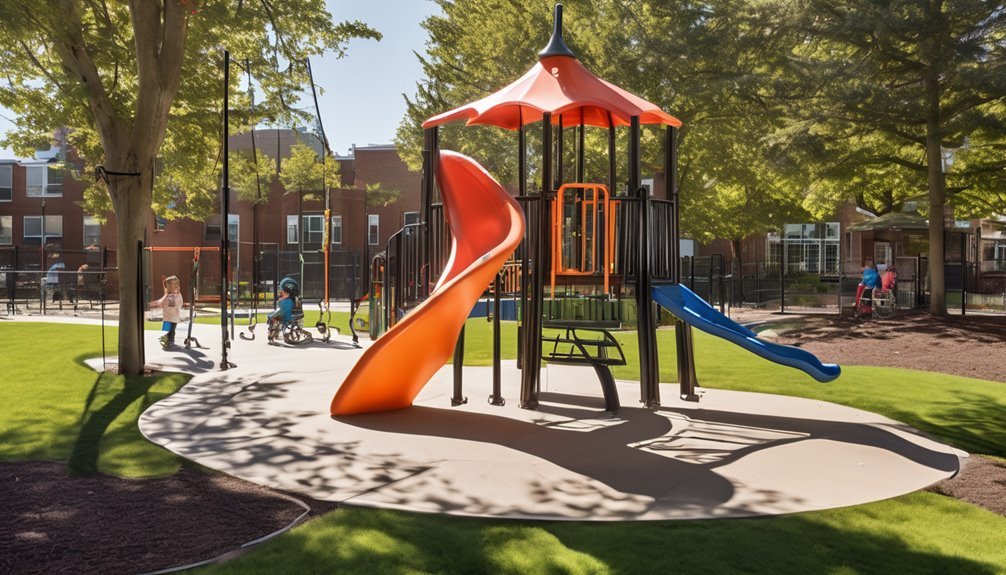
Accessible play is about designing spaces so all kids can participate, learn, and have fun. You’ll see that accessible play centers on inclusive design—creating environments that support varied abilities, ages, and energy levels. The benefits are practical and measurable: increased social interaction, opportunities for active exploration, and safer play that reduces injury risk. By prioritizing step-free routes, ground-level opportunities, and adaptable equipment, you help kids move with autonomy and confidence. Community engagement matters because input from families, caregivers, and educators shapes layouts that truly meet needs. When the design invites collaboration, you gain buy-in, smoother transitions, and richer play histories for everyone involved. This evidence-based approach strengthens belonging and ensures equitable participation in everyday play.
Planning for Inclusion: Stakeholders and Site Assessment
To put inclusive play into action, you start by identifying who will influence decisions and how the site will function for every kid. In this planning phase, you map roles, responsibilities, and communication channels so parents, caregivers, therapists, and school partners are heard early. You prioritize transparent processes that welcome diverse perspectives, translating needs into actionable design criteria. Stakeholder engagement isn’t tokenism; it’s a foundation for trust, informed choices, and shared accountability. Next, you conduct a structured site assessment to understand topography, surface safety, accessibility routes, and nearby amenities. Document constraints and opportunities with measurable criteria, then align them with local codes and inclusive standards. Clear findings guide practical, equitable implementation, ensuring the play area serves all children while supporting caregivers and staff.
Designing Adaptive Swings: Features, Safety, and Experience
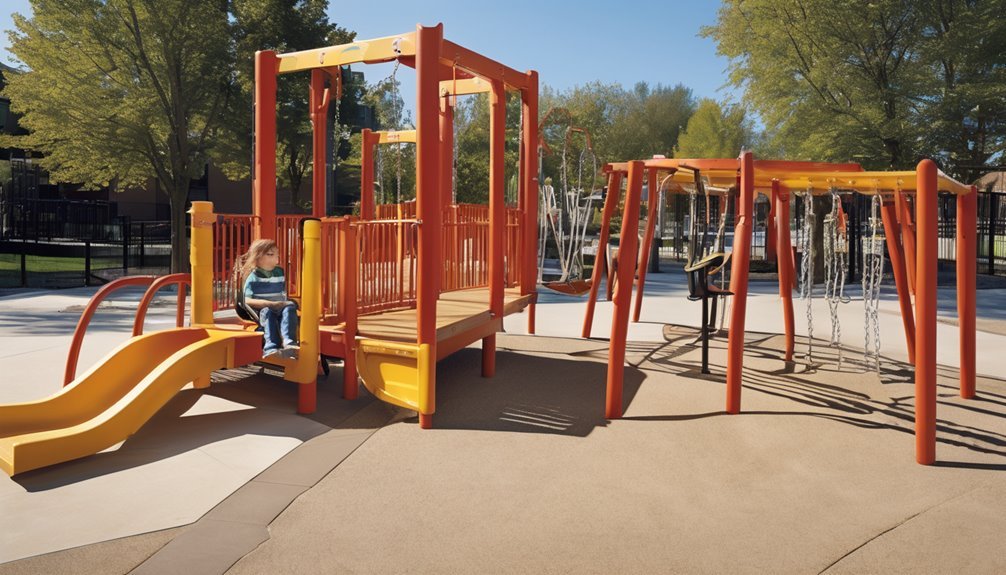
You’ll consider features like accessible straps, transfer-friendly seats, and adjustable seating to accommodate a range of body types and abilities. Safety and comfort should guide every choice, from stable mounting and clear fall zones to armrests, grips, and smooth surfaces that reduce friction and injury risk. This sets the foundation for an inclusive swing experience that supports independence, enjoyment, and ongoing participation.
Accessible Swing Features
Swing sets can be designed to empower kids of all abilities by combining adaptive seating, easy-access platforms, and secure harnessing. When you choose inclusive swing designs, you create more opportunities for joyful participation and peer connection. Focus on adaptive features that accommodate diverse body types, gripping needs, and transfer abilities, such as high-back seats, lateral supports, and transfer-friendly frames. Easy-entry heights, smooth ramps, and stable, non-slip surfaces reduce barriers and promote independence. Adjustable harnesses provide secure support without restricting movement, while swiveling hooks and accessible chain lengths enable smoother use from a seated or standing position. Prioritize durability, corrosion resistance, and simple maintenance to sustain safety and trust. Your inclusive swing choices demonstrate belonging, backed by evidence and user-centered testing.
Safety and Comfort Considerations
Designing adaptive swings blends user comfort with rigorous safety checks, ensuring kids of diverse abilities can enjoy steady, confident use. You’ll prioritize inclusive seating that supports various body types and postures, reducing fatigue and shifting pressure away from delicate joints. Inspect grip hardware, harnesses, and transfer zones for smooth operation and reliable release, so transitions feel secure rather than abrupt. Consider sensory integration by offering swing options with varied textures, sounds, and motion profiles to prevent overload and encourage self-regulation. Ground surfaces should be shock-absorbing and well maintained to minimize slips. Regular maintenance logs, user feedback, and staff training underpin ongoing safety. Design with belonging in mind: clear paths, intuitive controls, and visible assistance cultivate comfort, trust, and repeated, joyful engagement for all children.
Wheelchair Ramps and Pathways: Layouts, Compliance, and Flow
You’ll want to start by sizing ramp width to accommodate wheelchairs and scooters while leaving space for turning and passing. An accessible path layout should minimize abrupt changes in direction and ensure clear sightlines, helping users navigate confidently. Compliance and flow come next: verify standards for slope, landing dimensions, and unobstructed routes so movement remains safe and predictable.
Ramp Width Standards
How wide should a ramp be to serve everyone safely and smoothly? You’ll prioritize space that reduces friction for wheels, crutches, and attentive pedestrians alike. In practice, ramp width matters for turning, seating, and assistance tasks, so you design with inclusive flow in mind. Evidence-based guidance shows that wider sections prevent pinch points and allow two-wheel chair users to maneuver beside helpers without crowding. When you reference accessibility standards, you align with국 core metrics that support safe approach, transfer, and braking space. Aim for consistent, unobstructed runouts and landings, and avoid abrupt narrowing. Document your calculations, test with real users, and revise as needed. Clear, measurable planning builds confidence, trust, and belonging in every participant’s experience.
Accessible Path Layout
A well-planned path layout lets everyone move confidently from ramp to route without backtracking or bottlenecks. You design for accessible gradients and smooth curb transitions, so turning points feel natural and predictable. Widths, surface, and cross slopes are aligned to support steady flow, reducing hesitation and confusion. Visual cues and tactile indicators help all users orient quickly, fostering a sense of belonging as soon as they arrive.
- Clear sightlines that invite shared use
- Consistent surface quality with gentle transitions
- Logical sequencing from ramp to play zones
- Respect for personal space and simultaneous navigation
You’ll see calmer, more inclusive spaces when paths invite collaboration, minimize detours, and honor diverse needs through evidence-based choices.
Compliance and Flow
Compliance and Flow: when ramps and pathways work together, you get predictable, accessible movement that reduces hesitation and bottlenecks. You’ll align layouts with inclusive design principles, ensuring transitions are smooth and clearly defined. Prioritize grade transitions, clear cross-slope, and continuous handrails to support diverse users, including wheelchair users and caregivers. Your rollout strategies should test routes with real users, gathering feedback to refine spacing, turning radii, and resting points. Document compliance decisions transparently, linking them to local codes and universal design goals. By framing flow as a shared experience, you foster belonging and confidence in the space. Pair evidence-based standards with practical, easy-to-understand signage, so families feel informed, included, and able to plan visits without hesitation.
Real-World Examples: Case Studies and Best Practices
Real-world examples show how inclusive play areas succeed when designers partner with users, share data, and iterate based on outcomes. By examining case studies, you’ll see how communities translate research into practical layouts, accessibility ramps, and adaptable swings that invite participation. Best practices emerge from collaboration, continuous feedback, and transparent metrics that verify decisions.
- Co-design sessions with local families produce space-saving adjustments that boost utilization
- Transparent data sharing guides equitable procurement and maintenance plans
- Prototyping cycles reveal which swing heights and surface textures reduce fatigue
- Community storytelling grows belonging and encourages ongoing involvement
These case studies demonstrate how empathy, evidence, and clear ownership create environments where everyone belongs. Implementing best practices means documenting outcomes, honoring voices, and refining features toward universal usability.
Getting Started: Implementation Tips and Resource Tools
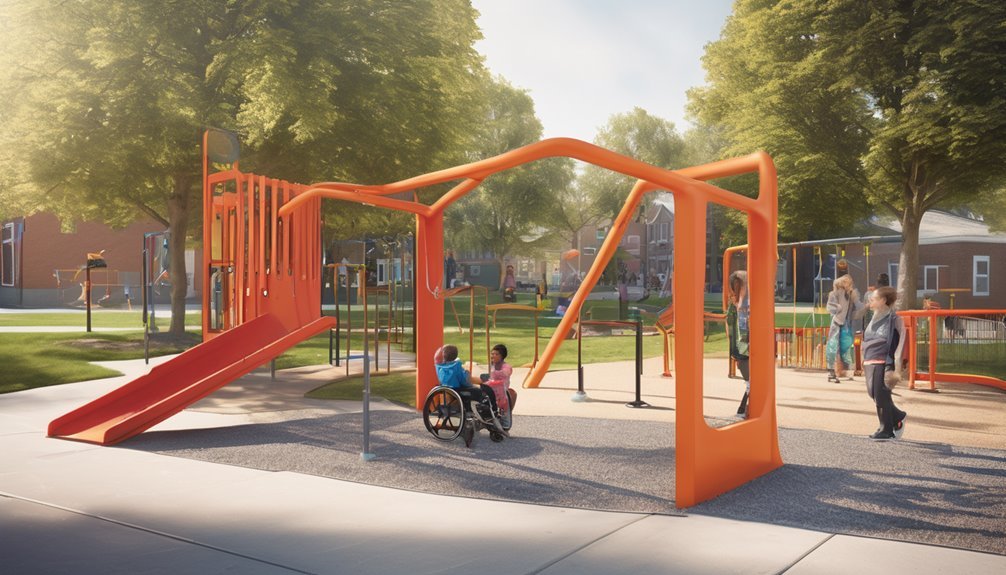
Getting started with implementation means turning insights from real-world cases into practical actions you can take today. You’ll begin by mapping needs through inclusive design principles, ensuring flexibility for different ages, abilities, and spaces. Gather a small, diverse team for stakeholder collaboration, including caregivers, facility managers, and kids themselves, to surface priorities early. Prioritize low-cost, high-impact changes—adjust swing heights, add fall-safe surfacing, and improve ramp access—while planning longer-term upgrades. Use simple checklists and evidence-based guidelines to measure accessibility, safety, and usability. Build a resource toolkit with vendor contacts, funding options, and grant opportunities, plus templates for stakeholder communication. Iterate in small cycles, document outcomes, and share learnings to foster belonging and continuous improvement.
Frequently Asked Questions
How Can We Fund Inclusive Playground Projects Over Time?
Funding diversification helps you sustain inclusive playgrounds over time, while scalable grants let you grow capacity as needs evolve. You’ll blend a mix of public funds, private philanthropy, corporate sponsorships, and community fundraising to maintain momentum. Document outcomes, share impact transparently, and tailor proposals to funders’ priorities. Build partnerships with schools and nonprofits to expand reach. You’ll demonstrate stewardship, recurrence, and measurable social value, inviting belonging and long-term support through evidence-based, inclusive design.
What Maintenance Plans Ensure Long-Term Equipment Safety?
To ensure long-term equipment safety, you implement a clear maintenance scheduling and follow evidence-based inspections. You’ll baseline wear, test loads, and document every visit, so vulnerabilities are caught early. You’ll plan proactive replacements at the end of each equipment lifecycle and adjust based on usage data. You stay inclusive by communicating results openly, inviting community feedback, and scheduling repairs during off-peak hours. Your approach builds trust, belonging, and durable, safer play environments for all.
How Do We Measure Inclusion Outcomes Beyond Usage?
You measure inclusion outcomes by combining inclusive outcomes with qualitative and quantitative signals beyond usage metrics. You track how diverse families feel welcomed, observe social interactions, and note whether children with disabilities participate in decisions about play spaces. You document changes in confidence, sense of belonging, and independence. You triangulate your data with surveys, observations, and accessibility audits. You then translate findings into iterative improvements, ensuring everyone’s voice shapes ongoing design, programs, and maintenance.
Are There Models Pairing Therapy Goals With Play Design?
Yes—there are models pairing therapy with play design. You can integrate goal‑oriented activities into play experiences, aligning therapeutic targets (sensory, motor, social) with specific features like adaptable swings or guided cooperative play. You’ll measure progress through observable routines, engagement, and meaningful participation, not just task completion. By partnering with families, you create inclusive spaces that feel like belonging. This evidence‑based approach supports ongoing adjustment, ensuring therapy goals ride alongside joyful, accessible play.
How Can Community Voices Stay Engaged Post-Installation?
Yes—you keep community voices involved by transparent updates, regular meetings, and easy channels for post installation feedback. You nurture ongoing stakeholder participation through surveys, listening sessions, and co-design workshops. You document outcomes, share progress, and act on concerns to show accountability. This approach supports long term sustainability, strengthens trust, and affirms belonging, as evidence-based adjustments improve safety and inclusivity. Your commitment to community engagement demonstrates that every voice shapes the space.