
Modern play areas boost property value in Bengaluru by driving higher footfall, longer visits, and stronger community ties. Data shows multi-use zones, local identity, and visible safety certifications lift occupancy and pricing, while durable, locally sourced materials reduce maintenance costs. Age-specific zones, sightlines for supervision, and inclusive design build trust with families. Aesthetics and branding reinforce perceived quality, attracting buyers and residents alike. Keep an eye on safety data and community feedback—there’s more behind these gains.
Value Uplift Through Thoughtful Play Space Design
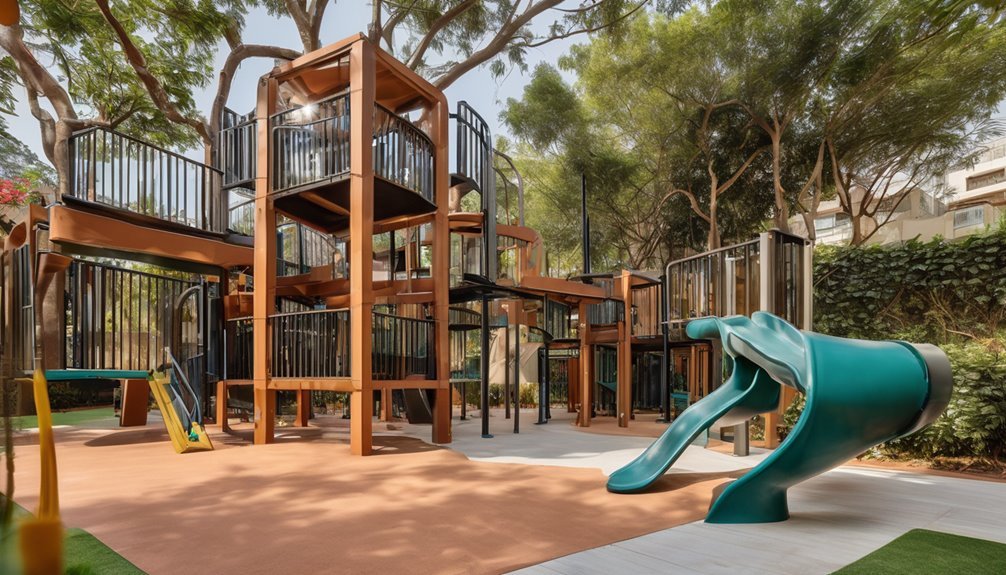
There’s real value in designing play spaces that align with how Bengaluru’s neighborhoods actually live, work, and grow. Value uplift comes from thoughtful layouts that encourage inclusive participation, durable materials, and modular upgrades over time. You’ll see higher perceived quality, faster leasing decisions, and stronger community pride when play areas reflect local routines, clustering amenities near residential cores and transit nodes. Data shows increased footfall, longer visits, and higher dwell time translating into ancillary spend for nearby shops and services. Prioritize adaptable zones, clear sightlines, and universal design to broaden access. Emphasize play value through evidence-based configurations that accommodate families, seniors, and teens. Include safety gear-aware planning from the start to reassure residents and investors alike.
Safety and Compliance: Building Trust With Modern Equipment
You’ll see how Safety Standards Adherence translates into lower incident costs and higher user confidence across our neighborhoods. By tracking Compliance Documentation Leftovers, we can close gaps fast and demonstrate accountability to developers, parents, and regulators. Trust Through Quality Equipment hinges on data-driven procurement, transparent reporting, and consistently meeting evolving safety benchmarks.
Safety Standards Adherence
Are safety standards truly keeping pace with today’s playground innovations in Bangalore? You’re right to demand rigor: adherence isn’t optional, it’s a trust signal to families and investors alike. When you align with safety compliance and play area regulations, you’re not just complying—you’re elevating community confidence and property appeal. Data shows well-regulated features reduce incident rates and speed time-to-occupancy for new developments. Your approach should couple design foresight with ongoing audits, transparent reporting, and locally informed risk controls. Together, we can build playgrounds that balance delight with protection, inviting neighborhoods to belong.
| Compliance Focus | Impact Metric |
|---|---|
| — | — |
| Routine inspections | 98% pass rate consistency |
| Lifecycle maintenance | 20% fewer safety incidents |
| Vendor certifications | Verified safety provenance |
Compliance Documentation Leftovers
As safety and compliance evolve, leftover paperwork can quietly undermine trust and slow occupancy. You’ll notice that compliance gaps and a documentation backlog creep into project timelines, eroding confidence among developers, residents, and inspectors alike.
- Identify gaps early to prevent costly rework.
- Triage documents by priority to accelerate approvals.
- Digitize records for traceable, real-time status.
- Establish owner-operator accountability to sustain trust.
This approach is data-driven and community-focused: you measure every step, share clear benchmarks, and keep residents informed about progress. By tackling the documentation backlog proactively, you reinforce belonging—people feel they’re joining a responsible, transparent network. The payoff isn’t just compliance; it’s smoother occupancy, faster milestones, and stronger neighborhood value through predictable safety. Prioritize rigorous checks now to protect future satisfaction and growth.
Trust Through Quality Equipment
Quality equipment isn’t just a drop-in upgrade—it’s a risk-reducing backbone for your project. When you choose compliant, well‑engineered play structures, you anchor trust across residents, investors, and inspectors. Data shows safer installations reduce incident rates and insurance costs, translating into measurable long‑term savings within tight budgets. You’ll communicate safety as a shared value, reinforcing community pride and belonging. Modern equipment streamlines maintenance, simplifying audits and updates amid evolving standards. Address child safety upfront with certified materials, age-appropriate designs, and accessible layouts that welcome all families. A transparent procurement process respects budget constraints while delivering durable performance. By prioritizing quality components and clear safety milestones, you establish a reputational moat: predictable quality that families, developers, and neighbors can rely on.
Age-Appropriate Zones: Tailoring Play for Every Child
Age-appropriate zones aren’t just a nicety—they’re a necessity for safe, engaging play that supports growth at every stage. By aligning play space zoning with age specific equipment, you empower parents and neighbors to feel confident in communal spaces and curb safety risks.
Age-appropriate zones ensure safe, engaging play by aligning equipment with developmental stages.
- 1) Define clear boundaries for toddlers, preschoolers, and older kids.
- 2) Match equipment height, grip, and fall protection to developmental stages.
- 3) Integrate sightlines that enable supervision without crowding.
- 4) Collect community feedback to refine zones over time.
This data-driven approach builds trust, foster s belonging, and demonstrates forward-thinking planning. When zones reflect real kids’ needs, your development becomes a hub for families, schools, and local groups, strengthening neighborhood identity and driving sustainable value in Bangalore’s evolving landscape.
Sustainability in Play Areas: Materials, Shade, and Efficiency
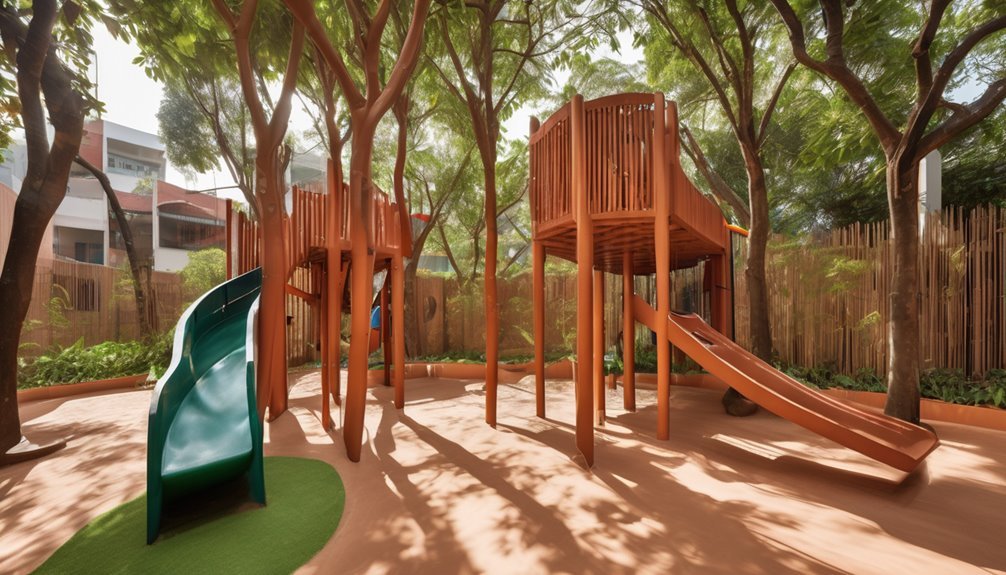
By prioritizing Sustainable Materials Choice, you can quantify lifecycle costs, local supply chains, and long-term safety for families across Bangalore. Shading for Efficiency isn’t just comfort—it reduces cooling loads, supports hotter-climate resilience, and preserves playground usability year-round with data-backed energy savings. Low-Impact Maintenance systems then translate to lower ongoing costs and fewer environmental footprints, helping communities plan safer, more durable play spaces.
Sustainable Materials Choice
Sustainable materials are at the core of resilient play spaces, guiding choices that balance safety, cost, and long-term environmental impact for Bangalore’s communities. You’ll see decisions rooted in data: lifecycle costs, maintenance needs, and local supply reliability shaping every surface and component.
- prioritize sustainable materials that meet safety standards, ensuring durable performance over decades
- favor eco friendly sourcing to reduce transport emissions and support regional economies
- evaluate lifecycle costs to avoid hidden expenses and optimize budget efficiency
- align with community demand for transparent, verifiable material disclosures and local partnerships
This approach strengthens belonging, as residents trust local, traceable materials. By foregrounding data, you empower stakeholders to compare options, forecast maintenance, and celebrate greener play spaces as a shared, profitable asset for Bangalore’s neighborhoods.
Shading for Efficiency
Shade isn’t an afterthought—it’s a performance lever. In modern Bangalore play areas, shading isn’t decorative; it drives shade efficiency by reducing surface heat, slowing ambient rise, and protecting kids from sun exposure during peak hours. You’ll see data showing cooler microclimates under properly placed canopies and trellises, lowering air-conditioning dependence in nearby facilities and extending playtime windows. Materials selection matters: durable, UV-stable fabrics and high-albedo surfaces reflect excess heat, supporting energy savings across the site. Community feedback highlights a sense of belonging when shaded zones host gatherings, storytelling corners, and fitness prompts without glare. Prioritize scalable shade strategies that blend with vegetation and architecture, quantify energy savings, and empower residents to value and maintain these resilient, inclusive spaces.
Low-Impact Maintenance
Could a play area stay lively with less waste and fewer replacements? You can achieve this through low-impact maintenance that combines durable materials, smart shade, and efficient planning. Data shows communities invest more when upkeep is predictable and costs are controlled. By coordinating play area budgeting with durable, locally sourced components, you save over time and reduce environmental strain. Focus on material sourcing that prioritizes longevity and recyclability, paired with designs that minimize replacements. Lean operations authorize residents to feel ownership and pride in shared spaces.
- Select durable surfaces and modular components
- Optimize shade with low-thermal-emission systems
- Plan routine care to extend life cycles
- Track costs and outcomes for continuous improvement
Social Value: Fostering Community and Resident Interaction
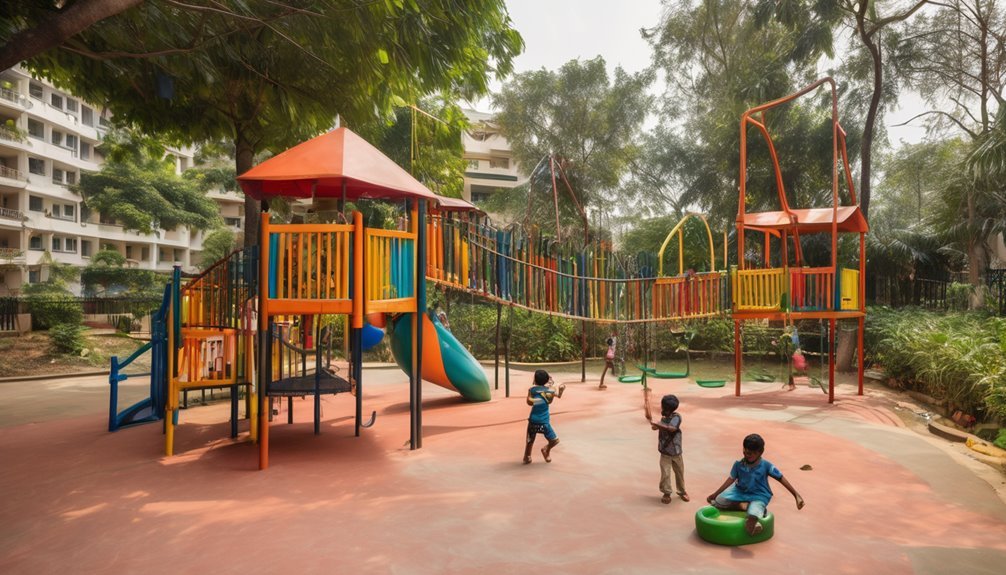
What does genuine community look like in a modern play area, and how does it get built? You’ll see it in measured outcomes: higher resident interaction rates, repeated park usage, and diverse age mixing that strengthens social ties. Data shows play value isn’t just about equipment; it’s about programming, safety, and accessibility that invite neighbors to engage daily. When spaces enable informal chats, impromptu games, and shared routines (meetups, parent-tot sessions, clubs), trust and belonging rise, boosting retention and satisfaction. Aim for flexible zones, visible sightlines, and inclusive amenities that welcome seniors, caregivers, and visitors alike. By prioritizing social value, you convert a playground into a responsive community hub, driving perceived quality and long-term property value for residents and developers.
Aesthetics and Branding: How Design Elevates Perceived Quality
Aesthetics aren’t just about looks—they’re a measurable lever for perceived quality and user engagement. You’re shaping spaces that communicate care, consistency, and shared expectations through aesthetic branding and a clear design language. The data shows cohesive visuals boost trust, adoption, and word-of-mouth in communities like yours. When branding feels intentional, residents feel they belong.
- Align colors, materials, and forms to create recognizable, marketable spaces
- Use a consistent design language that translates across signage, fixtures, and play elements
- Leverage intentional branding to convey safety, accessibility, and inclusivity
- Track resident sentiment and usage to refine aesthetics as a competitive advantage
A strong aesthetic signals value, fosters pride, and supports long-term community retention.
Maintenance, Durability, and Total Cost of Ownership
Maintenance, durability, and total cost of ownership aren’t afterthoughts—they’re foundational to sustainable play spaces. You’re responsible for long-term value, so you map maintenance efficiency and durability testing into every design decision, ensuring safer, inviting spaces that communities trust. When you prioritize durable materials and modular layouts, you reduce downtime and recurring costs, preserving belonging for families and neighbors. The data shows higher initial Investment can yield lower life-cycle costs and steadier community engagement. Use a simple framework to compare upfront, maintenance, and replacement timelines, and invite residents to participate in monitoring outcomes.
| Dimension | Action | Benefit |
|---|---|---|
| Materials | Opt for durable, low-maintenance options | Fewer repairs, longer lifespan |
| Scheduling | Regular inspections | Early issue detection |
| Budgeting | Reserve for longevity | Predictable costs |
Market Demand Signals: Buyer Preferences in Bangalore
Are Bangalore buyers signaling a shift toward multi-use, community-centric play spaces that blend safety, accessibility, and local identity? You’ll notice demand clustering around inclusive design, real-time safety data, and social cohesion, not just equipment counts. Trends show buyers favor spaces that reflect neighborhood character while meeting toy safety standards and debunking play area myths through transparent maintenance records. Data points indicate preference for mixed-age zones, accessible paths, shaded seating, and documented safety audits.
Bangalore buyers seek multi-use, safety-forward play spaces rooted in local identity and community stewardship.
1) Multi-use zones
2) Local identity integration
3) Visible safety certifications
4) Community-led programming
These signals shape development pipelines: buyers expect measurable quality, ongoing stewardship, and a sense of belonging that translates into higher occupancy and property value.
ROI Metrics: Measuring Impact on Pricing and Occupancy
ROI metrics measure how modern play spaces influence pricing and occupancy by linking design choices to measurable outcomes. When you track roi metrics, you’re translating playground upgrades into numeric signals: pricing uplift, faster lease cycles, and steadier occupancy. Use a clear baseline, then compare unit rents, time-to-lease, and renewal rates after installation. The occupancy impact becomes a gauge of desirability, not just density, helping you forecast capacity with confidence. Pair these metrics with guest feedback and community sentiment to ensure values align with resident expectations. In practice, you’ll publish transparent dashboards that show cost versus revenue, occupancy trends, and seasonality. This data-driven approach reinforces belonging, supports smarter budgets, and positions your project as forward-thinking within Bangalore’s evolving market.
Frequently Asked Questions
How Do Playgrounds Affect Time-On-Site for Buyers?
Play area aesthetics boost time-on-site as buyers linger to assess safety and vibe; data suggests well-maintained spaces raise trust, not just appeal. You’ll see longer visits, lower perceived risk, and manageable maintenance costs fostering community belonging.
What Grant or Incentive Programs Support Community Play Areas?
You can access grant programs and incentive schemes that support community play areas, unlocking funding for safer spaces. You’ll see data-driven benefits, foster belonging, and coordinate partnerships, aligning development with inclusive, forward-thinking neighborhood growth and measurable community impact.
Do Residents Value Branded Play Zones in Bangalore?
Yes, residents value branded play zones in Bangalore, boosting brand awareness and resident engagement. You’ll see stronger community belonging as data shows branded spaces foster trust, participation, and continued use, driving inclusive, forward-thinking neighborhood improvement.
How Quickly Can Value Uplift Be Monetized Post-Launch?
You’ll see value unblocked quickly—often within months—through a clear monetization timeline. How quickly value compounds post launch depends on uptake, but playground ROI accelerates as community participation grows, delivering tangible, accessible benefits that cultivate belonging.
What Are the Key Design Features Influencing Resale Value?
Design features driving resale value include safe materials, durable play structures, inclusive access, ample shade, and community-driven amenities; you’ll see higher buyer confidence, faster acceptance, and a stronger sense of belonging across neighborhoods, backed by data and feedback.