
Adventure playgrounds let you build resilience by using purposeful risk, clear supports, and hands-on challenges. Climbing walls develop grip, balance, and motor coordination, while obstacle courses teach problem-solving, sequencing, and time-pressured decision‑making. Social resilience grows through teamwork, communication, and shared goals, with roles and feedback guiding safe participation. Balance challenge with safety through visible supports and gradual difficulty. At‑home extensions reinforce classroom readiness and belonging. If you keep exploring, you’ll uncover practical steps to apply this approach everywhere.
Designing Risk-Reward Zones for Curious Minds
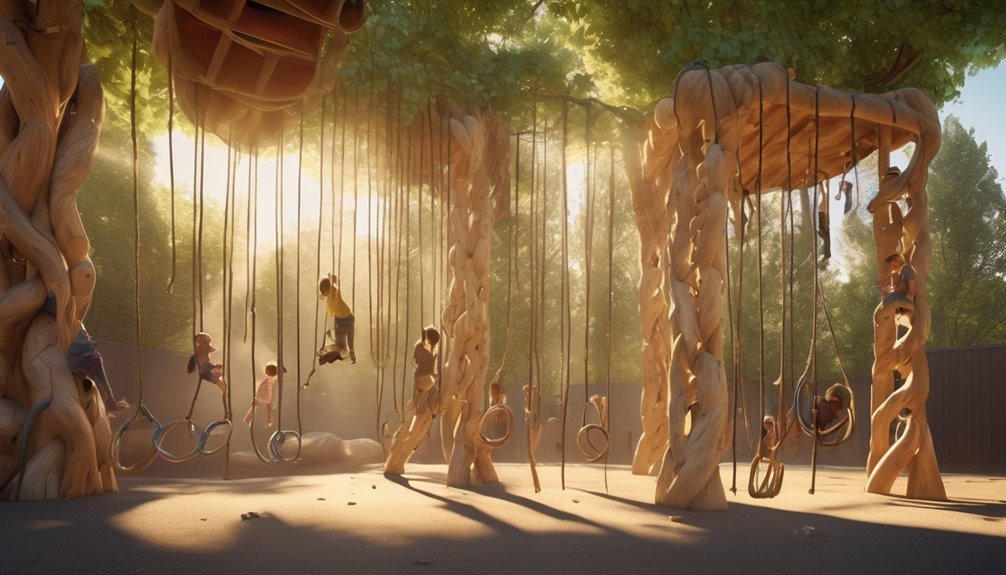
Designing risk-reward zones taps into kids’ natural curiosity as keeping safety goals clear. You’ll create boundaries that invite challenge while preventing harm, framing it as opportunity rather than risk. In curiosity driven exploration, success hinges on clear cues, adjustable difficulty, and visible supports that empower decision-making without shaming mistakes. You’ll design layouts that mix near and far goals, so kids test abilities at a pace that matches their development, hands-on and peer-supported. Provide incremental challenges, reflective prompts, and immediate feedback to reinforce learning. Emphasize autonomy within structure, so children feel a sense of belonging as they navigate choices. Ground decisions in evidence: supervise smartly, assess risk continuously, and iterate based on observation and input from kids and caregivers. This approach builds resilience through intentional play.
The Role of Climbing Walls in Motor Skill Development
How do climbing walls support motor skill development in children? You experience progressive challenges that build grip strength, balance, and body awareness. Climbing wall benefits include refined motor planning and coordinated limb movements, fostering confidence while reducing fear responses. As you ascend, you integrate visual input with proprioception, improving motor coordination across settings. This development supports everyday tasks, from handwriting to sports participation, with lasting impact on self-efficacy and persistence.
| Skill area | Mechanism | Outcome |
|---|---|---|
| Grip & forearm strength | Hand holds and friction | Better tool use and endurance |
| Balance | Shifting weight and stance | Safer landing, stable gait |
| Coordination | Multi-limb sequencing | Fluid movement in play |
Obstacle Courses as Tools for Problem-Solving and Strategy
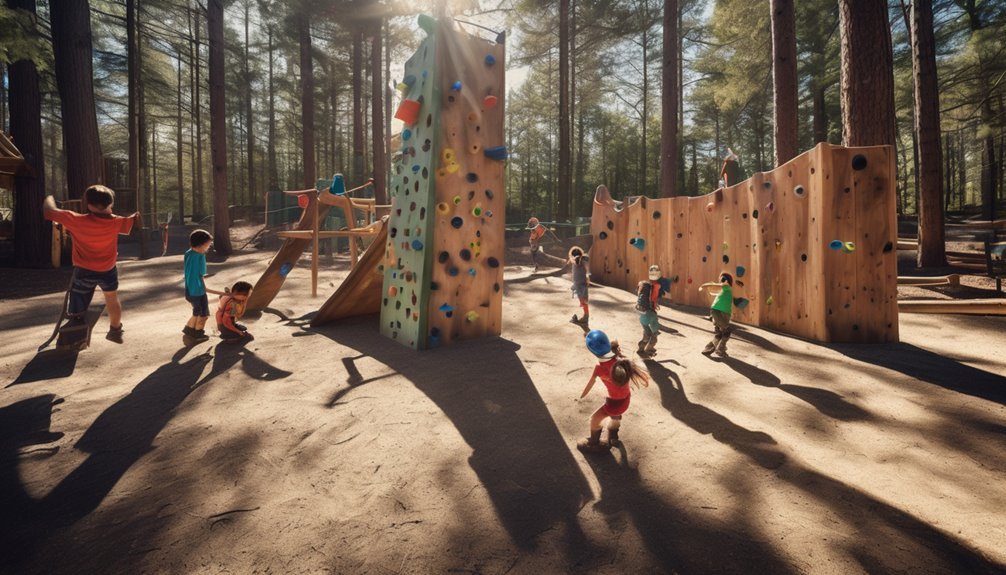
Obstacle courses offer a concrete setting where kids convert plan into action, testing strategies under time pressure and with physical constraints. You’ll see problem solving unfold as repeated trials reveal better routes, faster transitions, and safer choices. This environment supports strategy development through deliberate sequencing, spacing and pacing, and obstacle sequencing, turning curiosity into tested procedures. Key elements include risk assessment, motor coordination, and balance challenges that refine control while sustaining engagement. Sensory processing differences surface as kids adapt tactile, visual, and proprioceptive cues to stay focused under pressure. You foster a sense of belonging by recognizing progress and encouraging peer feedback. Use these ideas to guide practice:
1) Approach, test, adjust
2) Observe outcomes, refine steps
3) Celebrate improvements, share learnings
Social Resilience Through Teamwork and Communication
Ever wonder how teamwork builds resilience in kids during physical challenges? You’ll see that success isn’t solo—it emerges from strong communication dynamics and shared goals. When you coordinate movements, listen actively, and name problems clearly, you reduce uncertainty and increase safety. Effective teamwork strategies emphasize roles, turn-taking, and timely feedback, helping every participant contribute according to strengths. In climbing, belaying, spotting, or navigating a course, you learn to read cues, adapt quickly, and support peers without judgment. This collaboration builds social confidence, empathy, and trust, which spill over into everyday life. By modeling respectful dialogue and clear expectations, you create an inclusive environment where every child belongs and grows through collective effort, not just personal achievement.
Balancing Challenge and Safety in Adventure Playgrounds
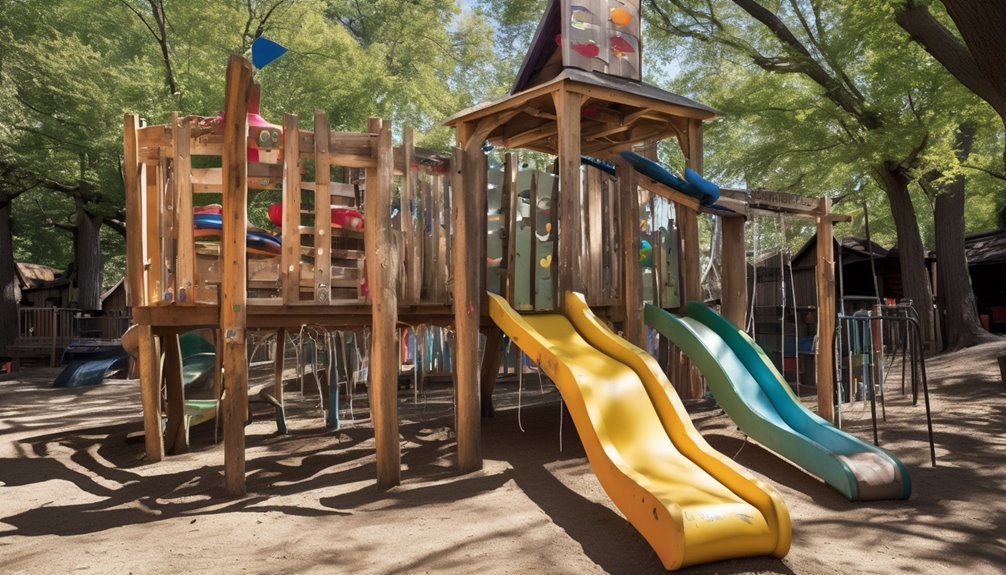
Balancing challenge and safety in adventure playgrounds means designing activities that push kids just beyond their current skills while keeping risk under thoughtful control. You’ll use a structured approach that blends growth with protection, guided by evidence and observation. Implement clear safety protocols and ongoing risk assessment to adjust difficulty in real time.
- Assess hazards before sessions and update plans as conditions change.
- Scaffold tasks with progressive challenges tied to individual readiness.
- Review incidents, celebrate successes, and refine protocols accordingly.
This balance supports belonging by signaling you value each child’s effort and safety. Your playground becomes a place where curiosity is encouraged, mistakes are learning steps, and supervision is precise, not punitive. With consistent safety protocols and proactive risk assessment, resilience emerges through deliberate, supported exploration.
Engaging Families: At-Home Extensions of Adventure Play
How can families extend the benefits of adventure play at home without sacrificing safety? You can translate playground lessons into everyday moments by designing small, supervised challenges that target balance, problem-solving, and teamwork. Start with low-risk activities, like a hallway obstacle course using cushions, taped lines, and soft mats, and declare clear safety rules before you begin. Involve all ages through cooperative tasks, rotating roles to boost family engagement and ownership. Set simple goals, track progress, and celebrate gradual improvements to reinforce resilience without pressure. Use open-ended questions to reflect on strategies and decisions, fostering belonging and shared language around risk, help, and recovery. These at-home extensions support community safety and strengthen bonds, showing how family routines can nurture development beyond playground walls.
Measuring Growth: Confidence, Perseverance, and School Readiness
You’ll see how Confidence Through Challenges grows as you tackle tasks that push you a bit beyond your comfort zone. Perseverance in Practice shows up when you keep trying after setbacks, building steady progress over time. Readiness for School Tasks emerges as you transfer those skills to planning, focus, and collaborative problem-solving in classroom-like activities.
Confidence Through Challenges
As children tackle climbing walls and obstacle courses, they gain confidence by testing boundaries and learning that effort leads to progress. You’ll see how bold exploration and practical risk taking translate into classroom readiness, social belonging, and steady self-belief.
- Confidence grows when challenges are matched to abilities, fostering gradual mastery.
- Perseverance strengthens as kids navigate setbacks and try new strategies.
- School readiness improves through focused attention, problem solving, and collaborative play.
In this space, you’re encouraged to celebrate effort, not just outcomes, reinforcing safe risk and personal rhythm. Evidence shows structured challenges support self-regulation, goal setting, and peer support, all of which underpin resilience. By embracing these experiences, you connect with others who value growth, inclusion, and purposeful play, building a shared sense of belonging while you develop steady, measurable gains in confidence.
Perseverance in Practice
What does growth look like when kids persevere through climbing walls and obstacle courses, and how can we measure it across confidence, perseverance, and school readiness? You’ll observe steady effort, improved task persistence, and calmer problem-solving under pressure. Perseverance practice becomes visible in repeated attempts after setbacks, shrinking hesitation and boosting self-regulation during challenges. You can quantify growth through brief, development-focused indicators: sustained attention to tasks, timely goal-setting, and adaptive strategies when plans fail. Track challenge persistence as kids select increasingly complex routes, recover quickly from missteps, and seek feedback constructively. Use simple checklists and brief reflections to capture shifts in confidence and readiness for classroom tasks. This approach honors belonging, supports ongoing growth, and links playground grit to learning confidence.
Readiness for School Tasks
Children who build confidence, perseverance, and readiness in the context of school tasks show clearer links between outdoor grit and classroom success. You’ll see growth when adventure reading and boundary exploration translate into focused study habits and task persistence, not just play.
- You establish routine by translating outdoor problem-solving into classroom tasks, reinforcing time management and goal setting.
- You monitor progress with observable markers—completion rate, task accuracy, and effort—celebrating steady gains in both domains.
- You reinforce social belonging by collaborative tasks that connect peers, teachers, and families around shared achievements.
This approach supports readiness for school tasks as an extension of outdoor learning, where confidence and grit fuel adaptive thinking, experimentation, and resilience.
Frequently Asked Questions
How Do Adventure Playgrounds Affect Long-Term Risk Perception in Kids?
Adventure playgrounds can positively shape long-term risk perception by fostering adventure psychology in kids, helping you normalize calculated risks. You’ll learn to assess danger, set boundaries, and recover from setbacks, reducing risk normalization over time. By providing controlled challenges, you gain confidence, social support, and a sense of belonging, which supports resilient decision-making. Research suggests balanced exposure helps you weigh benefits versus harms, contributing to safer, more self-assured choices later in life.
Can Climbing Walls Replace Traditional Physical Education in Schools?
Climbing walls can’t fully replace traditional PE, but they can complement it. You’d still need traditional PE for structured aerobic, strength, and assessment. When you mix climbing walls into PE, focus on risk perception, inclusion, and diffabled inclusion to ensure everyone participates safely. Use transparent funding models and data ethics, share safety incidents, and pursue community led design. Align with inclusion goals, encourage incident sharing, and view this as augmenting, not substituting, a comprehensive physical education program.
What Funding Models Sustain Community-Led Obstacle Courses?
Funding partnerships sustain community-led obstacle courses by broadening grants, sponsorships, and in-kind support, while ensuring programs remain affordable and accessible. You’ll thrive when you cultivate shared ownership via volunteer governance, aligning values with funders and community needs. Evidence shows diverse revenue streams reduce risk and boost continuity. You’ll build belonging by inviting neighbors, schools, and local businesses to co-design activities, monitor impact, and celebrate milestones, creating resilient, inclusive spaces supported through ongoing funding partnerships.
Do Adventure Play Designs Impact Inclusion for Differently-Abled Children?
Yes, adventure play designs can improve inclusion for differently-abled children. You’ll benefit from inclusive access and adaptive design that adjust to varied abilities, enabling meaningful participation. By offering varied heights, textures, and supported paths, you empower every child to explore safely. Evidence supports universal features like low-rim edges, sensory-rich elements, and clear fall zones. Your approach should center belonging, where successful, accessible challenges build confidence and foster shared play among all young explorers.
How Is Data on Safety Incidents Ethically Collected and Shared?
Data ethics guides how you collect and share safety information, ensuring consent, minimization, and transparency. You report incidents through secure, anonymized channels, safeguarding participants while enabling learning. You balance accountability with privacy, publish aggregate trends, and avoid stigmatizing individuals. By adhering to incident reporting standards, you foster trust and continuous improvement. You’ll build a sense of belonging by showing care for every child’s safety, encouraging open dialogue, and using insights to prevent harm and strengthen resilience.