
To implement Bangalore-ready school playgrounds, you’ll aline governance with local codes, accessibility standards, and safety rules, while engaging parents and teachers in planning. Assess site conditions for monsoon drainage, soil stability, and surface durability to prevent pooling and erosion. Choose climate‑appropriate, low‑toxicity materials with tested slip resistance and UV stability. Design inclusive, age‑diverse layouts with clear sightlines, compliant surfacing, sturdy fencing, and shade. Establish maintenance budgets and stakeholder responsibilities; you’ll uncover more actionable steps ahead.
Set Goals, Safety Rules, and Regulatory Requirements for Bangalore Playgrounds
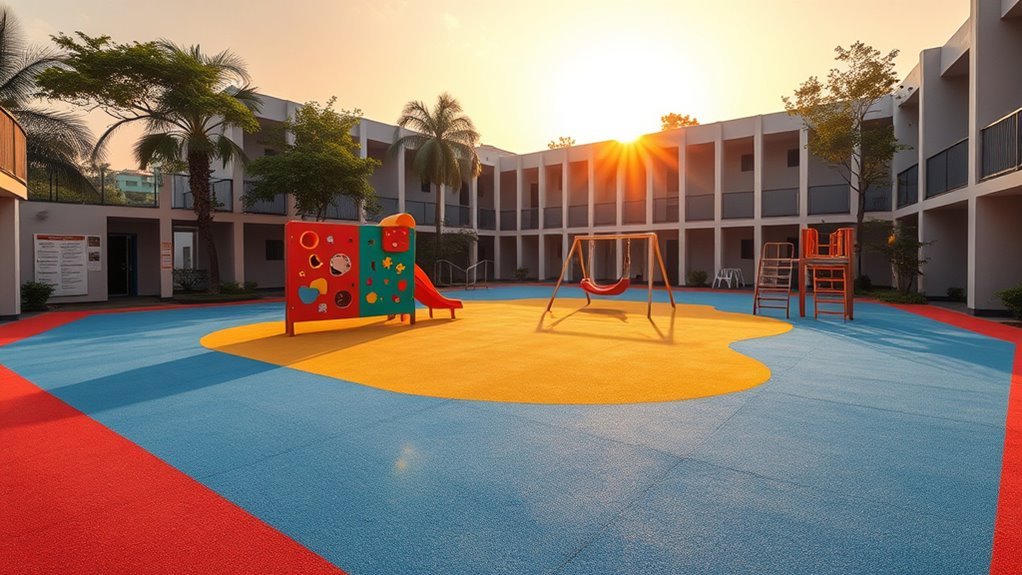
Setting clear goals, safety rules, and regulatory requirements is essential for Bangalore playgrounds to function as safe, engaging spaces for children and compliant facilities for operators. You’ll establish governance compliance by aligning design objectives with local codes, accessibility standards, and municipal approvals, ensuring accountability from siting to maintenance. Your goals should reflect inclusive, age-appropriate play, risk-aware layouts, and durable materials that withstand Bengaluru’s climate. Safety rules must be explicit yet user-friendly, promoting supervision, proper equipment use, and injury-prevention practices. Regulatory requirements demand documented inspections, incident reporting, and certifications. You’ll foster community engagement by involving parents, teachers, and neighbors in planning, feedback loops, and volunteer stewardship. Clear metrics, transparent timelines, and ongoing communication reinforce belonging, trust, and shared responsibility throughout the project lifecycle.
Assess Site Conditions and Bengaluru’s Monsoon-Ready Constraints
As you plan, assess how monsoon drainage, soil saturation, and surface durability shape feasibility and safety constraints for your playground. You’ll need to align drainage design, soil stability, and rainy-season wear with local policies and maintenance routines. This discussion sets the foundation for resilient, year-round use in Bengaluru’s climate.
Monsoon Drainage Considerations
How do Bengaluru’s heavy monsoons shape site readiness for a school playground, and what conditions must be verified before breaking ground? You evaluate drainage capacity, predict monsoon performance, and confirm that the plan aligns with local regulations. Prioritize reliable monsoon drainage solutions to prevent pooling and erosion, safeguarding user safety and equipment longevity. Assess surface runoff patterns with contouring, swales, and rain gardens that integrate with the campus’s landscape and water management policy. Verify that each zone drains within 24 to 48 hours after rainfall, and ensure access for maintenance crews during events. Establish clear responsibilities, timetables, and budget contingencies to address flooding risk and emergency access, while fostering a sense of belonging through transparent, community-informed decisions.
Soil Saturation and Stability
Bengaluru’s heavy monsoons mean soil conditions can fluctuate rapidly, so you should assess saturation and stability before breaking ground. You’ll evaluate soil saturation levels across the site, focusing on low-lying areas and cutoff drainage paths to anticipate standing water. Stability concerns include subgrade bearing capacity, soil type variability, and potential slope movement during peak rains. Effective drainage performance is essential to prevent prolonged saturation that weakens play surface supports and increases erosion risk. Document findings and align them with local policies on site suitability, groundwater impact, and future maintenance. Consider how soil behavior influences structural loading, ensuring that playground foundations and retaining features are designed for seasonal moisture changes. This proactive approach reinforces safety, belonging, and the community’s confidence in the project.
Rainy-Season Surface Durability
Rainy-season surface durability requires a clear, policy-driven assessment of site conditions to guarantee safe, long-lasting play spaces. You’ll map Bengaluru’s monsoon constraints, prioritizing accessible routes, proper drainage, and durable materials that resist standing water. Focus on playground drainage and rain impact durability to minimize slip hazards and erosion. Establish guidelines for grading, underlayment, and surface overlays that promote rapid drying and consistent playability. Conform with district policies on accessibility, maintenance cycles, and budgeting for seasonal risk. Engage staff, parents, and students in monitoring surfaces after heavy rains, updating risk registers, and documenting remediation. Your approach should be inclusive, evidence-based, and transparent, fostering a sense of belonging through safer, well-prepared outdoor spaces.
| Policy+Action | Expected Outcome |
|---|---|
| Drainage standards | Reduced pooling, faster dry times |
| Monitoring plan | Timely remediation, shared accountability |
Pick Durable, Kid-Friendly Materials Suited to the Climate
You should prioritize durable, low-maintenance materials that perform well in Bengaluru’s climate and heavy monsoon cycles. This involves climate-appropriate safety ratings and surface options that reduce moisture, heat, and wear while supporting inclusive play. By harmonizing material choices with kid-friendly usability and clear maintenance policies, you’ll set a foundation for a safer, long-lasting playground.
Durable Material Selection
Selecting durable, kid-friendly materials is crucial for long-term safety and cost-effectiveness in Bangalore’s climate. You aim for resilient, low-maintenance choices that support inclusive play and policy compliance. Prioritize surfaces and structures that withstand heat, monsoon moisture, and wear. Here are core steps:
1) Choose durable materials with proven lifecycle data, prioritizing low toxicity and high impact resistance.
2) Favor climate adaptation by testing for slip resistance, UV stability, and drainage compatibility.
3) Document procurement criteria, safety standards, and maintenance schedules to align with school policies and community needs.
This approach reinforces belonging by ensuring predictable performance, clear expectations, and transparent decision-making. It also minimizes downtime, supports budget controls, and meets regulatory benchmarks for safe, age-appropriate play environments.
Climate-Appropriate Safety
Durability, safety, and user comfort must align with Bangalore’s climate, so choosing materials that tolerate heat, monsoon moisture, and seasonal wear is non-negotiable. You’ll select climate adaptation-focused options that reduce maintenance while maximizing safety and inclusivity for all students.
| Durable, Kid-Friendly Materials | Climate Benefits |
|---|---|
| Impact-absorbing rubber, recycled mulch | Monsoon resilience, slip resistance |
| UV-stable plastics, rot-proof composites | Heat tolerance, long service life |
| Powder-coated steel with rust resistance | Structural safety across seasons |
| Treated timber with sealant | Durability in wet conditions |
| Cushioned rubberized tiles | Gentle landing zones, easy cleaning |
Policy lens: standardize material testing, vendor certifications, and drainage compatibility to ensure climate-appropriate safety, equity, and inclusion for every playground user.
Kid-Friendly Surface Choices
What surface options best balance safety, comfort, and climate resilience for Bangalore’s schools? You want durable, low-maintenance materials that support multi-use play while respecting local conditions. Favor surfaces that cushion impact, resist heat, and endure monsoon cycles, coordinating with playground maintenance goals and long-term budgets. A well-planned choice also complements the tree canopy, preserving shade and microclimates that reduce heat exposure for students. Policy-driven decisions should prioritize local procurement and standardization for training, inspection, and funding clarity. Use these surface options to reinforce inclusion, accessibility, and belonging across campuses.
- Engineered rubber or modular tiles with slip resistance and drainage
- Poured-in-place rubber blends designed for heat tolerance and use zones
- grass-embedded foam or compact mulch systems for soft, seasonal resilience
Design an Inclusive, Age-Diverse Playground Layout
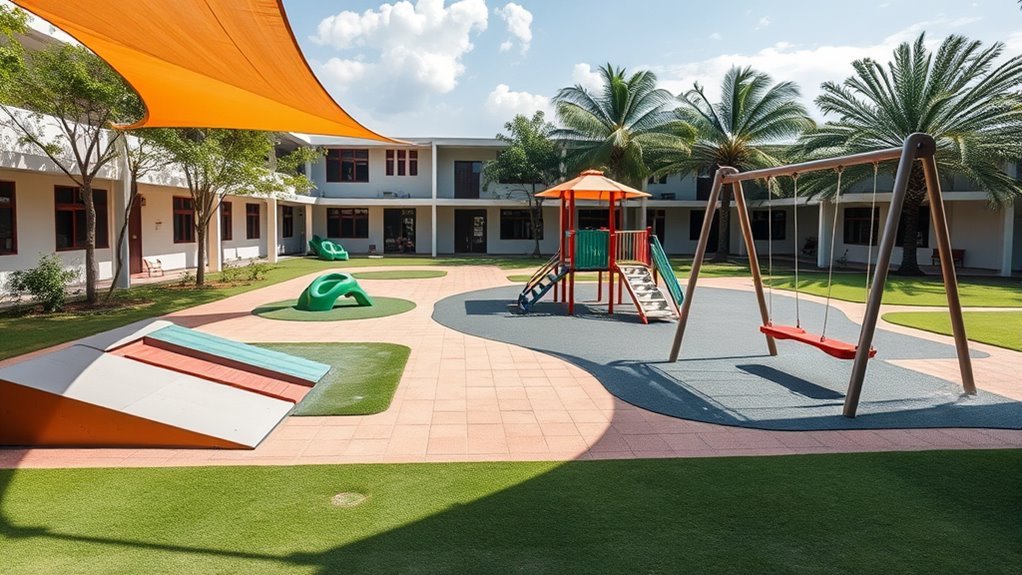
Designing an inclusive, age-diverse playground layout means balancing safety, accessibility, and opportunity for every child to participate. You’ll design zones that cluster ages and abilities, enabling peer mentoring and guided interaction while maintaining clear sightlines for supervision. Use inclusive play as a guiding principle, ensuring equipment and open spaces support varied heights, motor skills, and sensory needs. Plan age diverse zoning that promotes collaboration across groups, with stepped challenge levels so younger children can observe and learn from older peers. Pathways should be accessible, with tactile cues and ramps to connect play varieties without barriers. Align layout with school policies on inclusion, equity, and risk management, and incorporate flexible spaces for assemblies or instruction. This approach fosters belonging and equitable play opportunities for all learners.
Specify Safety Surfacing, Fencing, and Shade Solutions
How can you guarantee safety and continuous usage with the right surfaces, fences, and shade? You’ll align spec safety with local standards to reduce injury risk while supporting inclusive play. Proper surfacing absorbs impact, minimizes trip hazards, and accommodates accessibility needs. Fencing safety controls access, defines zones, and prevents wandering children near hazards. Shade solutions protect against heat stress and encourage longer outdoor time, enhancing daily routines and outdoor learning.
Design safe, inclusive outdoor spaces with compliant surfacing, secure fencing, and durable shade for extended, worry-free use.
- Select compliant safety surfacing, verify shock absorption, accessibility, and maintenance requirements.
- Implement robust fencing safety with appropriate heights, gates, and visibility.
- Integrate durable playground shade to ensure comfort and extended use.
Create a Maintenance, Budget, and Stakeholder Plan
To guarantee long-term safety and usability, you’ll establish a clear maintenance, budget, and stakeholder plan that dovetails with school policies and local regulations, sets realistic funding targets, and assigns explicit roles. Your plan should define routine inspection schedules, criteria for repairs, and escalation paths to address unsafe conditions without delay. Include maintenance budgeting that forecasts annual costs, reserves for capital refreshes, and transparent reporting to leadership. Establish stakeholder engagement by listing responsible groups—staff, PTA, vendors, and maintenance contractors—and outline their communication cadences, decision rights, and training requirements. Ensure documentation supports compliance audits and community trust. Finally, embed continuous improvement cycles that review outcomes, adjust priorities, and sustain inclusive participation from learners, families, and staff alike.
Frequently Asked Questions
How Is Local Weather Variability Considered for Long-Term Playground Durability?
You consider current weather patterns to assess material durability, plan long term maintenance, and budget for climate resilient play features, while engaging stakeholders in weather responsive design to foster belonging and ensure durable results.
What Funding Sources Exist for School Playground Installation in Bengaluru?
You can access funding sources, including Bengaluru grants, school district allocations, PTA contributions, and corporate CSR partnerships. You’ll coordinate proposals with policy priorities, build community buy-in, and utilize transparent reporting to belong within local funding ecosystems.
How Can We Measure Inclusive Accessibility for Differently-Abled Students?
You measure inclusive accessibility by conducting a differently abled assessment, considering local weather variability, and engaging students and staff in feedback loops to guarantee policies genuinely reflect needs and nurture belonging.
Which Local Certifications or Audits Apply to School Playground Projects?
You’ll need to verify local certifications and audits, focusing on regulatory compliance for school playgrounds. Guarantee your project corresponds with applicable standards, and you’ll cultivate belonging as you confidently maneuver approvals, inspections, and ongoing accountability within the regulatory framework.
How Do We Involve Students and Parents in the Design Process?
You involve students and parents by hosting student feedback sessions and parent workshops, integrating insights into design decisions, ensuring transparent communication, and documenting policy-aligned outcomes so everyone feels welcomed, heard, and part of the process.