
Innovative playground shelters for Bangalore schools must blend UV-shielding shade with reliable rain interception, optimized for year‑round use. Choose lightweight, modular frames with corrosion-resistant joints and UV-rated fabrics to resist intense sun and monsoon wear. Prioritize sloped roofs with gutters, drainage, and quick-dry surfaces that keep play areas usable after showers. Design layouts should balance seating near sheltered edges, clear circulation, and supervised play zones, with maintenance plans and cost tracking for long-term value. More specifics await you.
Why Bangalore Schools Need Shade and Rain Protection
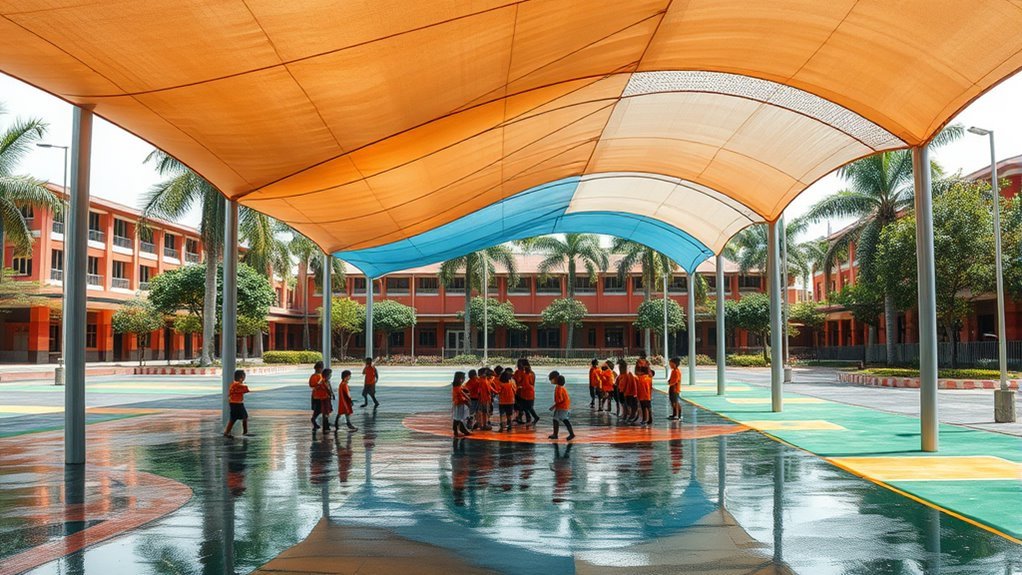
Bangalore’s climate combines intense sun and heavy monsoon rainfall, making shade and rain protection crucial for school campuses. You’ll prioritize practical coverage that minimizes glare, heat buildup, and weather-related classroom disruptions. Shade isn’t just comfort; it preserves learning time, protects playground equipment, and extends usable outdoor hours. When you plan, consider how playground aesthetics and shelter placement influence flow, safety, and social belonging. Effective solutions balance UV protection with ventilation to maintain student comfort without creating oppressive, enclosed spaces. Materials should resist corrosion and allow easy maintenance, while modular designs enable upgrades as needs evolve. You’ll gain predictable usage patterns, lower heat stress, and a welcoming outdoor environment where students feel seen, included, and engaged in daily activities.
Designing for Tropical Sun and Monsoon Weather
Designing for tropical sun and monsoon weather means selecting shelter systems that perform year-round, not just on dry days. You’ll prioritize grounded frames, corrosion-resistant connections, and shade fabrics rated for high heat and UV exposure. Focus on tropical shade that reduces radiant heat gain while maintaining visibility and airflow, enabling safe, comfortable play spaces. Roofs should be sloped to shed heavy rainfall and minimize ponding, with gutters that channel water away from play zones. Cladding and panels must resist algae growth and fading from intense sun. Provide adjustable strategies: operable vents for cross-ventilation and rain-conscious shading devices for sudden downpours. In practice, your design embraces monsoon resilience, reducing maintenance cycles and extending usability across seasons for the school community.
Lightweight, Modular Shelter Options That Last
You’ll see how lightweight assembly speeds setup and reduces labor although preserving scaffold safety and wind load performance. The modular adaptabilities enable rapid reconfiguration for evolving play areas, seasonal needs, and budget cycles without compromising durability. These options emphasize durable materials and joinery that withstand Bangalore’s sun and monsoon exposure while maintaining long-term value.
Lightweight Assembly Benefits
Are lightweight, modular shelter systems the smartest way to shield students from sun and rain as staying within budget? Yes, because you gain quick deployment, reduced construction waste, and scalable shade that expands with needs. Lightweight assembly minimizes site disruption while preserving structural integrity through durable fabrics and reinforced joints, delivering consistent wind resistance in varied Bangalore weather. You’ll appreciate predictable assembly times, minimal tools, and simpler maintenance schedules that keep downtime low. This approach supports a sense of belonging, as students see thoughtfully engineered spaces that respect budgets and local conditions.
| Benefit | Measurable Impact | Result |
|---|---|---|
| Deployment speed | Days vs months | Immediate shade |
| Maintenance | Low effort | Long-term reliability |
| Portability | Reuse across sites | Flexible use |
| Wind resistance | Certified tests | Safer outdoor learning |
Modular Adaptability Features
Modular adaptability features guarantee lightweight shelters remain durable and relevant as needs evolve. You’ll experience rapid reconfiguration through standardized connection nodes and panel modules, enabling on-site adjustments without specialized tooling. This approach supports weather-ready, shade-focused spaces that can grow with student cohorts or curricular shifts. Prioritize modular adaptability to simplify maintenance, reduce downtime, and optimize lifecycle cost. Feature customization lets you tailor shell profiles, airflow vents, and attachment points to specific site conditions in Bengaluru’s climate, while preserving structural integrity. Emphasize interchangeable fabrics, UV-resistant coatings, and modular supports that snap together with intuitive alignment guides. In practice, you gain scalable protection that matches usage patterns, promotes inclusion, and sustains comfort across seasons, fostering a sense of belonging among students, teachers, and communities involved in outdoor learning.
Real-World Layouts: Seating, Circulation, and Play Zones
How should a shelter-forward campus layout balance comfort and movement? You optimize flow by defining clear zones that respect shade, rain, and visibility. Your seating, circulation, and play zones interlock to support quick transitions and social belonging, without crowding or hazards. Implement durable edges, sightlines, and soft landings to preserve safety and inclusivity.
- Position seating near sheltered edges to invite rest without blocking pathways
- Align circulation routes with main entry points for intuitive wayfinding
- Place play zones where supervision is easy and weather is mitigated
- Separate high-traffic corridors from quiet study nooks to reduce disruption
This approach delivers seating circulation clarity and play zones safety, enabling confident movement, peer connection, and dependable shelter experience.
Cost, Upkeep, and Sustainability for Long-Term Value
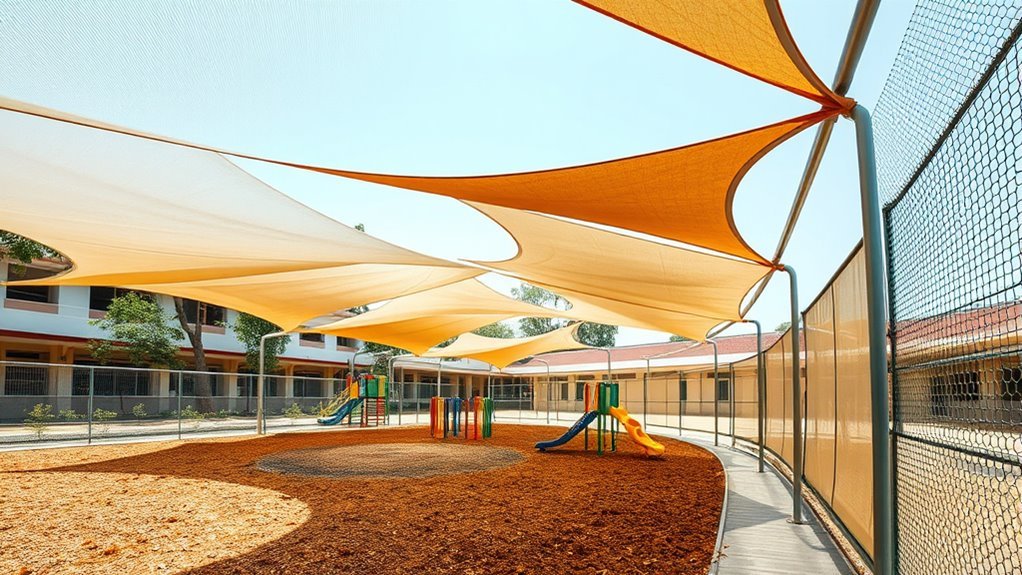
Cost, upkeep, and sustainability for long-term value must be engineered into the shelter-forward campus plan from day one. You’ll implement a clear cost sustainability framework, linking initial procurement to lifecycle outcomes, so budgets reflect durability, maintenance cycles, and retrofit needs. Prioritize modular, weather-rated materials with predictable replacement costs and standardized components to simplify upkeep planning. Establish preventive maintenance schedules, remote monitoring where feasible, and staff training that reduces downtime and extends shelter life. Design decisions should favor ease of cleaning, debris management, and sun exposure control to minimize wear. Document performance metrics and annual cost reviews to guide future investments, ensuring the shelters deliver reliable protection, community trust, and long-lasting value for students, teachers, and families.
A Practical Checklist to Choose the Right Shelter
Consider material durability, weather adaptability, and the realities of installation and ongoing maintenance as your first checks. Assess the shelter’s construction for Bangalore’s sun exposure and monsoon cycles, ensuring long-term performance and ease of upkeep. Use these points to build a practical shortlist that guides, not delays, the final selection.
Material Durability Guide
When selecting shelter materials for school playgrounds in Bangalore, durability isn’t just about strength—it’s about consistent performance under sun, rain, and heavy use. You’ll verify durability benchmarks by testing UV resistance, corrosion limits, and impact tolerance across seasons, then map how each parameter translates to long-term shelter life and maintenance costs.
- Confirm UV stability and colorfastness to minimize fading and heat absorption.
- Assess weather resistance, including rainwater shedding and corrosion risk in local atmospheres.
- Evaluate joints, fasteners, and coatings for fatigue resistance during repeated loading.
- Chart the material lifecycle with warranties, replacement intervals, and end‑of‑life recyclability.
This approach keeps you aligned with practical, community-focused choices that endure, reducing disruption while building trust in your school’s infrastructure.
Weather Adaptability Factors
Can a shelter handle Bangalore’s monsoons and sun—and still stay comfortable for students? You assess weather adaptability by matching structure to cyclical conditions, not just one season. Start with a two word idea, two word idea embedded as key criteria: like wind load, shade certainty, drainage fidelity, and thermal comfort. Prioritize roof geometry that disperses heavy rain without pooling, while offering consistent shade during peak sun. Consider material science for humidity resilience and color strategies that minimize heat gain. Ventilation paths should balance air flow with rain interception, keeping classrooms and open play areas usable through sudden showers. Durability under UV exposure matters, but quick-dry surfaces reduce slip risk. Finally, ensure cost-to-benefit clarity, aligning shelter choices with school schedules and local climate realities.
Installation And Maintenance
A practical installation and maintenance checklist guides you through selecting a shelter that fits Bangalore’s classrooms and play areas during staying reliable year-round. You’ll assess installation logistics, anchoring, and integration with existing structures, ensuring safety and code compliance. Maintenance scheduling is built in, forecasting inspection intervals, wear tracking, and rapid part replacement to minimize downtime.
- Verify site dimensions and access routes, confirming unobstructed assembly and safe unloading.
- Schedule crew, tools, and weather windows to optimize efficiency and reduce risk.
- Establish ongoing inspection routines, documenting corrosion, fastener integrity, and canopy wear.
- Predefine response timelines for repairs, spare parts, and lattice or frame maintenance to sustain longevity.
Frequently Asked Questions
How Long Do the Shelters Typically Last in Bangalore’s Climate?
A roof of reliability, like a steady heartbeat, shelters last about 10–15 years in Bangalore’s climate. You’ll see durability trends influenced by UV exposure, monsoon humidity, and thermal cycling. With climate adaptation strategies—corrosion-resistant frames, UV-stabilized polymers, and proper drainage—you gain longevity. Expect occasional repainting and joint inspections every 2–3 years. You’ll feel confident choosing materials designed for heavy rain, sun, and heat, knowing your shelters support safe, inclusive play for years to come.
Are There Child-Safe Materials for Playground Shelter Construction?
Yes, you can use child safe materials for playground shelter construction. Look for low-toxicity paints, formaldehyde-free plywood, UV-stabilized plastics, and non-slip, rounded edge metals. Verify playground shelter certifications from recognized bodies (CE, EN, or local safety standards) and guarantee adequate ventilation. Prioritize material durability in Bangalore’s climate, with warranty coverage and third-party testing. You’ll achieve safer, durable shelters that correspond with your community’s values and cultivate a sense of belonging for every child.
Can Shelters Be Integrated With Existing School Infrastructure?
You can integrate shelters with existing school infrastructure, arranging with structural loads and utility corridors. Ensure compatibility considerations cover canopy mounting, drainage, electrical, and lighting layouts, plus fire-safety clearances. You’ll coordinate with civil, electrical, and safety teams to minimize disruptions, using modular components for scalable coverage. The result is seamless integration with existing facilities, nurturing a sense of belonging while maintaining technical precision and durability for students and staff alike.
What Vandalism-Resistant Features Should Be Prioritized?
You should prioritize vandalism resistant materials and secure anchoring systems. Choose reinforced metals, tamper-proof fasteners, and impact-rated polycarbonate panels to withstand abuse. Use anchored, weld-free joints and hidden fixings to deter tampering. Implement anti-graffiti coatings and modular designs so panels can be swapped without dismantling the whole shelter. Regular inspections, sensor-triggered lighting, and clear sightlines promote accountability, helping you feel part of a safer, well-maintained school community.
Do Shelters Require Professional Maintenance Training for Staff?
Yes, shelters require professional maintenance training for staff. You’ll learn routine inspections, safe cleaning, and basic repairs to prevent corrosion, leaks, or loose fittings. The training should cover warranty nuances, parts availability, and when to escalate issues to specialists. You’ll also gain documentation habits for schedules and incident reports. By completing this, you ensure reliability, safety, and a sense of belonging among students and staff who trust well‑maintained, protected play spaces.