
When choosing plastic versus fiber for high-traffic school spaces, you’ll prioritize safety, durability, and lifecycle costs. Plastic is easier to fix on-site but can wear faster; fiber lasts longer but needs precise upkeep and parts. Consider weather tolerance, color longevity, and sturdy joint designs for outdoor and gym use. Compare warranties, maintenance needs, and replacement part availability. Favor modular designs, slip resistance, and fall-zone compliance. If you want practical guidance and safeguards, more insights await.
What School Environments Require From Equipment: Safety, Durability, and Capacity
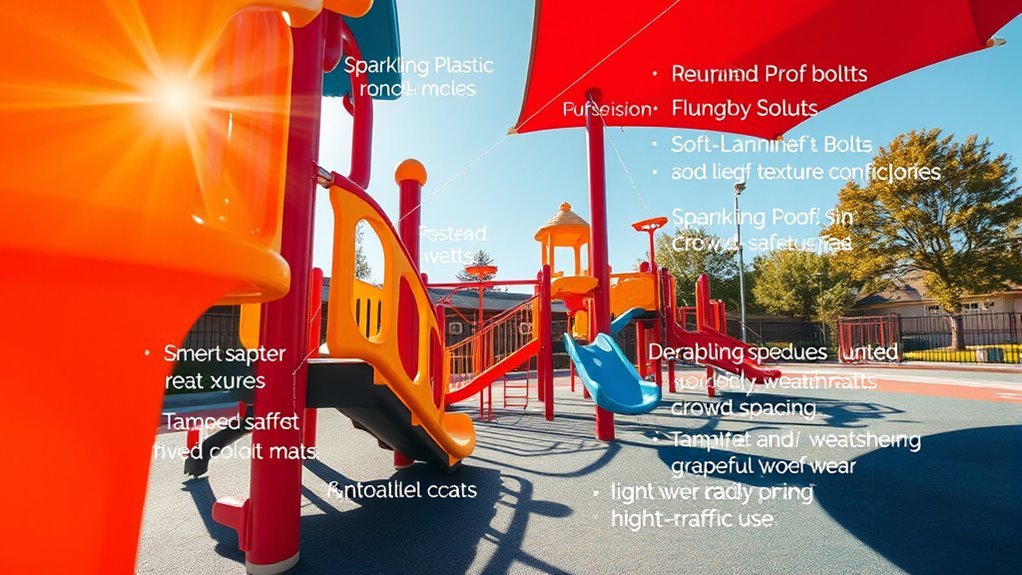
In high-traffic school settings, safety, durability, and capacity aren’t optional—they’re indispensable requirements. You’re selecting equipment that withstands daily use, resists wear, and supports multiple students simultaneously. Start with safety standards—your first priority—ensuring compliant guardrails, rounded edges, and non-toxic materials. Durability should be assessed through durability comparisons: load ratings, impact resistance, and weather tolerance for indoor and outdoor spaces. Capacity matters too; choose modules that accommodate class sizes without crowding or bottlenecks, preserving flow and supervision. You’ll want predictable performance, easy maintenance, and clear documentation for staff and families, reinforcing a sense of belonging and trust. Prioritize products with tested reliability, durable finishes, and accessible repair options. By coordinating with these criteria, you foster a safer, more inclusive learning environment.
Plastic vs. Fiber Play Structures: Durability in Busy Outdoor and Gym Spaces
When you’re labeling play spaces for high-traffic use, durability is as much about how materials behave day to day as it is about how they feel under a kid’s push and pull. Plastic and fiber structures offer distinct strengths in busy outdoor and gym environments, and your choice should center on real-world performance, not just specs.
- Weather resistance: choose materials that tolerate sun, rain, and temperature swings without cracking or fading.
- Color longevity: opt for pigments and finishes that resist chalk, scuffs, and UV degradation.
- Structural integrity: assess joint designs, fasteners, and reinforcing elements that stay secure under heavy use.
A safety-first mindset, backed by standards, creates belonging for every student and staff member.
Maintenance, Safety, and Lifecycle Costs for Busy Campuses
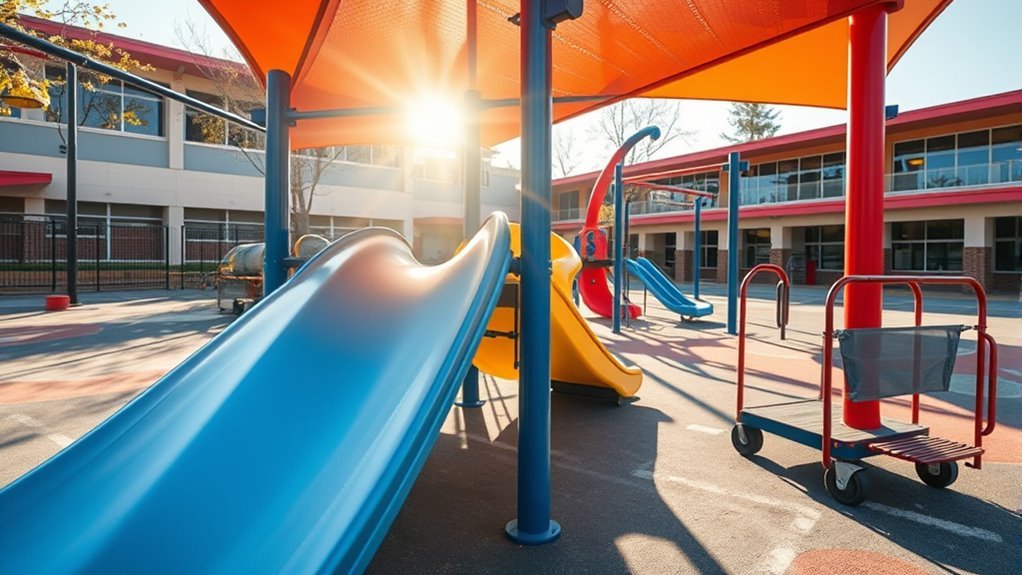
Maintaining play structures on busy campuses means planning for routine care, proactive safety checks, and predictable costs that don’t surprise facilities teams. You’ll implement clear maintenance budgeting that aligns with school schedules, weather exposure, and usage intensity, so funds stay available without last-minute scrambling. Regular inspections, torque checks, and surface assessments reduce incidents and support a culture of safety you can trust. Lifecycle planning guides replacements before failures disrupt learning, ensuring compatible components and compliant warranties. Documented records help your staff teach students about care, accountability, and belonging to a shared safety standard. Choose durable finishes and accessible maintenance paths that minimize downtime, accommodate shifts in population, and keep play spaces inviting. When priorities align, everyone benefits from consistent, standards-driven practices.
Real-World Performance in Busy Schools: Plastic vs. Fiber Case Studies
Have you ever seen how quickly a playground ages under heavy use—and what that means for busy schools? In real-world classrooms and playgrounds, plastic and fiber hold up differently under high traffic, and you’ll notice the impact on maintenance and safety schedules. You’ll compare outdoor durability in daily use, and weigh lifecycle costs alongside child comfort and supervision needs.
Across daily play, plastic wears faster but is easier to fix; fiber lasts longer but needs precise upkeep.
- Plastic setups often show quicker surface wear but can be easier to repair on-site, affecting downtime and safety checks.
- Fiber configurations may resist weathering better, yet require specialized parts and precise installation to maintain clean, safe play lines.
- Consistent inspections and standardized maintenance routines protect learners while aligning with outdoor durability expectations and lifecycle cost planning.
Smart Buying for High-Use Playgrounds and Gyms
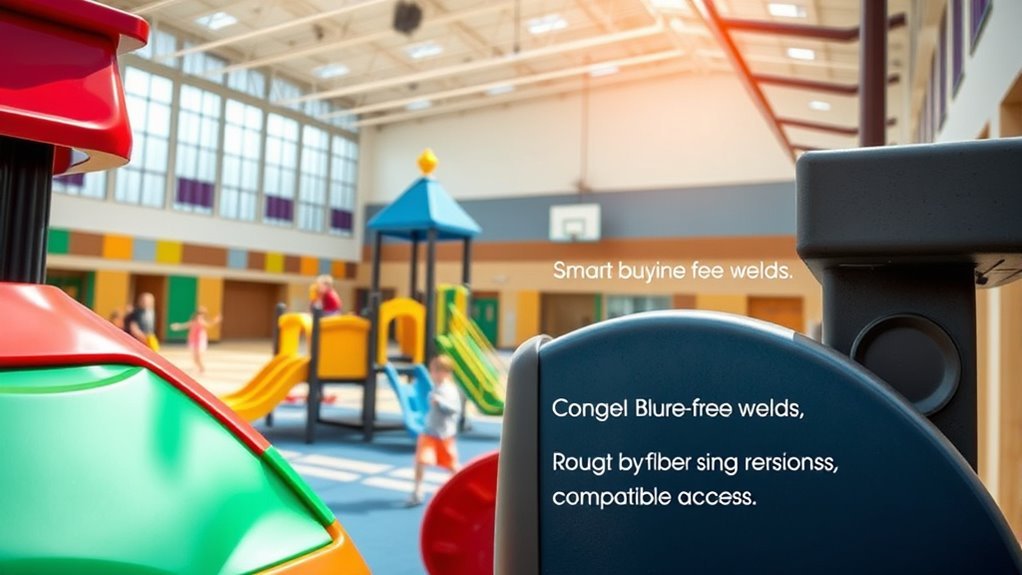
Smart buying for high-use playgrounds and gyms means choosing options that balance durability, safety, and long-term cost. You’ll prioritize products that meet relevant standards, withstand heavy use, and minimize downtime. Start by comparing plastic durability with fiber maintenance needs, noting how each material ages under frequent traffic and weather exposure. Inspect warranties, maintenance requirements, and replacement part availability to reduce future disruption. Consider modular designs that simplify upgrades and repairs without compromising safety. Assess slip resistance, impact attenuation, and fall-zone compliance for peace of mind across diverse users. Budget for recurring tasks like cleaning, lubrication, and surface refinishing, so you’re not surprised by hidden costs. Involve stakeholders early to reinforce a shared commitment to safe, inclusive play environments.
Frequently Asked Questions
How Do Weather Extremes Affect Long-Term Color Fading in Plastic vs. Fiber Play Equipment?
Long-term color fading: weather extremes stress plastic more, but fiber resists with steadier tones; expect less pigment degradation in fiber. You’ll want weathering cycles tested materials, practical safety checks, standards-driven specs, and inclusive, belonging-focused maintenance plans.
Can Modular Designs Adapt Mid-Life to Changing School Layouts and Crowd Sizes?
Yes, modular adaptation lets you reconfigure spaces as needs shift, supporting mid life redesign. You’ll safely adjust layouts to crowd sizes, maintain standards, and feel included in a practical, collaborative process that respects everyone’s needs.
Do Installation Practices Influence Warranty Validity for Busy School Environments?
If you follow proper installation warranties and maintenance scoring, yes—installation practices influence warranty validity in busy school environments. Envision a well-tuned playground like a city orchestra; each instrument—bolts, coatings, anchors—stays in harmony, safety, and belonging.
What Is the Impact of Vandalism Resistance on Total Lifecycle Costs?
Vandalism resistance reduces vandalism costs over time, shaping your lifecycle budgeting. You’ll prioritize durable materials, quick repairs, and safer designs, aligning with standards and inclusivity so everyone feels secure and included on the playground.
How Do Maintenance Intervals Differ Between Indoor Gym and Outdoor Playgrounds?
Maintenance intervals differ: indoor gym needs shorter, more frequent checks; outdoor playgrounds require weather-aware scheduling. You’ll prioritize color maintenance and material durability, ensuring safety standards are met while you cultivate a sense of belonging through proactive care.