
Creating an inclusive playground in Bangalore starts with you recognizing every child’s right to explore, learn, and belong. Use universal design from day one—accessible routes, adjustable equipment, calm corners, and clear, bilingual signage—and guarantee safety with pervasive supervision that includes families and peers. Build a multidisciplinary team, map physical, social, and academic barriers, and adapt routines to boost participation. Engage the community through co-creation and transparent accountability, then see how small wins shape lasting belonging—there’s more to explore ahead.
What Makes a Bangalore Inclusive Playground?
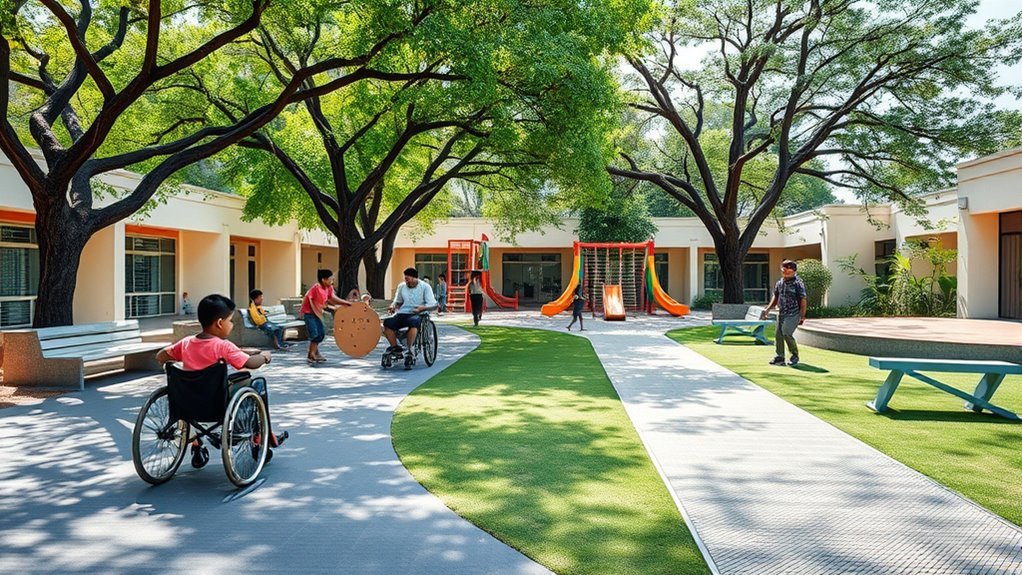
So, what makes a Bangalore inclusive playground truly inclusive? You recognize that inclusion starts with design that invites every child to participate. Think sensory gardens that awaken touch, sound, and scent, offering calm corners and engaging textures for kids with diverse needs. Wheelchair routes aren’t afterthoughts; they’re the backbone, weaving paths through play zones so mobility doesn’t limit exploration. Equipment should be adaptable, with adjustable heights and accessible switches, ramps, and transfer supports that empower independence. Clear sightlines and predictable routines build confidence, while bilingual, family-friendly signage invites caregivers to join. A truly inclusive space partners with local experts, disability advocates, and schools to ensure ongoing maintenance, safety, and evolving programming. Belonging grows when every child sees themselves reflected and valued.
Identify Barriers to Access: Physical, Social, and Academic
Are barriers to access keeping some children on the sidelines? You’re not imagining it: physical ramps, uneven ground, or narrow doorways can block movement; social cues and language gaps can silence participation; academic supports that don’t fit diverse needs can derail engagement. To change this, you begin with barrier mapping—systematically identifying where access fails and whose needs are overlooked. Pair it with access audits that check facilities, policies, and practices through a child-centered lens. Recognize transportation gaps, sensory overload, and scheduling conflicts as real constraints, not excuses. By naming barriers clearly, you empower communities to advocate for targeted fixes, funding, and training. Your clear, data-informed voice helps transform playgrounds into inclusive spaces where every child belongs and contributes.
Apply Universal Design Principles to Playgrounds
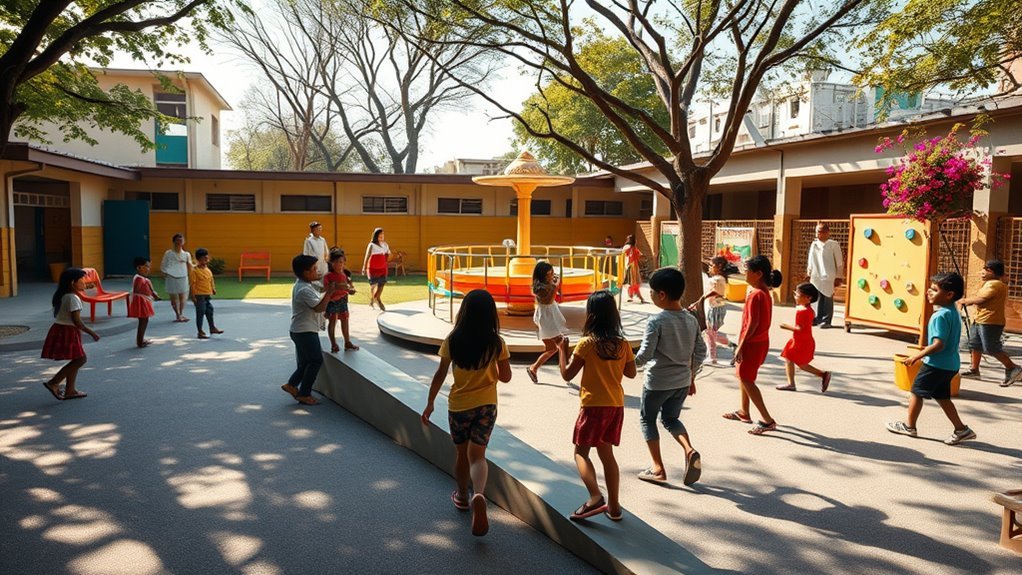
Have you considered how universal design can transform playgrounds into truly welcoming spaces for every child? You envision paths, stations, and equipment that invite exploration without barriers. Apply universal design by designing for multiple ages and abilities from the start, not as an afterthought. Choose inclusive play equipment that encourages social interaction, cooperation, and active participation for all genders and backgrounds. Ensure routes are accessible, with clear signage and tactile cues, so families navigate confidently. Provide adaptable features—ground surfaces, height-adjustable elements, and quiet zones—that reduce pain points and invite sustained engagement. Involve communities, caregivers, and students in planning to reflect lived experiences. This approach signals belonging, equity, and dignity, transforming schools into spaces where every child thrives. universal design supports inclusive play equipment and everyday inclusion.
Safety and Supervision: Balancing Risk and Inclusion
You balance risk and inclusion by designing supervision that protects every child while inviting them to explore safely. You ensure supervision is pervasive, not just at fixed stations, and includes teachers, aides, families, and peers. You align clear rules with flexible practices that empower all students, reflecting balanced risk management and inclusive, all-encompassing oversight.
Balanced Risk Management
In inclusive playgrounds, safety and inclusion aren’t competing aims but partners in a single mission: letting every child explore, learn, and grow. You balance risk and opportunity by pairing thoughtful design with vigilant, gentle supervision, ensuring all kids can participate.
- Consider balanced risk: design for safe exploration that still challenges.
- Map playground dimensions to keep sight lines clear and accessible routes obvious.
- Prioritize inclusive surfaces, shade, and seating for caretakers and children alike.
- Align equipment variety with diverse abilities without stigmatizing anyone.
- Build routines that empower self-management, peer support, and confident risk-taking.
This approach honors every learner, fosters belonging, and supports families who seek equitable access to play. Balanced risk becomes a shared responsibility, not a barrier, guiding Bangalore schools toward safer, richer play for all.
Supervision That Includes All
Supervision that includes all means planning for safety without singling anyone out, so every child can explore and learn with confidence. You’ll balance risk and inclusion by embedding inclusive routines into daily play, not as an afterthought but as a core practice. Ask yourself how staff presence, sightlines, and accessible equipment create predictable safety without stigma. Use inclusion metrics to measure whether all children are thriving, not just surviving; track participation, comfort, and perceived belonging in real time. Employ adaptive modeling to tailor supervision to varying abilities, adjusting teacher ratios and station roles as needs shift. Foster a culture where families feel heard, and where every voice informs policy. Together, you’ll build safer playgrounds that empower, connect, and belong.
Build a Multidisciplinary Team: Roles for Schools, Parents, Community
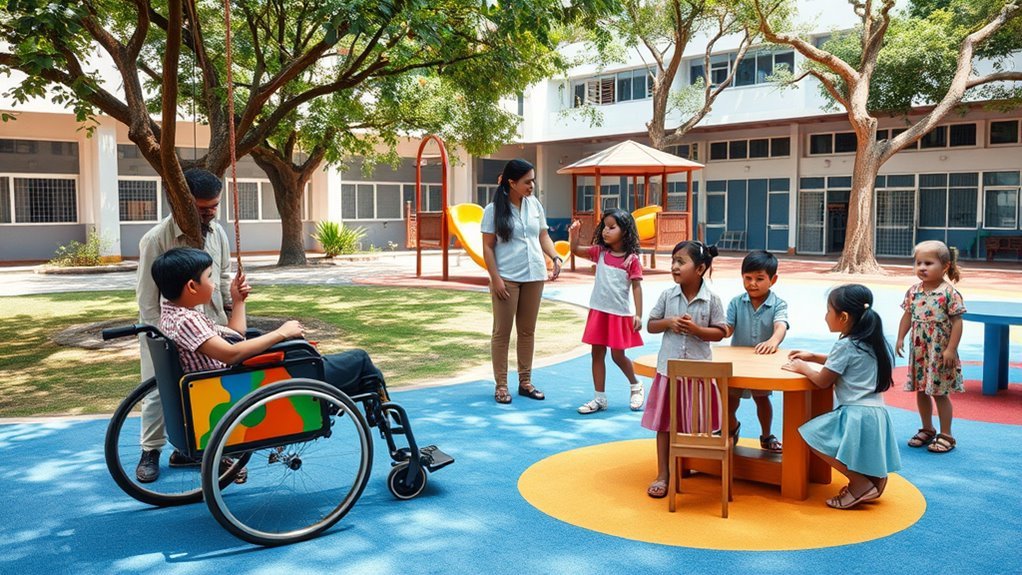
Forming a strong multidisciplinary team starts with clear roles across schools, families, and the broader community, so everyone knows how they contribute to inclusive play spaces.
You’ll align schools, parents, and local groups to share insight, leverage strengths, and sustain momentum. Your team defines responsibilities, decision processes, and accountability, ensuring every voice shapes access and safety. You’ll cultivate authentic partnerships, inviting neighbors, NGOs, and local businesses to contribute ideas, time, and funding strategies. You’ll frame goals around belonging, not labels, and track progress transparently.
- Clarify roles: administrator, teacher, parent facilitator, therapist, and community liaison
- Establish regular, accessible communication channels
- Map resources and funding strategies with transparency
- Jointly assess needs, celebrate small wins, adjust plans
- Foster ongoing community partnerships for sustainability
Inclusive Play Equipment: Selection, Adaptation, and Maintenance
How can we guarantee every child can play safely and joyfully, regardless of ability, through thoughtful equipment choices? You can select playscapes that offer universal access, with clear sightlines, varied textures, and intuitive navigation. Prioritize adaptive playforms that invite participation from all bodies and minds, not just those with specific needs. Maintenance is as essential as selection: inspect entrances, guards, and fall zones weekly; replace worn components; and document accessibility improvements. Engage children and caregivers in ongoing feedback to refine layouts, signage, and seating. Choose durable, low-maintenance materials that resist weathering and vandalism. By coordinating procurement with inclusivity standards, you create a playground that invites belonging, reduces barriers, and supports shared joy across diverse abilities in Bangalore schools.
Integrate Inclusive Play Into Curriculum and Activities
You can weave play-based experiences into every lesson, ensuring activities respect diverse abilities while building core skills. When you design inclusive tasks, you create a predictable, supportive structure that helps all students participate and learn together. This systemic approach strengthens curriculum standards and centers student agency through collaborative, fun, and accessible play.
Integrate Play-Based Curriculum
Integrating play into the curriculum means recognizing that learning happens best when children experience concepts through exploration, collaboration, and hands-on activities. You can make this vision real by weaving play into daily lessons, so students connect ideas with actions, not just symbols. In practice, that means prioritizing play collaboration as a core mechanism for understanding, and align activities with clear resource planning to keep projects feasible and inclusive. Your approach should honor diverse paces and styles, ensuring every learner feels seen and supported. By documenting outcomes and evolving practices, you reinforce a shared sense of belonging while sustaining measurable growth.
- Use play to connect math, language, and science through real-world tasks
- Design collaborative tasks that leverage each learner’s strengths
- Map needed materials and space, then adjust
- Track progress with simple, inclusive rubrics
- Reflect regularly to refine, not replace, core learning
Inclusive Activity Design
Connecting play-based learning to daily practice means you design activities that include every learner from the start. You weave inclusive play into the curriculum, not as an afterthought but as a guiding frame for planning, assessment, and reflection. When you design activities, you foreground accessibility, flexible goals, and varied modalities so every child can participate meaningfully. You invite collaboration with families, therapists, and teachers to identify barriers and co-create supports, ensuring routines become predictable and welcoming. Avoiding irrelevant detours like an unrelated topic or off topic idea helps maintain focus on belonging and progress. You model equitable language, celebrate diverse strengths, and monitor impact with simple, transparent feedback loops. In this way, inclusive activity design becomes a shared responsibility that sustains, scales, and honors every learner.
Engage Community: Outreach, Feedback, Co-creation
What matters most is how we bring everyone to the table:parents, teachers, students, and communities alike, so outreach isn’t just a gesture but a pathway to shared ownership. When you engage broadly, you build trust and unlock real, usable ideas through community outreach and feedback loops. You invite diverse voices, surface barriers, and co-create solutions that fit local rhythms and needs. Together, you transform spaces into inclusive futures, where every child belongs.
- Share clear goals and roles for inclusive playground projects
- Invite ongoing feedback through multiple channels
- Co-create prototypes with students and caregivers
- Listen deeply, then iterate quickly and transparently
- Celebrate small wins and sustain momentum with accountability
Measure Inclusion and Next Steps
Measuring inclusion isn’t a one-off check box; it’s a continuous, systemic practice that keeps the playground truly accessible for every child. You’ll create inclusive metrics that track participation, safety, and joy across ages, abilities, and backgrounds. Use data not to label success, but to reveal gaps and guide action. Next, deepen stakeholder engagement: invite teachers, parents, students, and local allies to review progress, set priorities, and co-design solutions. Translate findings into concrete steps—adapt equipment, adjust routines, and strengthen training—so improvements aren’t theoretical but felt by every child. Establish regular reviews, celebrate small wins, and stay accountable to the promise that belonging is built through every decision, every voice, and every shared responsibility.
Frequently Asked Questions
How Can We Fund Inclusive Playground Initiatives in Bangalore Schools?
You can explore funding models that blend grants, public-private partnerships, and community fundraising, while prioritizing transparent accountability; you’ll strengthen stakeholder engagement to ensure every voice shapes the plan, creating belonging and sustainable impact for inclusive playgrounds.
What Metrics Define True Inclusion in Play for Bangalore Kids?
Metrics definition for true inclusion in play means you measure access, participation, voice, and safety for every child, ensuring play inclusivity across abilities, genders, languages, and backgrounds, with continuous feedback, adaptation, and systemic support.
How to Train Teachers for Inclusive Play in Bangalore?
You can train teachers for inclusive play in Bangalore by prioritizing training inclusively and nurture classroom collaboration from day one, even if resistance appears. You’ll build confidence, belonging, and systemic change through empathetic, advocacy-driven, practical, collaborative professional development.
Which Local Partners Boost Inclusive Playgrounds in Bangalore?
Local sponsors and accessibility audits boost inclusive playgrounds in Bangalore, you’ll find allies who invest time, money, and design insight. You’re building belonging, demanding systemic change, and ensuring every child can play, learn, and thrive together.
How to Sustain Community Engagement Beyond Initial Build?
Today, you sustain inclusive participation by co-creating ongoing activities with families, schools, and local groups, building transparent feedback loops, and celebrating small wins through sustainable partnerships that honor every child’s right to belong. Welcome, neighbor.