
Plan your sports zone by starting with space assessment and scalable layout. Map boundaries, visibility, footing, and overhead clearances, then define how many players and peak usage. Choose durable nets, adjustable poles, and ball-appropriate gear, with boundary markers and proper tension. Include portable courts, shade, hydration, and storage solutions for quick setup. Prioritize safety, comfort, and belonging with clear routines and labeled gear. If you keep exploring, you’ll uncover practical steps to optimize every element.
Assessing Your Space and Player Needs
Assessing your space and player needs starts with a clear, practical plan. You’ll map available area, considering boundaries, surface, and safety zones. Start by defining how many players will participate simultaneously, then estimate peak and nearby usage to avoid conflicts. Focus on space utilization: align court footprints with clear sightlines, footing, and easy access for substitutes and coaches. Assess overhead clearances for nets, poles, and potential equipment storage. Consider circulation paths, entry points, and shaded or sheltered areas to support turnout across weather conditions. Evaluate player density to prevent overcrowding, ensuring comfortable spacing for movement and quick transitions. Prioritize scalable layouts that accommodate future growth, seasonal changes, and multi-sport activities. With this plan, you’ll boost comfort, safety, and belonging for every participant.
Core Volleyball Gear: Nets, Balls, and Poles
Nets, balls, and poles form the core of your volleyball setup, so choose net tension, ball type, and pole stability with practicality in mind. Consider the essentials: volleyball nets that meet standard dimensions, ball specs for your play level, and safe, adjustable poles that fit your space. By mapping these elements—Nets Essentials, Ball Specifications Guide, and Poles and Setup Tips—you’ll establish a reliable foundation for consistent, safe play.
Volleyball Nets Essentials
Do you know what makes a volleyball setup reliable? You’ll want a sturdy frame and durable net system that stays taut under game heat and wind. In this volleyball nets essentials section, focus on fit, tension, and secure attachments. Your essential components include a net that matches your court size, top and bottom tapes, and reliable climber straps or center anchors for consistent height. Choose post-mounted or freestanding options that hold steady when players dive. Look for UV-resistant materials and reinforced mesh to resist wear. Accessories like boundary markers and tensioners help you maintain a safe, predictable play area. With these essentials, you’ll foster a confident, inclusive space where teammates feel valued and ready to compete.
Ball Specifications Guide
Ever wonder how ball specs impact play? You’ll gauge control, durability, and comfort by matching size, weight, and surface finish to your court vibe. Ball inflation isn’t just about bounce; it drives grip and predictable flight, so keep it at the manufacturer’s recommended psi for your game level. Choose a surface materials appropriate to your environment—waterproof synthetic covers shine on outdoors, while genuine leather or composite blends suit indoor setups and seasons of heavy use. Look for a consistent valve, rounded seam, and a durable bladder to minimize deformation after rigorous rallies. Consistency across all balls in your set ensures fair, repeatable play. When you’ve aligned inflation, core, and cover, you’ll feel confident executing serves, spikes, and precise passes with every rally.
Poles and Setup Tips
Poles are the backbone of a stable volleyball setup, so start by choosing the right material and height for your space. You’ll want sturdy, weather‑proof poles that resist bending and rust, ensuring long‑term poles durability. Match the setup height to your players and court dimensions, then verify clearance and anchor points before you deploy. Use adjustable poles with reliable locking mechanisms to maintain tension and alignment, and favor systems that reduce wobble on uneven surfaces. Secure anchors or bases that distribute weight evenly, and check for ground stability periodically. Document your exact setup height for quick repeats. With clear measurements and quality components, your team feels confident, connected, and ready to perform at their best.
Portable Courts and Boundary Options for Outdoor Play
Portable courts offer flexibility for outdoor volleyball and other court-based games, with boundary options that suit any space. You’ll set up quickly, keep play fair, and invite neighbors to join the action with confidence. A good boundary setup defines the game, makes yard-friendly play possible, and reduces clutter after a match. Choose system components that pack light, install cleanly, and stay stable in wind or turf. Your portable court becomes a social hub, where friends feel welcome and included.
- Assess space and choose a boundary setup that maximizes usable area without crowding
- Pick height-appropriate nets and boundary tapes to signal lines clearly
- Store compactly, reassemble easily, and maintain consistent tension for reliable play
Safety, Comfort, and Durability: Pads, Shade, and Hydration
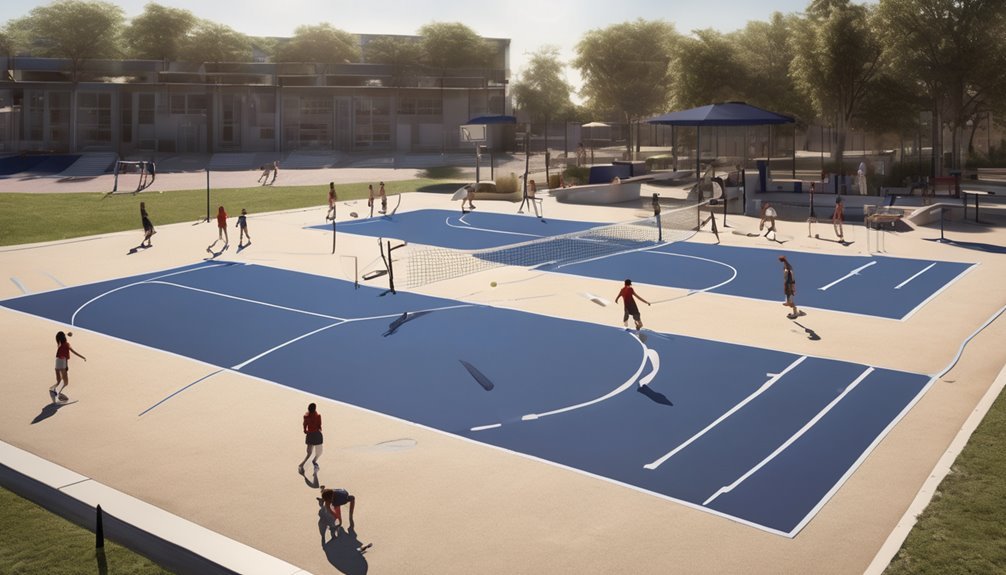
You’ll start with protective padding that fits your zones and protects players from impact. Add shade options to extend playtime and reduce heat fatigue, plus sun protection for lasting comfort. Don’t overlook hydration and on-site supplies to keep everyone fresh, focused, and ready for the next drill.
Protective Padding Essentials
Protective padding isn’t just a safety feature—it’s a performance asset. You deserve gear that respects joints, speeds recovery, and reinforces teamwork. When you pick padding, prioritize consistency in protection, fit, and breathability, so practice stays fluid and collisions stay controlled. Your goal is reliable impact protection that doesn’t slow you down or glare with discomfort.
- Padding practices: choose materials with uniform density, moisture management, and secure fastenings for all court angles.
- Fit and positioning: tailor pads to your body shape, ensuring coverage without restricting movement.
- Durability and maintenance: inspect regularly, clean after sessions, and replace worn padding promptly.
Together, these choices support safety, comfort, and a connected team culture—where toughness and care go hand in hand.
Shade and Sun Protection
Shade and sun aren’t afterthoughts here — they’re part of safe, productive play. You design spaces that protect players and extend practice time without sacrificing comfort. Prioritize shade solutions near courts and seating so everyone has a place to rest and regroup. Choose UV-rated canopies, awnings, or shaded structures that resist wind and sun glare, with clear sightlines for coaches. Implement sun safety routines: wide-brim hats, breathable fabrics, and sunscreen accessible at every shift change. Align shade with traffic flow to minimize clutter and ensure quick access. Regularly inspect covers for rips, loose seams, and pole stability, and replace worn components promptly. When done right, your zone feels welcoming, secure, and inclusive for all ages and skill levels.
Hydration and Comfort
Hydration and comfort go hand in hand with safety on any outdoor court or field. You stay sharp when your body isn’t battling dehydration or heat stress, so build a simple hydration strategy and stick to it. Prioritize easy-access water, temperature-appropriate bottles, and quick pauses between drills to sip and reset. Comfort innovations, like breathable fabrics, cushioned pads, and adjustable shading, reduce fatigue and improve focus so you feel you belong on the team.
- Hydration strategy: schedule sips, monitor thirst, and log fluids to prevent dips in performance.
- Comfort innovations: choose moisture-wicking materials and ergonomic gear for lasting comfort.
- Belonging mindset: follow routines, support teammates, and trust the plan for consistent effort.
Budget-Smart Picks and Maintenance Hacks
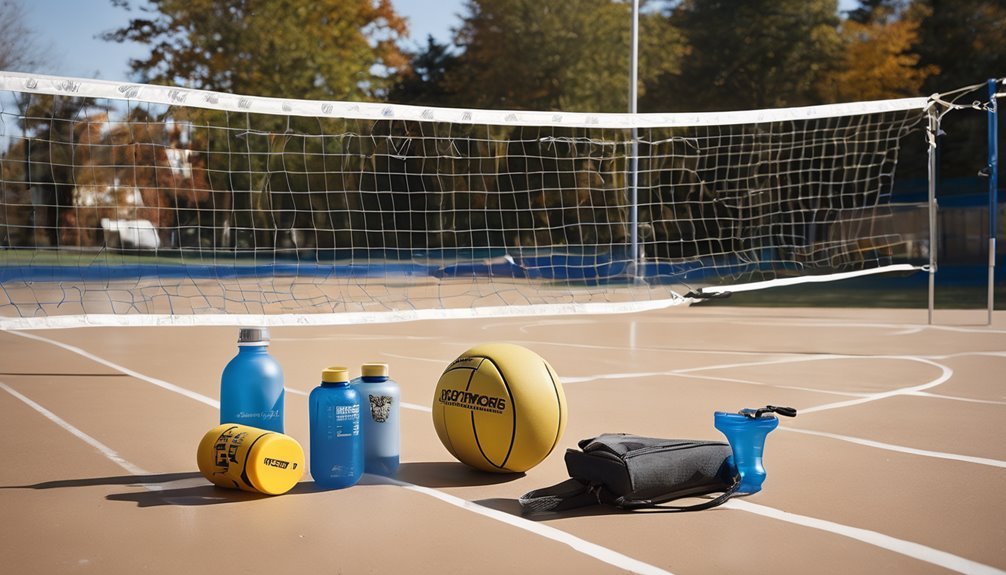
Budget-smart picks save you money without sacrificing performance, and maintenance hacks keep gear going longer. You want gear that lasts, fits your space, and feels like a smart choice right away. Start with core items: a reliable volleyball, a sturdy pump, and adjustable nets that suit your area—these deliver consistent practice without frequent upgrades. Look for multipurpose equipment that can double for other outdoor games to maximize value. Maintain gear by cleaning after use, drying completely, and storing it in a cool, dry place. Check inflation, tension, and seams regularly, addressing small wear before it becomes costly repairs. With budget smart choices and simple maintenance hacks, you’ll extend lifecycles, reduce downtime, and foster a sense of belonging in your community space.
Tailoring Equipment for Ages and Skill Levels
Tailoring equipment for ages and skill levels means choosing gear that fits everyone on the court or field. You’ll boost confidence, safety, and participation by matching gear to ability, not just size. Prioritize age appropriate equipment and gear that scales with progress, so beginners feel included and veterans stay challenged. You’ll also design drills that emphasize fundamentals, creating a shared sense of belonging and achievement.
1) Use lighter balls, lower nets, and smaller courts for beginners to build fundamentals with comfort.
2) Introduce skill focused drills that progress in complexity, enabling steady improvement for all ages.
3) Offer clearly labeled gear stations and quick swaps so players stay engaged and supported.
Frequently Asked Questions
How Do I Choose Court Dimensions for Limited Spaces?
You should tailor court dimensions to your space, aiming for a safe, functional layout. Start with your available footprint, then prioritize key zones and boundary buffers to avoid crowding. For limited spaces, adopt compact court layout strategies, like reduced singles volleyball lines or multi-use lines for both volleyball and outdoor games. Use space optimization techniques, keep clear sightlines, and measure entry points first. Your goal: practical, comfortable play that fits and feels inclusive.
What Is the Best Surface for Outdoor Volleyball Durability?
The best surface for outdoor volleyball durability is a high-quality, multi-use court surface, like modular acrylic or cushioned sport tiles, chosen for outdoor durability and shock absorption. You’ll want a surface that protects joints, drains well, and resists UV fading. Consider match-grade court dimensions you can maintain, and ensure edge protection for longevity. This surface type helps you feel confident, belong, and perform consistently with secure footing under varying weather.
How Often Should Nets and Poles Be Inspected for Safety?
Nets and poles should be inspected before every use and at least monthly for safety. You’ll want a formal safety inspection as part of your maintenance schedule, checking for frayed nets, loose fittings, and bent or corroded poles. If anything looks off, halt play and address repairs promptly. Regular maintenance builds confidence and belonging—you’ll feel secure lending equipment to friends and family when you know the gear is up to standard.
Are There Performance Differences Between Indoor and Outdoor Volleyballs?
Indoor vs outdoor volleyballs do differ in performance. Indoor balls typically have smoother surface and fuller consistency, while outdoor balls emphasize durability against weather and rougher surfaces. The ball material comparison shows indoor balls use smoother leather or composite for grip and control; outdoor balls use more rugged composites to resist abrasion. You’ll notice grip performance shifts with humidity, heat, and surface, so choose based on your playing environment and prioritize stability, control, and durability for belonging.
What Maintenance Schedule Extends Equipment Lifespan?
A good maintenance schedule extends equipment lifespan by staying consistent, not rushed. You should follow a steady rhythm: inspect daily, many teams do quick checks before play; deep-serve quarterly. Keep inflation at manufacturer specs, rotate balls if possible, and repair seams promptly. Maintain a clean, dry environment, and track wear. Use a maintenance checklist to log actions, and follow storage best practices to prevent damage when not in use. This builds reliability and a sense of belonging.