
Inclusive playground equipment supports your child’s development by enabling accessible exploration, social collaboration, and self-directed growth in shared spaces. You’ll see stronger participation as varied gear and supportive supervision boost self-efficacy and equal opportunities to contribute. Open-ended play spaces foster planning, problem-solving, and peer negotiation, while sensory-friendly features reduce overwhelm and improve focus. Accessible design helps with posture, balance, and safe movement, building transferable skills and confidence. Continue exploring to discover practical design and measurement tips that amplify these gains.
Why Inclusive Design Elevates Early Development
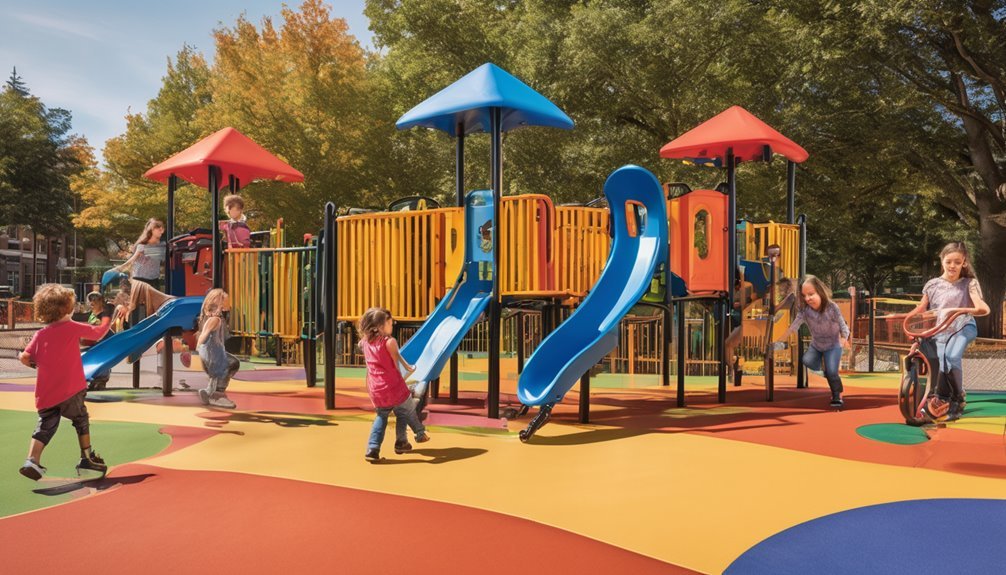
Inclusive design isn’t just about accessibility; it actively supports infants and toddlers as they explore, learn, and practice new skills. You’ll see that early development benefits when environments invite curiosity through varied textures, heights, and grasp-friendly grips. Inclusive design aligns with evidence showing that universal access supports every child’s participation, reducing frustration and encouraging repeated attempts. When play spaces are built around functional needs—easy transitions, clear sightlines, and predictable routines—you provide opportunities for caregivers to scaffold language, problem-solving, and self-regulation in real time. Metrics that track inclusive participation and engagement demonstrate how small design choices boost attention, memory, and skill consolidation. By prioritizing universal access and inclusive metrics, you create a playground where every child can grow with confidence and belonging.
Social Skills and Cooperative Play Across Abilities
You’ll see how shared play dynamics reveal how kids of different abilities join in, problem-solve, and build trust through simple, portable activities. By applying inclusive social strategies, you can support interactions that emphasize turn-taking, clear communication, and cooperative goal-setting. This approach grounds opportunities in real tasks, highlighting what each child can contribute and how the group moves forward together.
Shared Play Dynamics
How do children navigate shared play across abilities, and what does that mean for their social skills and cooperative play? You’ll notice how inclusive play shapes shared dynamics, guiding how peers interpret roles, signals, and turn-taking. When equipment supports varied needs, you model flexible collaboration, not competition, and kids learn to adapt strategies together. Your focus is on practical, observable actions that build connection, communication, and mutual respect.
1) Observe mixed-ability groups and highlight successful cooperation in default routines.
2) Encourage peers to verbalize goals, adjustments, and praise for collaborative problem-solving.
3) Validate all contributions, rotating roles so everyone experiences leadership moments.
4) Use predictable prompts to sustain participation and reduce frustration during transitions.
Inclusive Social Strategies
Shared play thrives when kids notice and respond to each other’s cues, so you can guide social skills by naming actions that support everyone. In inclusive social strategies, you’ll scaffold cooperation by highlighting shared goals and turn-taking, making coactive dialogue part of everyday interaction. Encourage peers to describe what they’re doing, ask for help, and offer assistance, emphasizing every contribution as valuable. By naming strengths across abilities, you create inclusive classrooms where kids see belonging as a teamwork outcome, not luck. Use structured roles, parallel play, and guided peer interactions to strengthen social connections without singling out differences. Assess progress through observable behaviors like initiative, responsiveness, and collaborative problem solving, ensuring practices remain child-centered, functional, and evidence-based for diverse learners.
Physical Growth Through Accessible Equipment
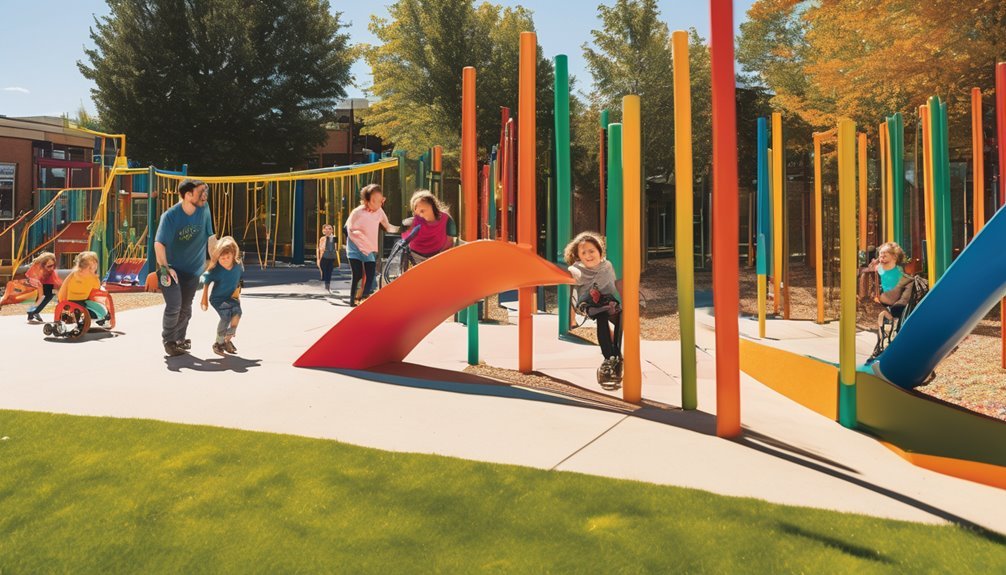
Accessible equipment supports you by strengthening movement patterns and endurance through real-world play. When you engage with inclusive designs, kids build targeted muscle groups and coordination while staying active alongside peers. This movement-focused approach emphasizes function—allowing kids to express growth through accessible strength and inclusive play mechanics.
Accessible Strength Benefits
Do you know how accessible playground features can help kids build real, transferable strength during playing? When equipment is designed for all bodies, you’ll notice steadier posture, controlled movements, and practical endurance that transfers beyond the playground. You gain confidence as you explore, climb, and push with guidance you can trust. This is accessible strength in action, supporting inclusive resilience through everyday activities and peer interactions.
1) You practice safe loading and unloading of your body, improving joint control.
2) You build functional grip, balance, and core stability during varied tasks.
3) You experience gradual progress with adaptive challenges that fit your pace.
4) You participate alongside peers, reinforcing motivation, belonging, and shared success.
Inclusive Play Mechanics
When kids move through playground equipment designed for all bodies, inclusive play mechanics support tangible physical growth by matching challenges to abilities and inviting repeated, meaningful practice. You’ll notice how accessible grips, low barriers, and adjustable ramps let children engage core movements safely, building strength, balance, and coordination through real tasks. Inclusive design emphasizes consistency and options, so practice feels purposeful rather than repetitive. Evidence points to gradual progression sustains motivation and reduces fatigue, while peer modeling reinforces skill use in social contexts. By centering function over form, you create spaces where every child sees mobility as attainable. Inclusive play and design foster belonging as you enable successful, age-appropriate challenges for all.
Cognitive Benefits of Open-Ended Play Spaces
Ever wonder how open-ended play spaces shape a child’s thinking? You’ll notice sharper cognitive exploration as you observe how choices unfold, hypotheses form, and problem-solving strategies emerge in real time. These environments support flexible thinking, planning, and sustained attention, all essential for learning across subjects. You’ll see how open ended play invites children to test ideas, revise plans, and seek feedback from peers, reinforcing mastery through function over form. The result is a confident, autonomous learner who collaborates to co-create meaning.
Open-ended play sparks bold thinking, testing ideas, and collaborative problem-solving in real time.
- Enhances cognitive exploration through self-directed experimentation
- Promotes hypothesis testing and iterative problem-solving
- Supports flexible thinking when rules or goals shift
- Encourages peer negotiation and shared decision-making
Sensory-Friendly Features and Their Impact
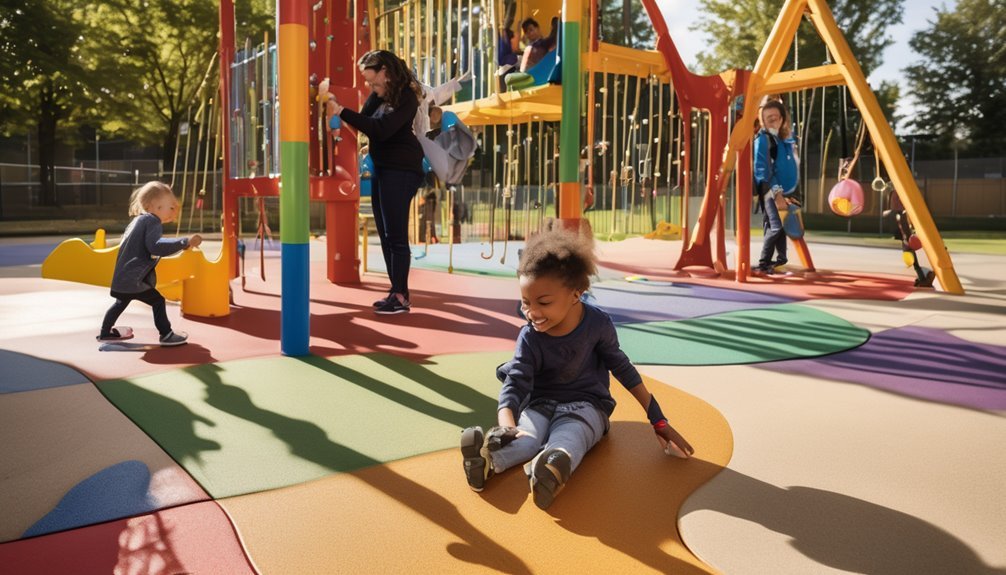
Sensory-friendly features aren’t just nice-to-haves; they directly support how children participate, learn, and regulate play in shared spaces. You’ll see that these features reduce overwhelm, so kids can stay engaged, try new activities, and cooperate with peers. Grounded in sensory integration principles, designs prioritize predictable textures, gentle lighting, and sound containment to support focus and self-regulation. You’ll observe how tactile exploration invites curious touch, differentiated textures, and accessible manipulate options that align with varied sensory needs. When environments balance stimulus with calm zones, children can shift between active play and quiet processing without disruptions to others. The result is inclusive participation, where every child’s strengths are noticed, valued, and built upon through purposeful, evidence-informed playground design.
Confidence, Independence, and New Role Models
Could confidence, independence, and new role models transform how kids view themselves on the playground? Yes, when inclusive equipment invites leadership and collaboration, children practice confidence building and develop independence skills in real-time. You’ll notice peers guiding peers, taking turns, and solving problems together, which reinforces a positive self-image and belonging. This environment supports gradual risk-taking, where small successes build momentum for bigger challenges.
- Role modeling through peer collaborative play
- Opportunities for self-directed choices and decision making
- Scaffolded tasks that strengthen independence skills
- Feedback that emphasizes effort, strategy, and growth
Evidence shows that varied equipment paired with supportive supervision promotes self-efficacy, social competence, and equitable participation, helping every child see themselves as capable contributors in shared spaces.
Families and Community Inclusion in Shared Environments
As kids gain confidence and independence on inclusive playgrounds, families and community members become active partners in shaping welcoming, accessible spaces. You contribute to routines that support early literacy and language development through shared storytelling, singing, and conversations during play. When you narrate actions, label emotions, and describe sequences, you reinforce vocabulary, turn-taking, and social cues in real time. Inclusive environments invite caregivers to model inclusive communication, encouraging peer interactions that extend learning beyond the equipment. The result is a message of belonging: every child’s voice matters, and every caregiver plays a purposeful role. Communities that connect families, schools, and local organizations foster consistent language-rich opportunities, helping children build critical communication skills while discover safe, joyful spaces they can call their own.
Planning Accessible Playgrounds: Design Considerations
Planning accessible playgrounds isn’t luxury—it’s essential for every child to explore, learn, and grow. You design with evidence in mind, prioritizing function, safety, and inclusive experiences that welcome all abilities. By coordinating features with inclusive logistics, you ensure smoother access, supervision, and transitions across zones. Budget considerations guide sustainable choices that still promote participation. Your plan should emphasize adaptable equipment, surface safety, and accessible paths that reduce barriers from entry to exit.
- Prioritize barrier-free routes, tactile cues, and adjustable elements that support diverse users.
- Choose durable, low-maintenance materials that meet safety standards and extend usable life.
- Create clearly labeled, quiet retreat areas for sensory regulation and social interaction.
- Coordinate infrastructure with inclusivity goals, partnerships, and transparent budget milestones.
Measuring Impact: Outcomes for Children and Communities
What evidence shows about playground impact matters: measuring outcomes helps us see how inclusive spaces affect children’s development and community well-being. You’ll track inclusive metrics across domains—social engagement, fine and gross motor skills, cognitive curiosity, emotional regulation, and equitable access—so benefits aren’t assumed, they’re demonstrated. You’ll invite community storytelling to reveal lived experiences, captures of belonging, and shared pride. Short- and long-term indicators matter: participation rates, interaction quality, independent play, cooperative play, and accessibility satisfaction. Data informs design tweaks, program supports, and policy advocacy that strengthen safety and inclusion. This approach centers children while connecting families, educators, and neighbors in shared purpose. Table below illustrates dimensions you’ll monitor to tell a clear impact story.
| Dimension | Indicator | Source |
|---|---|---|
| Social engagement | Interaction frequency | Observations |
| Motor skills | Balance, coordination | Assessments |
| Emotional regulation | Calming strategies | Reports |
| Access & equity | Usage by groups | Registries |
| Learning curiosity | Task persistence | Sessions |
Frequently Asked Questions
How Do Inclusive Playgrounds Reduce Stigma Among Peers?
Inclusive play reduces stigma by fostering peer connections, so you see diverse abilities celebrated and drawn into shared activities. You participate, collaborate, and learn empathy, making inclusive play feel like the norm—an incredibly potent, daily social equalizer for everyone.
What Maintenance Is Required for Adaptive Equipment?
Regularly schedule maintenance checks and follow cleaning routines for adaptive equipment to keep it safe and accessible; you’ll detect wear early, minimize downtime, and support every child’s participation with evidence-based, child-centered, function-focused care that foster belonging.
Are There Costs and Funding Options for Communities?
Yes—you can access funding strategies and grant opportunities tailored for inclusive playgrounds, and yes, costs exist, but strategic planning makes them manageable, delivering measurable benefits for every child while fostering belonging and evidence-based, child-centered outcomes in your community.
How Is Safety Ensured With Diverse Equipment?
You ensure safety with safe design by selecting equipment that meets standards, is age-appropriate, and thoroughly inspected; you prioritize accessibility benefits, reduce hazards, and promote inclusive play so every child can participate confidently and joyfully.
What Training Helps Staff Support Inclusive Play?
Staff training in an inclusive play philosophy equips you to observe, adapt, and support every child’s engagement, using evidence-based practices. You’ll cultivate belonging, assess needs, and tailor interventions to promote function-focused participation.