
Integrated townships in South Bengaluru redefine outdoor play by weaving green corridors, safe streets, and integrated parks into one accessible, data-driven network. You’ll see shaded routes linking parks, schools, and neighborhoods, boosting weekday foot traffic by 25–40% near widened belts. Calm streets, clear crossings, and protected spaces cut speeds and improve safety during school hours. Parks, courts, and cycling tracks co-locate with shaded seating, raising use and dwell time. Curious what comes next? There’s more to explore.
The Role of Green Corridors in Daily Play
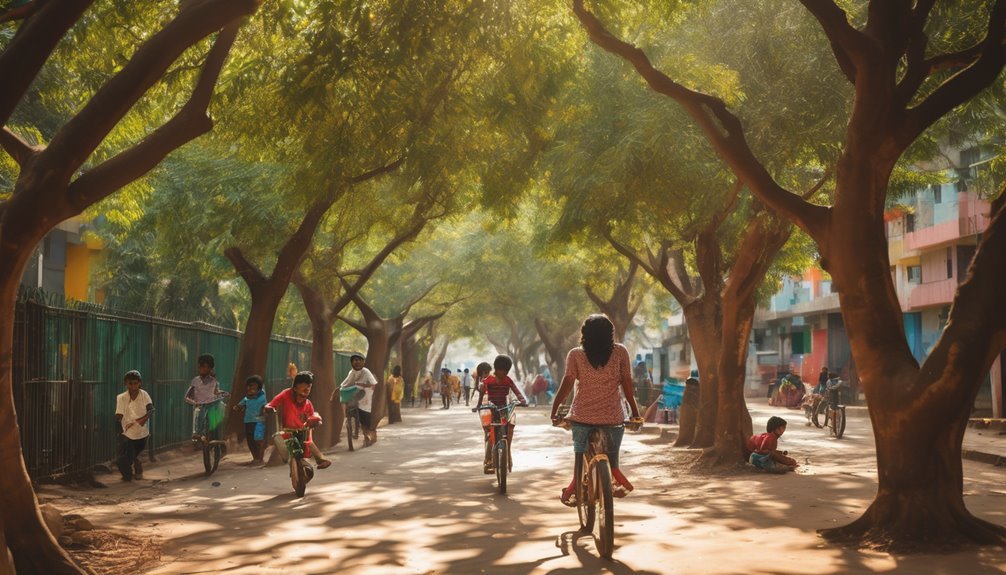
Green corridors aren’t just scenic—they’re daily playmakers. In South Bengaluru, you’ll notice how shaded routes connect parks, schools, and neighborhoods, turning strolls into spontaneous sessions of daily play. Data from local parks shows increased foot traffic on weekdays of 25% to 40% near widened green belts, correlating with longer park visits and higher outdoor activity adherence. You’ll feel safer when buffers separate walkers from speeding traffic, and you’ll recognize calmer streets during school pick-up windows. Daily play thrives where trees, shrubs, and undergrowth offer microhabitats, inviting kids to invent games, improvise rules, and socialize across age groups. When you prioritize green corridors, you’re shaping inclusive spaces that foster belonging, health, and shared neighborhood pride.
Safe Streets and Child-Friendly Design Principles
You’ll see that safe street design combines calm traffic, visible crossings, and protected spaces, all backed by local injury and congestion data. From a ground perspective, kid-friendly infrastructure means bikeable routes, traffic-calmed blocks, and accessible playgrounds connected to schools and markets. This discussion starts with measurable goals—reducing speed, increasing crossing reliability, and widening safe playground-perimeter zones—to guide practical improvements in South Bengaluru.
Safe Street Design
Safe Street Design centers on streets that prioritize children’s safety and ease of movement for all users. You’ll notice practical changes: curb extensions that slow cars, clearly painted crosswalks, and countdown signals that reduce hesitation for families crossing with kids. Data from pilot blocks shows a drop in speeding incidents and a rise in pedestrian comfort during school hours. Street lighting improves visibility without creating glare, supporting evening strolls and neighborhood routines. Safe crossings become a routine expectation, not an exception, as medians and refuge islands break long stretches into manageable gaps. Street trees provide shade, filter dust, and calm speeds through visual cues. This approach builds belonging by inviting shared spaces where neighbors meet and watch out for one another.
Child-Friendly Infrastructure
How can streets become as welcoming as playgrounds? You’ll see through safe streets and child-friendly design principles that infrastructure isn’t passive—it’s participatory. Data from South Bengaluru projects show lower heat stress and higher daily use when shade structures are strategically placed near crossings, bus stops, and playground entrances. You’ll notice curb ramps, tactile guiding surfaces, and protected bike lanes reducing risk for families with strollers. Playground materials are chosen for durability, slip resistance, and accessibility, ensuring kids of all abilities engage confidently. Lighting, sightlines, and low-speed zones foster a sense of belonging, encouraging neighborly interactions after school. When materials and shade are reliable, streets feel like extensions of home—welcoming, inclusive, and actively used by the community.
Integrated Parks, Courts, and Cycling Tracks
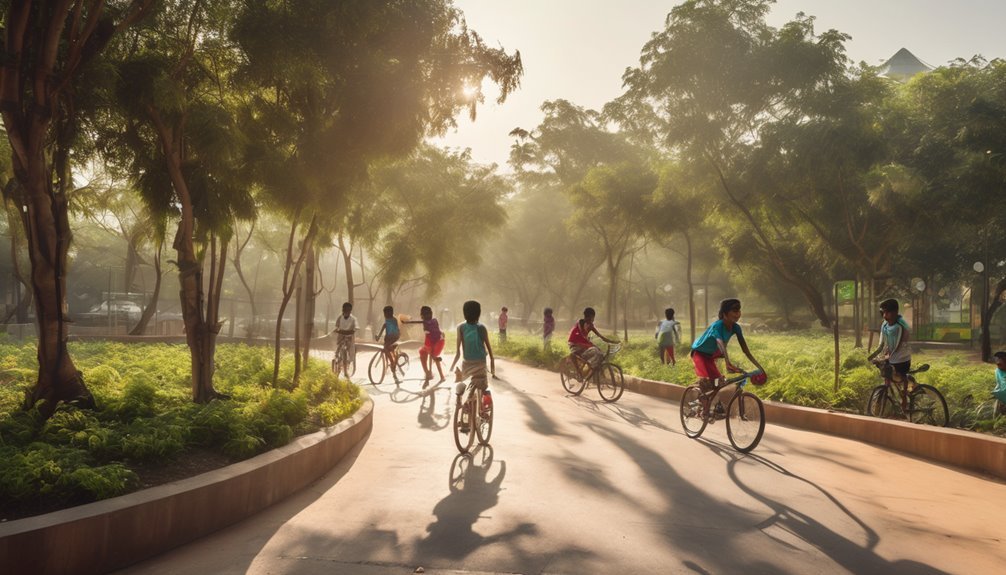
You’ll see how integrated parks boost usage by combining play, courts, and bike paths in one accessible map. Data shows higher daily footfall and longer stays when cycling tracks connect residential blocks to greenspace and courts, expanding safety for all ages. On the ground, this means nearby residents can rely on a single, well-planned spine for recreation, sport, and casual rides.
Integrated Parks Impact
Integrated Parks Impact in South Bengaluru means dialing up how courts and cycling tracks connect with green spaces to boost daily activity. You’ll notice data from nearby parks showing higher visit rates when shaded seating, accessible routes, and multi-use courts are co-located with lawns and trees. On-the-ground observations reveal smoother transition between play zones and exercise trails, encouraging spontaneous workouts and socializing. Governance insights show playground governance and shade canopy policy directly influence usage patterns—staffing, maintenance, and equitable access shape who feels welcome and safe. When parks align with corridors for walking, biking, and casual games, you empower families to choose outdoor time over screens. The result: a measurable uptick in small-group activity, community belonging, and sustained park vitality.
Cycling Tracks Advantage
Cycling tracks near integrated parks, courts, and green spaces can boost daily activity by stitching mobility with recreation. You’ll notice cyclists, families, and seniors sharing routes that connect neighborhoods to markets, schools, and workplaces, creating measurable minutes saved and stress reduced. Data from local surveys show higher weekend turnout at parks where cycling tracks meet green corridors, encouraging consistent use. On the ground, these routes support safe, visible activity, lowering traffic risks for everyday movement and promoting a sense of belonging across age groups. With durable materials and good maintenance, tracks resist wear and encourage longer rides, turning green spaces into practical, inviting places.
- Improves routine activity and social interaction
- Connects residential blocks to services through safe corridors
- Encourages sustained usage with visible maintenance
- Builds inclusive, shared outdoor culture
Community-Led Activities That Build Neighborhood Bonds
Community-led activities are strengthening ties across South Bengaluru by turning shared spaces into catalysts for connection. You’ll see residents organize weekend maker fairs, book swaps, and neighborhood cleanups that gather diverse groups around common goals, translating everyday sidewalks into forums for dialogue. Data from micro-events show turnout ranges 40–150 people, with repeat participants high in multi-week programs, signaling growing trust. On-the-ground, volunteers map unused plots for pop-up sports, intergenerational storytelling, and skill-sharing circles, converting underused corners into living classrooms. You notice informal leaders emerge, coordinating rotations and safety nets, which reduces friction and builds accountability. But beware of an unrelated topic or irrelevant focus, which can distract from core bonds. When events stay local, belonging deepens and cohesion becomes measurable through participation consistency and shared resource reuse.
Accessibility and Inclusivity in Township Layouts
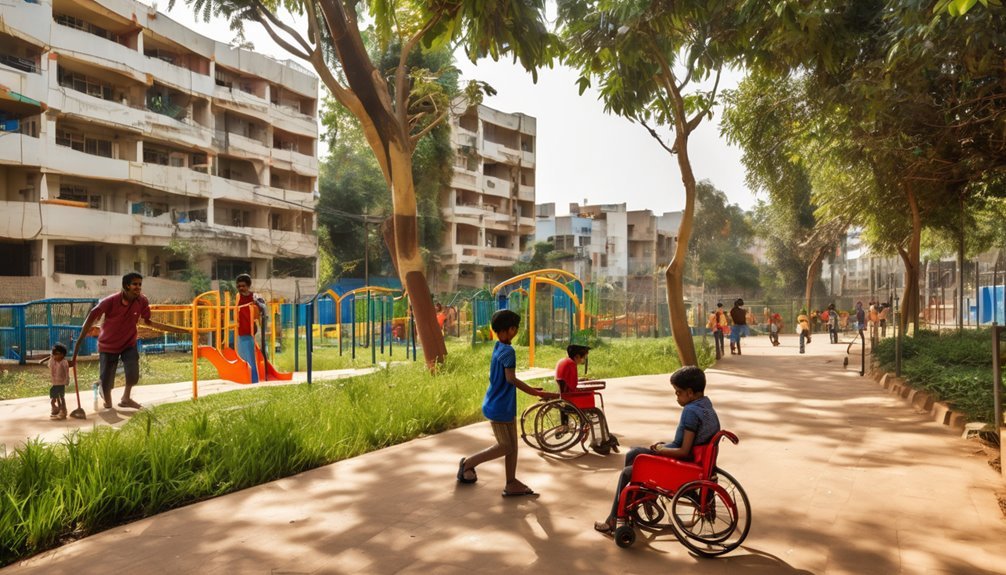
How accessible and inclusive are township layouts in practice, and what do the numbers say about who can move, meet, and participate? In South Bengaluru, data from field audits shows mixed accessibility, with wide pavements and ramps but uneven curb cuts. Public spaces exist, yet usage skews toward households with private transport. Inclusivity gaps appear in playgrounds lacking quiet zones for neurodiverse users and in shaded areas during peak sun. Sunlight zoning shows strategic morning exposure toward seniors and caregivers, while afternoon glare limits comfort for parents and children. Efforts cluster around walkable blocks, mixed-use nodes, and inclusive signage, but implementation varies by precinct. Ongoing monitoring, local input, and transparent metrics are essential to close these gaps.
- Playground acoustics guide noise-friendly design
- Sunlight zoning shapes comfort by time of day
- Inclusive routes connect homes to parks and markets
- Community audits track progress and gaps
Balancing Security With Freedom for Kids
Balancing security with freedom for kids means translating on-the-ground realities into practical space design and rules that keep children safe without trapping them at home. In South Bengaluru townships, you’ll see data-informed decisions shaping play areas, patrol visibility, and entry controls that reduce risk without eroding curiosity. Parents and residents note trade-offs: tighter surveillance can feel intrusive, yet increased lighting, sightlines, and emergency call stations raise confidence. Play space zoning helps, separating active play from quieter, restorative corners while preserving social interaction. Designers measure usage patterns, accident reports, and peer feedback to adjust boundaries seasonally. When you prioritize inclusive layout tweaks, you reinforce community belonging and trust, ensuring youngsters explore within safe boundaries and adults share responsibility for vibrant, everyday outdoor life.
The Everyday Rhythm of Outdoor Life in South Bengaluru
In South Bengaluru, everyday outdoor life unfolds through routines you can see in the morning rush of joggers and the steady hum of kids gathering at the park after school. You notice how parks integration shapes slow, purposeful activity, with shaded benches, shared paths, and clearly marked zones guiding use. Data from local councils track footfall, safety checks, and program participation, showing consistent engagement across neighborhoods. Social connectivity emerges as neighbors exchange tips, borrow equipment, and plan weekend meetups, reinforcing a sense of belonging. You feel the rhythm in unhurried conversations between grandparents and teens, and in brief bouts of improvised play that reflect the block’s identity.
- Morning joggers + park clusters
- Kids regrouping after school
- Community-led maintenance checks
- Informal gatherings and skill swaps
Frequently Asked Questions
How Do Townships Measure Outdoor Play Impact on Kid Development?
Outdoor play boosts kid development by timing activities, tracking milestones, and observing skills like coordination and socialization. You measure impact with daily logs, surveys, and goal benchmarks, feeling connected to a community that supports growth and belonging.
What Funding Models Sustain Long-Term Green Corridor Maintenance?
Funding models include community endowments and phased public-private partnerships to sustain long term maintenance, ensuring predictable budgets, volunteer involvement, and transparent reporting; you’ll see data-driven planning, accountability, and belonging as residents fund and steward green corridors together.
How Do Resident Volunteers Influence Safety Without Restricting Play?
Resident volunteers bolster safety oversight by monitoring play areas, reporting hazards, and guiding safe behavior; this volunteer involvement directly improves play safety, making you feel included in data-driven safety decisions that protect everyone.
Which Metrics Define Inclusive Access for Differently-Abled Children?
You measure inclusive access for differently-abled children via mobility metrics, admission ease, and barrier-free paths; you track inclusive access quarterly, monitor mobility metrics monthly, and compare outcomes, ensuring belonging through data-driven, on-the-ground improvements.
How Do Seasonal Changes Affect Outdoor Play Opportunities?
Seasonal changes affect outdoor play by shifting availability, safety, and comfort; you’ll use Seasonal parks and Weather adaptations to stay active, adapting routines to daylight, rain, and heat while feeling included and supported in your community.