
Sustainable playgrounds prioritize eco-friendly, non-toxic materials that cut health risks and maintenance costs while boosting learning and inclusion. You’ll see data backing fewer injuries, lower absenteeism, and better air quality from durable, low-emission coatings and antimicrobial surfaces. Long-term, recycled and renewable resources reduce embodied carbon, while permeable surfaces and water-management features improve resilience to heat and storms. With transparent supply chains and independent safety certifications, upfront investments pay off through lower lifecycle costs and enhanced student engagement. More details ahead.
The Case for Green Playgrounds in Schools
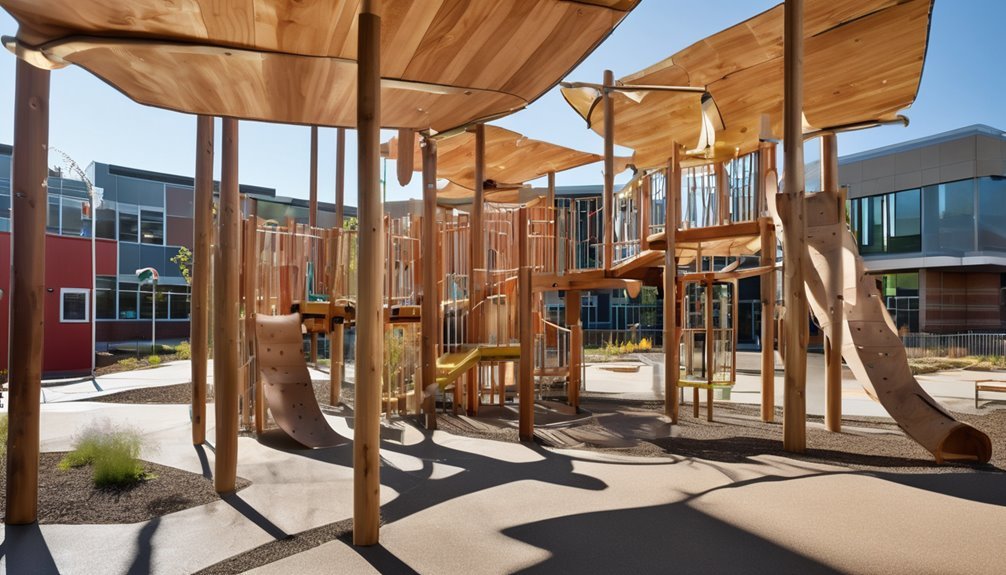
Green playgrounds aren’t just nicer to look at—they’re smarter investments in student health, safety, and learning. When you choose earth friendly materials, you reduce toxins and exposure, improving air quality and attention in class. Data show fewer injuries and lower maintenance costs over time, translating into more productive school days. Playful textures invite inclusive participation, encouraging movement, collaboration, and social belonging among diverse students. By prioritizing durability, you minimize waste and create spaces that adapt to changing needs, from outdoor classrooms to after-school programs. The solution is clear: adopt standards that favor non-toxic, resilient options and ongoing safety inspections. With transparent metrics and community input, you’ll foster a sense of ownership, trust, and pride in your school’s environment.
Benefits of Eco-Friendly Materials for Safety and Health
You’ll see that choosing safer, eco-friendly materials reduces exposure to harmful chemicals and supports a healthier school environment. Data consistently link low-toxicity composites and natural surfacing with fewer respiratory and dermatitis issues, while durable, recycled-content options help manage lifecycle costs. By prioritizing safer material choices, you can drive health and safety gains and enable ongoing, evidence-based improvements in playground quality.
Safer Material Choices
Are eco-friendly materials truly safer for kids and communities, or is the perceived benefit overhyped? You’ll see data linking lower toxin exposure and fewer inflammatory incidents when safer options are chosen, but safety hinges on ongoing testing, proper installation, and maintenance. Consider these practical steps:
1) Compare independent safety certifications to ensure compliant, low-emission materials.
2) Prioritize closed-loop or recyclable products to reduce end-of-life hazards.
3) Audit installation procedures and contractor training to minimize exposure during setup.
4) Track disposal challenges and plan responsible end-use strategies to prevent leakage into playground environments.
Beyond safety, you strengthen trust by transparency about supply chain ethics, routine third-party audits, and clear communication with families about long-term health protections.
Healthy School Environment
Healthy school environments depend on the material choices that protect kids’ health and support learning. Eco-friendly options reduce exposure to toxins, mold growth, and irritating chemicals, strengthening safety and attendance. You’ll see fewer health concerns when surfaces resist moisture and microbial growth, improving air quality and overall well-being. Data show lower absenteeism in schools using sustainable composites and low-emission coatings. By prioritizing durability and non-toxic finishes, you create a space where students feel welcome and cared for. Table highlight:
| Benefit | Impact |
|---|---|
| Reduced playground mold | Fewer respiratory visits |
| Antimicrobial coatings | Lower surface contamination |
| Better indoor air | Enhanced concentration |
Adopt proactive maintenance and transparent reporting to build trust, foster belonging, and sustain a healthier learning environment.
Durability and Longevity: Lower Total Cost of Ownership
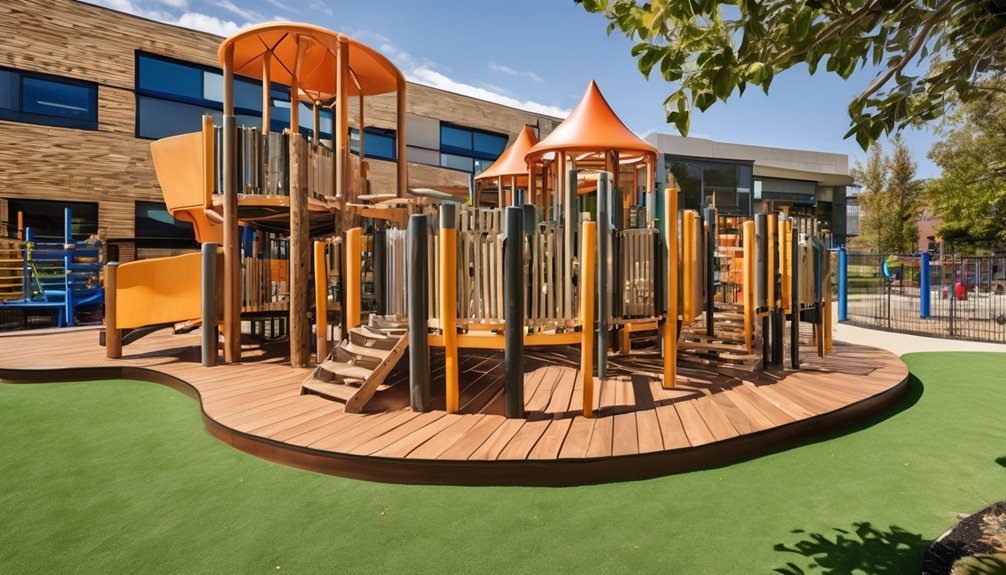
You’ll see how upfront investments in durable materials pay off through lower Lifetime Cost Benefits and reduced maintenance across the playground’s lifespan. When Maintenance Reduction Impacts are realized, ongoing upkeep headaches diminish and uptime improves, boosting user access and safety. By prioritizing Material Longevity Advantage, you set a strategy that lowers total cost of ownership while sustaining performance and safety over time.
Lifetime Cost Benefits
Durability and longevity drive real savings in playgrounds: components that withstand weather, heavy use, and vandalism reduce maintenance cycles and downtime, delivering a lower total cost of ownership over the lifespan. You’ll see clearer budgeting when materials resist weathering and washouts, lowering replacement frequency and labor. Data shows longer lifespans cut lifecycle costs, with fewer teardown projects and extended resale value. By choosing resilient, non-toxic options, you support safer budgets and sustainable programs. glossy coatings and durable substrates also maintain aesthetic value, reducing repaint cycles and downtime. toxic emissions considerations drive long-term cost benefits by minimizing health-related expenses and compliance risk.
- Assess expected lifecycle costs before purchase
- Prioritize durability ratings and warranty terms
- Compare maintenance and repainting intervals
- Plan for end-of-life recyclability
Maintenance Reduction Impacts
How much can maintenance time and costs drop when a playground’s durability is designed in from the start? You’ll see lower maintenance reduction and fewer disruptions, because durable materials resist wear, weather, and vandalism. Durability impacts translate into predictable service life, fewer repairs, and steadier budget planning. When you prioritize design-for-durability, you reduce downtime, extend usable years, and lower replacement frequency—all essential for sustainable school environments. The payoff is clear: less labor, fewer parts, and safer play spaces with consistent access for students. Below is a quick visual map of ideas.
| Idea 1 | Idea 2 | Idea 3 |
|---|---|---|
| Lower upkeep | Fewer repairs | Lower total cost of ownership |
Material Longevity Advantage
Material longevity isn’t just about lasting longer—it’s about lowering total ownership costs. You’ll see fewer replacements, reduced maintenance, and more predictable budgets when durability guides material choices. This durability comparison matters because it translates to steadier school operations and safer play spaces, even after heavy use. Over time, you’ll also observe less disruption from aging materials and lower disposal footprint, aligning with sustainable goals.
- Durability comparison shows cost savings over lifecycle
- Material aging reductions minimize maintenance cycles
- Predictable budgeting from extended product life
- Safer, more reliable playgrounds that foster belonging
Recycled and Renewable Resources in Play Structures
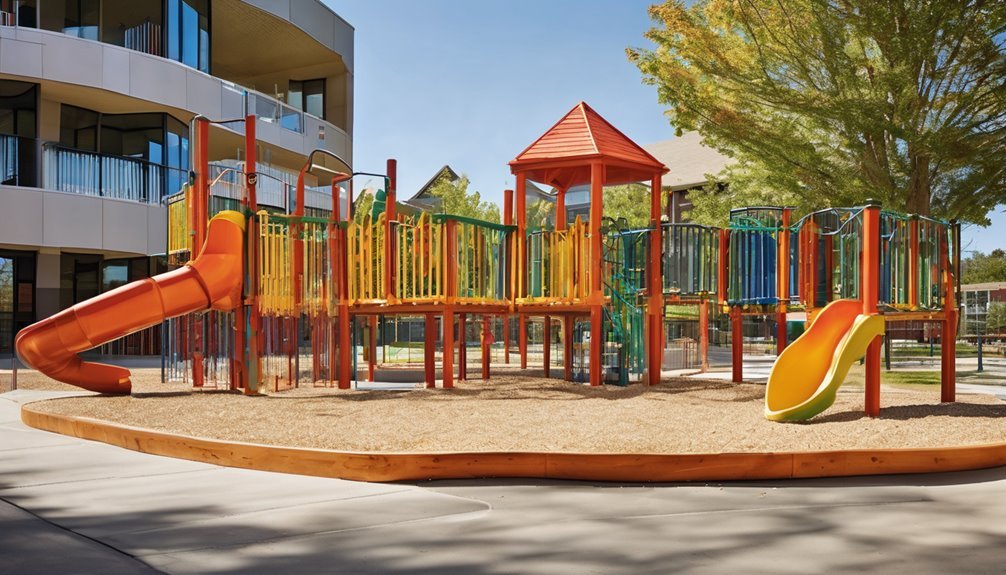
Are recycled and renewable resources the key to safer, more sustainable play structures? You’ll see how data drives smarter choices. Recycled plastics reduce virgin material demand and can lower long‑term maintenance costs when formulations resist wear and weathering. You’ll note safety advantages in standardized testing for impact attenuation and slip resistance, along with lifecycle assessments that reduce embodied carbon. Renewable timber offers sturdy framing with readability for future audits and procurement transparency, while maintaining mechanical performance and fire safety standards. By prioritizing supply chain traceability, you’ll strengthen community trust and local employment. The approach isn’t about tradeoffs; it’s aligning performance targets with responsible sourcing. Together, you’ll advocate for clearer guidance, measurable goals, and ongoing monitoring to maximize impact and foster belonging.
Water Management and Permeable Surfaces
Water management and permeable surfaces are essential for playground resilience and safety, especially in urban settings where stormwater overload and heat islands threaten usability. You’ll see data showing how porous surfaces reduce runoff, lower heat absorption, and support healthier play spaces. By choosing water sustainability practices, you conform with community needs and future-proof schools against extreme weather. Here’s how to act:
Water management and permeable surfaces boost playground resilience against storms and heat.
- Select porous surfaces, like permeable pavers and rubberized, returned-to-soil substrates.
- Integrate bioswales and rain gardens to filter pollutants and capture excess rain.
- Install subsurface storage to reuse rainwater for irrigation and non-potable needs.
- Monitor performance with simple metrics: infiltration rate, runoff reduction, and heat indices.
Together, you create inclusive, safer play areas that thrive under changing climates.
Aesthetic Value and Learning Opportunities With Sustainable Design
Aesthetic value and learning opportunities grow when sustainable design is embedded in playgrounds, linking beauty with behavior and curiosity. You’ll see how thoughtful textures, colors, and forms invite exploration while reducing environmental impact, making spaces feel inviting and inclusive. Data show that visually engaging, natural materials correlate with higher incidental learning rates and longer engagement with tasks that reinforce safety, collaboration, and problem-solving. Design choices that blend sunlight, shade, and acoustics support attention and social interaction, creating equitable access to exploration for all students. By prioritizing durable, non-toxic finishes and biophilic cues, you foster place attachment and repeated use. The result is measurable gains in curiosity, collaboration, and resilience—demonstrating that aesthetic value and learning opportunities can advance together through sustainable design.
Budgeting, Funding, and Lifecycle Considerations
Budgeting, funding, and lifecycle considerations anchor sustainable playground projects in reality: you’ll need a clear cost baseline, phased funding plans, and a lifecycle mindset that ties upfront investments to long-term maintenance, replacement, and end-of-life decisions.
Budgeting, funding, and lifecycle planning anchor sustainable playgrounds in long-term value.
1) You’ll map budgeting constraints against program goals, identifying where savings come from eco-friendly materials, modular design, and durable construction.
2) Fundraising strategies prioritize community ties, grants, and donor recognition to sustain momentum across project phases.
3) A lifecycle plan links initial expenditure to annual operating costs, maintenance schedules, and eventual upgrades.
4) Transparent reporting builds trust, showing stakeholders how data drives decisions and long-term value for students and families.
Together, these practices create inclusive, accountable, and financially resilient playgrounds.
Real-World Performance: Case Studies and Benchmarks
Case studies and benchmarks provide a concrete read on how sustainable playgrounds perform in real settings, translating theory into measurable outcomes. You’ll see data on durability, maintenance costs, and user engagement that tie environmental psychology insights to daily use. Benchmarks reveal how material reclamation reduces waste streams while preserving safety and play value, showing lower lifecycle costs over time. In schools, metrics track injury rates, accessibility, and inclusive design uptake, confirming that eco-friendly choices don’t sacrifice performance. Case studies illustrate adaptation to climate, foot traffic, and seasonal changes, guiding scalable solutions. You’ll gain practical indicators for budgeting, supplier selection, and ongoing optimization, reinforcing belonging through transparent performance conversations among staff, parents, and students. The result: informed, collaborative decisions that sustain both play and planet.
Planning Steps for Implementing a Sustainable Outdoor Space
How can you turn sustainability goals into a practical, cost-conscious plan for an outdoor space? You’ll map objectives to measurable outcomes, prioritize low-cost, high-impact materials, and align with school demands and community values. Use stewardship metrics to track progress and justify investments, cleaving to real data over hype. Engage stakeholders early to boost community engagement and ownership. Then follow these steps:
- Define goals, KPIs, and budget with transparent timelines.
- Assess site constraints, drainage, shade, and accessibility for inclusive design.
- Source durable, eco-friendly materials and local labor to reduce lifecycle costs.
- Pilot, measure, and iterate using feedback loops and data dashboards. This approach supports belonging, accountability, and resilience while delivering a sustainable outdoor space that scales with your school’s needs.
Frequently Asked Questions
How Do Eco-Friendly Materials Affect Student Safety Tests and Standards?
Eco-friendly materials improve student safety by meeting or exceeding safety tests and green standards, so you’ll see fewer health risks and better long-term outcomes. You meet strict eco safety criteria, reducing chemical exposure and slip hazards while tracks, seals, and surfaces conform with standardized performance data. By prioritizing evidence, you support safer playgrounds and inclusive spaces where families feel they belong, and you enable decisions that reinforce safer, accountable school environments.
What Maintenance Schedules Maximize the Lifespan of Green Playgrounds?
If you maintain a steady maintenance cadence, you’ll maximize the lifespan of green playgrounds. Some worry it’s costly, but data shows proactive checks reduce long-term repairs. Inspect surfacing, fasteners, and equipment monthly, and recoat or reseal annually. Track wear rates to adjust intervals, ensuring materials durability stays high. You’ll build belonging by prioritizing safety and reliability, as your team demonstrates responsible stewardship through transparent reporting and continuous improvement.
Can Green Surfaces Withstand Heavy School-Year Usage and Weather?
Yes, green surfaces can withstand heavy usage and weather when engineered properly. You’ll see durable cores, impact-absorbing layers, and UV-stable finishes designed for multi-season stress. Regular inspections, proper drainage, and scheduled resurfacing protect performance during heavy usage. Pair these with high-traffic design choices and data-driven maintenance, and you gain reliable safety, lower downtime, and a sense of belonging for students, staff, and families who value long-lasting, resilient play spaces.
Are Recycled Materials Legally Approved for Children’s Outdoor Equipment?
Yes, recycled materials can be legally approved for children’s outdoor equipment, but you must verify local regulations and obtain proper licensing for playgrounds. You’ll want data on material safety ratings, certifications, and ongoing maintenance. Ensure your plan with recyclingTRACE requirements, align licensing for playgrounds is current, and document compliance. This approach shows you’re accountable, inclusive, and solutions-focused, helping your community feel they belong while building a safer, environmentally responsible outdoor space.
How Do Sustainable Designs Influence Access and Inclusivity?
You’ll find sustainable designs boost inclusive access and equitable play opportunities by prioritizing barrier-free layouts, sensory-friendly surfaces, and varied equipment heights. Data shows universal design reduces accidents and boosts participation for kids of all abilities. You can implement color-contrast cues, accessible transfer spaces, and inclusive奈 pathways. By choosing modular, adaptable elements, you empower every student to engage, learn, and belong, creating a healthier school culture where inclusive access and equitable play opportunities drive measurable outcomes.